Refractory Concrete (High Strength Low Shrinkage)
CN → US| HS编码 | 关税税率 | 原产国 | 目的国 | 文档 |
|---|---|---|---|---|
| 3816002050 | 38.0% | CN | US | 官方文档 |
| 6903900050 | 35.0% | CN | US | 官方文档 |
| 6810110010 | 38.2% | CN | US | 官方文档 |
| 6810990080 | 35.0% | CN | US | 官方文档 |
| 3816002010 | 38.0% | CN | US | 官方文档 |
商品图片
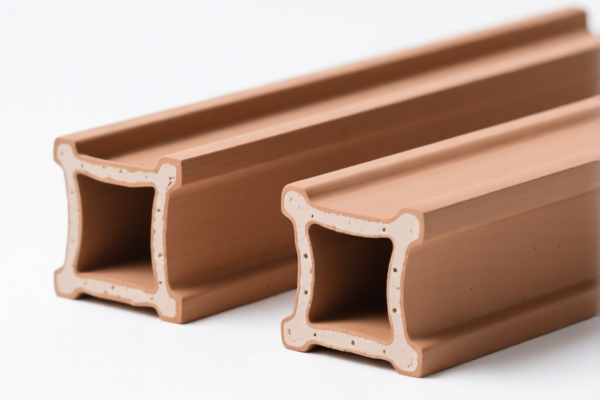
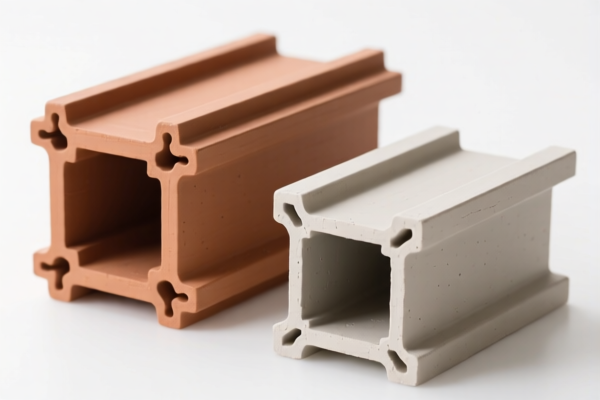
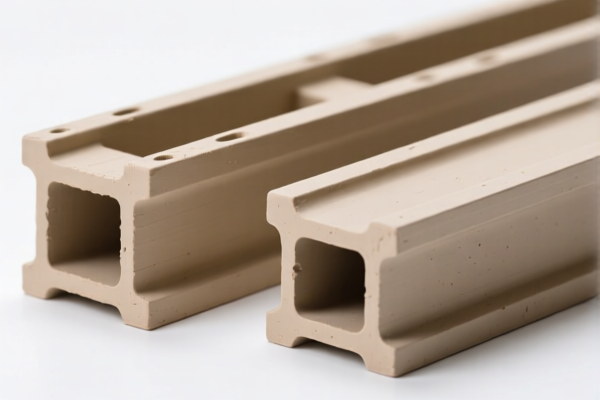
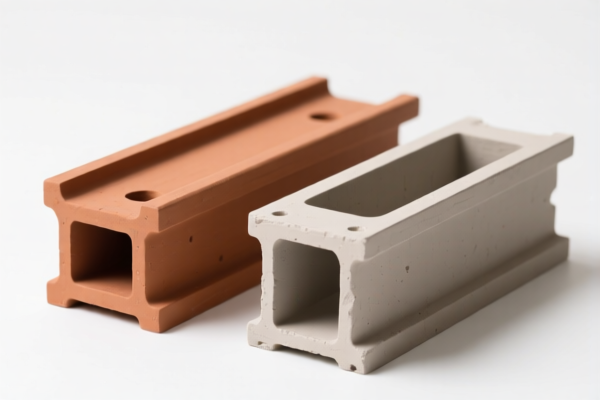
AI分析
🏗️ Refractory Concrete (High Strength Low Shrinkage)
🌐 HS Code Reference & Customs Clearance Guide | 2026 Latest Tariff Analysis | Professional Strategy for Fire-Resistant Materials
📌 1. Product Definition & Classification: Do You Truly Understand "Refractory Concrete"?
Refractory concrete, often referred to as castable refractory, is a pre-mixed hydraulic or non-hydraulic cement-based mixture containing aggregate, powder, and additives. It is designed to withstand extreme temperatures (typically >1000°C) and chemical erosion.
In international trade, the classification of "Refractory Concrete" is a common pitfall. It can fall under Cement/Concrete articles or Ceramic refractories, depending on its binding agent and final form. The key distinction lies in whether it is viewed as a "building material" (cementitious) or a "specialized ceramic product."
⚠️ Critical Distinction Point:
- If the product is primarily a cementitious mix for industrial linings (brick-like application) → May fall under Chapter 68 (Artificial stone/Cement products).
- If the product is specifically categorized as Refractory Cement/Concrete under Chapter 38 (Miscellaneous chemical products) or Chapter 69 (Ceramics) → Depends on the specific chemical composition and binding agent.
- "High Strength Low Shrinkage" is a performance feature, not a classification driver. The HS Code is determined by the material composition and heading description.
📦 2. HS Code Classification Details (2026 Latest Tariff Authority Comparison)
| HS Code | Product Description | Application Scenario | Material Attribute |
|---|---|---|---|
3816.00.20.50 |
Refractory concrete / Mortar / Cement (Misc. Chemical Products) | Industrial kiln linings, high-temp casting | ✅ Refractory Cementitious Mix |
6903.90.00.50 |
Other refractory ceramic goods (Ceramics) | Refractory bricks, blocks, specialized ceramic casts | ✅ Refractory Ceramic Material |
6810.11.00.10 |
Cement, concrete or artificial stone articles (Building/Construction) | Refractory blocks, bricks, pre-cast units | ✅ Refractory Concrete-like Article |
6810.99.00.80 |
Other cement, concrete or artificial stone articles | General refractory concrete products not specified elsewhere | ✅ Other Cementitious Refractory |
3816.00.20.10 |
Refractory concrete / Mortar (Misc. Chemical Products) | Specific "Refractory Concrete" classification | ✅ Exact Match: "Refractory Concrete" |
🔍 Key Reminder:
- Chapter 69 (Ceramics) vs. Chapter 68 (Stone/Cement): If the concrete is fired/sintered into a ceramic body, it’s Ch. 69. If it cures chemically (like cement), it’s often Ch. 68 or Ch. 38.
- Chapter 38 (Misc. Chemical): Often used for specific refractory mortars/cements that don’t fit standard construction cement codes.
- "Refractory Concrete" appears explicitly in 3816.00.20 descriptions in some national nomenclatures, making it a strong candidate for accurate classification.
💰 3. 2026 Latest Tariff Rate Breakdown (Including Surtaxes & Policy Add-ons)
✅ Applicable Country: United States (US)
✅ Origin: China (CN)
✅ Effective Date: November 10, 2025 (and subsequent imports)
🎯 1. 3816.00.20.50 & 3816.00.20.10 —— Refractory Concrete (Misc. Chemical Products)
| Item | Content |
|---|---|
| Base Tariff | 3.0% (ad valorem) |
| USITC Surtax (Section 301) | +25% |
| IEEPA Surtax (Section 122) | +10% |
| Total Tariff | 38.0% |
| Tax Calculation | CIF Value × 38.0% |
| De Minimis Exemption | ❌ Not Eligible (deny_de_minimis) |
| Legal Basis Path | IEEPA:9903.01.25 → USITC:3816.00.20 → FOOTNOTE:9903.88.01 |
📌 Explanation:
- These HS codes fall under Chapter 38 (Miscellaneous chemical products).
- The 3.0% base is standard for many chemical-related items.
- The +25% Section 301 tariff applies to Chinese imports.
- The +10% IEEPA (Section 122) tariff applies specifically to Chinese goods from Nov 2025 onwards.
- Total 38.0% is a high barrier, requiring careful cost planning.
🎯 2. 6903.90.00.50 —— Other Refractory Ceramic Goods
| Item | Content |
|---|---|
| Base Tariff | 0.0% |
| USITC Surtax (Section 301) | +25% |
| IEEPA Surtax (Section 122) | +10% |
| Total Tariff | 35.0% |
| Tax Calculation | CIF Value × 35.0% |
| De Minimis Exemption | ❌ Not Eligible (deny_de_minimis) |
| Legal Basis Path | IEEPA:9903.01.24 → USITC:6903.90.00 → FOOTNOTE:9903.88.01 |
📌 Note:
- If classified as a ceramic product (Chapter 69), the base tariff is often 0%.
- However, the 25% + 10% surtaxes still apply.
- Total 35.0% is 3% lower than Chapter 38 classifications. This makes 6903.90.00.50 potentially more cost-effective if the product can be legally classified as a "refractory ceramic good."
🎯 3. 6810.11.00.10 & 6810.99.00.80 —— Cement/Concrete/Artificial Stone Articles
| Item | Content |
|---|---|
| Base Tariff | 3.2% (for 6810.11.00.10) or 0.0% (for 6810.99.00.80) |
| USITC Surtax (Section 301) | +25% |
| IEEPA Surtax (Section 122) | +10% |
| Total Tariff | 38.2% (for 6810.11) or 35.0% (for 6810.99) |
| Tax Calculation | CIF Value × Total Rate |
| De Minimis Exemption | ❌ Not Eligible (deny_de_minimis) |
| Legal Basis Path | IEEPA:9903.01.25/24 → USITC:6810.xx → FOOTNOTE:9903.88.01 |
📌 Explanation:
- 6810.11.00.10: Refractory blocks/bricks. Base 3.2% + 35% surtaxes = 38.2%.
- 6810.99.00.80: Other cement/concrete articles. Base 0.0% + 35% surtaxes = 35.0%.
- Classification as 6810.99.00.80 offers the lowest total rate (35.0%) among Chapter 68 options.
🛠️ 4. Customs Clearance Practical Advice (Real-World Pitfall Avoidance)
✅ 1. Preparation Checklist (No Shortages)
| Document | Required | Description |
|---|---|---|
| ✅ Product Technical Data Sheet | ✔️ | Must specify binding agent (cement, clay, phosphate?), max temp, composition. |
| ✅ Material Safety Data Sheet (MSDS) | ✔️ | Crucial for chemical classification (Chapter 38 vs 68/69). |
| ✅ Product Photos (Packaging & Unpacked) | ✔️ | Show form: powder mix, pre-cast blocks, or liquid? |
| ✅ Commercial Invoice | ✔️ | Clearly state "Refractory Concrete, High Strength Low Shrinkage." |
| ✅ Packing List | ✔️ | Weight/volume details for CIF calculation. |
| ✅ Certificate of Origin (CO) | ✔️ | Required for origin determination (China vs. non-China). |
| ✅ Third-Party Test Report | ✔️ | Proof of refractory properties (ASTM C113, C27, etc.). |
✅ 2. Declaration Strategy (Key Mnemonics)
🔥 "Material Defines Code, Not Just Name: Cement vs. Ceramic vs. Chemical!"
| Scenario | Correct Declaration | Wrong Practice | Consequence |
|---|---|---|---|
| Powder Mix for Casting | 3816.00.20.10/50 or 6810.99.00.80 |
Mislabel as "Refractory Brick" | Classification error → Delay/Fine |
| Pre-cast Refractory Blocks | 6810.11.00.10 or 6903.90.00.50 |
Declare as "Raw Material" | Under-declaration → Penalty |
| High-Temp Ceramic Castable | 6903.90.00.50 |
Declare as "Ordinary Cement" | 0% base missed → Pay 38.2% |
| Chemical-Bound Refractory | 3816.00.20.10 |
Declare as "Construction Concrete" | 3.2% base missed → Pay 38.2% |
✅ 3. Special Cases
| Case | Handling Suggestion |
|---|---|
| OEM/Custom Mix | Provide formula breakdown. If >50% refractory aggregate, lean towards 6903/6810. |
| Packaged as Powder | Clearly state "Pre-mixed Refractory Concrete." Avoid vague "Chemical Powder." |
| Used in Kilns/Linings | Emphasize "Refractory" and "High Temp Resistance" in description. |
| Origin Non-China | If from Vietnam/Thailand, IEEPA 10% may not apply. Tariff could drop significantly (e.g., 25% only or less). |
🌍 5. Global Market Comparison (2026 Latest)
| Country/Region | Recommended HS Code | Total Tariff (China Origin) | Certification | Notes |
|---|---|---|---|---|
| 🇺🇸 USA | 6903.90.00.50 / 3816.00.20.10 |
35.0% - 38.2% | None Specific | High surtaxes apply. |
| 🇨🇳 China | 6815.99.99.90 (General) |
~5-10% | None | Low entry barrier. |
| 🇪🇺 EU | 6903.20.00 / 6810.99 |
0-6.5% | REACH | No Section 301/122 equivalents. |
| 🇬🇧 UK | 6903.20.00 |
~6.5% | UKCA | Post-Brexit rules apply. |
| 🇦🇺 Australia | 6903.20.00 |
5% | RCM | Moderate tariff. |
📌 Conclusion:
- USA is the most expensive market for Refractory Concrete due to 25% + 10% surtaxes.
- EU/UK/Australia have significantly lower barriers.
- For US imports,6903.90.00.50(35.0%) and6810.99.00.80(35.0%) are the most cost-effective, beating3816.00.20.10(38.0%) and6810.11.00.10(38.2%).
📌 6. Common Errors & Pitfall Guide (Lessons Learned)
❌ Error 1: Declaring "Refractory Concrete" as "Ordinary Portland Cement" (3001.90)
👉 Consequence: Wrong chapter. Ordinary cement has different tariffs and regulatory requirements. May be rejected.
❌ Error 2: Ignoring the IEEPA 10% Surcharge
👉 Consequence: Budget shortfall. Many importers calculate only 25% (301) and forget the additional 10% (122) effective Nov 2025.
❌ Error 3: Misclassifying Pre-cast Blocks as "Ceramic Tiles" (6911/6912)
👉 Consequence: 6911/6912 are for tableware/ornamental ceramics. Refractory blocks must be 6903 or 6810.
❌ Error 4: Using Vague Descriptions ("High Temp Material")
👉 Consequence: Customs holds the shipment for detailed examination. Delays can cost $500+/day in demurrage.
✅ Correct Practice:
"Refractory Concrete, Castable, High Strength Low Shrinkage, Phosphate Bonded, for Industrial Kiln Lining, HS Code: 6903.90.00.50, Country of Origin: China."
🎯 7. Conclusion: Precise Classification Saves Money!
🎯 Remember the Mnemonic:
🔹 "Ceramic Base 0%, Cement Base 3%, Chemical Base 3%..."
🔹 "Add 35% Surcharge to All..."
🔹 "Ceramic/Other Cement = 35% (Cheapest) | Chemical/Brick = 38% (Expensive)"
📌 Tips:
- If your Refractory Concrete is not made in China (e.g., sourced from Vietnam, India, or EU), you may avoid the IEEPA 10% surcharge, reducing the total tariff to 25% (Section 301 only) or lower.
- Always request a Binding Tariff Information (BTI) or Advance Ruling from US Customs if the value is high and classification is ambiguous.
📣 Immediate Action:
📞 Contact a Licensed Customs Broker
📄 Provide MSDS + Product Specs
🚀 Apply for Advance Ruling to Lock in the 35% Rate!
✨ Professional Clearance Starts with Accurate Classification!
💼 Every 1% of Tariff Saved is Pure Profit!
用户评价
关于 HS 编码归类
协调制度(HS)是由世界海关组织(WCO)制定的国际贸易商品分类标准。全球 200 多个国家采用 HS 系统作为海关关税、贸易统计和进出口监管的基础。
每个 HS 编码遵循以下层级结构:
- 章(2 位)——商品大类(例如:第 84 章:机器和机械设备)
- 品目(4 位)——章内的更具体分类
- 子目(6 位)——国际通用细分,所有 WCO 成员国统一使用
- 本国细分(8-10 位)——各国自行扩展的细分编码,如美国 HTSUS 10 位编码
正确的 HS 编码归类对于顺利通关、准确缴纳关税和遵守贸易法规至关重要。错误归类可能导致海关延误、多缴关税或罚款。
从CN进口到US时,适用的关税税率可能包括:
- 最惠国(MFN)税率——适用于 WTO 成员国的标准关税税率
- 普通税率——适用于无贸易协定国家
- 贸易救济关税——附加关税,如 301 条款(反倾销)、232 条款(国家安全)或反补贴税
本页内容仅供参考。如需正式归类,请咨询当地海关或持牌报关代理。