Refractory Concrete (High Strength Low Shrinkage)
CN → US| HS Code | Tariff Rate | Origin | Destination | Doc |
|---|---|---|---|---|
| 3816002050 | 38.0% | CN | US | Official Doc |
| 6903900050 | 35.0% | CN | US | Official Doc |
| 6810110010 | 38.2% | CN | US | Official Doc |
| 6810990080 | 35.0% | CN | US | Official Doc |
| 3816002010 | 38.0% | CN | US | Official Doc |
Product Images
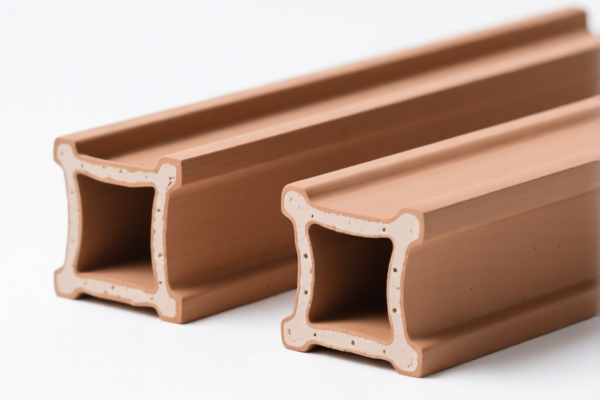
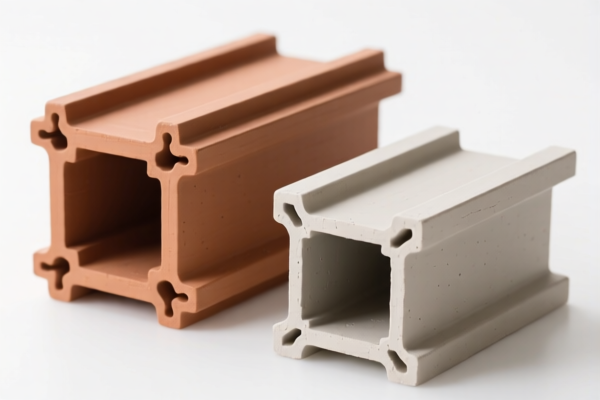
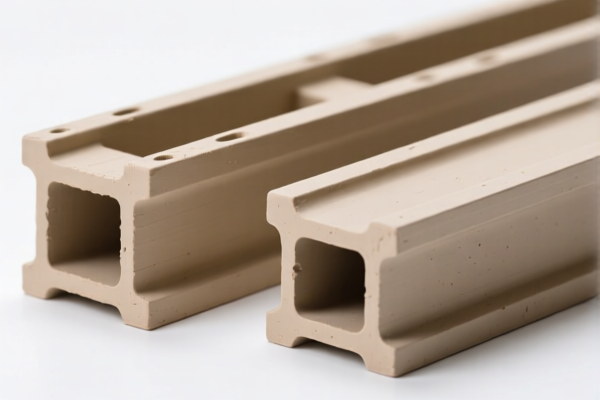
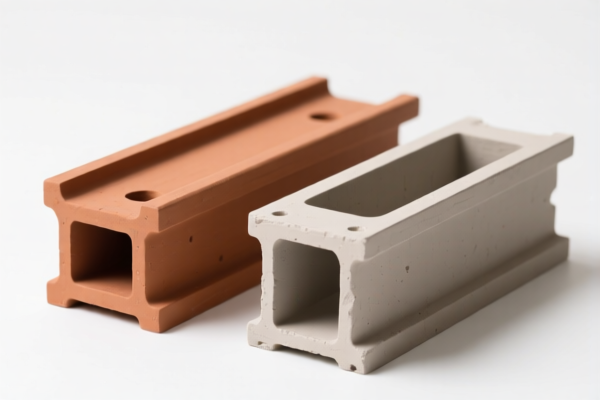
AI Analysis
🏗️ Refractory Concrete (High Strength Low Shrinkage)
🌐 HS Code Reference & Customs Clearance Guide | 2026 Latest Tariff Analysis | Professional Strategy for Fire-Resistant Materials
📌 1. Product Definition & Classification: Do You Truly Understand "Refractory Concrete"?
Refractory concrete, often referred to as castable refractory, is a pre-mixed hydraulic or non-hydraulic cement-based mixture containing aggregate, powder, and additives. It is designed to withstand extreme temperatures (typically >1000°C) and chemical erosion.
In international trade, the classification of "Refractory Concrete" is a common pitfall. It can fall under Cement/Concrete articles or Ceramic refractories, depending on its binding agent and final form. The key distinction lies in whether it is viewed as a "building material" (cementitious) or a "specialized ceramic product."
⚠️ Critical Distinction Point:
- If the product is primarily a cementitious mix for industrial linings (brick-like application) → May fall under Chapter 68 (Artificial stone/Cement products).
- If the product is specifically categorized as Refractory Cement/Concrete under Chapter 38 (Miscellaneous chemical products) or Chapter 69 (Ceramics) → Depends on the specific chemical composition and binding agent.
- "High Strength Low Shrinkage" is a performance feature, not a classification driver. The HS Code is determined by the material composition and heading description.
📦 2. HS Code Classification Details (2026 Latest Tariff Authority Comparison)
| HS Code | Product Description | Application Scenario | Material Attribute |
|---|---|---|---|
3816.00.20.50 |
Refractory concrete / Mortar / Cement (Misc. Chemical Products) | Industrial kiln linings, high-temp casting | ✅ Refractory Cementitious Mix |
6903.90.00.50 |
Other refractory ceramic goods (Ceramics) | Refractory bricks, blocks, specialized ceramic casts | ✅ Refractory Ceramic Material |
6810.11.00.10 |
Cement, concrete or artificial stone articles (Building/Construction) | Refractory blocks, bricks, pre-cast units | ✅ Refractory Concrete-like Article |
6810.99.00.80 |
Other cement, concrete or artificial stone articles | General refractory concrete products not specified elsewhere | ✅ Other Cementitious Refractory |
3816.00.20.10 |
Refractory concrete / Mortar (Misc. Chemical Products) | Specific "Refractory Concrete" classification | ✅ Exact Match: "Refractory Concrete" |
🔍 Key Reminder:
- Chapter 69 (Ceramics) vs. Chapter 68 (Stone/Cement): If the concrete is fired/sintered into a ceramic body, it’s Ch. 69. If it cures chemically (like cement), it’s often Ch. 68 or Ch. 38.
- Chapter 38 (Misc. Chemical): Often used for specific refractory mortars/cements that don’t fit standard construction cement codes.
- "Refractory Concrete" appears explicitly in 3816.00.20 descriptions in some national nomenclatures, making it a strong candidate for accurate classification.
💰 3. 2026 Latest Tariff Rate Breakdown (Including Surtaxes & Policy Add-ons)
✅ Applicable Country: United States (US)
✅ Origin: China (CN)
✅ Effective Date: November 10, 2025 (and subsequent imports)
🎯 1. 3816.00.20.50 & 3816.00.20.10 —— Refractory Concrete (Misc. Chemical Products)
| Item | Content |
|---|---|
| Base Tariff | 3.0% (ad valorem) |
| USITC Surtax (Section 301) | +25% |
| IEEPA Surtax (Section 122) | +10% |
| Total Tariff | 38.0% |
| Tax Calculation | CIF Value × 38.0% |
| De Minimis Exemption | ❌ Not Eligible (deny_de_minimis) |
| Legal Basis Path | IEEPA:9903.01.25 → USITC:3816.00.20 → FOOTNOTE:9903.88.01 |
📌 Explanation:
- These HS codes fall under Chapter 38 (Miscellaneous chemical products).
- The 3.0% base is standard for many chemical-related items.
- The +25% Section 301 tariff applies to Chinese imports.
- The +10% IEEPA (Section 122) tariff applies specifically to Chinese goods from Nov 2025 onwards.
- Total 38.0% is a high barrier, requiring careful cost planning.
🎯 2. 6903.90.00.50 —— Other Refractory Ceramic Goods
| Item | Content |
|---|---|
| Base Tariff | 0.0% |
| USITC Surtax (Section 301) | +25% |
| IEEPA Surtax (Section 122) | +10% |
| Total Tariff | 35.0% |
| Tax Calculation | CIF Value × 35.0% |
| De Minimis Exemption | ❌ Not Eligible (deny_de_minimis) |
| Legal Basis Path | IEEPA:9903.01.24 → USITC:6903.90.00 → FOOTNOTE:9903.88.01 |
📌 Note:
- If classified as a ceramic product (Chapter 69), the base tariff is often 0%.
- However, the 25% + 10% surtaxes still apply.
- Total 35.0% is 3% lower than Chapter 38 classifications. This makes 6903.90.00.50 potentially more cost-effective if the product can be legally classified as a "refractory ceramic good."
🎯 3. 6810.11.00.10 & 6810.99.00.80 —— Cement/Concrete/Artificial Stone Articles
| Item | Content |
|---|---|
| Base Tariff | 3.2% (for 6810.11.00.10) or 0.0% (for 6810.99.00.80) |
| USITC Surtax (Section 301) | +25% |
| IEEPA Surtax (Section 122) | +10% |
| Total Tariff | 38.2% (for 6810.11) or 35.0% (for 6810.99) |
| Tax Calculation | CIF Value × Total Rate |
| De Minimis Exemption | ❌ Not Eligible (deny_de_minimis) |
| Legal Basis Path | IEEPA:9903.01.25/24 → USITC:6810.xx → FOOTNOTE:9903.88.01 |
📌 Explanation:
- 6810.11.00.10: Refractory blocks/bricks. Base 3.2% + 35% surtaxes = 38.2%.
- 6810.99.00.80: Other cement/concrete articles. Base 0.0% + 35% surtaxes = 35.0%.
- Classification as 6810.99.00.80 offers the lowest total rate (35.0%) among Chapter 68 options.
🛠️ 4. Customs Clearance Practical Advice (Real-World Pitfall Avoidance)
✅ 1. Preparation Checklist (No Shortages)
| Document | Required | Description |
|---|---|---|
| ✅ Product Technical Data Sheet | ✔️ | Must specify binding agent (cement, clay, phosphate?), max temp, composition. |
| ✅ Material Safety Data Sheet (MSDS) | ✔️ | Crucial for chemical classification (Chapter 38 vs 68/69). |
| ✅ Product Photos (Packaging & Unpacked) | ✔️ | Show form: powder mix, pre-cast blocks, or liquid? |
| ✅ Commercial Invoice | ✔️ | Clearly state "Refractory Concrete, High Strength Low Shrinkage." |
| ✅ Packing List | ✔️ | Weight/volume details for CIF calculation. |
| ✅ Certificate of Origin (CO) | ✔️ | Required for origin determination (China vs. non-China). |
| ✅ Third-Party Test Report | ✔️ | Proof of refractory properties (ASTM C113, C27, etc.). |
✅ 2. Declaration Strategy (Key Mnemonics)
🔥 "Material Defines Code, Not Just Name: Cement vs. Ceramic vs. Chemical!"
| Scenario | Correct Declaration | Wrong Practice | Consequence |
|---|---|---|---|
| Powder Mix for Casting | 3816.00.20.10/50 or 6810.99.00.80 |
Mislabel as "Refractory Brick" | Classification error → Delay/Fine |
| Pre-cast Refractory Blocks | 6810.11.00.10 or 6903.90.00.50 |
Declare as "Raw Material" | Under-declaration → Penalty |
| High-Temp Ceramic Castable | 6903.90.00.50 |
Declare as "Ordinary Cement" | 0% base missed → Pay 38.2% |
| Chemical-Bound Refractory | 3816.00.20.10 |
Declare as "Construction Concrete" | 3.2% base missed → Pay 38.2% |
✅ 3. Special Cases
| Case | Handling Suggestion |
|---|---|
| OEM/Custom Mix | Provide formula breakdown. If >50% refractory aggregate, lean towards 6903/6810. |
| Packaged as Powder | Clearly state "Pre-mixed Refractory Concrete." Avoid vague "Chemical Powder." |
| Used in Kilns/Linings | Emphasize "Refractory" and "High Temp Resistance" in description. |
| Origin Non-China | If from Vietnam/Thailand, IEEPA 10% may not apply. Tariff could drop significantly (e.g., 25% only or less). |
🌍 5. Global Market Comparison (2026 Latest)
| Country/Region | Recommended HS Code | Total Tariff (China Origin) | Certification | Notes |
|---|---|---|---|---|
| 🇺🇸 USA | 6903.90.00.50 / 3816.00.20.10 |
35.0% - 38.2% | None Specific | High surtaxes apply. |
| 🇨🇳 China | 6815.99.99.90 (General) |
~5-10% | None | Low entry barrier. |
| 🇪🇺 EU | 6903.20.00 / 6810.99 |
0-6.5% | REACH | No Section 301/122 equivalents. |
| 🇬🇧 UK | 6903.20.00 |
~6.5% | UKCA | Post-Brexit rules apply. |
| 🇦🇺 Australia | 6903.20.00 |
5% | RCM | Moderate tariff. |
📌 Conclusion:
- USA is the most expensive market for Refractory Concrete due to 25% + 10% surtaxes.
- EU/UK/Australia have significantly lower barriers.
- For US imports,6903.90.00.50(35.0%) and6810.99.00.80(35.0%) are the most cost-effective, beating3816.00.20.10(38.0%) and6810.11.00.10(38.2%).
📌 6. Common Errors & Pitfall Guide (Lessons Learned)
❌ Error 1: Declaring "Refractory Concrete" as "Ordinary Portland Cement" (3001.90)
👉 Consequence: Wrong chapter. Ordinary cement has different tariffs and regulatory requirements. May be rejected.
❌ Error 2: Ignoring the IEEPA 10% Surcharge
👉 Consequence: Budget shortfall. Many importers calculate only 25% (301) and forget the additional 10% (122) effective Nov 2025.
❌ Error 3: Misclassifying Pre-cast Blocks as "Ceramic Tiles" (6911/6912)
👉 Consequence: 6911/6912 are for tableware/ornamental ceramics. Refractory blocks must be 6903 or 6810.
❌ Error 4: Using Vague Descriptions ("High Temp Material")
👉 Consequence: Customs holds the shipment for detailed examination. Delays can cost $500+/day in demurrage.
✅ Correct Practice:
"Refractory Concrete, Castable, High Strength Low Shrinkage, Phosphate Bonded, for Industrial Kiln Lining, HS Code: 6903.90.00.50, Country of Origin: China."
🎯 7. Conclusion: Precise Classification Saves Money!
🎯 Remember the Mnemonic:
🔹 "Ceramic Base 0%, Cement Base 3%, Chemical Base 3%..."
🔹 "Add 35% Surcharge to All..."
🔹 "Ceramic/Other Cement = 35% (Cheapest) | Chemical/Brick = 38% (Expensive)"
📌 Tips:
- If your Refractory Concrete is not made in China (e.g., sourced from Vietnam, India, or EU), you may avoid the IEEPA 10% surcharge, reducing the total tariff to 25% (Section 301 only) or lower.
- Always request a Binding Tariff Information (BTI) or Advance Ruling from US Customs if the value is high and classification is ambiguous.
📣 Immediate Action:
📞 Contact a Licensed Customs Broker
📄 Provide MSDS + Product Specs
🚀 Apply for Advance Ruling to Lock in the 35% Rate!
✨ Professional Clearance Starts with Accurate Classification!
💼 Every 1% of Tariff Saved is Pure Profit!
Customer Reviews
About HS Code Classification
The Harmonized System (HS) is an internationally standardized nomenclature developed by the World Customs Organization (WCO) to classify traded products. Over 200 countries use the HS system as the basis for customs tariffs, trade statistics, and import/export regulations.
Each HS code follows a hierarchical structure:
- Chapter (2 digits) — Broad category of goods (e.g., Chapter 84: Machinery and Mechanical Appliances)
- Heading (4 digits) — More specific grouping within the chapter
- Subheading (6 digits) — Internationally standardized breakdown, used by all WCO member countries
- National subdivisions (8-10 digits) — Country-specific extensions for further classification, such as US HTSUS 10-digit codes
Correct HS code classification is essential for smooth customs clearance, accurate duty payment, and compliance with trade regulations. Misclassification can lead to customs delays, overpayment of duties, or penalties.
When importing from CN to US, the applicable tariff rates may include:
- Most-Favored-Nation (MFN) rate — The standard duty rate applied to WTO members
- General rate — Applied to countries without trade agreements
- Trade remedy duties — Additional tariffs such as Section 301 (anti-dumping), Section 232 (national security), or countervailing duties
The information provided on this page is for reference purposes only. For official classification, please consult with your local customs authority or a licensed customs broker.