Refractory Concrete Lightweight
CN → US| HS编码 | 关税税率 | 原产国 | 目的国 | 文档 |
|---|---|---|---|---|
| 6810110010 | 38.2% | CN | US | 官方文档 |
| 6902901010 | 35.0% | CN | US | 官方文档 |
| 6810110070 | 38.2% | CN | US | 官方文档 |
| 3816001000 | 35.0% | CN | US | 官方文档 |
| 3816002050 | 38.0% | CN | US | 官方文档 |
| 6902905010 | 35.0% | CN | US | 官方文档 |
商品图片
AI分析
🧱 Refractory Concrete Lightweight (Lightweight Insulating Castable)
🌐 HS Code Reference & Customs Clearance Guide | 2026 Latest Tariff Analysis | Professional Clearance Strategy for US-China Trade
📌 1. Product Definition & Classification: Do You Really Understand "Lightweight Refractory Concrete"?
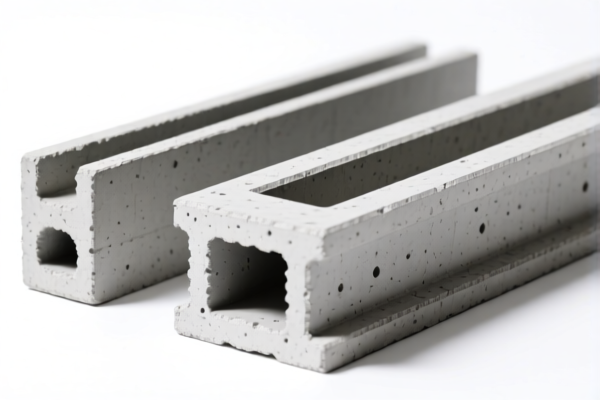
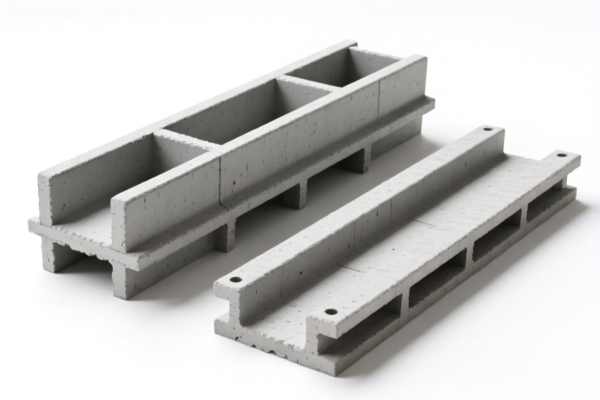
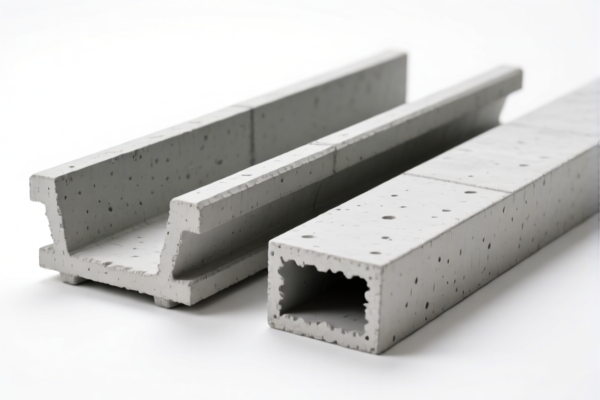
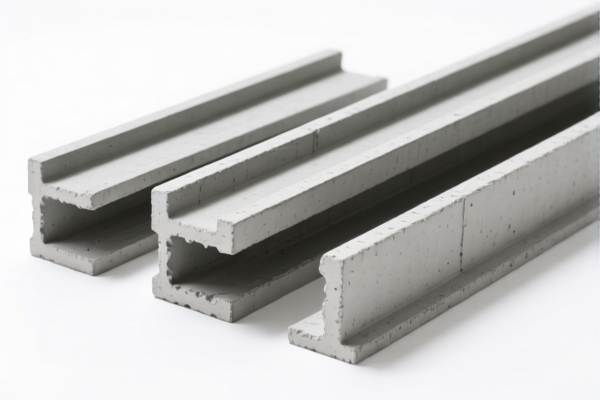
Lightweight refractory concrete (also known as Lightweight Insulating Castable) is a special type of refractory material primarily composed of lightweight aggregates (such as vermiculite, expanded perlite, or sintered fly ash) and hydraulic or non-hydraulic binders. It is characterized by low bulk density and excellent thermal insulation properties, making it ideal for lining furnaces, kilns, and high-temperature vessels where heat retention is critical.
In international trade, classification depends heavily on two factors: 1. Physical Form: Is it a molded block/brick or a loose castable/powder? 2. Primary Function: Is it primarily for structural building purposes or for high-temperature refractory service?
⚠️ Key Distinction Point:
- If it is molded into blocks/bricks for structural lining → Tends toward Chapter 68 (Stone, Plaster, Cement).
- If it is loose castable or specifically formulated for extreme heat resistance (>800°C) regardless of form → Tends toward Chapter 69 (Ceramic Refractory Products) or Chapter 38 (Prepared Binders/Chemical Products).
📦 2. HS Code Classification Details (2026 Latest Tariff Authority Comparison)
Based on the provided <DATA>, here are the valid HS Codes for Refractory Concrete Lightweight entering the US market from China.
| HS Code | Product Description | Summary Logic | Total Tax Rate |
|---|---|---|---|
6810.11.00.10 |
Concrete/Artificial Stone Products: Building Blocks/Bricks | Material: Concrete/Artificial Stone. Form: Building Blocks/Bricks. Use: General construction lining. |
38.2% |
6902.90.10.10 |
Ceramic Refractory Brick/Block: Other | Inference: Based on form and use, categorized as refractory building products. Note: High-temperature specific. |
35.0% |
6810.11.00.70 |
Concrete Building Blocks: Other | Material: Concrete. Form: Building Blocks. Category: Other miscellaneous blocks not fitting specific subheads. |
38.2% |
3816.00.10.00 |
Prepared Binders for Refractory Coatings/Mortars | Material: Concrete-like substances. Use: Refractory application. Note: Often applies if it's a specialized chemical binder mix rather than a finished block. |
35.0% |
3816.00.20.50 |
Refractory Preparations (Other) | Characteristic: Fully matches refractory features of concrete material. Note: Specialized chemical preparation. |
38.0% |
6902.90.50.10 |
Ceramic Refractory Brick/Block: Other | Attribute: Consistent refractory property; concrete is an inorganic material. Note: Broad ceramic refractory category. |
35.0% |
🔍 Key Insight:
- Chapter 68 (6810): Best if the product is sold as structural concrete blocks with some heat resistance but not certified as pure "refractory ceramic."
- Chapter 69 (6902): Best if the product is marketed specifically as "Refractory Brick/Block" with high-temperature certification. Usually offers a slightly lower base tariff (0% vs 3.2%).
- Chapter 38 (3816): Best if the product is a powder/binder mix for on-site mixing rather than pre-formed blocks.
💰 3. 2026 Latest Tariff Rate Breakdown (Including Add-on Taxes & Policy Surcharges)
✅ Applicable Country: United States (US)
✅ Origin: China (CN)
✅ Effective Date: Post-November 2025 (Current Trade War Rates)
🎯 1. 6810.11.00.10 & 6810.11.00.70 – Concrete Building Blocks (Chapter 68)
| Item | Content |
|---|---|
| Base Tariff (MFN) | 3.2% (Ad valorem) |
| USITC Add-on (Section 301) | +25.0% |
| IEEPA Add-on (Section 122/Other) | +10.0% |
| Total Effective Rate | 38.2% |
| Tax Calculation | CIF Value × 38.2% |
| De Minimis Exemption | ❌ Not Eligible (Deny de minimis for Section 301 goods from China) |
| Legal Basis Path | USITC:6810.11.00.10 → FOOTNOTE:9903.88.01 (25%) → IEEPA:9903.01.24 (10%) |
📌 Explanation:
- These codes fall under "Articles of Stone, Plaster, Cement...".
- The 3.2% base rate is higher than ceramic codes, but the 25% Section 301 and 10% IEEPA are fixed.
- Total 38.2% is very high. Ensure the product is indeed "concrete" and not "ceramic" to avoid misclassification penalties.
🎯 2. 6902.90.10.10 & 6902.90.50.10 – Ceramic Refractory Blocks (Chapter 69)
| Item | Content |
|---|---|
| Base Tariff (MFN) | 0.0% (Ad valorem) |
| USITC Add-on (Section 301) | +25.0% |
| IEEPA Add-on (Section 122/Other) | +10.0% |
| Total Effective Rate | 35.0% |
| Tax Calculation | CIF Value × 35.0% |
| De Minimis Exemption | ❌ Not Eligible |
| Legal Basis Path | USITC:6902.90.10.10 → FOOTNOTE:9903.88.01 (25%) → IEEPA:9903.01.24 (10%) |
📌 Explanation:
- These codes fall under "Bricks, Blocks, Tiles... of Refractory Ceramic."
- The 0.0% base rate makes this 3.2% cheaper than Chapter 68.
- Critical: You must prove the product is ceramic/refractory (e.g., high alumina content, specific heat resistance tests) to qualify for 0% base. If customs deems it "concrete," you get penalized and reassigned to 6810.
🎯 3. 3816.00.10.00 & 3816.00.20.50 – Prepared Refractory Binders/Preparations (Chapter 38)
| Item | Content |
|---|---|
| Base Tariff (MFN) | 0.0% - 3.0% |
| USITC Add-on (Section 301) | +25.0% |
| IEEPA Add-on (Section 122/Other) | +10.0% |
| Total Effective Rate | 35.0% (for 3816.00.10.00) or 38.0% (for 3816.00.20.50) |
| Tax Calculation | CIF Value × Rate |
| De Minimis Exemption | ❌ Not Eligible |
| Legal Basis Path | USITC:3816.00.10.00 → FOOTNOTE:9903.88.01 (25%) → IEEPA:9903.01.24 (10%) |
📌 Explanation:
- If your "lightweight refractory concrete" is sold as a bagged powder for on-site casting (castable), Chapter 38 is often more accurate than Chapter 68/69 (which are for pre-formed blocks).
-3816.00.10.00is for "Prepared binders for refractory coatings," which fits many lightweight castables.
- Rate is 35.0%, same as Chapter 69, but with 0% base. This is a strong candidate for bagged products.
🛠️ 4. Customs Clearance Practical Advice (Real-World Pitfall Guide)
✅ 1. Document Checklist (Must Have)
| Document | Required? | Explanation |
|---|---|---|
| ✅ Technical Data Sheet (TDS) | ✔️ | Must show Bulk Density (kg/m³) and Refractoriness (°C). |
| ✅ Product Photographs | ✔️ | Show both finished blocks and packaging. If bagged, show the bag. |
| ✅ Certificate of Composition | ✔️ | Detail % of Alumina, Silica, Aggregates. Proves "Refractory" nature for Chapter 69. |
| ✅ Commercial Invoice | ✔️ | Description must match HS Code logic (e.g., "Refractory Ceramic Brick" vs. "Concrete Block"). |
| ✅ Bill of Lading | ✔️ | Standard shipping document. |
| ✅ Fumigation Certificate | ✔️ | If packaging contains wood, ISPM 15 compliance is needed. |
✅ 2. Declaration Strategy (Key Tips)
🔥 "Know Your Form: Block vs. Powder!"
| Scenario | Correct HS Code | Risk of Misclassification |
|---|---|---|
| Pre-formed Blocks/Bricks (Solid shape) | 6902.90.10.10 (Refractory) or 6810.11.00.10 (Concrete) |
High. If it's ceramic but declared as concrete → Penalty. If concrete but declared as ceramic → Seizure. |
| Bagged Castable/Powder (Loose mix) | 3816.00.10.00 (Prepared Binder) |
Moderate. Ensure it's not declared as "Building Material" generally. |
| Hybrid Products (Concrete with refractory additive) | 6810.11.00.70 |
Low risk if composition is >50% concrete/cement. |
📌 Critical Advice:
- If your product is Lightweight Insulating Castable (bagged powder), DO NOT declare it as "Concrete Block" (6810). It will be rejected. Use3816.00.10.00(35.0%) or6902.90.50.10if it's pre-formed.
- If your product is Pre-formed Blocks, use6902.90.10.10(35.0%) if you have refractory certification. This saves 3.2% compared to Chapter 68.
✅ 3. Special Cases
| Situation | Handling Advice |
|---|---|
| Low-Density Insulation (< 800 kg/m³) | Strongly argue for Chapter 69 (Refractory) or 3816 (Binder) rather than Chapter 68 (Construction Concrete) to avoid misclassification as general building material. |
| Mixed Containers | Declare each HS code separately on the Commercial Invoice. Do not mix 6902 and 6810 in one line item. |
| Third-Party Country Transshipment | If shipped from Vietnam/Malaysia, provide proof of substantial transformation to avoid US-China tariffs. But note: Lightweight concrete is often easily re-exported without transformation, leading to anti-circumvention investigations. |
🌍 5. Global Market Comparison (2026)
| Country/Region | Recommended HS Code | Tariff Rate (China Origin) | Notes |
|---|---|---|---|
| 🇺🇸 USA | 6902.90.10.10 or 3816.00.10.00 |
35.0% (Optimal) | Avoid 6810 (38.2%) if possible. |
| 🇨🇳 China | 6815.99.90.90 |
0% - 5% | Domestic trade only. |
| 🇪🇺 EU | 6902.10.00 |
0% - 3.7% | No Section 301/IEEPA. Lower base tariff. |
| 🇯🇵 Japan | 6902.90.00 |
3.0% - 6.0% | No additional US-style tariffs. |
| 🇮🇳 India | 6902.90.00 |
7.5% - 12% | BCD + SWS. Verify anti-dumping duties. |
📌 Conclusion:
- The US market is the most expensive due to the 25% + 10% add-ons.
- Minimize costs by correctly classifying as Refractory Ceramic (6902) or Prepared Binder (3816) to get the 0% base rate, resulting in 35.0% total.
- 38.2% (Chapter 68) is avoidable if you can prove refractory properties.
📌 6. Common Errors & Pitfalls (Blood Lessons)
❌ Error 1: Declaring "Lightweight Refractory Concrete" as 6810.11.00.10 (Concrete Block) when it is certified as Refractory Ceramic.
👉 Consequence: You pay 38.2% instead of 35.0%. Wasted 3.2% profit.
❌ Error 2: Declaring bagged castable powder as 6810.11.00.70 (Concrete Block).
👉 Consequence: Customs rejects the declaration because it's not a "block." Delay/Re-packing.
❌ Error 3: Failing to provide a Technical Data Sheet showing refractoriness.
👉 Consequence: Customs defaults to Chapter 68 (General Construction) even if you claimed Chapter 69. Higher tax + Audit.
❌ Error 4: Ignoring Section 301 Exclusions.
👉 Consequence: Many refractory products were previously excluded from tariffs. Check if your specific HS Code is still excluded. If not, 35-38.2% is mandatory.
✅ Correct Practice:
"Lightweight Refractory Castable, High-Alumina, Bagged, for Kiln Lining, Model RC-100, NSF/ISO Certified"
HS Code:3816.00.10.00(35.0%)
🎯 7. Conclusion: Professional Declaration, Cost Saving, Efficient Clearance!
🎯 Remember the Mantra:
🔹 "Form Determines Chapter: Block = 69/68, Powder = 38."
🔹 "Refractory Proof Saves 3.2%: 35.0% vs 38.2%."
🔹 "No De Minimis for China: All CIF Value is Taxed!"
📌 Tips:
- If your product is very low density (< 1000 kg/m³) and used for insulation, consider if it fits under 6815.99 (Other articles of stone/cement) which may have different treatment, but 6902 is safer for high-temp.
- Pre-Ruling: Apply for a US Customs Pre-Ruling before your first shipment. Provide TDS and photos. This locks in the HS Code and prevents surprise audits.
📣 Immediate Action:
📞 Contact your customs broker with the Technical Data Sheet.
📄 Request a Pre-Ruling for6902.90.10.10or3816.00.10.00.
🚀 Clear goods smoothly, reduce costs, and maximize profit!
✨ Professional Customs Clearance Starts with Precise Classification!
💼 Every percent of tariff matters in the US-China trade war!
用户评价
关于 HS 编码归类
协调制度(HS)是由世界海关组织(WCO)制定的国际贸易商品分类标准。全球 200 多个国家采用 HS 系统作为海关关税、贸易统计和进出口监管的基础。
每个 HS 编码遵循以下层级结构:
- 章(2 位)——商品大类(例如:第 84 章:机器和机械设备)
- 品目(4 位)——章内的更具体分类
- 子目(6 位)——国际通用细分,所有 WCO 成员国统一使用
- 本国细分(8-10 位)——各国自行扩展的细分编码,如美国 HTSUS 10 位编码
正确的 HS 编码归类对于顺利通关、准确缴纳关税和遵守贸易法规至关重要。错误归类可能导致海关延误、多缴关税或罚款。
从CN进口到US时,适用的关税税率可能包括:
- 最惠国(MFN)税率——适用于 WTO 成员国的标准关税税率
- 普通税率——适用于无贸易协定国家
- 贸易救济关税——附加关税,如 301 条款(反倾销)、232 条款(国家安全)或反补贴税
本页内容仅供参考。如需正式归类,请咨询当地海关或持牌报关代理。