Refractory Concrete Lightweight
CN → US| HS Code | Tariff Rate | Origin | Destination | Doc |
|---|---|---|---|---|
| 6810110010 | 38.2% | CN | US | Official Doc |
| 6902901010 | 35.0% | CN | US | Official Doc |
| 6810110070 | 38.2% | CN | US | Official Doc |
| 3816001000 | 35.0% | CN | US | Official Doc |
| 3816002050 | 38.0% | CN | US | Official Doc |
| 6902905010 | 35.0% | CN | US | Official Doc |
Product Images
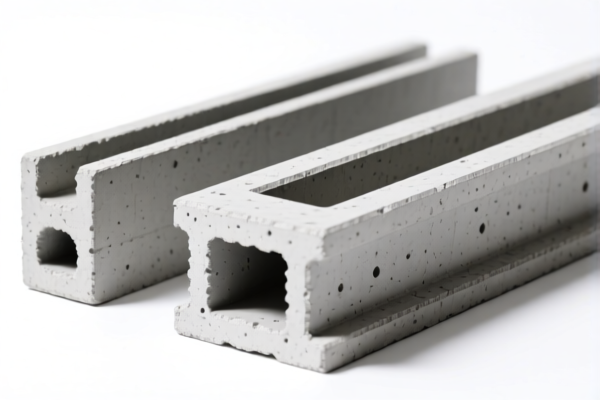
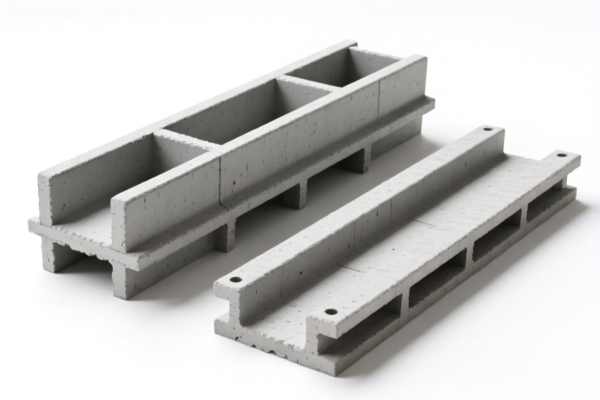
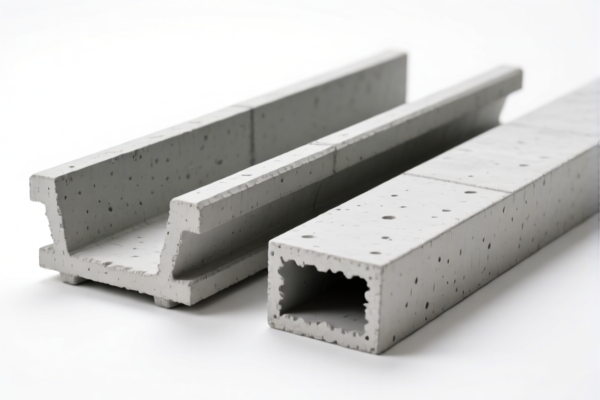
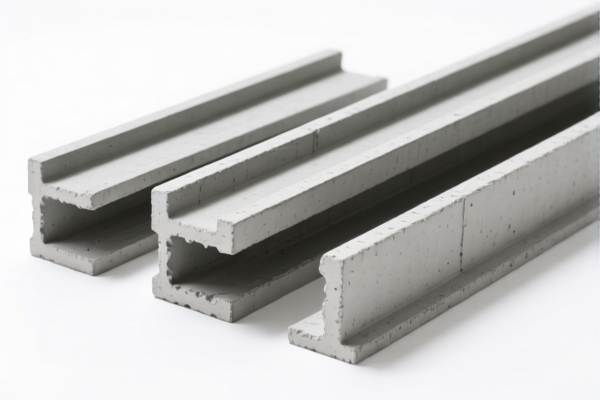
AI Analysis
🧱 Refractory Concrete Lightweight (Lightweight Insulating Castable)
🌐 HS Code Reference & Customs Clearance Guide | 2026 Latest Tariff Analysis | Professional Clearance Strategy for US-China Trade
📌 1. Product Definition & Classification: Do You Really Understand "Lightweight Refractory Concrete"?
Lightweight refractory concrete (also known as Lightweight Insulating Castable) is a special type of refractory material primarily composed of lightweight aggregates (such as vermiculite, expanded perlite, or sintered fly ash) and hydraulic or non-hydraulic binders. It is characterized by low bulk density and excellent thermal insulation properties, making it ideal for lining furnaces, kilns, and high-temperature vessels where heat retention is critical.
In international trade, classification depends heavily on two factors: 1. Physical Form: Is it a molded block/brick or a loose castable/powder? 2. Primary Function: Is it primarily for structural building purposes or for high-temperature refractory service?
⚠️ Key Distinction Point:
- If it is molded into blocks/bricks for structural lining → Tends toward Chapter 68 (Stone, Plaster, Cement).
- If it is loose castable or specifically formulated for extreme heat resistance (>800°C) regardless of form → Tends toward Chapter 69 (Ceramic Refractory Products) or Chapter 38 (Prepared Binders/Chemical Products).
📦 2. HS Code Classification Details (2026 Latest Tariff Authority Comparison)
Based on the provided <DATA>, here are the valid HS Codes for Refractory Concrete Lightweight entering the US market from China.
| HS Code | Product Description | Summary Logic | Total Tax Rate |
|---|---|---|---|
6810.11.00.10 |
Concrete/Artificial Stone Products: Building Blocks/Bricks | Material: Concrete/Artificial Stone. Form: Building Blocks/Bricks. Use: General construction lining. |
38.2% |
6902.90.10.10 |
Ceramic Refractory Brick/Block: Other | Inference: Based on form and use, categorized as refractory building products. Note: High-temperature specific. |
35.0% |
6810.11.00.70 |
Concrete Building Blocks: Other | Material: Concrete. Form: Building Blocks. Category: Other miscellaneous blocks not fitting specific subheads. |
38.2% |
3816.00.10.00 |
Prepared Binders for Refractory Coatings/Mortars | Material: Concrete-like substances. Use: Refractory application. Note: Often applies if it's a specialized chemical binder mix rather than a finished block. |
35.0% |
3816.00.20.50 |
Refractory Preparations (Other) | Characteristic: Fully matches refractory features of concrete material. Note: Specialized chemical preparation. |
38.0% |
6902.90.50.10 |
Ceramic Refractory Brick/Block: Other | Attribute: Consistent refractory property; concrete is an inorganic material. Note: Broad ceramic refractory category. |
35.0% |
🔍 Key Insight:
- Chapter 68 (6810): Best if the product is sold as structural concrete blocks with some heat resistance but not certified as pure "refractory ceramic."
- Chapter 69 (6902): Best if the product is marketed specifically as "Refractory Brick/Block" with high-temperature certification. Usually offers a slightly lower base tariff (0% vs 3.2%).
- Chapter 38 (3816): Best if the product is a powder/binder mix for on-site mixing rather than pre-formed blocks.
💰 3. 2026 Latest Tariff Rate Breakdown (Including Add-on Taxes & Policy Surcharges)
✅ Applicable Country: United States (US)
✅ Origin: China (CN)
✅ Effective Date: Post-November 2025 (Current Trade War Rates)
🎯 1. 6810.11.00.10 & 6810.11.00.70 – Concrete Building Blocks (Chapter 68)
| Item | Content |
|---|---|
| Base Tariff (MFN) | 3.2% (Ad valorem) |
| USITC Add-on (Section 301) | +25.0% |
| IEEPA Add-on (Section 122/Other) | +10.0% |
| Total Effective Rate | 38.2% |
| Tax Calculation | CIF Value × 38.2% |
| De Minimis Exemption | ❌ Not Eligible (Deny de minimis for Section 301 goods from China) |
| Legal Basis Path | USITC:6810.11.00.10 → FOOTNOTE:9903.88.01 (25%) → IEEPA:9903.01.24 (10%) |
📌 Explanation:
- These codes fall under "Articles of Stone, Plaster, Cement...".
- The 3.2% base rate is higher than ceramic codes, but the 25% Section 301 and 10% IEEPA are fixed.
- Total 38.2% is very high. Ensure the product is indeed "concrete" and not "ceramic" to avoid misclassification penalties.
🎯 2. 6902.90.10.10 & 6902.90.50.10 – Ceramic Refractory Blocks (Chapter 69)
| Item | Content |
|---|---|
| Base Tariff (MFN) | 0.0% (Ad valorem) |
| USITC Add-on (Section 301) | +25.0% |
| IEEPA Add-on (Section 122/Other) | +10.0% |
| Total Effective Rate | 35.0% |
| Tax Calculation | CIF Value × 35.0% |
| De Minimis Exemption | ❌ Not Eligible |
| Legal Basis Path | USITC:6902.90.10.10 → FOOTNOTE:9903.88.01 (25%) → IEEPA:9903.01.24 (10%) |
📌 Explanation:
- These codes fall under "Bricks, Blocks, Tiles... of Refractory Ceramic."
- The 0.0% base rate makes this 3.2% cheaper than Chapter 68.
- Critical: You must prove the product is ceramic/refractory (e.g., high alumina content, specific heat resistance tests) to qualify for 0% base. If customs deems it "concrete," you get penalized and reassigned to 6810.
🎯 3. 3816.00.10.00 & 3816.00.20.50 – Prepared Refractory Binders/Preparations (Chapter 38)
| Item | Content |
|---|---|
| Base Tariff (MFN) | 0.0% - 3.0% |
| USITC Add-on (Section 301) | +25.0% |
| IEEPA Add-on (Section 122/Other) | +10.0% |
| Total Effective Rate | 35.0% (for 3816.00.10.00) or 38.0% (for 3816.00.20.50) |
| Tax Calculation | CIF Value × Rate |
| De Minimis Exemption | ❌ Not Eligible |
| Legal Basis Path | USITC:3816.00.10.00 → FOOTNOTE:9903.88.01 (25%) → IEEPA:9903.01.24 (10%) |
📌 Explanation:
- If your "lightweight refractory concrete" is sold as a bagged powder for on-site casting (castable), Chapter 38 is often more accurate than Chapter 68/69 (which are for pre-formed blocks).
-3816.00.10.00is for "Prepared binders for refractory coatings," which fits many lightweight castables.
- Rate is 35.0%, same as Chapter 69, but with 0% base. This is a strong candidate for bagged products.
🛠️ 4. Customs Clearance Practical Advice (Real-World Pitfall Guide)
✅ 1. Document Checklist (Must Have)
| Document | Required? | Explanation |
|---|---|---|
| ✅ Technical Data Sheet (TDS) | ✔️ | Must show Bulk Density (kg/m³) and Refractoriness (°C). |
| ✅ Product Photographs | ✔️ | Show both finished blocks and packaging. If bagged, show the bag. |
| ✅ Certificate of Composition | ✔️ | Detail % of Alumina, Silica, Aggregates. Proves "Refractory" nature for Chapter 69. |
| ✅ Commercial Invoice | ✔️ | Description must match HS Code logic (e.g., "Refractory Ceramic Brick" vs. "Concrete Block"). |
| ✅ Bill of Lading | ✔️ | Standard shipping document. |
| ✅ Fumigation Certificate | ✔️ | If packaging contains wood, ISPM 15 compliance is needed. |
✅ 2. Declaration Strategy (Key Tips)
🔥 "Know Your Form: Block vs. Powder!"
| Scenario | Correct HS Code | Risk of Misclassification |
|---|---|---|
| Pre-formed Blocks/Bricks (Solid shape) | 6902.90.10.10 (Refractory) or 6810.11.00.10 (Concrete) |
High. If it's ceramic but declared as concrete → Penalty. If concrete but declared as ceramic → Seizure. |
| Bagged Castable/Powder (Loose mix) | 3816.00.10.00 (Prepared Binder) |
Moderate. Ensure it's not declared as "Building Material" generally. |
| Hybrid Products (Concrete with refractory additive) | 6810.11.00.70 |
Low risk if composition is >50% concrete/cement. |
📌 Critical Advice:
- If your product is Lightweight Insulating Castable (bagged powder), DO NOT declare it as "Concrete Block" (6810). It will be rejected. Use3816.00.10.00(35.0%) or6902.90.50.10if it's pre-formed.
- If your product is Pre-formed Blocks, use6902.90.10.10(35.0%) if you have refractory certification. This saves 3.2% compared to Chapter 68.
✅ 3. Special Cases
| Situation | Handling Advice |
|---|---|
| Low-Density Insulation (< 800 kg/m³) | Strongly argue for Chapter 69 (Refractory) or 3816 (Binder) rather than Chapter 68 (Construction Concrete) to avoid misclassification as general building material. |
| Mixed Containers | Declare each HS code separately on the Commercial Invoice. Do not mix 6902 and 6810 in one line item. |
| Third-Party Country Transshipment | If shipped from Vietnam/Malaysia, provide proof of substantial transformation to avoid US-China tariffs. But note: Lightweight concrete is often easily re-exported without transformation, leading to anti-circumvention investigations. |
🌍 5. Global Market Comparison (2026)
| Country/Region | Recommended HS Code | Tariff Rate (China Origin) | Notes |
|---|---|---|---|
| 🇺🇸 USA | 6902.90.10.10 or 3816.00.10.00 |
35.0% (Optimal) | Avoid 6810 (38.2%) if possible. |
| 🇨🇳 China | 6815.99.90.90 |
0% - 5% | Domestic trade only. |
| 🇪🇺 EU | 6902.10.00 |
0% - 3.7% | No Section 301/IEEPA. Lower base tariff. |
| 🇯🇵 Japan | 6902.90.00 |
3.0% - 6.0% | No additional US-style tariffs. |
| 🇮🇳 India | 6902.90.00 |
7.5% - 12% | BCD + SWS. Verify anti-dumping duties. |
📌 Conclusion:
- The US market is the most expensive due to the 25% + 10% add-ons.
- Minimize costs by correctly classifying as Refractory Ceramic (6902) or Prepared Binder (3816) to get the 0% base rate, resulting in 35.0% total.
- 38.2% (Chapter 68) is avoidable if you can prove refractory properties.
📌 6. Common Errors & Pitfalls (Blood Lessons)
❌ Error 1: Declaring "Lightweight Refractory Concrete" as 6810.11.00.10 (Concrete Block) when it is certified as Refractory Ceramic.
👉 Consequence: You pay 38.2% instead of 35.0%. Wasted 3.2% profit.
❌ Error 2: Declaring bagged castable powder as 6810.11.00.70 (Concrete Block).
👉 Consequence: Customs rejects the declaration because it's not a "block." Delay/Re-packing.
❌ Error 3: Failing to provide a Technical Data Sheet showing refractoriness.
👉 Consequence: Customs defaults to Chapter 68 (General Construction) even if you claimed Chapter 69. Higher tax + Audit.
❌ Error 4: Ignoring Section 301 Exclusions.
👉 Consequence: Many refractory products were previously excluded from tariffs. Check if your specific HS Code is still excluded. If not, 35-38.2% is mandatory.
✅ Correct Practice:
"Lightweight Refractory Castable, High-Alumina, Bagged, for Kiln Lining, Model RC-100, NSF/ISO Certified"
HS Code:3816.00.10.00(35.0%)
🎯 7. Conclusion: Professional Declaration, Cost Saving, Efficient Clearance!
🎯 Remember the Mantra:
🔹 "Form Determines Chapter: Block = 69/68, Powder = 38."
🔹 "Refractory Proof Saves 3.2%: 35.0% vs 38.2%."
🔹 "No De Minimis for China: All CIF Value is Taxed!"
📌 Tips:
- If your product is very low density (< 1000 kg/m³) and used for insulation, consider if it fits under 6815.99 (Other articles of stone/cement) which may have different treatment, but 6902 is safer for high-temp.
- Pre-Ruling: Apply for a US Customs Pre-Ruling before your first shipment. Provide TDS and photos. This locks in the HS Code and prevents surprise audits.
📣 Immediate Action:
📞 Contact your customs broker with the Technical Data Sheet.
📄 Request a Pre-Ruling for6902.90.10.10or3816.00.10.00.
🚀 Clear goods smoothly, reduce costs, and maximize profit!
✨ Professional Customs Clearance Starts with Precise Classification!
💼 Every percent of tariff matters in the US-China trade war!
Customer Reviews
About HS Code Classification
The Harmonized System (HS) is an internationally standardized nomenclature developed by the World Customs Organization (WCO) to classify traded products. Over 200 countries use the HS system as the basis for customs tariffs, trade statistics, and import/export regulations.
Each HS code follows a hierarchical structure:
- Chapter (2 digits) — Broad category of goods (e.g., Chapter 84: Machinery and Mechanical Appliances)
- Heading (4 digits) — More specific grouping within the chapter
- Subheading (6 digits) — Internationally standardized breakdown, used by all WCO member countries
- National subdivisions (8-10 digits) — Country-specific extensions for further classification, such as US HTSUS 10-digit codes
Correct HS code classification is essential for smooth customs clearance, accurate duty payment, and compliance with trade regulations. Misclassification can lead to customs delays, overpayment of duties, or penalties.
When importing from CN to US, the applicable tariff rates may include:
- Most-Favored-Nation (MFN) rate — The standard duty rate applied to WTO members
- General rate — Applied to countries without trade agreements
- Trade remedy duties — Additional tariffs such as Section 301 (anti-dumping), Section 232 (national security), or countervailing duties
The information provided on this page is for reference purposes only. For official classification, please consult with your local customs authority or a licensed customs broker.