Refractory Mortar (Low Expansion)
CN → US| HS编码 | 关税税率 | 原产国 | 目的国 | 文档 |
|---|---|---|---|---|
| 2508300000 | 10.0% | CN | US | 官方文档 |
| 2508700000 | 35.0% | CN | US | 官方文档 |
| 3816002050 | 38.0% | CN | US | 官方文档 |
| 6903900050 | 35.0% | CN | US | 官方文档 |
| 6903900010 | 35.0% | CN | US | 官方文档 |
商品图片
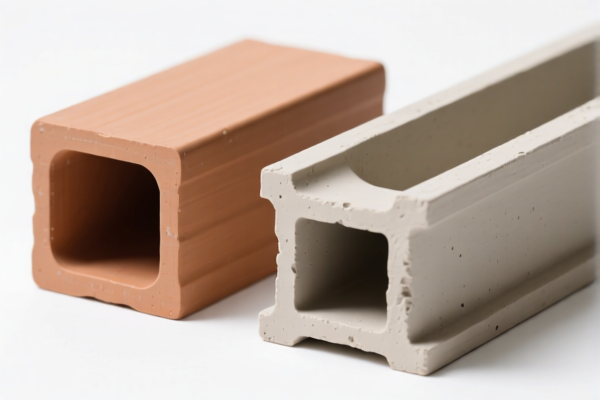
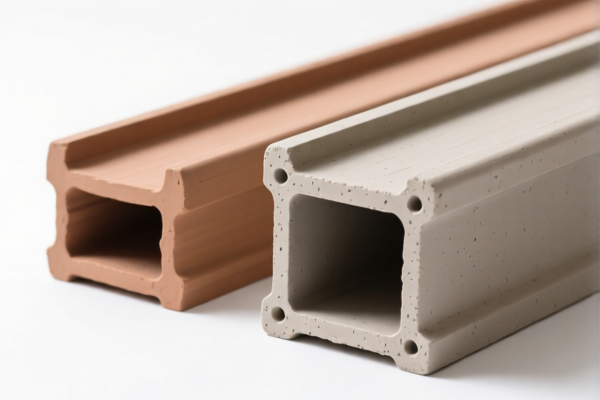
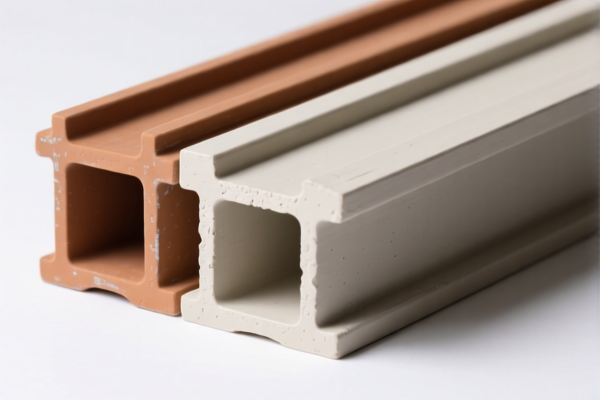
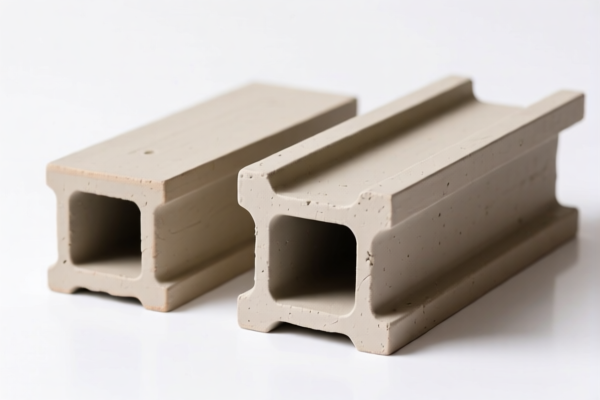
AI分析
🧱 Refractory Mortar (Low Expansion)
🌐 HS Code Reference & Customs Clearance Guide | 2026 Latest Tariff Analysis | Professional Clearance Strategy
📌 I. Product Definition & Classification: What is "Low Expansion Refractory Mortar"?
Refractory Mortar (Low Expansion), often referred to in trade as "Refractory Mud (Low Shrinkage)" or Low-Expansion Refractory Castable/Mortar, is a specialized material used in high-temperature industrial applications (steel mills, cement kilns, glass furnances). Its key characteristic is minimal volume change during heating/cooling cycles, preventing cracks in brickwork or monolithic linings.
In international trade, it is classified based on its physical state (powder/mud vs. finished brick) and chemical composition (clay-based vs. cement-based). The following analysis breaks down the five potential HS Codes provided, explaining why each applies and the resulting tax implications.
⚠️ Key Distinction:
- Is it a raw material (clay, alumina, fireclay)? → Chapters 25 or 38.
- Is it a processed ceramic (even if in mud form)? → Chapter 69.
- The classification hinges on whether it is considered a "mineral product" or a "manufactured ceramic."
📦 II. HS Code Classification Details (2026 Latest Tariff Authority Comparison)
| HS Code | Product Description | Application Scenario | Tax Rate (Total) | Key Classification Basis |
|---|---|---|---|---|
2508.30.00.00 |
Refractory Clay (Raw/Low Shrinkage) | Natural refractory clay, minimally processed. | 10.0% | Considered a raw mineral product. Lowest risk, but may be rejected if heavily processed. |
2508.70.00.00 |
Clinker / Refractory Clay (High Temp) | Calcined refractory clay or clinker. | 35.0% | Highly consistent with material properties. "Clinker" implies high-temperature processing. |
3816.00.20.50 |
Other Refractory Cements, Mortars | Synthetic refractory mortars, cement-based mixes. | 38.0% | Classified as chemical preparations/mortars. High risk of "Section XVII" exclusion. |
6903.90.00.50 |
Other Refractory Ceramic Articles | Ceramic products in mud/paste form. | 35.0% | Fits "mud/paste" category but under ceramics. High tariff due to 301/IEEPA. |
6903.90.00.10 |
Other Refractory Ceramic Articles | Ceramic products where mud fits clay原料 definition. | 35.0% | Similar to above, but specific to clay-based ceramic muds. |
🔍 Key Insight:
-2508.30.00.00is the most cost-effective option (10% total tax), but requires proving the product is a raw mineral rather than a manufactured chemical mix.
-2508.70.00.00and Chapter 69 codes carry 35-38% total tax due to US-China trade tariffs.
-3816.00.20.50is a "catch-all" for chemical mortars but incurs the highest base tariff (3%) + 25% + 10% = 38%.
💰 III. 2026 Latest Tariff Rate Breakdown (Including Surcharges & Policy Add-ons)
✅ Applicable Country: United States (US)
✅ Origin: China (CN)
✅ Effective Date: November 10, 2025 (and onwards)
🎯 1. 2508.30.00.00 —— Refractory Clay (Low Shrinkage)
Best Case Scenario for Cost
| Item | Content |
|---|---|
| Base Tariff | 0.0% (ad valorem) |
| USITC Add-on Tariff | 0.0% |
| IEEPA Add-on Tariff | +10.0% (Section 122/IEEPA against China) |
| Total Tax Rate | 10.0% |
| Tax Calculation | CIF Value × 10% |
| De Minimis Eligibility | ❌ No (Deny de minimis for Section 301/IEEPA goods) |
| Legal Basis | IEEPA:9903.01.25 → USITC:2508.30.00.00 |
📌 Explanation:
- This code falls under Chapter 25 (Salt; Sulfurs; Earths and Stone).
- If customs classifies the product as natural refractory clay (even if mixed with minimal binders), it escapes the 25% USITC tariff.
- Only the 10% IEEPA tariff applies.
- Risk: Customs may argue it’s a "processed mixture" and reclassify it to Chapter 69 or 38, triggering higher taxes.
🎯 2. 2508.70.00.00 —— Clinker / Refractory Clay (High Temp)
Material Consistency High
| Item | Content |
|---|---|
| Base Tariff | 0.0% |
| USITC Add-on Tariff | +25.0% (Section 301) |
| IEEPA Add-on Tariff | +10.0% |
| Total Tax Rate | 35.0% |
| Tax Calculation | CIF Value × 35% |
| De Minimis Eligibility | ❌ No |
| Legal Basis | IEEPA:9903.01.24 → USITC:2508.70.00.00 → FOOTNOTE:9903.88.01 |
📌 Explanation:
- This code covers calcined refractory clay or clinker.
- If your mortar contains highly calcined alumina or fireclay, this is a technically accurate description.
- Higher risk: Customs often disputes whether "mud" is "clinker." If it’s a ready-to-use mix, they may prefer Chapter 69 or 38.
🎯 3. 3816.00.20.50 —— Other Refractory Cements, Mortars
Highest Base Cost
| Item | Content |
|---|---|
| Base Tariff | 3.0% |
| USITC Add-on Tariff | +25.0% (Section 301) |
| IEEPA Add-on Tariff | +10.0% |
| Total Tax Rate | 38.0% |
| Tax Calculation | CIF Value × 38% |
| De Minimis Eligibility | ❌ No |
| Legal Basis | IEEPA:9901.25 → USITC:3816.00.20.50 |
📌 Explanation:
- Chapter 38 covers "Miscellaneous Chemical Products."
- This is the default for synthetic refractory mortars that don’t fit Chapter 25 (minerals) or Chapter 69 (ceramics).
- Highest tax burden: The 3% base tariff adds up, making it the most expensive option.
- Use Case: If the product contains significant chemical binders (e.g., alumina cement, silica sol) rather than just clay.
🎯 4 & 5. 6903.90.00.50 & 6903.90.00.10 —— Other Refractory Ceramic Articles
Material Consistency High (Ceramic Class)
| Item | Content |
|---|---|
| Base Tariff | 0.0% |
| USITC Add-on Tariff | +25.0% (Section 301) |
| IEEPA Add-on Tariff | +10.0% |
| Total Tax Rate | 35.0% |
| Tax Calculation | CIF Value × 35% |
| De Minimis Eligibility | ❌ No |
| Legal Basis | IEEPA:9903.01.24 → USITC:6903.90.00.50 / .10 |
📌 Explanation:
- Chapter 69 covers "Ceramic Products."
- Even though the product is a mud/paste, if it’s made from fired ceramic materials (refractory bricks, tiles), it can be classified here.
-.50: "Other" ceramic articles (mud/paste form).
-.10: Specifically for clay-based ceramic muds.
- Risk: Customs may reject "mud" under Chapter 69 if it’s not a "finished ceramic article." However, refractory muds are explicitly included in some rulings if they are processed to ceramic-grade standards.
🛠️ IV. Customs Clearance Practical Advice (Avoiding Pitfalls)
✅ 1. Preparation Checklist (Essential Documents)
| Document | Required | Notes |
|---|---|---|
| ✅ Product Specifications | ✔️ | Must detail chemical composition (e.g., % Al₂O₃, % SiO₂, expansion rate). |
| ✅ Formula/Recipe | ✔️ | Critical for proving if it’s a "raw mineral" (Ch.25) or "chemical mix" (Ch.38). |
| ✅ MSDS (Material Safety Data Sheet) | ✔️ | Shows it’s not hazardous, but also reveals binders/additives. |
| ✅ Photos of Product | ✔️ | Show both powder/mud form and applied state (if possible). |
| ✅ Commercial Invoice | ✔️ | Describe as "Refractory Mortar, Low Expansion, Clay-Based" or "Ceramic Mud." |
| ✅ Bill of Lading | ✔️ | Ensure weight matches invoice. |
✅ 2. Declaration Strategy (Key Tips)
🔥 "Raw Clay for 10%, Processed Mix for 35-38%!"
| Scenario | Recommended HS Code | Strategy |
|---|---|---|
| Natural Fireclay + Minimal Binder | 2508.30.00.00 |
Emphasize "Natural Clay," "Minimally Processed," "Low Shrinkage." |
| Calcined Clay/Clinker | 2508.70.00.00 |
Provide calcination temperature proof. |
| High Chemical Binder Content | 3816.00.20.50 |
Disclose chemical binders (e.g., cement). Accept 38% tax. |
| Ceramic-Grade Mud | 6903.90.00.50 |
Argue it’s a "ceramic article in paste form." |
✅ 3. Special Cases & Risk Management
| Case | Handling Advice |
|---|---|
| OEM/Private Label | Use generic description: "Refractory Mortar." Avoid brand names that might trigger specific duties. |
| Mixed Shipment | If clay-based and chemical-based mortars are mixed, separate shipments. Do not blend in one container. |
| Pre-Ruling Request | HIGHLY RECOMMENDED. File an Advance Ruling with US CBP for 2508.30.00.00 to lock in the 10% rate. |
| Third-Country Transshipment | If shipped from Vietnam/Mexico, ensure substantial transformation occurred. Direct China origin still triggers IEEPA. |
🌍 V. Global Market Comparison (2026 Update)
| Market | Recommended HS Code | Total Tax (China Origin) | Notes |
|---|---|---|---|
| 🇺🇸 USA | 2508.30.00.00 |
10% (Best Case) | Aggressive classification needed. |
| 🇺🇸 USA | 2508.70.00.00 / 6903.90.00 |
35% | Common for processed mortars. |
| 🇺🇸 USA | 3816.00.20.50 |
38% | Highest cost, lowest risk of dispute if chemical. |
| 🇨🇳 China | 2508.30.00.00 |
5-10% | Export from China may have different duties. |
| 🇪🇺 EU | 2508.30.00 |
0-3% | No Section 301 equivalent. |
| 🇨🇦 Canada | 2508.30.00 |
0-5% | FTAA/USMCA may apply if originating in North America. |
📌 Conclusion:
- USA is the most challenging market due to IEEPA/301 tariffs.
- Clay-based classification (2508.30) is the golden ticket for cost savings.
- Document preparation is key: Prove it’s a mineral, not a chemical mix.
📌 VI. Common Mistakes & Pitfalls (Lessons Learned)
❌ Mistake 1: Calling it "Refractory Cement"
👉 Result: Classified under 3816.00.20.50 → 38% Tax.
👉 Fix: Use "Refractory Mortar" or "Refractory Mud" if clay-based.
❌ Mistake 2: Ignoring the Binder Content
👉 Result: Customs determines it’s >10% binder → Rejected from Ch.25.
👉 Fix: Disclose binder % in specs. If low, argue for Ch.25.
❌ Mistake 3: Using "Ceramic Mud" for Raw Clay
👉 Result: Misclassification, potential penalty.
👉 Fix: Use "Raw Refractory Clay" if uncalcined.
❌ Mistake 4: Assuming De Minimis Applies
👉 Result: Package seized or back-charged.
👉 Fix: All shipments subject to tariffs; no de minimis exemption for Section 301/IEEPA goods.
✅ Correct Declaration Example:
"Refractory Mud, Low Shrinkage, Clay-Based, Min. 80% Al₂O₃, for Furnace Lining, Model RM-100"
🎯 VII. Conclusion: Precision in Classification, Savings in Cost
🎯 Key Takeaway:
🔹 "Clay = 10%, Clinker/Ceramic = 35%, Chemical = 38%!"
🔹 "Prove it’s a Mineral, Not a Mix!"
📌 Pro Tip:
If your product is clay-based, apply for an Advance Ruling immediately. The difference between 10% and 35% is 25 percentage points, which can be the difference between profit and loss.
📣 Action Item:
📞 Contact a Customs Broker + Provide Full Formula + Request Advance Ruling
🚀 Ensure Smooth Clearance, Minimize Duties, Maximize Profit!
✨ Professional Clearance Starts with Accurate Classification!
💼 Every Percent Saved is Pure Profit!
用户评价
关于 HS 编码归类
协调制度(HS)是由世界海关组织(WCO)制定的国际贸易商品分类标准。全球 200 多个国家采用 HS 系统作为海关关税、贸易统计和进出口监管的基础。
每个 HS 编码遵循以下层级结构:
- 章(2 位)——商品大类(例如:第 84 章:机器和机械设备)
- 品目(4 位)——章内的更具体分类
- 子目(6 位)——国际通用细分,所有 WCO 成员国统一使用
- 本国细分(8-10 位)——各国自行扩展的细分编码,如美国 HTSUS 10 位编码
正确的 HS 编码归类对于顺利通关、准确缴纳关税和遵守贸易法规至关重要。错误归类可能导致海关延误、多缴关税或罚款。
从CN进口到US时,适用的关税税率可能包括:
- 最惠国(MFN)税率——适用于 WTO 成员国的标准关税税率
- 普通税率——适用于无贸易协定国家
- 贸易救济关税——附加关税,如 301 条款(反倾销)、232 条款(国家安全)或反补贴税
本页内容仅供参考。如需正式归类,请咨询当地海关或持牌报关代理。