Refractory Mortar (Low Expansion)
CN → US| HS Code | Tariff Rate | Origin | Destination | Doc |
|---|---|---|---|---|
| 2508300000 | 10.0% | CN | US | Official Doc |
| 2508700000 | 35.0% | CN | US | Official Doc |
| 3816002050 | 38.0% | CN | US | Official Doc |
| 6903900050 | 35.0% | CN | US | Official Doc |
| 6903900010 | 35.0% | CN | US | Official Doc |
Product Images
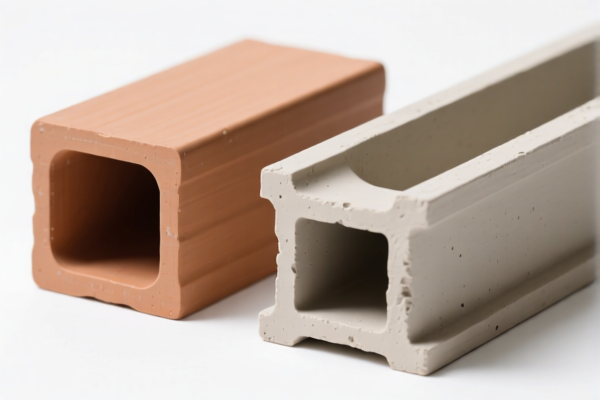
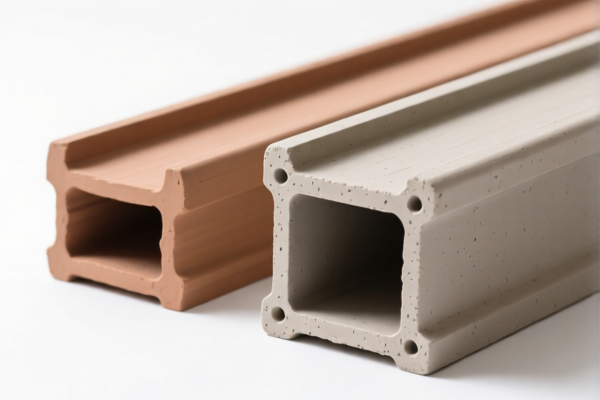
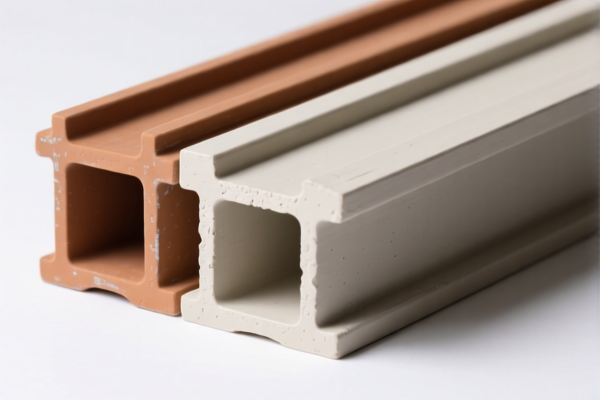
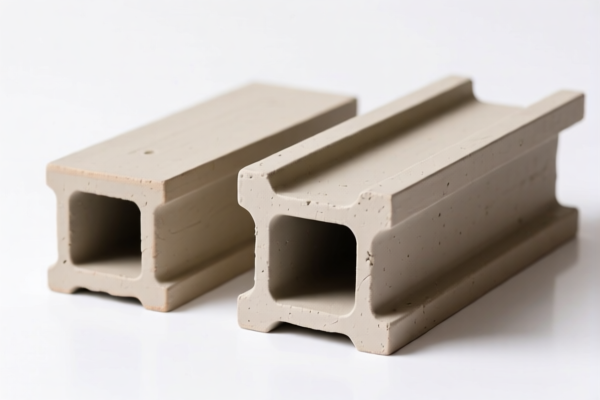
AI Analysis
🧱 Refractory Mortar (Low Expansion)
🌐 HS Code Reference & Customs Clearance Guide | 2026 Latest Tariff Analysis | Professional Clearance Strategy
📌 I. Product Definition & Classification: What is "Low Expansion Refractory Mortar"?
Refractory Mortar (Low Expansion), often referred to in trade as "Refractory Mud (Low Shrinkage)" or Low-Expansion Refractory Castable/Mortar, is a specialized material used in high-temperature industrial applications (steel mills, cement kilns, glass furnances). Its key characteristic is minimal volume change during heating/cooling cycles, preventing cracks in brickwork or monolithic linings.
In international trade, it is classified based on its physical state (powder/mud vs. finished brick) and chemical composition (clay-based vs. cement-based). The following analysis breaks down the five potential HS Codes provided, explaining why each applies and the resulting tax implications.
⚠️ Key Distinction:
- Is it a raw material (clay, alumina, fireclay)? → Chapters 25 or 38.
- Is it a processed ceramic (even if in mud form)? → Chapter 69.
- The classification hinges on whether it is considered a "mineral product" or a "manufactured ceramic."
📦 II. HS Code Classification Details (2026 Latest Tariff Authority Comparison)
| HS Code | Product Description | Application Scenario | Tax Rate (Total) | Key Classification Basis |
|---|---|---|---|---|
2508.30.00.00 |
Refractory Clay (Raw/Low Shrinkage) | Natural refractory clay, minimally processed. | 10.0% | Considered a raw mineral product. Lowest risk, but may be rejected if heavily processed. |
2508.70.00.00 |
Clinker / Refractory Clay (High Temp) | Calcined refractory clay or clinker. | 35.0% | Highly consistent with material properties. "Clinker" implies high-temperature processing. |
3816.00.20.50 |
Other Refractory Cements, Mortars | Synthetic refractory mortars, cement-based mixes. | 38.0% | Classified as chemical preparations/mortars. High risk of "Section XVII" exclusion. |
6903.90.00.50 |
Other Refractory Ceramic Articles | Ceramic products in mud/paste form. | 35.0% | Fits "mud/paste" category but under ceramics. High tariff due to 301/IEEPA. |
6903.90.00.10 |
Other Refractory Ceramic Articles | Ceramic products where mud fits clay原料 definition. | 35.0% | Similar to above, but specific to clay-based ceramic muds. |
🔍 Key Insight:
-2508.30.00.00is the most cost-effective option (10% total tax), but requires proving the product is a raw mineral rather than a manufactured chemical mix.
-2508.70.00.00and Chapter 69 codes carry 35-38% total tax due to US-China trade tariffs.
-3816.00.20.50is a "catch-all" for chemical mortars but incurs the highest base tariff (3%) + 25% + 10% = 38%.
💰 III. 2026 Latest Tariff Rate Breakdown (Including Surcharges & Policy Add-ons)
✅ Applicable Country: United States (US)
✅ Origin: China (CN)
✅ Effective Date: November 10, 2025 (and onwards)
🎯 1. 2508.30.00.00 —— Refractory Clay (Low Shrinkage)
Best Case Scenario for Cost
| Item | Content |
|---|---|
| Base Tariff | 0.0% (ad valorem) |
| USITC Add-on Tariff | 0.0% |
| IEEPA Add-on Tariff | +10.0% (Section 122/IEEPA against China) |
| Total Tax Rate | 10.0% |
| Tax Calculation | CIF Value × 10% |
| De Minimis Eligibility | ❌ No (Deny de minimis for Section 301/IEEPA goods) |
| Legal Basis | IEEPA:9903.01.25 → USITC:2508.30.00.00 |
📌 Explanation:
- This code falls under Chapter 25 (Salt; Sulfurs; Earths and Stone).
- If customs classifies the product as natural refractory clay (even if mixed with minimal binders), it escapes the 25% USITC tariff.
- Only the 10% IEEPA tariff applies.
- Risk: Customs may argue it’s a "processed mixture" and reclassify it to Chapter 69 or 38, triggering higher taxes.
🎯 2. 2508.70.00.00 —— Clinker / Refractory Clay (High Temp)
Material Consistency High
| Item | Content |
|---|---|
| Base Tariff | 0.0% |
| USITC Add-on Tariff | +25.0% (Section 301) |
| IEEPA Add-on Tariff | +10.0% |
| Total Tax Rate | 35.0% |
| Tax Calculation | CIF Value × 35% |
| De Minimis Eligibility | ❌ No |
| Legal Basis | IEEPA:9903.01.24 → USITC:2508.70.00.00 → FOOTNOTE:9903.88.01 |
📌 Explanation:
- This code covers calcined refractory clay or clinker.
- If your mortar contains highly calcined alumina or fireclay, this is a technically accurate description.
- Higher risk: Customs often disputes whether "mud" is "clinker." If it’s a ready-to-use mix, they may prefer Chapter 69 or 38.
🎯 3. 3816.00.20.50 —— Other Refractory Cements, Mortars
Highest Base Cost
| Item | Content |
|---|---|
| Base Tariff | 3.0% |
| USITC Add-on Tariff | +25.0% (Section 301) |
| IEEPA Add-on Tariff | +10.0% |
| Total Tax Rate | 38.0% |
| Tax Calculation | CIF Value × 38% |
| De Minimis Eligibility | ❌ No |
| Legal Basis | IEEPA:9901.25 → USITC:3816.00.20.50 |
📌 Explanation:
- Chapter 38 covers "Miscellaneous Chemical Products."
- This is the default for synthetic refractory mortars that don’t fit Chapter 25 (minerals) or Chapter 69 (ceramics).
- Highest tax burden: The 3% base tariff adds up, making it the most expensive option.
- Use Case: If the product contains significant chemical binders (e.g., alumina cement, silica sol) rather than just clay.
🎯 4 & 5. 6903.90.00.50 & 6903.90.00.10 —— Other Refractory Ceramic Articles
Material Consistency High (Ceramic Class)
| Item | Content |
|---|---|
| Base Tariff | 0.0% |
| USITC Add-on Tariff | +25.0% (Section 301) |
| IEEPA Add-on Tariff | +10.0% |
| Total Tax Rate | 35.0% |
| Tax Calculation | CIF Value × 35% |
| De Minimis Eligibility | ❌ No |
| Legal Basis | IEEPA:9903.01.24 → USITC:6903.90.00.50 / .10 |
📌 Explanation:
- Chapter 69 covers "Ceramic Products."
- Even though the product is a mud/paste, if it’s made from fired ceramic materials (refractory bricks, tiles), it can be classified here.
-.50: "Other" ceramic articles (mud/paste form).
-.10: Specifically for clay-based ceramic muds.
- Risk: Customs may reject "mud" under Chapter 69 if it’s not a "finished ceramic article." However, refractory muds are explicitly included in some rulings if they are processed to ceramic-grade standards.
🛠️ IV. Customs Clearance Practical Advice (Avoiding Pitfalls)
✅ 1. Preparation Checklist (Essential Documents)
| Document | Required | Notes |
|---|---|---|
| ✅ Product Specifications | ✔️ | Must detail chemical composition (e.g., % Al₂O₃, % SiO₂, expansion rate). |
| ✅ Formula/Recipe | ✔️ | Critical for proving if it’s a "raw mineral" (Ch.25) or "chemical mix" (Ch.38). |
| ✅ MSDS (Material Safety Data Sheet) | ✔️ | Shows it’s not hazardous, but also reveals binders/additives. |
| ✅ Photos of Product | ✔️ | Show both powder/mud form and applied state (if possible). |
| ✅ Commercial Invoice | ✔️ | Describe as "Refractory Mortar, Low Expansion, Clay-Based" or "Ceramic Mud." |
| ✅ Bill of Lading | ✔️ | Ensure weight matches invoice. |
✅ 2. Declaration Strategy (Key Tips)
🔥 "Raw Clay for 10%, Processed Mix for 35-38%!"
| Scenario | Recommended HS Code | Strategy |
|---|---|---|
| Natural Fireclay + Minimal Binder | 2508.30.00.00 |
Emphasize "Natural Clay," "Minimally Processed," "Low Shrinkage." |
| Calcined Clay/Clinker | 2508.70.00.00 |
Provide calcination temperature proof. |
| High Chemical Binder Content | 3816.00.20.50 |
Disclose chemical binders (e.g., cement). Accept 38% tax. |
| Ceramic-Grade Mud | 6903.90.00.50 |
Argue it’s a "ceramic article in paste form." |
✅ 3. Special Cases & Risk Management
| Case | Handling Advice |
|---|---|
| OEM/Private Label | Use generic description: "Refractory Mortar." Avoid brand names that might trigger specific duties. |
| Mixed Shipment | If clay-based and chemical-based mortars are mixed, separate shipments. Do not blend in one container. |
| Pre-Ruling Request | HIGHLY RECOMMENDED. File an Advance Ruling with US CBP for 2508.30.00.00 to lock in the 10% rate. |
| Third-Country Transshipment | If shipped from Vietnam/Mexico, ensure substantial transformation occurred. Direct China origin still triggers IEEPA. |
🌍 V. Global Market Comparison (2026 Update)
| Market | Recommended HS Code | Total Tax (China Origin) | Notes |
|---|---|---|---|
| 🇺🇸 USA | 2508.30.00.00 |
10% (Best Case) | Aggressive classification needed. |
| 🇺🇸 USA | 2508.70.00.00 / 6903.90.00 |
35% | Common for processed mortars. |
| 🇺🇸 USA | 3816.00.20.50 |
38% | Highest cost, lowest risk of dispute if chemical. |
| 🇨🇳 China | 2508.30.00.00 |
5-10% | Export from China may have different duties. |
| 🇪🇺 EU | 2508.30.00 |
0-3% | No Section 301 equivalent. |
| 🇨🇦 Canada | 2508.30.00 |
0-5% | FTAA/USMCA may apply if originating in North America. |
📌 Conclusion:
- USA is the most challenging market due to IEEPA/301 tariffs.
- Clay-based classification (2508.30) is the golden ticket for cost savings.
- Document preparation is key: Prove it’s a mineral, not a chemical mix.
📌 VI. Common Mistakes & Pitfalls (Lessons Learned)
❌ Mistake 1: Calling it "Refractory Cement"
👉 Result: Classified under 3816.00.20.50 → 38% Tax.
👉 Fix: Use "Refractory Mortar" or "Refractory Mud" if clay-based.
❌ Mistake 2: Ignoring the Binder Content
👉 Result: Customs determines it’s >10% binder → Rejected from Ch.25.
👉 Fix: Disclose binder % in specs. If low, argue for Ch.25.
❌ Mistake 3: Using "Ceramic Mud" for Raw Clay
👉 Result: Misclassification, potential penalty.
👉 Fix: Use "Raw Refractory Clay" if uncalcined.
❌ Mistake 4: Assuming De Minimis Applies
👉 Result: Package seized or back-charged.
👉 Fix: All shipments subject to tariffs; no de minimis exemption for Section 301/IEEPA goods.
✅ Correct Declaration Example:
"Refractory Mud, Low Shrinkage, Clay-Based, Min. 80% Al₂O₃, for Furnace Lining, Model RM-100"
🎯 VII. Conclusion: Precision in Classification, Savings in Cost
🎯 Key Takeaway:
🔹 "Clay = 10%, Clinker/Ceramic = 35%, Chemical = 38%!"
🔹 "Prove it’s a Mineral, Not a Mix!"
📌 Pro Tip:
If your product is clay-based, apply for an Advance Ruling immediately. The difference between 10% and 35% is 25 percentage points, which can be the difference between profit and loss.
📣 Action Item:
📞 Contact a Customs Broker + Provide Full Formula + Request Advance Ruling
🚀 Ensure Smooth Clearance, Minimize Duties, Maximize Profit!
✨ Professional Clearance Starts with Accurate Classification!
💼 Every Percent Saved is Pure Profit!
Customer Reviews
About HS Code Classification
The Harmonized System (HS) is an internationally standardized nomenclature developed by the World Customs Organization (WCO) to classify traded products. Over 200 countries use the HS system as the basis for customs tariffs, trade statistics, and import/export regulations.
Each HS code follows a hierarchical structure:
- Chapter (2 digits) — Broad category of goods (e.g., Chapter 84: Machinery and Mechanical Appliances)
- Heading (4 digits) — More specific grouping within the chapter
- Subheading (6 digits) — Internationally standardized breakdown, used by all WCO member countries
- National subdivisions (8-10 digits) — Country-specific extensions for further classification, such as US HTSUS 10-digit codes
Correct HS code classification is essential for smooth customs clearance, accurate duty payment, and compliance with trade regulations. Misclassification can lead to customs delays, overpayment of duties, or penalties.
When importing from CN to US, the applicable tariff rates may include:
- Most-Favored-Nation (MFN) rate — The standard duty rate applied to WTO members
- General rate — Applied to countries without trade agreements
- Trade remedy duties — Additional tariffs such as Section 301 (anti-dumping), Section 232 (national security), or countervailing duties
The information provided on this page is for reference purposes only. For official classification, please consult with your local customs authority or a licensed customs broker.