Refractory Mortar for Chimneys
CN → US| HS编码 | 关税税率 | 原产国 | 目的国 | 文档 |
|---|---|---|---|---|
| 3816002010 | 38.0% | CN | US | 官方文档 |
| 2522200000 | 35.0% | CN | US | 官方文档 |
| 6902905020 | 35.0% | CN | US | 官方文档 |
| 6902205020 | 35.0% | CN | US | 官方文档 |
| 3816002050 | 38.0% | CN | US | 官方文档 |
商品图片
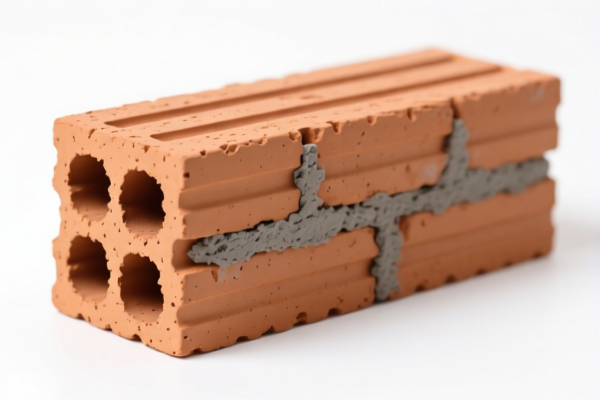
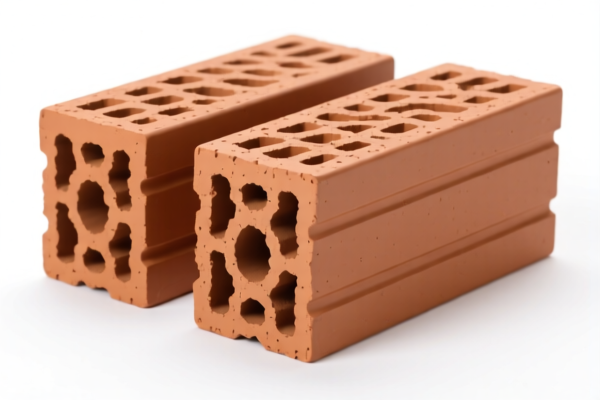
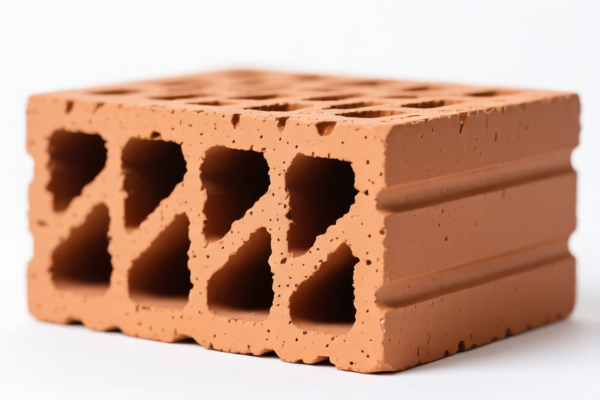
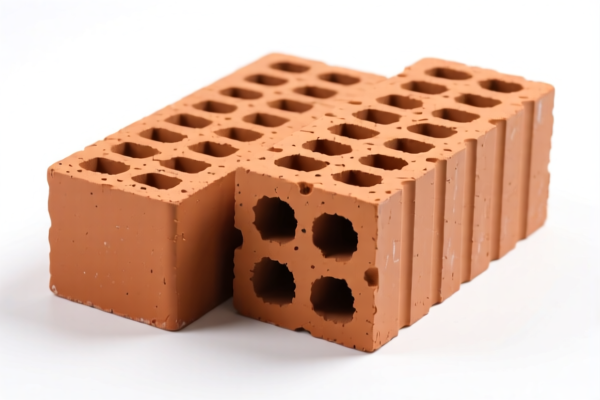
AI分析
🏗️ Refractory Mortar for Chimneys (耐火砂浆/烟囱用耐火泥)
🌐 HS Code Reference & Customs Clearance Guide | 2026 Latest Tariff Analysis | Professional Entry Strategies
📌 I. Product Definition & Classification: What Exactly is "Refractory Mortar"?
Refractory Mortar for Chimneys is a specialized building material used for bedding, jointing, and repairing refractory bricks in high-temperature environments such as chimneys, kilns, and furnances. It typically consists of refractory aggregates (clay, alumina, silica) and a binder (clay, cement, or chemical).
In international trade, its classification depends on chemical composition and primary function: * Chemical Nature: If it is primarily based on lime or calcium compounds, it may fall under Chapter 25. * Ceramic/Refractory Nature: If it is primarily ceramic/refractory brick mortar, it may fall under Chapter 69. * Prepared Mix/Ready-to-Use: If it is a specialized prepared mix that doesn't fit specific ceramic or mineral categories, it may fall under Chapter 38.
⚠️ Key Classification Distinction:
- Is it a Lime-based mortar? → Chapter 25
- Is it a Ceramic/Refractory Brick mortar? → Chapter 69
- Is it a Prepared Chemical/Other mortar? → Chapter 38
📦 II. HS Code Classification Details (2026 Latest Tariff Authoritative Comparison)
Based on the provided data, here are the 5 potential HS Codes for "Refractory Mortar for Chimneys":
| HS Code | Product Description | Matching Logic / Summary | Tax Detail (Total) |
|---|---|---|---|
3816.00.20.10 |
Prepared Refractory Cements & Mortars (Other than Clay) | Match: The name "Mortar" perfectly matches the classification explanation's requirement for the material/category "Mortar". It is classified as a prepared refractory mix. | 38.0% Base: 3.0% Addl: 25.0% 122 Clause: 10% |
2522.20.00.00 |
Dead Burned Magnesiu or Dolomite / Lime Products | Match: Refractory brick mortar contains lime components (calcium oxide/hydroxide). Its chemical attributes and use as a building material align with Quicklime/Hydrated Lime (2522.20), with no obvious material conflict. | 35.0% Base: 0.0% Addl: 25.0% 122 Clause: 10% |
6902.90.50.20 |
Refractory Ceramics (Other than Silica) | Match: The name "Refractory" matches the material requirement. "Brick Mortar" is seen as a配套 (supporting) building material similar to refractory bricks. It fits the "Other" category without material conflict. | 35.0% Base: 0.0% Addl: 25.0% 122 Clause: 10% |
6902.20.50.20 |
Refractory Ceramics (Alumina > 50% or Silicon Carbide) | Match: The product belongs to the refractory material category. Its composition (alumina/silica) matches the attributes of refractory ceramic building materials. As a supporting material for refractory bricks, its form and material logic are consistent with Chapter 69. | 35.0% Base: 0.0% Addl: 25.0% 122 Clause: 10% |
3816.00.20.50 |
Prepared Refractory Cements & Mortars (Other) | Match: The name "Mortar" belongs to refractory cement/mortar products. Although material is not explicit, common sense infers it is not clay-based, fitting the "Other" category definition. | 38.0% Base: 3.0% Addl: 25.0% 122 Clause: 10% |
🔍 Key Observation:
- Codes3816.00.20.10and3816.00.20.50have a higher total tax (38%) because they include a 3.0% Base Tariff.
- Codes2522.20.00.00,6902.90.50.20, and6902.20.50.20have a lower total tax (35%) because they have a 0.0% Base Tariff, but all still carry the 25% Additional Tariff and 10% Section 122 Tariff.
- The core difference lies in whether the product is classified as a Chemical/Prepared Mix (Ch 38) or a Mineral/Ceramic Product (Ch 25/69).
💰 III. 2026 Latest Tariff Rate Breakdown (Including Additional Taxes)
✅ Applicable Country: United States (US)
✅ Origin: China (CN)
✅ Effective Date: From November 10, 2025 (and subsequent imports)
🎯 1. 3816.00.20.10 & 3816.00.20.50 —— Prepared Refractory Mortars
| Item | Content |
|---|---|
| Base Tariff | 3.0% |
| USITC Additional Tariff (Section 301) | +25.0% |
| IEEPA Additional Tariff (Section 122) | +10.0% |
| Total Tariff Rate | 38.0% |
| Tax Calculation | CIF Value × 38.0% |
| De Minimis Exemption | ❌ Not Eligible |
| Legal Basis Path | USITC:3816.00.20.10 → USITC:3816.00.20.50 → FOOTNOTE:9903.88.01 |
📌 Explanation:
- These codes fall under Chapter 38 (Miscellaneous Chemical Products).
- The 3.0% base is standard for these sub-headings.
- The 35% additional tax (25% + 10%) is applied on top, resulting in a 38% effective rate.
- Warning: If you classify here, you pay the highest tax rate among the options.
🎯 2. 2522.20.00.00 —— Lime-Based Refractory Mortar
| Item | Content |
|---|---|
| Base Tariff | 0.0% |
| USITC Additional Tariff (Section 301) | +25.0% |
| IEEPA Additional Tariff (Section 122) | +10.0% |
| Total Tariff Rate | 35.0% |
| Tax Calculation | CIF Value × 35.0% |
| De Minimis Exemption | ❌ Not Eligible |
| Legal Basis Path | USITC:2522.20.00.00 → FOOTNOTE:9903.88.01 |
📌 Explanation:
- This code applies if the mortar is primarily lime-based (calcium oxide/hydroxide).
- The 0% base makes it cheaper than Chapter 38, but still subject to high additional tariffs.
- Requirement: You must prove the product's composition is predominantly lime/mineral, not a complex chemical mix.
🎯 3. 6902.90.50.20 & 6902.20.50.20 —— Ceramic/Refractory Brick Mortar
| Item | Content |
|---|---|
| Base Tariff | 0.0% |
| USITC Additional Tariff (Section 301) | +25.0% |
| IEEPA Additional Tariff (Section 122) | +10.0% |
| Total Tariff Rate | 35.0% |
| Tax Calculation | CIF Value × 35.0% |
| De Minimis Exemption | ❌ Not Eligible |
| Legal Basis Path | USITC:6902.90.50.20 / 6902.20.50.20 → FOOTNOTE:9903.88.01 |
📌 Explanation:
- These codes apply if the mortar is clearly a ceramic refractory product, consistent with refractory bricks (Chapter 69).
- Difference between 6902.90 and 6902.20:
-6902.90: Refractory ceramics with Al₂O₃ < 50% or SiO₂ > 85% (Other).
-6902.20: Refractory ceramics with Al₂O₃ ≥ 50% or Silicon Carbide.
- Requirement: Provide product specs showing it is a ceramic refractory material, matching the bricks it is applied to.
🛠️ IV. Customs Clearance Practical Advice (Real-World Pitfall Guide)
✅ 1. Preparation Checklist (All Required)
| Document | Mandatory | Description |
|---|---|---|
| ✅ Product Specification Sheet | ✔️ | Must list chemical composition (e.g., % Al₂O₃, % CaO, % Silica) and physical form (powder/paste). |
| ✅ MSDS / Safety Data Sheet | ✔️ | Critical for chemical classification. Shows if it's a hazardous chemical or simple mineral mix. |
| ✅ Product Photos | ✔️ | Clear images of the packaging, labeling, and the product itself (dry powder vs. ready-to-use paste). |
| ✅ Certificate of Analysis (COA) | ✔️ | Proves the mineral/ceramic content. Essential for 2522 or 6902 classification. |
| ✅ Commercial Invoice | ✔️ | Clearly state "Refractory Mortar for Chimneys". Avoid vague terms like "Construction Material". |
| ✅ Packing List | ✔️ | Detail the net/gross weight and quantity. |
✅ 2. Declaration Tips (Key Mantra)
🔥 “Composition is King, Form is Queen, Name Matches Code, Tax Saves 3%!”
| Scenario | Correct Declaration | Incorrect Practice |
|---|---|---|
| Lime-based Mortar | 2522.20.00.00 |
Declaring as "Chemical Mix" → 38% |
| Ceramic Refractory Mortar | 6902.90.50.20 |
Declaring as "Lime" → Classification Risk |
| Generic Prepared Mix | 3816.00.20.10 |
Declaring as "Brick" → Misclassification |
| Alumina > 50% Mortar | 6902.20.50.20 |
Declaring as "Other Ceramics" → Lower Accuracy |
💡 Strategy:
- If you can prove the product is Lime-based, choose 2522.20.00.00 (35%).
- If you can prove it is Ceramic/Refractory, choose 6902.90.50.20 (35%).
- If it is a specialized chemical mix with no clear mineral/ceramic primary identity, you must use 3816.00.20.x0 (38%).
- Save 3% by avoiding Chapter 38 if possible!
✅ 3. Special Cases & Handling
| Scenario | Handling Advice |
|---|---|
| Ready-to-Use Paste | If it contains chemical additives that make it a "preparation," it may fall under 3816. Provide formulation details. |
| Dry Powder Mix | More likely to be classified as Mineral (2522) or Ceramic (6902). Provide COA. |
| OEM Private Label | Ensure the spec sheet matches the supplier's technical data. Do not change the composition name. |
| Samples vs. Bulk | Declaration rules are the same. Always provide accurate composition for both. |
🌍 V. Global Market Comparison (2026 Latest)
| Country/Region | Recommended HS Code | Tariff Rate | Certification | Notes |
|---|---|---|---|---|
| 🇺🇸 USA | 2522.20.00.00 or 6902.90.50.20 |
35% (CN Origin) | MSDS Required | 38% if classified as Ch 38. High scrutiny on chemical composition. |
| 🇨🇳 China | 2522.20.00.00 or 6902.90.50.20 |
0% - 10% | CCC (if applicable) | No additional Section 122 tax. |
| 🇪🇺 EU | 6902.90.50 or 2522.20.00 |
0% - 6.5% | REACH + SDS | No "Section 122" equivalent. Lower overall cost. |
| 🇦🇺 Australia | 6902.90.50 |
5% | GEMS | No major additional tariffs. |
| 🇯🇵 Japan | 6902.90.50 |
3% - 7% | JIS | Stable tariffs. |
📌 Conclusion:
- USA has the highest tariff burden due to Section 301 (25%) and Section 122 (10%).
- Minimizing the Base Tariff (0% vs 3%) is critical. Aim for 2522 or 6902 to save 3%.
- Chapter 38 (3816) is the most expensive and risky if composition is not clearly "prepared chemical."
📌 VI. Common Mistakes & Pitfalls (Blood & Tears Lessons)
❌ Mistake 1: Declaring "Refractory Mortar" as "Chemical Adhesive" without composition proof.
👉 Consequence: Customs may force classification under 3816.00.20.10 (38%) or seize for misdeclaration.
❌ Mistake 2: Using vague names like "Building Material" or "Glue".
👉 Consequence: Delays, audits, and potential re-classification to higher tax brackets.
❌ Mistake 3: Not providing a Certificate of Analysis (COA).
👉 Consequence: Customs cannot verify if it is Lime (2522) or Ceramic (6902). They may default to 3816 (38%).
❌ Mistake 4: Assuming "Mortar" is always Chapter 38.
👉 Consequence: Missed opportunity to use 0% base tariff under Chapter 25 or 69.
✅ Correct Approach:
"Refractory Mortar, Chimney Grade, Lime-Based, Powder Form, Al₂O₃ < 50%, for Jointing Refractory Bricks, Model XYZ, MSDS Attached."
🎯 VII. Conclusion: Professional Declaration, Time-Saving, Cost Reduction!
🎯 Remember the Mantra:
🔹 “Composition First, Code Follows, Base Zero Saves 3%!”
🔹 “3816 is 38%, 2522/6902 is 35%, choose wisely!”
📌 Tips:
- If your product is Lime-based, insist on 2522.20.00.00.
- If it is Ceramic, insist on 6902.90.50.20 (or 6902.20.50.20 if high alumina).
- Avoid 3816 unless you have no other choice.
- Always provide MSDS and COA to support your classification.
- Consider Advance Ruling (Pre-classification) with US Customs for high-value shipments.
📣 Immediate Action:
📞 Contact your customs broker + Provide Product Spec Sheet + Request HS Code Pre-classification
🚀 Clear your Refractory Mortar through customs smoothly, reduce tax costs, and maximize profits!
✨ Professional Customs Clearance Starts with Accurate Classification!
💼 Every cent of tax you save is a cent of profit you keep!
用户评价
关于 HS 编码归类
协调制度(HS)是由世界海关组织(WCO)制定的国际贸易商品分类标准。全球 200 多个国家采用 HS 系统作为海关关税、贸易统计和进出口监管的基础。
每个 HS 编码遵循以下层级结构:
- 章(2 位)——商品大类(例如:第 84 章:机器和机械设备)
- 品目(4 位)——章内的更具体分类
- 子目(6 位)——国际通用细分,所有 WCO 成员国统一使用
- 本国细分(8-10 位)——各国自行扩展的细分编码,如美国 HTSUS 10 位编码
正确的 HS 编码归类对于顺利通关、准确缴纳关税和遵守贸易法规至关重要。错误归类可能导致海关延误、多缴关税或罚款。
从CN进口到US时,适用的关税税率可能包括:
- 最惠国(MFN)税率——适用于 WTO 成员国的标准关税税率
- 普通税率——适用于无贸易协定国家
- 贸易救济关税——附加关税,如 301 条款(反倾销)、232 条款(国家安全)或反补贴税
本页内容仅供参考。如需正式归类,请咨询当地海关或持牌报关代理。