Refractory Mortar for Chimneys
CN → US| HS Code | Tariff Rate | Origin | Destination | Doc |
|---|---|---|---|---|
| 3816002010 | 38.0% | CN | US | Official Doc |
| 2522200000 | 35.0% | CN | US | Official Doc |
| 6902905020 | 35.0% | CN | US | Official Doc |
| 6902205020 | 35.0% | CN | US | Official Doc |
| 3816002050 | 38.0% | CN | US | Official Doc |
Product Images
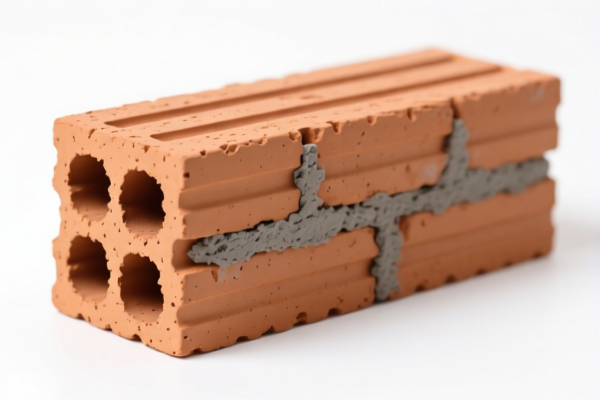
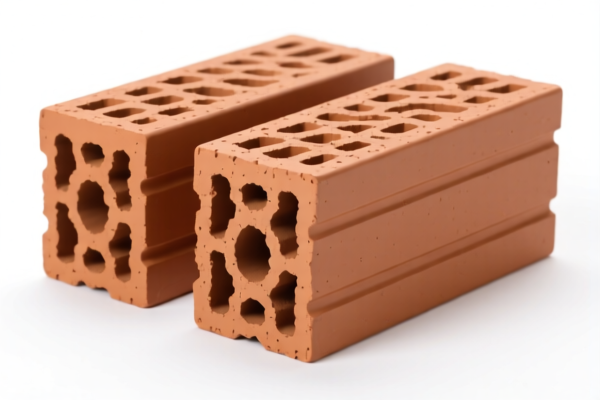
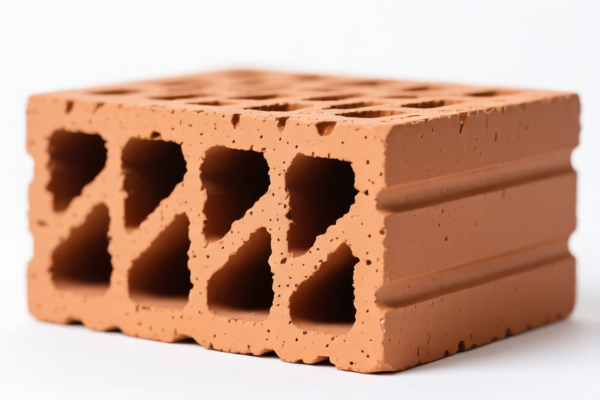
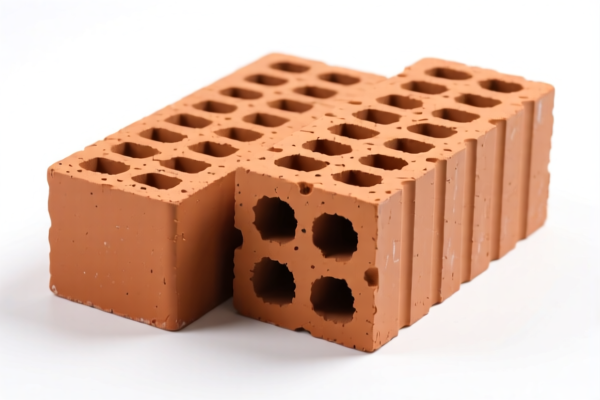
AI Analysis
🏗️ Refractory Mortar for Chimneys (耐火砂浆/烟囱用耐火泥)
🌐 HS Code Reference & Customs Clearance Guide | 2026 Latest Tariff Analysis | Professional Entry Strategies
📌 I. Product Definition & Classification: What Exactly is "Refractory Mortar"?
Refractory Mortar for Chimneys is a specialized building material used for bedding, jointing, and repairing refractory bricks in high-temperature environments such as chimneys, kilns, and furnances. It typically consists of refractory aggregates (clay, alumina, silica) and a binder (clay, cement, or chemical).
In international trade, its classification depends on chemical composition and primary function: * Chemical Nature: If it is primarily based on lime or calcium compounds, it may fall under Chapter 25. * Ceramic/Refractory Nature: If it is primarily ceramic/refractory brick mortar, it may fall under Chapter 69. * Prepared Mix/Ready-to-Use: If it is a specialized prepared mix that doesn't fit specific ceramic or mineral categories, it may fall under Chapter 38.
⚠️ Key Classification Distinction:
- Is it a Lime-based mortar? → Chapter 25
- Is it a Ceramic/Refractory Brick mortar? → Chapter 69
- Is it a Prepared Chemical/Other mortar? → Chapter 38
📦 II. HS Code Classification Details (2026 Latest Tariff Authoritative Comparison)
Based on the provided data, here are the 5 potential HS Codes for "Refractory Mortar for Chimneys":
| HS Code | Product Description | Matching Logic / Summary | Tax Detail (Total) |
|---|---|---|---|
3816.00.20.10 |
Prepared Refractory Cements & Mortars (Other than Clay) | Match: The name "Mortar" perfectly matches the classification explanation's requirement for the material/category "Mortar". It is classified as a prepared refractory mix. | 38.0% Base: 3.0% Addl: 25.0% 122 Clause: 10% |
2522.20.00.00 |
Dead Burned Magnesiu or Dolomite / Lime Products | Match: Refractory brick mortar contains lime components (calcium oxide/hydroxide). Its chemical attributes and use as a building material align with Quicklime/Hydrated Lime (2522.20), with no obvious material conflict. | 35.0% Base: 0.0% Addl: 25.0% 122 Clause: 10% |
6902.90.50.20 |
Refractory Ceramics (Other than Silica) | Match: The name "Refractory" matches the material requirement. "Brick Mortar" is seen as a配套 (supporting) building material similar to refractory bricks. It fits the "Other" category without material conflict. | 35.0% Base: 0.0% Addl: 25.0% 122 Clause: 10% |
6902.20.50.20 |
Refractory Ceramics (Alumina > 50% or Silicon Carbide) | Match: The product belongs to the refractory material category. Its composition (alumina/silica) matches the attributes of refractory ceramic building materials. As a supporting material for refractory bricks, its form and material logic are consistent with Chapter 69. | 35.0% Base: 0.0% Addl: 25.0% 122 Clause: 10% |
3816.00.20.50 |
Prepared Refractory Cements & Mortars (Other) | Match: The name "Mortar" belongs to refractory cement/mortar products. Although material is not explicit, common sense infers it is not clay-based, fitting the "Other" category definition. | 38.0% Base: 3.0% Addl: 25.0% 122 Clause: 10% |
🔍 Key Observation:
- Codes3816.00.20.10and3816.00.20.50have a higher total tax (38%) because they include a 3.0% Base Tariff.
- Codes2522.20.00.00,6902.90.50.20, and6902.20.50.20have a lower total tax (35%) because they have a 0.0% Base Tariff, but all still carry the 25% Additional Tariff and 10% Section 122 Tariff.
- The core difference lies in whether the product is classified as a Chemical/Prepared Mix (Ch 38) or a Mineral/Ceramic Product (Ch 25/69).
💰 III. 2026 Latest Tariff Rate Breakdown (Including Additional Taxes)
✅ Applicable Country: United States (US)
✅ Origin: China (CN)
✅ Effective Date: From November 10, 2025 (and subsequent imports)
🎯 1. 3816.00.20.10 & 3816.00.20.50 —— Prepared Refractory Mortars
| Item | Content |
|---|---|
| Base Tariff | 3.0% |
| USITC Additional Tariff (Section 301) | +25.0% |
| IEEPA Additional Tariff (Section 122) | +10.0% |
| Total Tariff Rate | 38.0% |
| Tax Calculation | CIF Value × 38.0% |
| De Minimis Exemption | ❌ Not Eligible |
| Legal Basis Path | USITC:3816.00.20.10 → USITC:3816.00.20.50 → FOOTNOTE:9903.88.01 |
📌 Explanation:
- These codes fall under Chapter 38 (Miscellaneous Chemical Products).
- The 3.0% base is standard for these sub-headings.
- The 35% additional tax (25% + 10%) is applied on top, resulting in a 38% effective rate.
- Warning: If you classify here, you pay the highest tax rate among the options.
🎯 2. 2522.20.00.00 —— Lime-Based Refractory Mortar
| Item | Content |
|---|---|
| Base Tariff | 0.0% |
| USITC Additional Tariff (Section 301) | +25.0% |
| IEEPA Additional Tariff (Section 122) | +10.0% |
| Total Tariff Rate | 35.0% |
| Tax Calculation | CIF Value × 35.0% |
| De Minimis Exemption | ❌ Not Eligible |
| Legal Basis Path | USITC:2522.20.00.00 → FOOTNOTE:9903.88.01 |
📌 Explanation:
- This code applies if the mortar is primarily lime-based (calcium oxide/hydroxide).
- The 0% base makes it cheaper than Chapter 38, but still subject to high additional tariffs.
- Requirement: You must prove the product's composition is predominantly lime/mineral, not a complex chemical mix.
🎯 3. 6902.90.50.20 & 6902.20.50.20 —— Ceramic/Refractory Brick Mortar
| Item | Content |
|---|---|
| Base Tariff | 0.0% |
| USITC Additional Tariff (Section 301) | +25.0% |
| IEEPA Additional Tariff (Section 122) | +10.0% |
| Total Tariff Rate | 35.0% |
| Tax Calculation | CIF Value × 35.0% |
| De Minimis Exemption | ❌ Not Eligible |
| Legal Basis Path | USITC:6902.90.50.20 / 6902.20.50.20 → FOOTNOTE:9903.88.01 |
📌 Explanation:
- These codes apply if the mortar is clearly a ceramic refractory product, consistent with refractory bricks (Chapter 69).
- Difference between 6902.90 and 6902.20:
-6902.90: Refractory ceramics with Al₂O₃ < 50% or SiO₂ > 85% (Other).
-6902.20: Refractory ceramics with Al₂O₃ ≥ 50% or Silicon Carbide.
- Requirement: Provide product specs showing it is a ceramic refractory material, matching the bricks it is applied to.
🛠️ IV. Customs Clearance Practical Advice (Real-World Pitfall Guide)
✅ 1. Preparation Checklist (All Required)
| Document | Mandatory | Description |
|---|---|---|
| ✅ Product Specification Sheet | ✔️ | Must list chemical composition (e.g., % Al₂O₃, % CaO, % Silica) and physical form (powder/paste). |
| ✅ MSDS / Safety Data Sheet | ✔️ | Critical for chemical classification. Shows if it's a hazardous chemical or simple mineral mix. |
| ✅ Product Photos | ✔️ | Clear images of the packaging, labeling, and the product itself (dry powder vs. ready-to-use paste). |
| ✅ Certificate of Analysis (COA) | ✔️ | Proves the mineral/ceramic content. Essential for 2522 or 6902 classification. |
| ✅ Commercial Invoice | ✔️ | Clearly state "Refractory Mortar for Chimneys". Avoid vague terms like "Construction Material". |
| ✅ Packing List | ✔️ | Detail the net/gross weight and quantity. |
✅ 2. Declaration Tips (Key Mantra)
🔥 “Composition is King, Form is Queen, Name Matches Code, Tax Saves 3%!”
| Scenario | Correct Declaration | Incorrect Practice |
|---|---|---|
| Lime-based Mortar | 2522.20.00.00 |
Declaring as "Chemical Mix" → 38% |
| Ceramic Refractory Mortar | 6902.90.50.20 |
Declaring as "Lime" → Classification Risk |
| Generic Prepared Mix | 3816.00.20.10 |
Declaring as "Brick" → Misclassification |
| Alumina > 50% Mortar | 6902.20.50.20 |
Declaring as "Other Ceramics" → Lower Accuracy |
💡 Strategy:
- If you can prove the product is Lime-based, choose 2522.20.00.00 (35%).
- If you can prove it is Ceramic/Refractory, choose 6902.90.50.20 (35%).
- If it is a specialized chemical mix with no clear mineral/ceramic primary identity, you must use 3816.00.20.x0 (38%).
- Save 3% by avoiding Chapter 38 if possible!
✅ 3. Special Cases & Handling
| Scenario | Handling Advice |
|---|---|
| Ready-to-Use Paste | If it contains chemical additives that make it a "preparation," it may fall under 3816. Provide formulation details. |
| Dry Powder Mix | More likely to be classified as Mineral (2522) or Ceramic (6902). Provide COA. |
| OEM Private Label | Ensure the spec sheet matches the supplier's technical data. Do not change the composition name. |
| Samples vs. Bulk | Declaration rules are the same. Always provide accurate composition for both. |
🌍 V. Global Market Comparison (2026 Latest)
| Country/Region | Recommended HS Code | Tariff Rate | Certification | Notes |
|---|---|---|---|---|
| 🇺🇸 USA | 2522.20.00.00 or 6902.90.50.20 |
35% (CN Origin) | MSDS Required | 38% if classified as Ch 38. High scrutiny on chemical composition. |
| 🇨🇳 China | 2522.20.00.00 or 6902.90.50.20 |
0% - 10% | CCC (if applicable) | No additional Section 122 tax. |
| 🇪🇺 EU | 6902.90.50 or 2522.20.00 |
0% - 6.5% | REACH + SDS | No "Section 122" equivalent. Lower overall cost. |
| 🇦🇺 Australia | 6902.90.50 |
5% | GEMS | No major additional tariffs. |
| 🇯🇵 Japan | 6902.90.50 |
3% - 7% | JIS | Stable tariffs. |
📌 Conclusion:
- USA has the highest tariff burden due to Section 301 (25%) and Section 122 (10%).
- Minimizing the Base Tariff (0% vs 3%) is critical. Aim for 2522 or 6902 to save 3%.
- Chapter 38 (3816) is the most expensive and risky if composition is not clearly "prepared chemical."
📌 VI. Common Mistakes & Pitfalls (Blood & Tears Lessons)
❌ Mistake 1: Declaring "Refractory Mortar" as "Chemical Adhesive" without composition proof.
👉 Consequence: Customs may force classification under 3816.00.20.10 (38%) or seize for misdeclaration.
❌ Mistake 2: Using vague names like "Building Material" or "Glue".
👉 Consequence: Delays, audits, and potential re-classification to higher tax brackets.
❌ Mistake 3: Not providing a Certificate of Analysis (COA).
👉 Consequence: Customs cannot verify if it is Lime (2522) or Ceramic (6902). They may default to 3816 (38%).
❌ Mistake 4: Assuming "Mortar" is always Chapter 38.
👉 Consequence: Missed opportunity to use 0% base tariff under Chapter 25 or 69.
✅ Correct Approach:
"Refractory Mortar, Chimney Grade, Lime-Based, Powder Form, Al₂O₃ < 50%, for Jointing Refractory Bricks, Model XYZ, MSDS Attached."
🎯 VII. Conclusion: Professional Declaration, Time-Saving, Cost Reduction!
🎯 Remember the Mantra:
🔹 “Composition First, Code Follows, Base Zero Saves 3%!”
🔹 “3816 is 38%, 2522/6902 is 35%, choose wisely!”
📌 Tips:
- If your product is Lime-based, insist on 2522.20.00.00.
- If it is Ceramic, insist on 6902.90.50.20 (or 6902.20.50.20 if high alumina).
- Avoid 3816 unless you have no other choice.
- Always provide MSDS and COA to support your classification.
- Consider Advance Ruling (Pre-classification) with US Customs for high-value shipments.
📣 Immediate Action:
📞 Contact your customs broker + Provide Product Spec Sheet + Request HS Code Pre-classification
🚀 Clear your Refractory Mortar through customs smoothly, reduce tax costs, and maximize profits!
✨ Professional Customs Clearance Starts with Accurate Classification!
💼 Every cent of tax you save is a cent of profit you keep!
Customer Reviews
About HS Code Classification
The Harmonized System (HS) is an internationally standardized nomenclature developed by the World Customs Organization (WCO) to classify traded products. Over 200 countries use the HS system as the basis for customs tariffs, trade statistics, and import/export regulations.
Each HS code follows a hierarchical structure:
- Chapter (2 digits) — Broad category of goods (e.g., Chapter 84: Machinery and Mechanical Appliances)
- Heading (4 digits) — More specific grouping within the chapter
- Subheading (6 digits) — Internationally standardized breakdown, used by all WCO member countries
- National subdivisions (8-10 digits) — Country-specific extensions for further classification, such as US HTSUS 10-digit codes
Correct HS code classification is essential for smooth customs clearance, accurate duty payment, and compliance with trade regulations. Misclassification can lead to customs delays, overpayment of duties, or penalties.
When importing from CN to US, the applicable tariff rates may include:
- Most-Favored-Nation (MFN) rate — The standard duty rate applied to WTO members
- General rate — Applied to countries without trade agreements
- Trade remedy duties — Additional tariffs such as Section 301 (anti-dumping), Section 232 (national security), or countervailing duties
The information provided on this page is for reference purposes only. For official classification, please consult with your local customs authority or a licensed customs broker.