Refractory Ramming Material (Magnesia)
CN → US| HS编码 | 关税税率 | 原产国 | 目的国 | 文档 |
|---|---|---|---|---|
| 3816001000 | 35.0% | CN | US | 官方文档 |
| 3816002050 | 38.0% | CN | US | 官方文档 |
| 6903900010 | 35.0% | CN | US | 官方文档 |
| 6902105000 | 35.0% | CN | US | 官方文档 |
| 6903900050 | 35.0% | CN | US | 官方文档 |
商品图片
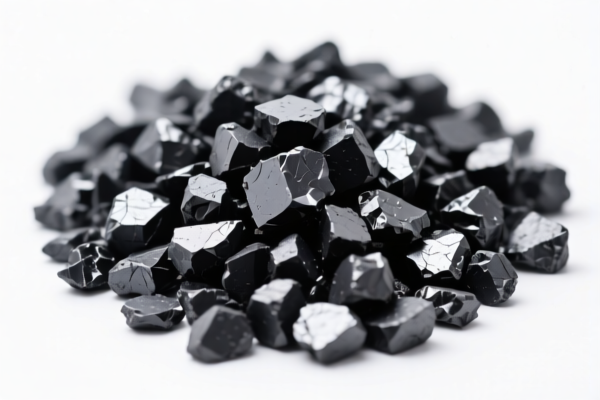
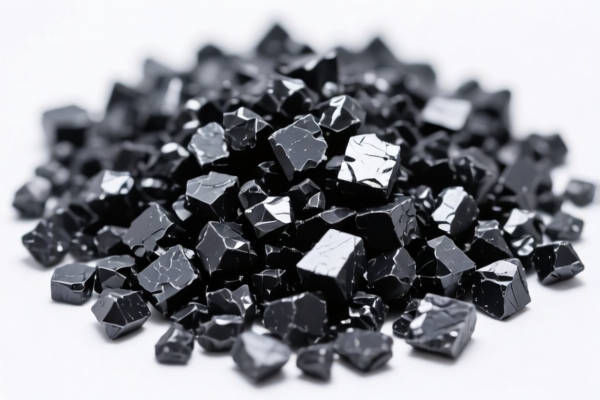
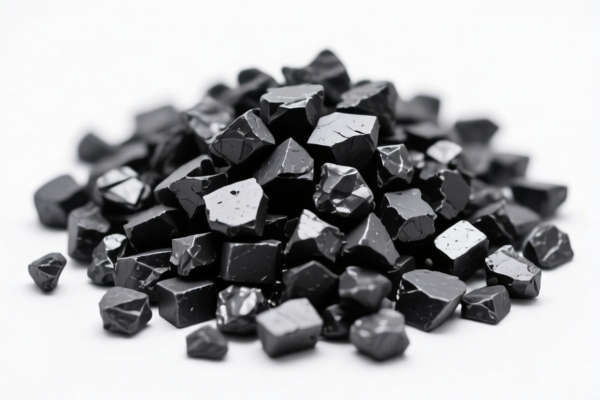
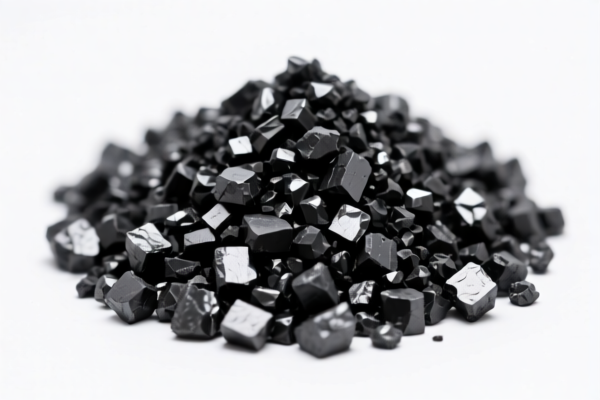
AI分析
🔥 Refractory Ramming Material (Magnesia) | HS Code Classification & Duty Analysis (USA/China Trade)
🌐 HS Code Reference & Customs Clearance Guide | 2026 Latest Tariff Structure | Professional Compliance Strategy
📌 I. Product Definition & Classification: What is "Refractory Ramming Material"?
Refractory Ramming Material (specifically Magnesia-based) is a specialized industrial refractory product used in high-temperature industrial furnances (such as steel ladles, electric arc furnaces, and cement rotary kilns).
It is NOT a shaped brick. It is a unshaped refractory material supplied as a dry mix (powder/granular) or sometimes pre-mixed with binders. It is installed by ramming (mechanical vibration/compaction) into the furnace lining to form a monolithic structure.
⚠️ Critical Distinction:
- Shaped Bricks → Classified under Chapter 69 (Ceramic Products).
- Unshaped Refractories (Ramming Mixes) → Typically classified under Heading 3816 (Chemical Products) OR Chapter 69 depending on exact composition and form.
- Magnesia (MgO) is the primary refractory aggregate.
- Binders/Additives may include clay, silicon carbide, or organic binders.🚨 Key Risk:
If classified under HS 3816, it is treated as a "chemical mixture" for refractory purposes.
If classified under HS 6903/6902, it is treated as "ceramic refractory."
The duty rate differs significantly (0% vs 3% base), but BOTH suffer from the same additional tariffs (25% + 10%).
📦 II. HS Code Classification Details (2026 Latest Tariff Cross-Reference)
Based on the provided data, here are the 5 matched HS Codes with detailed explanations for each match.
| HS Code | Product Description | Match Logic & Reasoning | Tax Implication |
|---|---|---|---|
| 3816.00.10.00 | Refractory preparations & products (not including refractory bricks or similar refractory blocks of ceramic materials) | ✅ High Match: "Refractory Ramming Material" is explicitly an unshaped refractory. "Dolomite ramming mix" in the reference is highly analogous. "Magnesia" is a material characteristic, not a conflict. | 35.0% |
| 3816.00.20.50 | Refractory preparations (other) | ✅ Strong Match: "Refactory" + "Ramming Material" aligns with "Refractory... similar articles." "Magnesia" indicates a non-clay material, fitting the "Other" category logic under 3816. | 38.0% |
| 6903.90.00.10 | Other articles of graphite or other carbon (refractory ceramic) | ✅ Partial/Logical Match: Classifies as a "refractory raw material." Although not explicitly "clay," the MgO-based nature is inferred as a non-siliceous fossil powder or similar ceramic raw material. Matches "Other refractory ceramic articles." | 35.0% |
| 6902.10.50.00 | Refractory bricks, blocks, tiles, & similar refractory ceramic constructions of magnesia | ✅ Material Match: "Magnesia" (MgO) content matches the material requirement. "Ramming Material" is viewed as a form of refractory ceramic construction/installation material. | 35.0% |
| 6903.90.00.50 | Other articles of graphite or other carbon (refractory ceramic) | ✅ Fallback Match: Classified as refractory raw material. MgO composition fits "non-clay" inference. Morphology (ramming material) fits the "other refractory ceramic articles" catch-all logic. | 35.0% |
🔍 Classification Conflict Alert:
- 3816 vs. 6903/6902: The US CBP often debates whether unshaped refractories are "chemical preparations" (3816) or "ceramic products" (6903/6902).
- Strategy: If the product is purely MgO + small binder, 3816 is strong. If it contains significant ceramic binders or pre-formed granules, 6903/6902 may be argued.
- Result: Both paths are heavily taxed (35-38%), so classification risk is moderate, but cost impact is high.
💰 III. 2026 Latest Tariff Rate Breakdown (USA Origin: China)
✅ Applicable Country: United States (US)
✅ Country of Origin: China (CN)
✅ Effective Date: November 10, 2025 onwards
✅ Product Type: Refractory Materials (Industrial Chemicals/Ceramics)
🎯 1. HS Code 3816.00.10.00 — Refractory Preparations (Most Likely)
| Item | Detail |
|---|---|
| Base Duty Rate | 0.0% |
| Section 301 Duty (USITC) | +25.0% (Additional Tariff on Chinese Goods) |
| IEEPA Duty (122 Clause) | +10.0% (Emergency Economic Powers Act Tariff on China) |
| Total Effective Duty Rate | 35.0% |
| Tax Calculation | CIF Value × 35% |
| De Minimis Exemption? | ❌ NO (Not eligible for $800 de minimis exemption) |
| Legal Reference Path | USITC:3816.00.10.00 → FOOTNOTE:301_3816 → IEEPA:122 |
📌 Explanation:
- 0% Base: Refractory materials are generally low-base-duty items.
- 35% Total: This is a high-cost import. The 25% Section 301 and 10% IEEPA tariffs are additive.
- Impact: For every $10,000 CIF value, you pay $3,500 in duties.
🎯 2. HS Code 3816.00.20.50 — Other Refractory Preparations
| Item | Detail |
|---|---|
| Base Duty Rate | 3.0% |
| Section 301 Duty (USITC) | +25.0% |
| IEEPA Duty (122 Clause) | +10.0% |
| Total Effective Duty Rate | 38.0% |
| Tax Calculation | CIF Value × 38% |
| De Minimis Exemption? | ❌ NO |
| Legal Reference Path | USITC:3816.00.20.50 → FOOTNOTE:301_3816 → IEEPA:122 |
📌 Note:
- This is the "worst-case" scenario for 3816.
- Only use if the product contains additives that push it out of 3816.10 (e.g., specific chemical binders classified as "other preparations").
🎯 3. HS Code 6903.90.00.10 / 6903.90.00.50 — Other Refractory Ceramic Articles
| Item | Detail |
|---|---|
| Base Duty Rate | 0.0% |
| Section 301 Duty (USITC) | +25.0% |
| IEEPA Duty (122 Clause) | +10.0% |
| Total Effective Duty Rate | 35.0% |
| Tax Calculation | CIF Value × 35% |
| De Minimis Exemption? | ❌ NO |
| Legal Reference Path | USITC:6903.90.00.10 → FOOTNOTE:301_6903 → IEEPA:122 |
📌 Explanation:
- Same effective rate as 3816.10.
- Risk: CBP may challenge the "ceramic" classification if the product is more "chemical mix" than "ceramic article."
🎯 4. HS Code 6902.10.50.00 — Magnesia Refractory Bricks/Blocks
| Item | Detail |
|---|---|
| Base Duty Rate | 0.0% |
| Section 301 Duty (USITC) | +25.0% |
| IEEPA Duty (122 Clause) | +10.0% |
| Total Effective Duty Rate | 35.0% |
| Tax Calculation | CIF Value × 35% |
| De Minimis Exemption? | ❌ NO |
| Legal Reference Path | USITC:6902.10.50.00 → FOOTNOTE:301_6902 → IEEPA:122 |
📌 Note:
- This code is typically for shaped products (bricks/blocks).
- Caution: Ramming material is unshaped. Misclassifying ramming material as bricks (6902.10) can lead to seizure or penalties if the CBP determines the product is not a "brick/block."
- Only use if the ramming material is pre-formed into large blocks/monoliths.
🛠️ IV. Customs Clearance Practical Advice (Risk Mitigation)
✅ 1. Required Documentation Checklist
| Document | Mandatory? | Notes |
|---|---|---|
| Product Specification Sheet | ✅ Yes | Must clearly state: MgO % content, binder type, particle size, and form (powder/granule vs. pre-formed). |
| Safety Data Sheet (SDS) | ✅ Yes | Required for chemical/hazardous classification. Confirm no restricted chemicals. |
| Commercial Invoice | ✅ Yes | Description must match HS Code logic. Use term "Refractory Ramming Mix" not just "Magnesia Powder." |
| Packing List | ✅ Yes | Show net/gross weight. Ensure packaging is industrial (drums/pallets). |
| Country of Origin Certificate | ✅ Yes | Required for 301/IEEPA tariffs. |
| Prior Ruling Request | ✅ Highly Recommended | Request an Advance Ruling from CBP to confirm 3816 vs. 6903 classification. |
✅ 2. Classification Strategy & Tips
🔥 Golden Rule: "Form Defines Function, Content Defines Category."
| Scenario | Recommended HS Code | Why? |
|---|---|---|
| Dry Mix (Powder/Granules) | 3816.00.10.00 |
Most accurate for "unshaped" refractory preparations. |
| Pre-mixed with Binders | 3816.00.20.50 |
If binders make it a "chemical preparation" beyond basic refractory. |
| Pre-formed Blocks/Monoliths | 6902.10.50.00 |
Only if shaped. Do not use for ramming mix. |
| High-Carbon Refractory | 6903.90.00.10 |
If carbon content is significant (>5% or as per CBP guidance). |
⚠️ Warning:
- Do NOT declare as "Magnesia Oxide" (HS 2817.00) if it is a refractory mix. This is a common error that leads to 25% penalty for misclassification.
- Do NOT split shipment into "raw material" and "binder" to avoid tariffs. CBP will aggregate if commonly sold together.
✅ 3. Special Handling for High Duties (35-38%)
| Issue | Solution |
|---|---|
| High Duty Cost | Consider Duty Drawback if products are later re-exported. |
| Supply Chain Risk | Evaluate Third-Country Assembly (e.g., mix/blend in Mexico/Vietnam) to avoid China origin. |
| Budgeting | Factor in 35-38% into landed cost. Do not ignore IEEPA 10%. |
| Compliance | Maintain technical file proving MgO content and unshaped nature. |
🌍 V. Global Market Comparison (2026)
| Country/Region | Recommended HS Code | Duty Rate | Key Certification | Notes |
|---|---|---|---|---|
| 🇺🇸 USA | 3816.00.10.00 |
35.0% | None specific | High tariffs due to 301+IEEPA. |
| 🇨🇳 China | 3816.00.10.00 |
8.0% | None | Lower base duty. No 301/IEEPA. |
| 🇪🇺 EU | 3816.00.00 |
6.5% | REACH | No anti-dumping duties on refractories. |
| 🇮🇳 India | 3816.00.00 |
7.5% | BIS | Standard ICD rate. |
| 🇲🇽 Mexico | 3816.00.00 |
5.0% | NOM | Potential USMCA benefit if non-China origin. |
📌 Conclusion:
- USA is the most expensive market due to trade wars.
- China/EU/India have significantly lower barriers.
- Mexico is a strategic alternative if you can source components from non-China origins.
📌 VI. Common Mistakes & Pitfalls (Blood Lessons)
❌ Mistake 1: Classifying as 2817.00 (Magnesia Oxide Chemical)
👉 Consequence: CBP rejects, claims it's a refractory mixture. 25% penalty + back duties.
❌ Mistake 2: Using 6902 for Ramming Mix
👉 Consequence: Misclassification. Ramming mix is unshaped. 6902 is for shaped bricks. Seizure risk.
❌ Mistake 3: Ignoring IEEPA 10%
👉 Consequence: Underpaying duties by 10%. CBP audits find this in 3 years. Back taxes + interest.
❌ Mistake 4: Splitting "Mix" and "Binder"
👉 Consequence: CBP applies "Essential Character" rule. One HS Code applies to the whole shipment.
✅ Correct Practice:
"Refractory Ramming Material, Magnesia-Based, Unshaped, for Industrial Furnace Lining, HS 3816.00.10.00"
🎯 VII. Conclusion: Professional Classification Saves Money!
🎯 Remember This Mantra:
🔹 "Unshaped = 3816, Shaped = 6902. Ramming = Unshaped. Magnesia = Content. Don't Split!"
🔹 "USA Duty = Base + 25% + 10%. Budget 35%+ for Landed Cost."
📌 Pro Tip:
If your product is 100% MgO with no binders, it might still be 3816. If it has clay/organic binders, it is still 3816.
Request a CBP Advance Ruling before first shipment to lock in 3816.00.10.00 and avoid disputes.
📣 Immediate Action:
📞 Consult a Licensed Customs Broker.
📄 Prepare Technical Data Sheet (MgO %, Particle Size, Binder %).
🚀 Secure Your Supply Chain with Accurate HS Codes!
✨ Precision in Classification, Profit in Compliance!
💼 Every Duty Dollar Counts. Don't Leave Money on the Table.
用户评价
关于 HS 编码归类
协调制度(HS)是由世界海关组织(WCO)制定的国际贸易商品分类标准。全球 200 多个国家采用 HS 系统作为海关关税、贸易统计和进出口监管的基础。
每个 HS 编码遵循以下层级结构:
- 章(2 位)——商品大类(例如:第 84 章:机器和机械设备)
- 品目(4 位)——章内的更具体分类
- 子目(6 位)——国际通用细分,所有 WCO 成员国统一使用
- 本国细分(8-10 位)——各国自行扩展的细分编码,如美国 HTSUS 10 位编码
正确的 HS 编码归类对于顺利通关、准确缴纳关税和遵守贸易法规至关重要。错误归类可能导致海关延误、多缴关税或罚款。
从CN进口到US时,适用的关税税率可能包括:
- 最惠国(MFN)税率——适用于 WTO 成员国的标准关税税率
- 普通税率——适用于无贸易协定国家
- 贸易救济关税——附加关税,如 301 条款(反倾销)、232 条款(国家安全)或反补贴税
本页内容仅供参考。如需正式归类,请咨询当地海关或持牌报关代理。