Regenerated Cellulose Fiber Textiles
CN → US| HS编码 | 关税税率 | 原产国 | 目的国 | 文档 |
|---|---|---|---|---|
| 5403103040 | 45.0% | CN | US | 官方文档 |
| 5403310040 | 45.0% | CN | US | 官方文档 |
| 5516110010 | 49.9% | CN | US | 官方文档 |
| 5516120010 | 49.9% | CN | US | 官方文档 |
| 5007903090 | 35.8% | CN | US | 官方文档 |
商品图片
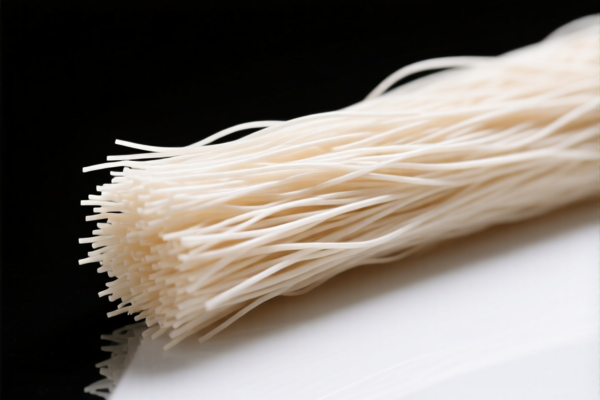


AI分析
🧵 Regenerated Cellulose Fiber Textiles (Rayon/Viscose/Silk Substitutes)
🌐 HS Code Reference & Clearance Guide | 2026 Latest Tariff Breakdown | Professional Customs Strategy
📌 I. Product Definition & Classification: What is "Regenerated Cellulose Fiber"?
Regenerated cellulose fibers (commonly known as Viscose, Rayon, or artificial silk) are man-made fibers produced by dissolving natural cellulose (wood pulp, cotton linters) and regenerating it into fibers. Unlike synthetic fibers (polyester, nylon) made from petrochemicals, these are semi-synthetic and biodegradable.
In international trade, they are categorized based on their physical state and end-product form:
1. Filament Yarns (Long-staple/Continuous): * Definition: Continuous strands of fiber, resembling natural silk. * Key Distinction: Classified under Chapter 54 (Man-made filaments). * Sub-types: * Textured/Untextured Filament Yarns (e.g., HS 5403.10). * Monofilament/Single Filament (e.g., HS 5403.31).
2. Woven Fabrics (Textiles): * Definition: Fabric made by weaving filament yarns or staple fibers into viscose/rayon. * Key Distinction: Classified under Chapter 55 (Man-made staple fibers) or sometimes Chapter 50 if blended with real silk (though pure regenerated is usually Ch 55). * Specifics: Woven fabrics consisting mainly of artificial filament yarns or staple fibers.
⚠️ Critical Classification Point: - If the product is Yarn/Filament → Look to Chapter 54. - If the product is Woven Fabric → Look to Chapter 55. - Note: "Silk-like" appearance does not automatically mean it falls under Chapter 50 (Real Silk). Pure regenerated cellulose is NOT real silk.
📦 II. HS Code Classification Details (2026 Latest Tariff Mapping)
Based on the provided data, here are the specific HS Codes for Regenerated Cellulose Fiber Textiles:
| HS Code | Product Description | Application Scenario | Category Logic |
|---|---|---|---|
5403.10.30.40 |
Regenerated Cellulose Fiber, classified as Artificial Filaments (Long staple/multi-filament) | Rayon yarn, textile threads, sewing thread | ✅ Filament Yarn (Chapter 54) |
5403.31.00.40 |
Regenerated Cellulose Fiber, classified as Viscose Rayon (Artificial filaments, filament/yarn) | Viscose filament yarn, monofilament | ✅ Filament Yarn (Chapter 54) |
5516.11.00.10 |
Regenerated Cellulose Fiber, conforms to Artificial Filament category, form is Fabric | Woven viscose/rayon fabric, lining fabric | ✅ Woven Fabric (Chapter 55) |
5516.12.00.10 |
Regenerated Cellulose Fiber, form is Filament-type Fabric, conforms to artificial filament fabric classification | Sheer fabrics, chiffon, woven rayon textiles | ✅ Woven Fabric (Chapter 55) |
5007.90.30.90 |
Regenerated Cellulose Fiber, categorized as Silk or Silk Waste, conforms to Fabric category | Special Case: Fabrics potentially blended with or labeled as "Silk-like" waste or specific silk blends | ⚠️ Silk-Related Fabric (Chapter 50 - Cross-category nuance) |
🔍 Key Insight: - Codes
5403.*refer to Yarn/Filament. - Codes5516.*refer to Woven Fabrics. - Code5007.*is an outlier here, likely referring to specific silk blends or waste fabrics treated similarly to silk for tariff purposes. Verify if your product contains real silk. If 100% regenerated cellulose,5516is more likely correct for fabrics.
💰 III. 2026 Latest Tariff Rate Breakdown (Including Surcharges)
✅ Applicable Country: United States (US)
✅ Origin: China (CN)
✅ Effective Date: Current trade policy (Section 301 & IEEPA)
🎯 1. Yarn/Filament Categories (5403.10.30.40 & 5403.31.00.40)
| Item | Content |
|---|---|
| Base Tariff | 10.0% |
| Section 301 Surtax | +25.0% |
| IEEPA Surtax (Section 122/301 related) | +10.0% |
| Total Effective Rate | 45.0% |
| Calculation Basis | CIF Value × 45% |
| De Minimis Exemption | ❌ Not Eligible |
| Legal Authority | USITC:5403.10.30.40, Section 301, IEEPA |
📌 Explanation: - These yarns are considered "man-made filaments." - Subject to Base 10% + Section 301 25% + IEEPA 10% = 45% Total. - This is a high-cost category. Ensure accurate valuation.
🎯 2. Woven Fabric Categories (5516.11.00.10 & 5516.12.00.10)
| Item | Content |
|---|---|
| Base Tariff | 14.9% |
| Section 301 Surtax | +25.0% |
| IEEPA Surtax (Section 122/301 related) | +10.0% |
| Total Effective Rate | 49.9% |
| Calculation Basis | CIF Value × 49.9% |
| De Minimis Exemption | ❌ Not Eligible |
| Legal Authority | USITC:5516.11.00.10, Section 301, IEEPA |
📌 Explanation: - Woven fabrics made of artificial filaments or staple fibers (viscose/rayon) fall here. - Base tariff is higher (14.9%) compared to yarn (10%). - Total 49.9% makes this one of the most expensive textile categories for US import from China.
🎯 3. Silk-Related Fabric Category (5007.90.30.90)
| Item | Content |
|---|---|
| Base Tariff | 0.8% |
| Section 301 Surtax | +25.0% |
| IEEPA Surtax (Section 122/301 related) | +10.0% |
| Total Effective Rate | 35.8% |
| Calculation Basis | CIF Value × 35.8% |
| De Minimis Exemption | ❌ Not Eligible |
| Legal Authority | USITC:5007.90.30.90, Section 301, IEEPA |
📌 Explanation: - This code has a much lower base rate (0.8%), resulting in a lower total (35.8%). - ⚠️ WARNING: Only use this if the product truly falls under "Silk or Silk Waste" definitions (e.g., specific blends or waste products). If it is pure regenerated cellulose, misclassification here is a major customs risk. Do not use to evade higher duties on true viscose fabrics.
🛠️ IV. Customs Clearance Practical Advice (Pitfall Avoidance)
✅ 1. Documentation Checklist (Mandatory)
| Document | Required | Description |
|---|---|---|
| ✅ Product Specification Sheet | ✔️ | Must specify: Fiber content (e.g., 100% Viscose), Form (Yarn/Fabric), Weave type. |
| ✅ Material Composition Proof | ✔️ | Lab test report confirming it is Regenerated Cellulose, NOT polyester or natural silk. |
| ✅ Commercial Invoice | ✔️ | Must clearly state "Regenerated Cellulose Fiber" and HS Code. Avoid vague terms like "Fabric." |
| ✅ Packing List | ✔️ | Detail weight, dimensions, and quantity. |
| ✅ Origin Certificate | ✔️ | Crucial for Section 301 applicability. If origin is NOT China, lower rates may apply. |
✅ 2. Declaration Tips (Key Keywords)
🔥 "Be Specific: Fiber, Form, and Origin!"
| Scenario | Correct Declaration | Incorrect/Risky Declaration |
|---|---|---|
| Yarn | Regenerated Cellulose Filament Yarn, Viscose, 100% |
"Silk Thread" or "Artificial Silk" (Vague) |
| Fabric | Woven Fabric, Regenerated Cellulose Fiber, Viscose |
"Cotton Fabric" (Wrong Chapter) |
| Silk-Like | Fabric, Regenerated Cellulose, Silk-like appearance |
"Real Silk" (If not 100% silk) |
| Origin | Made in China |
Origin: Unknown |
✅ 3. Special Case Handling
| Situation | Handling Advice |
|---|---|
| Blended Fabrics | If mixed with polyester (e.g., 65% Rayon/35% Poly), classification changes. Consult tariff notes for "principal material." |
| "Silk-Like" Claims | Customs may scrutinize 5007 codes. Provide lab reports proving it is not natural silk to avoid fraud penalties. |
| Pre-Cut Fabric | Ensure it is classified as "Fabric," not "Garments," unless it is cut/sewn. |
🌍 V. Global Market Comparison (2026)
| Country/Region | Recommended HS Code | Tariff (China Origin) | Notes |
|---|---|---|---|
| 🇺🇸 USA | 5516.11.00.10 / 5403.10.30.40 |
45% - 49.9% | High tariffs due to Section 301 & IEEPA. |
| 🇨🇳 China | 5516.11.00.10 / 5403.10.30.40 |
~5% - 10% | Lower import duties. |
| 🇪🇺 EU | 5516.11.00.10 |
0% - 4% | No Section 301 equivalent. |
| 🇬🇧 UK | 5516.11.00.10 |
0% - 4% | Post-Brexit tariff structure. |
| 🇻🇳 Vietnam | 5516.11.00.10 |
0% | Often used for re-export to avoid US tariffs. |
📌 Conclusion: - USA is the highest-cost market for regenerated cellulose textiles from China. - EU and UK are significantly more favorable. - Supply Chain Strategy: Many exporters use Vietnam or Cambodia for final processing to claim non-China origin and avoid 25-45% surcharges.
📌 VI. Common Errors & Pitfalls (Lessons Learned)
❌ Error 1: Classifying Regenerated Cellulose as Natural Silk (Chapter 50) to get lower rates. 👉 Consequence: Severe penalties for fraud, seizure of goods, back duties + interest.
❌ Error 2: Confusing Yarn (Chapter 54) with Fabric (Chapter 55). 👉 Consequence: Misclassification leading to incorrect duty assessment (45% vs 49.9%) and delays.
❌ Error 3: Ignoring Section 301 & IEEPA in cost calculations. 👉 Consequence: Profit margin erosion due to unanticipated 35-50% total tax burden.
❌ Error 4: Vague description "Artificial Silk." 👉 Consequence: Customs may require lab tests, causing 3-4 week delays.
✅ Correct Practice:
"Viscose Filament Yarn, 100% Regenerated Cellulose, for Textile Use, Origin: China" OR "Woven Viscose Fabric, 100% Regenerated Cellulose, for Garment Use, Origin: China"
🎯 VII. Conclusion: Precise Classification Saves Money!
🎯 Remember:
🔹 "Regenerated ≠ Natural Silk!" → It is a man-made fiber. 🔹 "Yarn vs. Fabric" → Determines Chapter 54 vs. Chapter 55. 🔹 "China Origin = High Tariff" → 45-49.9% in the US. Plan accordingly!
📌 Pro Tip:
If you are importing into the US, consider supply chain diversification to countries not subject to Section 301 (e.g., Vietnam, Thailand, Indonesia) to reduce tariff exposure.
📣 Immediate Action:
📞 Consult a licensed customs broker. 📄 Provide fiber composition reports. 📊 Calculate total landed cost including 45-49.9% duties. 🚀 Avoid surprises at the border!
✨ Professional Customs Clearance Starts with Accurate Classification! 💼 Your Cost Efficiency Depends on It!
用户评价
关于 HS 编码归类
协调制度(HS)是由世界海关组织(WCO)制定的国际贸易商品分类标准。全球 200 多个国家采用 HS 系统作为海关关税、贸易统计和进出口监管的基础。
每个 HS 编码遵循以下层级结构:
- 章(2 位)——商品大类(例如:第 84 章:机器和机械设备)
- 品目(4 位)——章内的更具体分类
- 子目(6 位)——国际通用细分,所有 WCO 成员国统一使用
- 本国细分(8-10 位)——各国自行扩展的细分编码,如美国 HTSUS 10 位编码
正确的 HS 编码归类对于顺利通关、准确缴纳关税和遵守贸易法规至关重要。错误归类可能导致海关延误、多缴关税或罚款。
从CN进口到US时,适用的关税税率可能包括:
- 最惠国(MFN)税率——适用于 WTO 成员国的标准关税税率
- 普通税率——适用于无贸易协定国家
- 贸易救济关税——附加关税,如 301 条款(反倾销)、232 条款(国家安全)或反补贴税
本页内容仅供参考。如需正式归类,请咨询当地海关或持牌报关代理。