Regenerated Cellulose Fiber Textiles
CN → US| HS Code | Tariff Rate | Origin | Destination | Doc |
|---|---|---|---|---|
| 5403103040 | 45.0% | CN | US | Official Doc |
| 5403310040 | 45.0% | CN | US | Official Doc |
| 5516110010 | 49.9% | CN | US | Official Doc |
| 5516120010 | 49.9% | CN | US | Official Doc |
| 5007903090 | 35.8% | CN | US | Official Doc |
Product Images
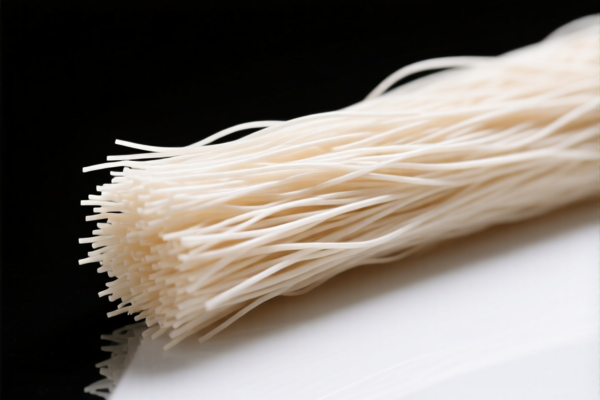


AI Analysis
🧵 Regenerated Cellulose Fiber Textiles (Rayon/Viscose/Silk Substitutes)
🌐 HS Code Reference & Clearance Guide | 2026 Latest Tariff Breakdown | Professional Customs Strategy
📌 I. Product Definition & Classification: What is "Regenerated Cellulose Fiber"?
Regenerated cellulose fibers (commonly known as Viscose, Rayon, or artificial silk) are man-made fibers produced by dissolving natural cellulose (wood pulp, cotton linters) and regenerating it into fibers. Unlike synthetic fibers (polyester, nylon) made from petrochemicals, these are semi-synthetic and biodegradable.
In international trade, they are categorized based on their physical state and end-product form:
1. Filament Yarns (Long-staple/Continuous): * Definition: Continuous strands of fiber, resembling natural silk. * Key Distinction: Classified under Chapter 54 (Man-made filaments). * Sub-types: * Textured/Untextured Filament Yarns (e.g., HS 5403.10). * Monofilament/Single Filament (e.g., HS 5403.31).
2. Woven Fabrics (Textiles): * Definition: Fabric made by weaving filament yarns or staple fibers into viscose/rayon. * Key Distinction: Classified under Chapter 55 (Man-made staple fibers) or sometimes Chapter 50 if blended with real silk (though pure regenerated is usually Ch 55). * Specifics: Woven fabrics consisting mainly of artificial filament yarns or staple fibers.
⚠️ Critical Classification Point: - If the product is Yarn/Filament → Look to Chapter 54. - If the product is Woven Fabric → Look to Chapter 55. - Note: "Silk-like" appearance does not automatically mean it falls under Chapter 50 (Real Silk). Pure regenerated cellulose is NOT real silk.
📦 II. HS Code Classification Details (2026 Latest Tariff Mapping)
Based on the provided data, here are the specific HS Codes for Regenerated Cellulose Fiber Textiles:
| HS Code | Product Description | Application Scenario | Category Logic |
|---|---|---|---|
5403.10.30.40 |
Regenerated Cellulose Fiber, classified as Artificial Filaments (Long staple/multi-filament) | Rayon yarn, textile threads, sewing thread | ✅ Filament Yarn (Chapter 54) |
5403.31.00.40 |
Regenerated Cellulose Fiber, classified as Viscose Rayon (Artificial filaments, filament/yarn) | Viscose filament yarn, monofilament | ✅ Filament Yarn (Chapter 54) |
5516.11.00.10 |
Regenerated Cellulose Fiber, conforms to Artificial Filament category, form is Fabric | Woven viscose/rayon fabric, lining fabric | ✅ Woven Fabric (Chapter 55) |
5516.12.00.10 |
Regenerated Cellulose Fiber, form is Filament-type Fabric, conforms to artificial filament fabric classification | Sheer fabrics, chiffon, woven rayon textiles | ✅ Woven Fabric (Chapter 55) |
5007.90.30.90 |
Regenerated Cellulose Fiber, categorized as Silk or Silk Waste, conforms to Fabric category | Special Case: Fabrics potentially blended with or labeled as "Silk-like" waste or specific silk blends | ⚠️ Silk-Related Fabric (Chapter 50 - Cross-category nuance) |
🔍 Key Insight: - Codes
5403.*refer to Yarn/Filament. - Codes5516.*refer to Woven Fabrics. - Code5007.*is an outlier here, likely referring to specific silk blends or waste fabrics treated similarly to silk for tariff purposes. Verify if your product contains real silk. If 100% regenerated cellulose,5516is more likely correct for fabrics.
💰 III. 2026 Latest Tariff Rate Breakdown (Including Surcharges)
✅ Applicable Country: United States (US)
✅ Origin: China (CN)
✅ Effective Date: Current trade policy (Section 301 & IEEPA)
🎯 1. Yarn/Filament Categories (5403.10.30.40 & 5403.31.00.40)
| Item | Content |
|---|---|
| Base Tariff | 10.0% |
| Section 301 Surtax | +25.0% |
| IEEPA Surtax (Section 122/301 related) | +10.0% |
| Total Effective Rate | 45.0% |
| Calculation Basis | CIF Value × 45% |
| De Minimis Exemption | ❌ Not Eligible |
| Legal Authority | USITC:5403.10.30.40, Section 301, IEEPA |
📌 Explanation: - These yarns are considered "man-made filaments." - Subject to Base 10% + Section 301 25% + IEEPA 10% = 45% Total. - This is a high-cost category. Ensure accurate valuation.
🎯 2. Woven Fabric Categories (5516.11.00.10 & 5516.12.00.10)
| Item | Content |
|---|---|
| Base Tariff | 14.9% |
| Section 301 Surtax | +25.0% |
| IEEPA Surtax (Section 122/301 related) | +10.0% |
| Total Effective Rate | 49.9% |
| Calculation Basis | CIF Value × 49.9% |
| De Minimis Exemption | ❌ Not Eligible |
| Legal Authority | USITC:5516.11.00.10, Section 301, IEEPA |
📌 Explanation: - Woven fabrics made of artificial filaments or staple fibers (viscose/rayon) fall here. - Base tariff is higher (14.9%) compared to yarn (10%). - Total 49.9% makes this one of the most expensive textile categories for US import from China.
🎯 3. Silk-Related Fabric Category (5007.90.30.90)
| Item | Content |
|---|---|
| Base Tariff | 0.8% |
| Section 301 Surtax | +25.0% |
| IEEPA Surtax (Section 122/301 related) | +10.0% |
| Total Effective Rate | 35.8% |
| Calculation Basis | CIF Value × 35.8% |
| De Minimis Exemption | ❌ Not Eligible |
| Legal Authority | USITC:5007.90.30.90, Section 301, IEEPA |
📌 Explanation: - This code has a much lower base rate (0.8%), resulting in a lower total (35.8%). - ⚠️ WARNING: Only use this if the product truly falls under "Silk or Silk Waste" definitions (e.g., specific blends or waste products). If it is pure regenerated cellulose, misclassification here is a major customs risk. Do not use to evade higher duties on true viscose fabrics.
🛠️ IV. Customs Clearance Practical Advice (Pitfall Avoidance)
✅ 1. Documentation Checklist (Mandatory)
| Document | Required | Description |
|---|---|---|
| ✅ Product Specification Sheet | ✔️ | Must specify: Fiber content (e.g., 100% Viscose), Form (Yarn/Fabric), Weave type. |
| ✅ Material Composition Proof | ✔️ | Lab test report confirming it is Regenerated Cellulose, NOT polyester or natural silk. |
| ✅ Commercial Invoice | ✔️ | Must clearly state "Regenerated Cellulose Fiber" and HS Code. Avoid vague terms like "Fabric." |
| ✅ Packing List | ✔️ | Detail weight, dimensions, and quantity. |
| ✅ Origin Certificate | ✔️ | Crucial for Section 301 applicability. If origin is NOT China, lower rates may apply. |
✅ 2. Declaration Tips (Key Keywords)
🔥 "Be Specific: Fiber, Form, and Origin!"
| Scenario | Correct Declaration | Incorrect/Risky Declaration |
|---|---|---|
| Yarn | Regenerated Cellulose Filament Yarn, Viscose, 100% |
"Silk Thread" or "Artificial Silk" (Vague) |
| Fabric | Woven Fabric, Regenerated Cellulose Fiber, Viscose |
"Cotton Fabric" (Wrong Chapter) |
| Silk-Like | Fabric, Regenerated Cellulose, Silk-like appearance |
"Real Silk" (If not 100% silk) |
| Origin | Made in China |
Origin: Unknown |
✅ 3. Special Case Handling
| Situation | Handling Advice |
|---|---|
| Blended Fabrics | If mixed with polyester (e.g., 65% Rayon/35% Poly), classification changes. Consult tariff notes for "principal material." |
| "Silk-Like" Claims | Customs may scrutinize 5007 codes. Provide lab reports proving it is not natural silk to avoid fraud penalties. |
| Pre-Cut Fabric | Ensure it is classified as "Fabric," not "Garments," unless it is cut/sewn. |
🌍 V. Global Market Comparison (2026)
| Country/Region | Recommended HS Code | Tariff (China Origin) | Notes |
|---|---|---|---|
| 🇺🇸 USA | 5516.11.00.10 / 5403.10.30.40 |
45% - 49.9% | High tariffs due to Section 301 & IEEPA. |
| 🇨🇳 China | 5516.11.00.10 / 5403.10.30.40 |
~5% - 10% | Lower import duties. |
| 🇪🇺 EU | 5516.11.00.10 |
0% - 4% | No Section 301 equivalent. |
| 🇬🇧 UK | 5516.11.00.10 |
0% - 4% | Post-Brexit tariff structure. |
| 🇻🇳 Vietnam | 5516.11.00.10 |
0% | Often used for re-export to avoid US tariffs. |
📌 Conclusion: - USA is the highest-cost market for regenerated cellulose textiles from China. - EU and UK are significantly more favorable. - Supply Chain Strategy: Many exporters use Vietnam or Cambodia for final processing to claim non-China origin and avoid 25-45% surcharges.
📌 VI. Common Errors & Pitfalls (Lessons Learned)
❌ Error 1: Classifying Regenerated Cellulose as Natural Silk (Chapter 50) to get lower rates. 👉 Consequence: Severe penalties for fraud, seizure of goods, back duties + interest.
❌ Error 2: Confusing Yarn (Chapter 54) with Fabric (Chapter 55). 👉 Consequence: Misclassification leading to incorrect duty assessment (45% vs 49.9%) and delays.
❌ Error 3: Ignoring Section 301 & IEEPA in cost calculations. 👉 Consequence: Profit margin erosion due to unanticipated 35-50% total tax burden.
❌ Error 4: Vague description "Artificial Silk." 👉 Consequence: Customs may require lab tests, causing 3-4 week delays.
✅ Correct Practice:
"Viscose Filament Yarn, 100% Regenerated Cellulose, for Textile Use, Origin: China" OR "Woven Viscose Fabric, 100% Regenerated Cellulose, for Garment Use, Origin: China"
🎯 VII. Conclusion: Precise Classification Saves Money!
🎯 Remember:
🔹 "Regenerated ≠ Natural Silk!" → It is a man-made fiber. 🔹 "Yarn vs. Fabric" → Determines Chapter 54 vs. Chapter 55. 🔹 "China Origin = High Tariff" → 45-49.9% in the US. Plan accordingly!
📌 Pro Tip:
If you are importing into the US, consider supply chain diversification to countries not subject to Section 301 (e.g., Vietnam, Thailand, Indonesia) to reduce tariff exposure.
📣 Immediate Action:
📞 Consult a licensed customs broker. 📄 Provide fiber composition reports. 📊 Calculate total landed cost including 45-49.9% duties. 🚀 Avoid surprises at the border!
✨ Professional Customs Clearance Starts with Accurate Classification! 💼 Your Cost Efficiency Depends on It!
Customer Reviews
About HS Code Classification
The Harmonized System (HS) is an internationally standardized nomenclature developed by the World Customs Organization (WCO) to classify traded products. Over 200 countries use the HS system as the basis for customs tariffs, trade statistics, and import/export regulations.
Each HS code follows a hierarchical structure:
- Chapter (2 digits) — Broad category of goods (e.g., Chapter 84: Machinery and Mechanical Appliances)
- Heading (4 digits) — More specific grouping within the chapter
- Subheading (6 digits) — Internationally standardized breakdown, used by all WCO member countries
- National subdivisions (8-10 digits) — Country-specific extensions for further classification, such as US HTSUS 10-digit codes
Correct HS code classification is essential for smooth customs clearance, accurate duty payment, and compliance with trade regulations. Misclassification can lead to customs delays, overpayment of duties, or penalties.
When importing from CN to US, the applicable tariff rates may include:
- Most-Favored-Nation (MFN) rate — The standard duty rate applied to WTO members
- General rate — Applied to countries without trade agreements
- Trade remedy duties — Additional tariffs such as Section 301 (anti-dumping), Section 232 (national security), or countervailing duties
The information provided on this page is for reference purposes only. For official classification, please consult with your local customs authority or a licensed customs broker.