Regulator
CN → US| HS编码 | 关税税率 | 原产国 | 目的国 | 文档 |
|---|---|---|---|---|
| 8543709820 | 37.6% | CN | US | 官方文档 |
| 8543709860 | 37.6% | CN | US | 官方文档 |
| 9209914000 | 17.5% | CN | US | 官方文档 |
| 9209924000 | 0.0% | CN | US | 官方文档 |
| 8483908080 | 37.8% | CN | US | 官方文档 |
商品图片
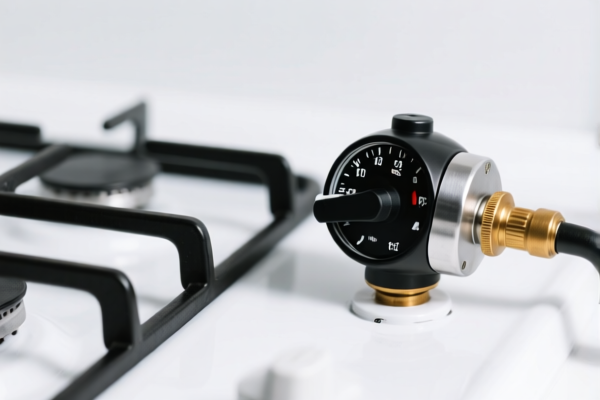
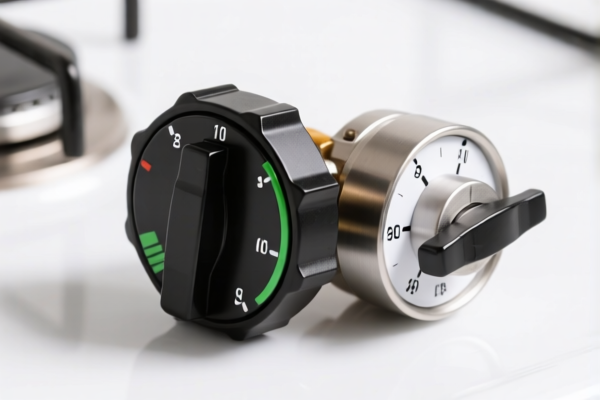
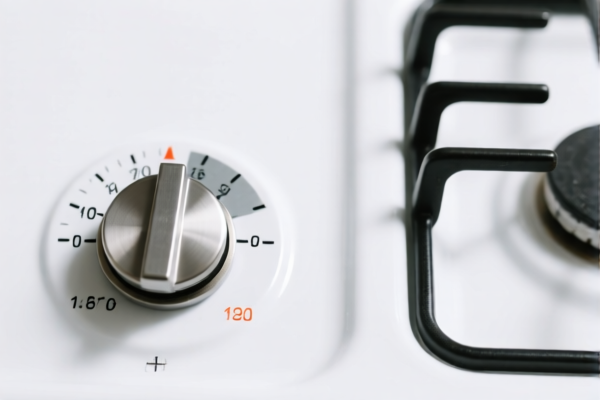
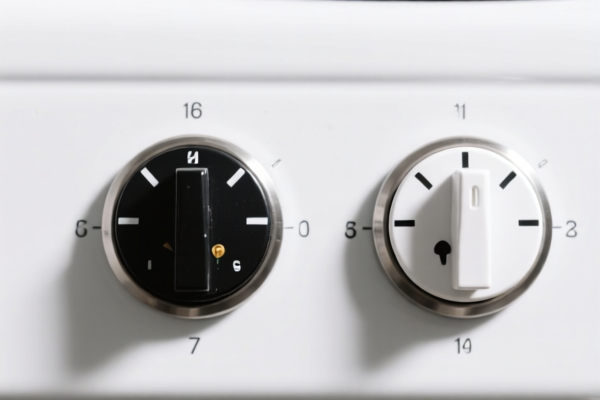
AI分析
🎸 String Regulators (Musical Instrument Tuning Devices)
🌐 HS Code Reference & Customs Clearance Guide | 2026 Latest Tariff Analysis | Professional Clearance Strategy
📌 I. Product Definition: What is a "String Regulator"?
A String Regulator (often referred to as a tuner, tuning peg, or tuning mechanism) is a critical component used in stringed musical instruments (such as pianos, harps, or specialized orchestral instruments) to adjust string tension.
In international trade, its classification depends heavily on its functional identity: * Is it a dedicated musical instrument part? → Falls under Chapter 92. * Is it a general mechanical adjustment device? → Falls under Chapter 85 or 84.
⚠️ Key Distinction Point:
- If the device is specifically designed for pianos (functioning like a tuning pin) → Best classified under 9209.
- If it is a general mechanical/electronic regulator not exclusive to instruments → Falls under 8543 or 8483.
📦 II. HS Code Classification Matrix (2026 Latest Tariff Authority)
Based on the provided data, here are the 5 potential classifications with their specific tax implications for imports from China to the US.
| HS Code | Product Description & Logic | Applicability | Total Tax Rate (China-Origin) |
|---|---|---|---|
9209.91.40.00 |
Piano Parts (String Regulators) Functionally equivalent to tuning pins; classified as instrument parts. |
Best Fit for Piano Tuning Pins/Regulators | 17.5% |
9209.92.40.00 |
Other Instrument Accessories Functions as tuning pins/accessories for stringed instruments. |
Pianos/Harps where "Part" classification is broader | 10¢/1,000 pins + 3.5% + 17.5% |
8543.70.98.20 |
Other Electrical Machines Regulator considered an "accessory" for musical instruments under general electrical machinery. |
Electronic tuning devices or non-mechanical regulators | 37.6% |
8543.70.98.60 |
Other Machines & Apparatus Inferred as an adjustment device for instruments, falling under "other machines." |
General mechanical adjustment devices for music gear | 37.6% |
8483.90.80.80 |
Transmission Parts Regulator viewed as a transmission component or adjusting part of a mechanical drive system. |
Mechanical regulators viewed as industrial transmission parts | 37.8% |
🔍 Critical Insight:
-9209Class is the Lowest Tax (17.5%). If your product is a piano tuning pin/regulator, this is the optimal classification. -8543and8483Classes are High Tax (~37-38%). These apply if the regulator is considered a general industrial or electrical component rather than a dedicated musical instrument part.
💰 III. 2026 Detailed Tariff Breakdown (Including Surcharges)
✅ Applicable Country: United States (US)
✅ Country of Origin: China (CN)
✅ Effective Date: Current trade policies apply (Section 301 & 122)
🎯 1. 9209.91.40.00 — Lowest Tax Option (17.5%)
Best for: Piano Tuning Pins/Regulators
| Item | Detail |
|---|---|
| Base Duty | 0.0% |
| Section 301 Surcharge | +7.5% |
| Section 122 Surcharge | +10.0% |
| Total Effective Rate | 17.5% |
| Calculation | CIF Value × 17.5% |
| Legal Path | USITC:9209.91.40.00 → 301:Footnote 9903.88.01 → 122:Section 122 |
📌 Explanation:
- This classification treats the item as a part of a musical instrument. - The base duty for instrument parts is often 0%, but Section 301 (7.5%) and Section 122 (10%) surcharges apply due to origin. - Savings: Compared to 37.6%, you save ~20% on duty costs.
🎯 2. 9209.92.40.00 — Alternative Instrument Accessory (10¢/1,000 pins + 21%)
| Item | Detail |
|---|---|
| Base Duty | 10¢ per 1,000 pins + 3.5% (Specific/Ad Valorem hybrid) |
| Section 301 Surcharge | +7.5% |
| Section 122 Surcharge | +10.0% |
| Total Effective Rate | ~21% + Fixed Fee (Varies by volume) |
| Calculation | (CIF Value × 3.5%) + Fixed Fee + Surcharges |
| Legal Path | USITC:9209.92.40.00 → 301 → 122 |
📌 Note:
- This is often used if the item is classified as an accessory rather than a core "part." - For high-volume pins, the fixed fee might be negligible, but the ad valorem rate is higher.
🎯 3. 8543.70.98.20 & 8543.70.98.60 — General Machinery (37.6%)
High Risk if misclassified as "electrical appliance" or "general regulator"
| Item | Detail |
|---|---|
| Base Duty | 2.6% |
| Section 301 Surcharge | +25.0% (Standard USITC 301 rate) |
| Section 122 Surcharge | +10.0% |
| Total Effective Rate | 37.6% |
| Legal Path | IEEPA:9903.01.25 → USITC:8543.70.98.x → 122 |
📌 Explanation:
- These codes fall under Chapter 85 (Electrical Machinery). - Subject to the standard 25% Section 301 tariff for Chinese origin, plus 10% Section 122. - Avoid this if the product can be reasonably argued as a musical instrument part.
🎯 4. 8483.90.80.80 — Transmission Parts (37.8%)
| Item | Detail |
|---|---|
| Base Duty | 2.8% |
| Section 301 Surcharge | +25.0% |
| Section 122 Surcharge | +10.0% |
| Total Effective Rate | 37.8% |
| Legal Path | USITC:8483.90.80.80 → 301 → 122 |
📌 Explanation:
- If customs views the regulator as a mechanical transmission component (e.g., a knob, handle, or drive shaft), it falls here. - Similar high tax burden as Chapter 85 items.
🛠️ IV. Customs Clearance Practical Advice (Avoid Pitfalls)
✅ 1. Document Preparation Checklist
| Document | Required? | Purpose |
|---|---|---|
| ✅ Product Specifications | ✔️ | Must clearly state "Musical Instrument Tuning Regulator" or "Piano Tuning Pin." |
| ✅ Usage Statement | ✔️ | Explicitly state: "Used exclusively for tuning stringed musical instruments (e.g., Pianos)." |
| ✅ Photos | ✔️ | Show the item installed in an instrument or close-ups showing gear/pin structure. |
| ✅ Bill of Materials (BOM) | ✔️ | If electronic, show it’s part of a tuning system, not a standalone industrial controller. |
| ✅ Commercial Invoice | ✔️ | Use precise description: "Piano Tuning Regulator, HS 9209.91.40.00" |
✅ 2. Classification Strategy: How to Argue for 9209
🔥 Golden Rule: "Instrument Part > General Mechanical Part"
| Scenario | Recommended HS Code | Strategy |
|---|---|---|
| Piano Tuning Pin/Regulator | 9209.91.40.00 |
Strongest Case. Cite GRI 1 (Heading 9209 covers "Parts"). Provide catalog showing piano use. |
| General String Tensioner | 9209.92.40.00 |
Strong Case. Classify as "Accessory." |
| Electronic Tuner Device | 8543.70.98.20 |
Weak Case. If it has a display/display panel, customs may force Chapter 85. |
| Industrial Gear Knob | 8483.90.80.80 |
Risk. Only use if it’s a generic part sold to machine factories, not music stores. |
✅ 3. Special Case Handling
| Situation | Recommendation |
|---|---|
| Mixed Shipment | If shipping pianos AND regulators, ensure regulators are listed as accessories. |
| OEM Custom Parts | Provide the end-product specification (e.g., "Designed for Yamaha Grand Piano Model X"). |
| Electronic vs. Mechanical | Mechanical parts (pins, gears) → Favor 9209. Electronic devices (digital tuners) → May fall under 8543 or 9031. |
| Pre-Ruling | For large volumes, apply for an Advance Ruling (ACE) from CBP to confirm 9209.91.40.00 eligibility. |
🌍 V. Global Market Comparison (2026)
| Market | Recommended HS Code | Duty Rate (China Origin) | Notes |
|---|---|---|---|
| 🇺🇸 USA | 9209.91.40.00 |
17.5% | Lowest duty. Must prove "Instrument Part" status. |
| 🇺🇸 USA | 8543.70.98.20 |
37.6% | High duty if misclassified as electrical appliance. |
| 🇨🇳 China | 9209.91.40.00 |
0% | No import duty for instruments/parts. |
| 🇪🇺 EU | 9209.91.00.00 |
0% | Generally 0% for instrument parts. |
| 🇬🇧 UK | 9209.91.00.00 |
0% | Post-Brexit rules align with EU for instruments. |
📌 Conclusion:
- The USA is the most challenging market due to Section 301 and 122 tariffs. - Accurate classification as a "Musical Instrument Part" (9209) saves ~20% in duty compared to general machinery codes.
📌 VI. Common Errors & Pitfalls (Lessons Learned)
❌ Error 1: Listing as "Mechanical Regulator"
👉 Result: Customs assigns 8483 or 8543 → 37-38% Tax.
✅ Fix: Use "Piano Tuning Regulator" or "Musical Instrument Part."
❌ Error 2: Ignoring Section 122 (10%)
👉 Result: Underpayment, penalties, and delays.
✅ Fix: Always include 10% Section 122 in cost calculations for all Chinese imports.
❌ Error 3: Claiming "De Minimis" (Under $800)
👉 Result: Denied. Section 301 and 122 tariffs apply to de minimis shipments.
✅ Fix: Pay duties upfront or use bonded warehouses.
🎯 VII. Summary & Action Plan
🎯 Key Takeaway:
"Piano Regulator = 9209.91.40.00 = 17.5% Tax"
"General Regulator = 8543/8483 = ~37% Tax"
✅ Immediate Actions:
1. Update Product Description in your commercial invoice to: "Musical Instrument Tuning Regulator / Piano Part."
2. Attach Proof of Use: Photos of the item in a piano or harp.
3. Verify HS Code: Confirm 9209.91.40.00 with your customs broker.
4. Calculate Landed Cost: Include 17.5% (not 37.6%) in your pricing model.
📣 Final Tip:
📞 Consult a Licensed Customs Broker to file for a Pre-Ruling if your shipment value exceeds $10,000.
🚀 Save 20% on duties by choosing the correct instrument classification!
✨ Precision in Classification = Profit in Clearance!
💼 Don’t let a wrong HS Code cost you thousands!
用户评价
关于 HS 编码归类
协调制度(HS)是由世界海关组织(WCO)制定的国际贸易商品分类标准。全球 200 多个国家采用 HS 系统作为海关关税、贸易统计和进出口监管的基础。
每个 HS 编码遵循以下层级结构:
- 章(2 位)——商品大类(例如:第 84 章:机器和机械设备)
- 品目(4 位)——章内的更具体分类
- 子目(6 位)——国际通用细分,所有 WCO 成员国统一使用
- 本国细分(8-10 位)——各国自行扩展的细分编码,如美国 HTSUS 10 位编码
正确的 HS 编码归类对于顺利通关、准确缴纳关税和遵守贸易法规至关重要。错误归类可能导致海关延误、多缴关税或罚款。
从CN进口到US时,适用的关税税率可能包括:
- 最惠国(MFN)税率——适用于 WTO 成员国的标准关税税率
- 普通税率——适用于无贸易协定国家
- 贸易救济关税——附加关税,如 301 条款(反倾销)、232 条款(国家安全)或反补贴税
本页内容仅供参考。如需正式归类,请咨询当地海关或持牌报关代理。