Regulator
CN → US| HS Code | Tariff Rate | Origin | Destination | Doc |
|---|---|---|---|---|
| 8543709820 | 37.6% | CN | US | Official Doc |
| 8543709860 | 37.6% | CN | US | Official Doc |
| 9209914000 | 17.5% | CN | US | Official Doc |
| 9209924000 | 0.0% | CN | US | Official Doc |
| 8483908080 | 37.8% | CN | US | Official Doc |
Product Images
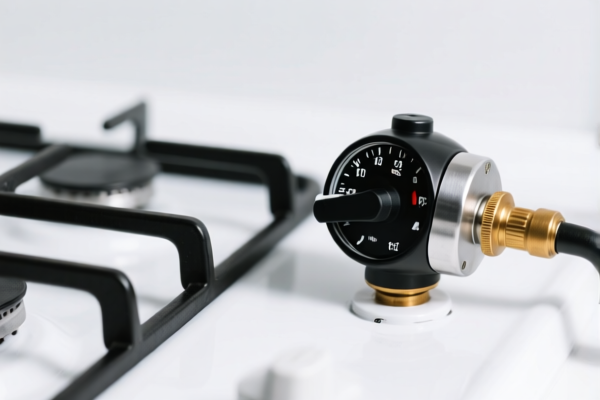
AI Analysis
🎸 String Regulators (Musical Instrument Tuning Devices)
🌐 HS Code Reference & Customs Clearance Guide | 2026 Latest Tariff Analysis | Professional Clearance Strategy
📌 I. Product Definition: What is a "String Regulator"?
A String Regulator (often referred to as a tuner, tuning peg, or tuning mechanism) is a critical component used in stringed musical instruments (such as pianos, harps, or specialized orchestral instruments) to adjust string tension.
In international trade, its classification depends heavily on its functional identity: * Is it a dedicated musical instrument part? → Falls under Chapter 92. * Is it a general mechanical adjustment device? → Falls under Chapter 85 or 84.
⚠️ Key Distinction Point:
- If the device is specifically designed for pianos (functioning like a tuning pin) → Best classified under 9209.
- If it is a general mechanical/electronic regulator not exclusive to instruments → Falls under 8543 or 8483.
📦 II. HS Code Classification Matrix (2026 Latest Tariff Authority)
Based on the provided data, here are the 5 potential classifications with their specific tax implications for imports from China to the US.
| HS Code | Product Description & Logic | Applicability | Total Tax Rate (China-Origin) |
|---|---|---|---|
9209.91.40.00 |
Piano Parts (String Regulators) Functionally equivalent to tuning pins; classified as instrument parts. |
Best Fit for Piano Tuning Pins/Regulators | 17.5% |
9209.92.40.00 |
Other Instrument Accessories Functions as tuning pins/accessories for stringed instruments. |
Pianos/Harps where "Part" classification is broader | 10¢/1,000 pins + 3.5% + 17.5% |
8543.70.98.20 |
Other Electrical Machines Regulator considered an "accessory" for musical instruments under general electrical machinery. |
Electronic tuning devices or non-mechanical regulators | 37.6% |
8543.70.98.60 |
Other Machines & Apparatus Inferred as an adjustment device for instruments, falling under "other machines." |
General mechanical adjustment devices for music gear | 37.6% |
8483.90.80.80 |
Transmission Parts Regulator viewed as a transmission component or adjusting part of a mechanical drive system. |
Mechanical regulators viewed as industrial transmission parts | 37.8% |
🔍 Critical Insight:
-9209Class is the Lowest Tax (17.5%). If your product is a piano tuning pin/regulator, this is the optimal classification. -8543and8483Classes are High Tax (~37-38%). These apply if the regulator is considered a general industrial or electrical component rather than a dedicated musical instrument part.
💰 III. 2026 Detailed Tariff Breakdown (Including Surcharges)
✅ Applicable Country: United States (US)
✅ Country of Origin: China (CN)
✅ Effective Date: Current trade policies apply (Section 301 & 122)
🎯 1. 9209.91.40.00 — Lowest Tax Option (17.5%)
Best for: Piano Tuning Pins/Regulators
| Item | Detail |
|---|---|
| Base Duty | 0.0% |
| Section 301 Surcharge | +7.5% |
| Section 122 Surcharge | +10.0% |
| Total Effective Rate | 17.5% |
| Calculation | CIF Value × 17.5% |
| Legal Path | USITC:9209.91.40.00 → 301:Footnote 9903.88.01 → 122:Section 122 |
📌 Explanation:
- This classification treats the item as a part of a musical instrument. - The base duty for instrument parts is often 0%, but Section 301 (7.5%) and Section 122 (10%) surcharges apply due to origin. - Savings: Compared to 37.6%, you save ~20% on duty costs.
🎯 2. 9209.92.40.00 — Alternative Instrument Accessory (10¢/1,000 pins + 21%)
| Item | Detail |
|---|---|
| Base Duty | 10¢ per 1,000 pins + 3.5% (Specific/Ad Valorem hybrid) |
| Section 301 Surcharge | +7.5% |
| Section 122 Surcharge | +10.0% |
| Total Effective Rate | ~21% + Fixed Fee (Varies by volume) |
| Calculation | (CIF Value × 3.5%) + Fixed Fee + Surcharges |
| Legal Path | USITC:9209.92.40.00 → 301 → 122 |
📌 Note:
- This is often used if the item is classified as an accessory rather than a core "part." - For high-volume pins, the fixed fee might be negligible, but the ad valorem rate is higher.
🎯 3. 8543.70.98.20 & 8543.70.98.60 — General Machinery (37.6%)
High Risk if misclassified as "electrical appliance" or "general regulator"
| Item | Detail |
|---|---|
| Base Duty | 2.6% |
| Section 301 Surcharge | +25.0% (Standard USITC 301 rate) |
| Section 122 Surcharge | +10.0% |
| Total Effective Rate | 37.6% |
| Legal Path | IEEPA:9903.01.25 → USITC:8543.70.98.x → 122 |
📌 Explanation:
- These codes fall under Chapter 85 (Electrical Machinery). - Subject to the standard 25% Section 301 tariff for Chinese origin, plus 10% Section 122. - Avoid this if the product can be reasonably argued as a musical instrument part.
🎯 4. 8483.90.80.80 — Transmission Parts (37.8%)
| Item | Detail |
|---|---|
| Base Duty | 2.8% |
| Section 301 Surcharge | +25.0% |
| Section 122 Surcharge | +10.0% |
| Total Effective Rate | 37.8% |
| Legal Path | USITC:8483.90.80.80 → 301 → 122 |
📌 Explanation:
- If customs views the regulator as a mechanical transmission component (e.g., a knob, handle, or drive shaft), it falls here. - Similar high tax burden as Chapter 85 items.
🛠️ IV. Customs Clearance Practical Advice (Avoid Pitfalls)
✅ 1. Document Preparation Checklist
| Document | Required? | Purpose |
|---|---|---|
| ✅ Product Specifications | ✔️ | Must clearly state "Musical Instrument Tuning Regulator" or "Piano Tuning Pin." |
| ✅ Usage Statement | ✔️ | Explicitly state: "Used exclusively for tuning stringed musical instruments (e.g., Pianos)." |
| ✅ Photos | ✔️ | Show the item installed in an instrument or close-ups showing gear/pin structure. |
| ✅ Bill of Materials (BOM) | ✔️ | If electronic, show it’s part of a tuning system, not a standalone industrial controller. |
| ✅ Commercial Invoice | ✔️ | Use precise description: "Piano Tuning Regulator, HS 9209.91.40.00" |
✅ 2. Classification Strategy: How to Argue for 9209
🔥 Golden Rule: "Instrument Part > General Mechanical Part"
| Scenario | Recommended HS Code | Strategy |
|---|---|---|
| Piano Tuning Pin/Regulator | 9209.91.40.00 |
Strongest Case. Cite GRI 1 (Heading 9209 covers "Parts"). Provide catalog showing piano use. |
| General String Tensioner | 9209.92.40.00 |
Strong Case. Classify as "Accessory." |
| Electronic Tuner Device | 8543.70.98.20 |
Weak Case. If it has a display/display panel, customs may force Chapter 85. |
| Industrial Gear Knob | 8483.90.80.80 |
Risk. Only use if it’s a generic part sold to machine factories, not music stores. |
✅ 3. Special Case Handling
| Situation | Recommendation |
|---|---|
| Mixed Shipment | If shipping pianos AND regulators, ensure regulators are listed as accessories. |
| OEM Custom Parts | Provide the end-product specification (e.g., "Designed for Yamaha Grand Piano Model X"). |
| Electronic vs. Mechanical | Mechanical parts (pins, gears) → Favor 9209. Electronic devices (digital tuners) → May fall under 8543 or 9031. |
| Pre-Ruling | For large volumes, apply for an Advance Ruling (ACE) from CBP to confirm 9209.91.40.00 eligibility. |
🌍 V. Global Market Comparison (2026)
| Market | Recommended HS Code | Duty Rate (China Origin) | Notes |
|---|---|---|---|
| 🇺🇸 USA | 9209.91.40.00 |
17.5% | Lowest duty. Must prove "Instrument Part" status. |
| 🇺🇸 USA | 8543.70.98.20 |
37.6% | High duty if misclassified as electrical appliance. |
| 🇨🇳 China | 9209.91.40.00 |
0% | No import duty for instruments/parts. |
| 🇪🇺 EU | 9209.91.00.00 |
0% | Generally 0% for instrument parts. |
| 🇬🇧 UK | 9209.91.00.00 |
0% | Post-Brexit rules align with EU for instruments. |
📌 Conclusion:
- The USA is the most challenging market due to Section 301 and 122 tariffs. - Accurate classification as a "Musical Instrument Part" (9209) saves ~20% in duty compared to general machinery codes.
📌 VI. Common Errors & Pitfalls (Lessons Learned)
❌ Error 1: Listing as "Mechanical Regulator"
👉 Result: Customs assigns 8483 or 8543 → 37-38% Tax.
✅ Fix: Use "Piano Tuning Regulator" or "Musical Instrument Part."
❌ Error 2: Ignoring Section 122 (10%)
👉 Result: Underpayment, penalties, and delays.
✅ Fix: Always include 10% Section 122 in cost calculations for all Chinese imports.
❌ Error 3: Claiming "De Minimis" (Under $800)
👉 Result: Denied. Section 301 and 122 tariffs apply to de minimis shipments.
✅ Fix: Pay duties upfront or use bonded warehouses.
🎯 VII. Summary & Action Plan
🎯 Key Takeaway:
"Piano Regulator = 9209.91.40.00 = 17.5% Tax"
"General Regulator = 8543/8483 = ~37% Tax"
✅ Immediate Actions:
1. Update Product Description in your commercial invoice to: "Musical Instrument Tuning Regulator / Piano Part."
2. Attach Proof of Use: Photos of the item in a piano or harp.
3. Verify HS Code: Confirm 9209.91.40.00 with your customs broker.
4. Calculate Landed Cost: Include 17.5% (not 37.6%) in your pricing model.
📣 Final Tip:
📞 Consult a Licensed Customs Broker to file for a Pre-Ruling if your shipment value exceeds $10,000.
🚀 Save 20% on duties by choosing the correct instrument classification!
✨ Precision in Classification = Profit in Clearance!
💼 Don’t let a wrong HS Code cost you thousands!
Customer Reviews
About HS Code Classification
The Harmonized System (HS) is an internationally standardized nomenclature developed by the World Customs Organization (WCO) to classify traded products. Over 200 countries use the HS system as the basis for customs tariffs, trade statistics, and import/export regulations.
Each HS code follows a hierarchical structure:
- Chapter (2 digits) — Broad category of goods (e.g., Chapter 84: Machinery and Mechanical Appliances)
- Heading (4 digits) — More specific grouping within the chapter
- Subheading (6 digits) — Internationally standardized breakdown, used by all WCO member countries
- National subdivisions (8-10 digits) — Country-specific extensions for further classification, such as US HTSUS 10-digit codes
Correct HS code classification is essential for smooth customs clearance, accurate duty payment, and compliance with trade regulations. Misclassification can lead to customs delays, overpayment of duties, or penalties.
When importing from CN to US, the applicable tariff rates may include:
- Most-Favored-Nation (MFN) rate — The standard duty rate applied to WTO members
- General rate — Applied to countries without trade agreements
- Trade remedy duties — Additional tariffs such as Section 301 (anti-dumping), Section 232 (national security), or countervailing duties
The information provided on this page is for reference purposes only. For official classification, please consult with your local customs authority or a licensed customs broker.