Reptile leather
CN → US| HS编码 | 关税税率 | 原产国 | 目的国 | 文档 |
|---|---|---|---|---|
| 4302196000 | 38.5% | CN | US | 官方文档 |
| 4302197500 | 36.7% | CN | US | 官方文档 |
| 4106400000 | 35.0% | CN | US | 官方文档 |
| 4205006000 | 39.9% | CN | US | 官方文档 |
| 4205008000 | 35.0% | CN | US | 官方文档 |
商品图片
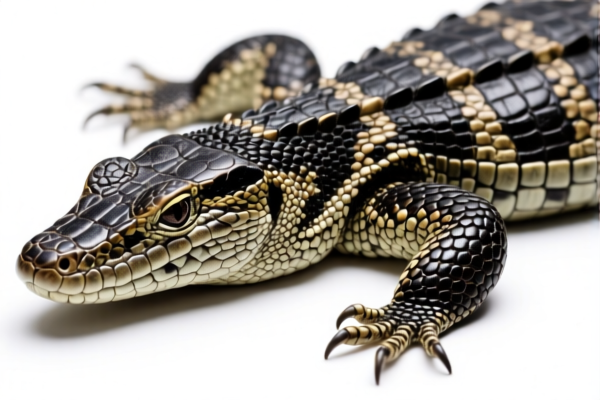
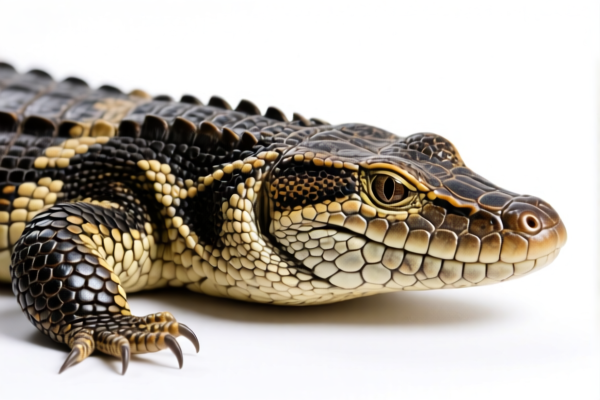
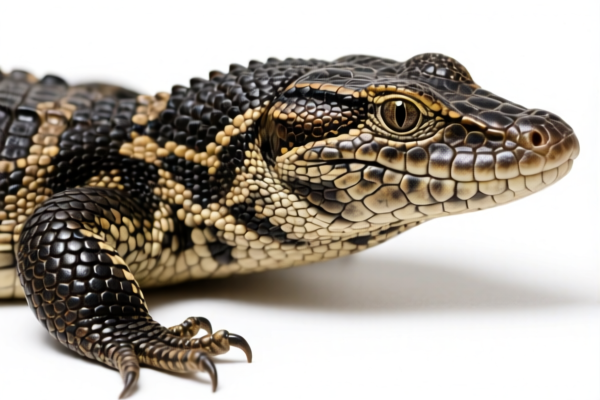

AI分析
🐍 Reptile Leather & Related Leather Goods – HS Code & Tariff Guide (2026 Edition)
🌐 HS Code Classification & Customs Clearance Strategy | 2026 Updated Tariff Rules | Pro-Level Compliance Insights
📌 One-Stop Reference for Importers, Exporters & Logistics Professionals
📦 1. Product Definition & Classification: What Exactly Is "Reptile Leather"?
Reptile leather refers to tanned or dressed skins of reptiles (such as snakes, lizards, crocodiles, alligators) used in luxury goods, fashion accessories, and high-end craftsmanship.
⚠️ Key Distinction: - Raw or semi-processed reptile skins (e.g., without further treatment) → classified under 4106.40.00.00 - Finished goods made from reptile leather (e.g., handbags, wallets, shoes) → classified under 4205.00.60.00 - Dyed or undyed whole furskins (non-reptile) → classified under 4302.19.60.00 / 4302.19.75.00
✅ Important Note:
- Reptile leather ≠ general animal leather → must be specifically declared as such. - No “leather-like” or “synthetic” labels allowed — must reflect actual material composition.
📊 2. HS Code Breakdown (2026 Tariff Authority Table)
| HS Code | Product Description | Applicable Use Case | Tax Status |
|---|---|---|---|
4205.00.60.00 |
Other articles of leather or composition leather: Other: Other: Of reptile leather | Handbags, wallets, belts, briefcases, travel cases made from reptile skin | 🟡 High Tariff |
4205.00.80.00 |
Other articles of leather or composition leather: Other: Other: Other | Non-reptile leather goods (e.g., cowhide, sheepskin), including non-leather composition items | 🟡 High Tariff |
4302.19.60.00 |
Tanned or dressed furskins (including heads, tails, paws): Whole skins, not assembled, not dyed | Undyed whole reptile or non-reptile furskins (e.g., alligator skins, fox pelts) | 🟢 0% Tariff |
4302.19.75.00 |
Tanned or dressed furskins: Whole skins, not assembled, dyed | Dyed whole reptile or non-reptile furskins | 🟢 0% Tariff |
4106.40.00.00 |
Tanned or crust skins of other animals, without wool/hair: Of reptiles | Raw reptile skins (e.g., snake, crocodile skins) before full finishing | 🟡 High Tariff |
🔍 Critical Insight: - Reptile leather products (like bags or accessories) are not classified under general "leather goods" — they require specific subheading due to end-use and material sensitivity. - Raw reptile skins are treated differently from finished goods — different HS codes, different tariffs.
💰 3. 2026 Tariff Rate Analysis (With Full Tax Breakdown)
✅ Applicable Country: United States (US)
✅ Origin: China (CN)
✅ Effective Date: November 10, 2025 (including subsequent imports)
🎯 1. 4205.00.60.00 — Articles of Reptile Leather (Finished Goods)
| Item | Detail |
|---|---|
| Base Duty Rate | 4.9% (ad valorem) |
| Additional Tariff (USITC Section 301) | +25.0% |
| Total Effective Duty | 29.9% |
| Tax Calculation | CIF Value × 29.9% |
| De Minimis Threshold | ❌ Not applicable (denied under U.S. law) |
| Legal Basis Path | USITC:4205.00.60.00 → FOOTNOTE:9903.88.01 → 301 Tariff List |
📌 Explanation: - This code applies to any finished item made from reptile leather, regardless of brand or design. - The 25% additional tariff comes from Section 301 of the U.S. Trade Act — targeting Chinese-origin goods deemed to involve unfair trade practices. - No exemption for “small shipments” or “gifts” — even a $50 wallet is subject to full 29.9%.
🎯 2. 4205.00.80.00 — Other Articles of Leather (Non-Reptile or Composition Leather)
| Item | Detail |
|---|---|
| Base Duty Rate | 0.0% |
| Additional Tariff (USITC Section 301) | +25.0% |
| Total Effective Duty | 25.0% |
| Tax Calculation | CIF Value × 25.0% |
| De Minimis Threshold | ❌ Not applicable |
| Legal Basis Path | USITC:4205.00.80.00 → FOOTNOTE:9903.88.01 → 301 Tariff List |
📌 Important Note: - Applies to non-reptile leather goods (e.g., cowhide bags, synthetic leather items). - Even if not made from reptile, if imported from China, it still triggers the 25% Section 301 tariff. - No difference in treatment between reptile and non-reptile leather — both face 25%+ if from China.
🎯 3. 4302.19.60.00 — Whole Reptile Furskins (Not Dyed)
| Item | Detail |
|---|---|
| Base Duty Rate | 0.0% |
| Additional Tariff | 0.0% |
| Total Effective Duty | 0.0% |
| Tax Calculation | CIF Value × 0.0% |
| De Minimis Threshold | ✅ Applicable (up to $800 per shipment) |
| Legal Basis Path | USITC:4302.19.60.00 → FOOTNOTE:9903.88.01 → No 301 Tariff |
📌 Why Zero Duty? - This code covers raw, unprocessed, whole reptile skins (e.g., alligator or python skins) not dyed. - These are not considered finished goods, so not subject to Section 301. - Can be shipped under de minimis — ideal for small batches, samples, or prototypes.
🎯 4. 4302.19.75.00 — Dyed Whole Reptile Furskins
| Item | Detail |
|---|---|
| Base Duty Rate | 0.0% |
| Additional Tariff | 0.0% |
| Total Effective Duty | 0.0% |
| Tax Calculation | CIF Value × 0.0% |
| De Minimis Threshold | ✅ Applicable |
| Legal Basis Path | USITC:4302.19.75.00 → FOOTNOTE:9903.88.01 → No 301 Tariff |
📌 Key Point: - Even dyed reptile furskins are exempt from 301 tariffs if not assembled or finished. - Only raw skins qualify — once cut, stitched, or assembled, they fall into 4205.00.60.00 or 4205.00.80.00.
🎯 5. 4106.40.00.00 — Tanned Crust Skins of Reptiles (Raw Material)
| Item | Detail |
|---|---|
| Base Duty Rate | 0.0% |
| Additional Tariff (USITC Section 301) | +25.0% |
| Total Effective Duty | 25.0% |
| Tax Calculation | CIF Value × 25.0% |
| De Minimis Threshold | ❌ Not applicable |
| Legal Basis Path | USITC:4106.40.00.00 → FOOTNOTE:9903.88.01 → 301 Tariff List |
📌 Critical Insight: - This code applies to raw reptile skins after tanning but before finishing. - Even though not yet a product, it is still subject to 25% Section 301 tariff due to Chinese origin. - No de minimis relief — must pay full 25%.
🛠️ 4. Customs Clearance Best Practices (Pro Tips)
✅ 1. Required Documentation (Must-Have Checklist)
| Document | Required? | Why It Matters |
|---|---|---|
| ✅ Commercial Invoice | ✔️ | Must clearly state: "Reptile Leather Wallet – Made from Snake Skin" |
| ✅ Packing List | ✔️ | Show total weight, number of units, and material type |
| ✅ Bill of Lading / Air Waybill | ✔️ | Proves shipment origin and route |
| ✅ Product Photos (High-Res) | ✔️ | Show material texture, stitching, branding |
| ✅ Material Certificate / Test Report | ✔️ | Prove reptile origin (e.g., CITES compliance) |
| ✅ CITES Permit (if applicable) | ✔️ | Required for endangered species (e.g., crocodile, python) |
| ✅ Certificate of Origin (CO) | ✔️ | Critical for tariff eligibility |
✅ 2.申报技巧 (Smart Filing Strategies)
🔥 "Raw vs. Finished, Dyed vs. Not Dyed — Know the Line!"
| Scenario | Correct HS Code | Risk of Error |
|---|---|---|
| Raw snake skin (undyed) | 4106.40.00.00 |
❌ High — if misclassified as finished, 29.9% instead of 25% |
| Finished wallet from reptile skin | 4205.00.60.00 |
❌ High — if misclassified as "other leather", 25% instead of 29.9% |
| Dyed alligator skin (whole) | 4302.19.75.00 |
✅ Safe — 0% duty |
| Non-reptile leather bag (China origin) | 4205.00.80.00 |
❌ High — 25% tariff even if not reptile |
| Sample of reptile skin (under $800) | 4302.19.60.00 |
✅ Safe — de minimis applies |
✅ 3. Special Cases & Risk Mitigation
| Situation | Recommended Action |
|---|---|
| Importing reptile skins from Vietnam or Thailand | ✅ Apply for 301 Tariff Exemption — may qualify for 0% duty |
| Using CITES-certified reptile skin | ✅ Submit CITES permit — avoids seizure |
| Shipping small samples (under $800) | ✅ Use 4302.19.60.00 or 4302.19.75.00 — de minimis applies |
| Custom-made leather goods with reptile trim | ❌ Do NOT split into "leather + reptile" — whole item must be classified under 4205.00.60.00 |
| Reptile leather in bulk for manufacturing | ✅ Use 4106.40.00.00 — but pay 25% unless origin is non-China |
🌍 5. Global Market Comparison (2026)
| Country | Recommended HS Code | Duty Rate | Certification Required | Notes |
|---|---|---|---|---|
| 🇺🇸 USA | 4205.00.60.00 |
29.9% | CITES, FCC (if electronic) | High risk — 25% Section 301 |
| 🇨🇳 China | 4205.00.60.00 |
13% (VAT + 13% import duty) | CCC, RoHS | No 301 tariff |
| 🇪🇺 EU | 4205.00.60.00 |
0% (if CE) | CE, REACH | No additional tariffs |
| 🇦🇺 Australia | 4205.00.60.00 |
5% | RCM | No 301-like tariffs |
| 🇯🇵 Japan | 4205.00.60.00 |
0% | PSE | No extra duties |
📌 Insight:
- The U.S. is the only market with high Section 301 tariffs on reptile leather goods. - China, EU, Australia, Japan offer much lower or zero tariffs — ideal for re-export or regional hubs.
🚨 6. Common Mistakes & Legal Risks (Avoid These!)
❌ Mistake 1: Misclassifying reptile leather wallet as "other leather" → 4205.00.80.00
👉 Result: Pay 25% instead of 29.9% → Underpayment → Penalties + Interest
❌ Mistake 2: Shipping raw reptile skin as "finished product"
👉 Result: Overcharged 29.9% instead of 25% → Wasted cost
❌ Mistake 3: Not declaring CITES for endangered species
👉 Result: Seizure, fines up to $50,000, criminal charges
❌ Mistake 4: Using "leather-like" or "synthetic" in description
👉 Result: Misrepresentation → Customs audit, refund denial
✅ Correct Declaration Example:
“Reptile Leather Wallet, Made from Snake Skin (Python), Handcrafted, Not Dyed, CITES Permitted, Model XYZ”
🎯 7. Final Verdict: Strategic Advice for 2026
🔹 If you're importing from China:
- Expect 25–29.9% tariffs on all reptile leather goods — no escape.
- Consider shifting origin to Vietnam, Thailand, or Mexico to avoid Section 301.🔹 If you're exporting raw skins:
- Use4302.19.60.00or4302.19.75.00— 0% duty, de minimis applies.🔹 Always verify CITES compliance — no exceptions.
🔹 Get a pre-ruling (Advance Ruling) from U.S. CBP — protects against future audits.
📌 Summary: The 3 Golden Rules of Reptile Leather Trade
- ✅ Raw skin ≠ finished product → different HS codes, different taxes.
- ✅ China origin = 25%+ tariffs → even for non-reptile goods.
- ✅ CITES is mandatory → no exceptions for endangered species.
📣 Take Action Now:
📞 Contact a licensed customs broker + provide product photos + material proof
🚀 Apply for HS Code pre-ruling before shipment
🌐 Consider non-China manufacturing hubs to reduce risk
✨ Pro Tip:
If your reptile leather goods are made in Vietnam, Mexico, or Malaysia, you may qualify for Section 301 exclusion — 0% duty on
4205.00.60.00and4106.40.00.00.
💼 Your success starts with precise classification.
📦 One wrong HS code = thousands in extra tax.
🔐 Stay compliant. Stay profitable. Stay ahead.
🎯 Professional Customs, Precision Tariffs, Global Success.
🚀 Let’s get your reptile leather goods across borders — smoothly, legally, and profitably!
用户评价
关于 HS 编码归类
协调制度(HS)是由世界海关组织(WCO)制定的国际贸易商品分类标准。全球 200 多个国家采用 HS 系统作为海关关税、贸易统计和进出口监管的基础。
每个 HS 编码遵循以下层级结构:
- 章(2 位)——商品大类(例如:第 84 章:机器和机械设备)
- 品目(4 位)——章内的更具体分类
- 子目(6 位)——国际通用细分,所有 WCO 成员国统一使用
- 本国细分(8-10 位)——各国自行扩展的细分编码,如美国 HTSUS 10 位编码
正确的 HS 编码归类对于顺利通关、准确缴纳关税和遵守贸易法规至关重要。错误归类可能导致海关延误、多缴关税或罚款。
从CN进口到US时,适用的关税税率可能包括:
- 最惠国(MFN)税率——适用于 WTO 成员国的标准关税税率
- 普通税率——适用于无贸易协定国家
- 贸易救济关税——附加关税,如 301 条款(反倾销)、232 条款(国家安全)或反补贴税
本页内容仅供参考。如需正式归类,请咨询当地海关或持牌报关代理。