Research grade Unsaturated Polyester Resin
CN → US| HS编码 | 关税税率 | 原产国 | 目的国 | 文档 |
|---|---|---|---|---|
| 3909400000 | 41.5% | CN | US | 官方文档 |
| 3208100000 | 38.7% | CN | US | 官方文档 |
| 3208900000 | 38.2% | CN | US | 官方文档 |
| 3909390000 | 41.5% | CN | US | 官方文档 |
商品图片
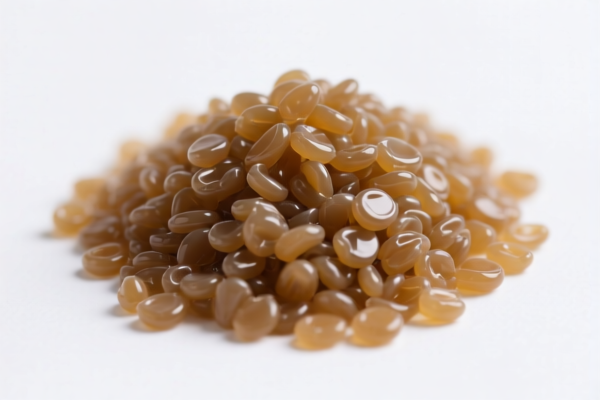
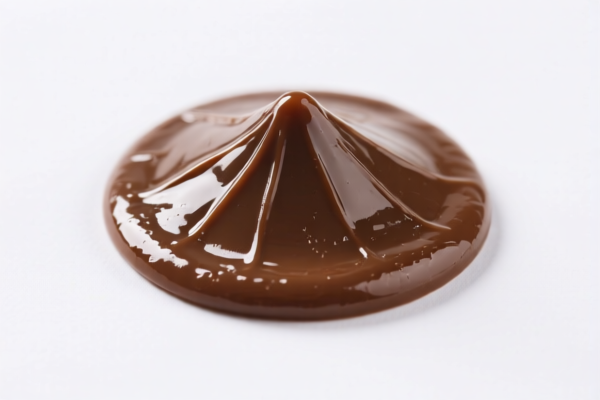
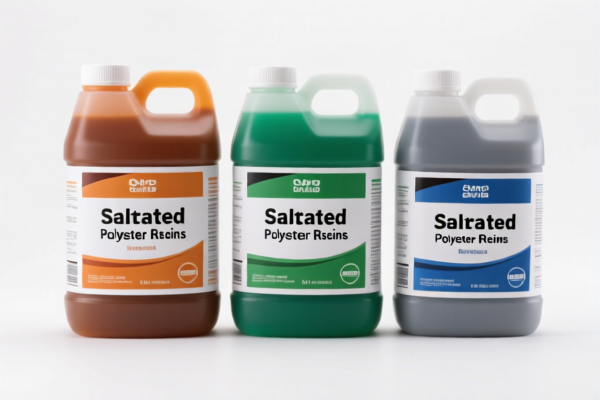
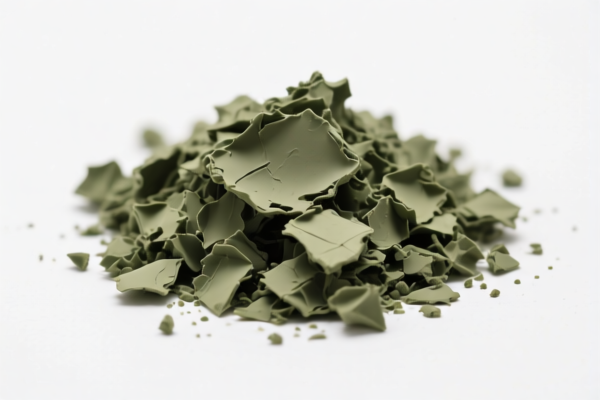
AI分析
🧪 Research Grade Unsaturated Polyester Resin (UPR)
🌐 HS Code Classification & Customs Clearance Guide | 2026 Latest Tariff Analysis | Professional Entry Strategy
📌 I. Product Definition: What is "Research Grade UPR"?
Unsaturated Polyester Resin (UPR) is a versatile synthetic polymer used extensively in composites, coatings, and adhesives. "Research Grade" implies a high-purity, lab-scale, or specialized formulation intended for scientific study or precise R&D applications, rather than bulk industrial molding.
In international trade, the classification hinges on two factors: 1. Material State: Is it a raw resin (base polymer) or a finished coating/paint? 2. Chemical Composition: Is it defined as a standalone resin or a mixture intended for specific uses (like paints)?
⚠️ Key Distinction:
- If sold as a base polymer for further processing (e.g., into fiberglass, castings, or customized coatings) → It is classified under Chapter 39 (Plastics/Resins).
- If sold as a finished product ready for application as a varnish, lacquer, or paint → It is classified under Chapter 32 (Tanning/Dyeing/Paints).
📦 II. HS Code Classification Details (2026 Latest Tariff Authority Match)
Based on the provided data, there are four potential HS Codes. The choice depends on the specific formulation and end-use declared by the importer.
| HS Code | Product Description | Applicability & Logic | Tax Rate (China to US) |
|---|---|---|---|
3909.40.00.00 |
Polyesters in Primary Forms | Best Match for Raw Resin. UPR is a polyester. "Primary form" covers liquids/powders not yet mixed into final paints. "Research grade" implies high purity, fitting the "resin" definition. | 41.5% |
3208.10.00.00 |
Paints/Varnishes Based on Polyesters | Match if Formulated as Coating. If the UPR is mixed with solvents/resin hardeners intended for direct painting/coating use, it falls here. Logic: Material matches "based on polyester"; Form matches "paints/varnishes." | 38.7% |
3208.90.00.00 |
Other Paints/Varnishes Based on Synthetic Polymers | Fallback for Coatings. If it doesn't fit 3208.10 (e.g., specific solvent-based restrictions), it falls under "Other synthetic polymers." Matches the "Synthetic Polymer" definition of UPR. |
38.2% |
3909.39.00.00 |
Other Polyesters in Primary Forms | Alternative for Resin. A "catch-all" for polyesters not specifically named elsewhere in Ch 39. If 3909.40 is contested, this acts as a backup for raw resin materials. |
41.5% |
🔍 Critical Note:
-3909.40.00.00is generally the most accurate for pure UPR resin.
-3208.x0codes are for finished coatings. If your product is a clear liquid used to coat surfaces, check if it meets the definition of "Varnish" or "Paint."
- Do not mix codes: You must declare ONE primary HS code. Misclassification leads to customs holds.
💰 III. 2026 Tariff Rate Breakdown (China to USA)
✅ Applicable Country: USA (US)
✅ Origin: China (CN)
✅ Effective Date: 2025/2026 Trade Rules (Section 301 & IEEPA)
🎯 1. 3909.40.00.00 & 3909.39.00.00 —— Raw Resin (Polyesters)
| Item | Detail |
|---|---|
| Base Duty | 6.5% (Ad Valorem) |
| Section 301 Additional Duty | +25.0% |
| IEEPA Section 122 Duty | +10.0% |
| Total Effective Rate | 41.5% |
| Calculation Basis | CIF Value × 41.5% |
| De Minimis Exemption | ❌ NOT ELIGIBLE (deny_de_minimis) |
| Legal Path | USITC:3909.40.00.00 → FOOTNOTE:301 → IEEPA:122 |
📌 Explanation:
- Raw polyester resins are subject to both Section 301 (25%) and IEEPA 122 (10%) tariffs.
- This is a high-cost entry. Many companies shift sourcing to Vietnam or Thailand to avoid these, but if imported from China, the cost is baked in.
🎯 2. 3208.10.00.00 —— Polyester-Based Paints/Varnishes
| Item | Detail |
|---|---|
| Base Duty | 3.7% (Ad Valorem) |
| Section 301 Additional Duty | +25.0% |
| IEEPA Section 122 Duty | +10.0% |
| Total Effective Rate | 38.7% |
| Calculation Basis | CIF Value × 38.7% |
| De Minimis Exemption | ❌ NOT ELIGIBLE (deny_de_minimis) |
📌 Explanation:
- Slightly lower total rate (38.7%) compared to raw resin.
- Requires proof that the product is classified as a "paint" or "varnish" (e.g., provided with hardeners, solvents, or marketed for coating).
🎯 3. 3208.90.00.00 —— Other Synthetic Polymer Paints
| Item | Detail |
|---|---|
| Base Duty | 3.2% (Ad Valorem) |
| Section 301 Additional Duty | +25.0% |
| IEEPA Section 122 Duty | +10.0% |
| Total Effective Rate | 38.2% |
| Calculation Basis | CIF Value × 38.2% |
| De Minimis Exemption | ❌ NOT ELIGIBLE (deny_de_minimis) |
📌 Explanation:
- Lowest Rate (38.2%) among all options.
- Applies if the resin is a coating but doesn't fit the specific "3208.10" criteria.
- Risk: Customs may challenge this if the product is clearly a raw resin and not a formulated paint.
🛠️ IV. Customs Clearance Practical Advice (Avoid Pitfalls)
✅ 1. Required Documentation Checklist
| Document | Must Provide | Purpose |
|---|---|---|
| ✅ Product Specification Sheet | ✔️ | Must state: "Unsaturated Polyester Resin," Purity %, Viscosity, Chemical Formula. |
| ✅ Technical Data Sheet (TDS) | ✔️ | Shows it is a base resin (for 3909) OR a coating system (for 3208). |
| ✅ Safety Data Sheet (SDS) | ✔️ | Classifies hazards. Critical for hazardous liquid shipping. |
| ✅ Commercial Invoice | ✔️ | Must clearly describe: "Research Grade Unsaturated Polyester Resin, Liquid, for Polymer Synthesis" OR "...for Coating Applications." |
| ✅ Labeling Photos | ✔️ | Show container labels matching the invoice. |
| ✅ Certificate of Origin | ✔️ | To prove Chinese origin (for accurate tariff calculation). |
✅ 2. Declaration Strategy (Key Tips)
🔥 "Form Defines the Code: Raw Resin vs. Formulated Paint"
| Scenario | Recommended HS Code | Declaration Description | Risk |
|---|---|---|---|
| Pure Resin (Liquid/Powder, no hardeners/solvents mixed) | 3909.40.00.00 |
"Unsaturated Polyester Resin, Primary Form, Research Grade" | Low (Standard) |
| Coating Mix (Mixed with solvents/hardeners, ready to paint) | 3208.10.00.00 |
"Polyester-Based Varnish, Ready for Application" | Medium (Must prove it's a paint) |
| Specialty Polymer Mix (Not standard paint) | 3208.90.00.00 |
"Synthetic Polymer Coating, Other" | High (Customs may reclassify to 3909) |
✅ 3. Special Handling for "Research Grade"
- Small Quantities: Even if the value is low, Section 301 + IEEPA duties still apply. Do NOT rely on
de minimis($800 exemption) if you are importing for commercial R&D that could be considered "commercial entry." Note: Some very small B2B shipments might be structured carefully, but high tariffs are mandatory for China-origin goods. - Hazardous Materials: UPR is often flammable and may contain styrene. Ensure IMDG/IATA compliance for air/sea freight. Customs may request additional hazmat declarations.
- Pre-Ruling: For large volume R&D, consider applying for a US Customs Pre-Ruling to lock in the HS Code (
3909.40vs3208.10) and avoid post-clearance audits.
🌍 V. Global Market Comparison (2026)
| Market | Recommended HS Code | Est. Tariff (China Origin) | Notes |
|---|---|---|---|
| 🇺🇸 USA | 3909.40.00.00 or 3208.90.00.00 |
38.2% – 41.5% | High Section 301 + IEEPA. |
| 🇨🇳 China | 3909.40.00.00 |
~6.5% | Import duty only, no punitive tariffs. |
| 🇪🇺 EU | 3909.40 |
0% – 6.5% | No Section 301 equivalent; check REACH compliance. |
| 🇨🇦 Canada | 3909.40 |
0% – 5% | CUSMA may apply if non-Chinese origin. |
📌 Conclusion:
The USA is the most expensive market for Chinese UPR due to dual punitive tariffs.
For R&D imports, budget for ~40% duty. Consider sourcing from Taiwan, Korea, or Vietnam for 0%–6% duties if volume allows.
📌 VI. Common Errors & Pitfalls (Lessons Learned)
❌ Error 1: Declaring "Resin" but importing a ready-to-use paint kit.
👉 Consequence: Customs reclassifies to 3208, potentially changing liability, or delays for additional documentation.
❌ Error 2: Ignoring the "Section 122" IEEPA tariff.
👉 Consequence: Underpayment of 10%. Result: Penalties + Back Taxes upon audit.
❌ Error 3: Using "Plastic Material" as a generic description.
👉 Consequence: Vague declarations lead to holds at the border. Be specific: "Unsaturated Polyester Resin."
❌ Error 4: Assuming small research samples are tax-free.
👉 Consequence: If the importer is a business (even for R&D), duties apply. Only personal consumption or specific non-commercial entries might qualify, but this is rare for B2B.
✅ Best Practice:
Declaration String:
"Unsaturated Polyester Resin, Research Grade, Liquid, CAS No. [Insert CAS], HS 3909.40.00.00, Made in China"
🎯 VII. Conclusion: Precise Classification Saves Money
🎯 Key Takeaway:
- Raw UPR → 3909.40.00.00 (41.5% Total Tariff)
- Coating UPR → 3208.90.00.00 (38.2% Total Tariff)
🔹 "If it's a base polymer, it's 3909. If it's a paint, it's 3208. Don't guess, test it."
🔹 "40% Tariff is the new normal for Chinese Resins. Plan your margin accordingly."
📌 Pro Tip:
If your UPR is non-Chinese origin (e.g., sourced from South Korea or Japan), you can avoid the 25% Section 301 + 10% IEEPA tariffs, dropping the rate to ~6.5% (3909.40) or ~3.2% (3208.90).
🚀 Action: Evaluate your supply chain. For high-volume R&D, non-China sourcing can save up to 35% in landed costs.
✨ Professional Customs Clearance Starts with Accurate Classification!
💼 Every Percent of Duty Matters in R&D Budgeting.
用户评价
关于 HS 编码归类
协调制度(HS)是由世界海关组织(WCO)制定的国际贸易商品分类标准。全球 200 多个国家采用 HS 系统作为海关关税、贸易统计和进出口监管的基础。
每个 HS 编码遵循以下层级结构:
- 章(2 位)——商品大类(例如:第 84 章:机器和机械设备)
- 品目(4 位)——章内的更具体分类
- 子目(6 位)——国际通用细分,所有 WCO 成员国统一使用
- 本国细分(8-10 位)——各国自行扩展的细分编码,如美国 HTSUS 10 位编码
正确的 HS 编码归类对于顺利通关、准确缴纳关税和遵守贸易法规至关重要。错误归类可能导致海关延误、多缴关税或罚款。
从CN进口到US时,适用的关税税率可能包括:
- 最惠国(MFN)税率——适用于 WTO 成员国的标准关税税率
- 普通税率——适用于无贸易协定国家
- 贸易救济关税——附加关税,如 301 条款(反倾销)、232 条款(国家安全)或反补贴税
本页内容仅供参考。如需正式归类,请咨询当地海关或持牌报关代理。