Research grade Unsaturated Polyester Resin
CN → US| HS Code | Tariff Rate | Origin | Destination | Doc |
|---|---|---|---|---|
| 3909400000 | 41.5% | CN | US | Official Doc |
| 3208100000 | 38.7% | CN | US | Official Doc |
| 3208900000 | 38.2% | CN | US | Official Doc |
| 3909390000 | 41.5% | CN | US | Official Doc |
Product Images
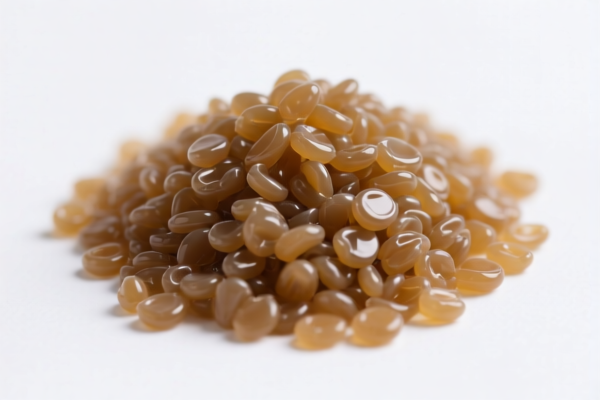
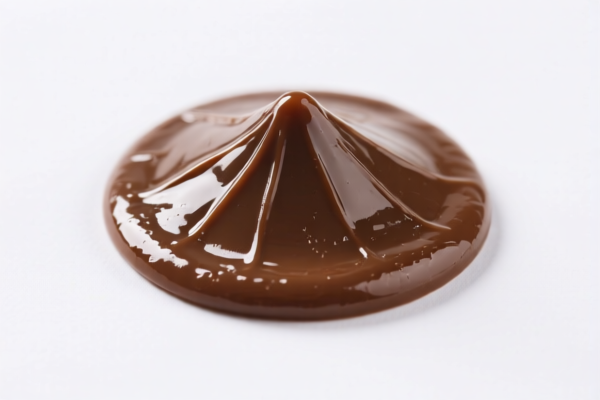
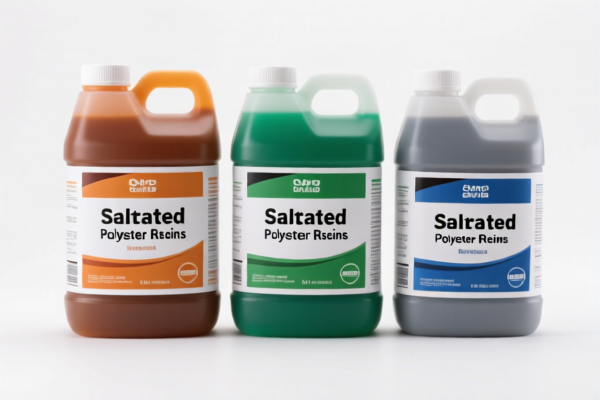
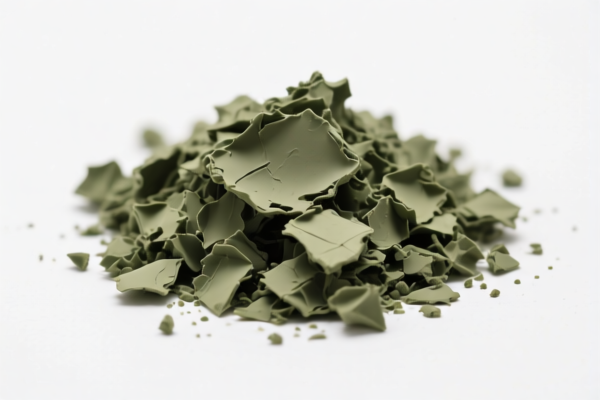
AI Analysis
🧪 Research Grade Unsaturated Polyester Resin (UPR)
🌐 HS Code Classification & Customs Clearance Guide | 2026 Latest Tariff Analysis | Professional Entry Strategy
📌 I. Product Definition: What is "Research Grade UPR"?
Unsaturated Polyester Resin (UPR) is a versatile synthetic polymer used extensively in composites, coatings, and adhesives. "Research Grade" implies a high-purity, lab-scale, or specialized formulation intended for scientific study or precise R&D applications, rather than bulk industrial molding.
In international trade, the classification hinges on two factors: 1. Material State: Is it a raw resin (base polymer) or a finished coating/paint? 2. Chemical Composition: Is it defined as a standalone resin or a mixture intended for specific uses (like paints)?
⚠️ Key Distinction:
- If sold as a base polymer for further processing (e.g., into fiberglass, castings, or customized coatings) → It is classified under Chapter 39 (Plastics/Resins).
- If sold as a finished product ready for application as a varnish, lacquer, or paint → It is classified under Chapter 32 (Tanning/Dyeing/Paints).
📦 II. HS Code Classification Details (2026 Latest Tariff Authority Match)
Based on the provided data, there are four potential HS Codes. The choice depends on the specific formulation and end-use declared by the importer.
| HS Code | Product Description | Applicability & Logic | Tax Rate (China to US) |
|---|---|---|---|
3909.40.00.00 |
Polyesters in Primary Forms | Best Match for Raw Resin. UPR is a polyester. "Primary form" covers liquids/powders not yet mixed into final paints. "Research grade" implies high purity, fitting the "resin" definition. | 41.5% |
3208.10.00.00 |
Paints/Varnishes Based on Polyesters | Match if Formulated as Coating. If the UPR is mixed with solvents/resin hardeners intended for direct painting/coating use, it falls here. Logic: Material matches "based on polyester"; Form matches "paints/varnishes." | 38.7% |
3208.90.00.00 |
Other Paints/Varnishes Based on Synthetic Polymers | Fallback for Coatings. If it doesn't fit 3208.10 (e.g., specific solvent-based restrictions), it falls under "Other synthetic polymers." Matches the "Synthetic Polymer" definition of UPR. |
38.2% |
3909.39.00.00 |
Other Polyesters in Primary Forms | Alternative for Resin. A "catch-all" for polyesters not specifically named elsewhere in Ch 39. If 3909.40 is contested, this acts as a backup for raw resin materials. |
41.5% |
🔍 Critical Note:
-3909.40.00.00is generally the most accurate for pure UPR resin.
-3208.x0codes are for finished coatings. If your product is a clear liquid used to coat surfaces, check if it meets the definition of "Varnish" or "Paint."
- Do not mix codes: You must declare ONE primary HS code. Misclassification leads to customs holds.
💰 III. 2026 Tariff Rate Breakdown (China to USA)
✅ Applicable Country: USA (US)
✅ Origin: China (CN)
✅ Effective Date: 2025/2026 Trade Rules (Section 301 & IEEPA)
🎯 1. 3909.40.00.00 & 3909.39.00.00 —— Raw Resin (Polyesters)
| Item | Detail |
|---|---|
| Base Duty | 6.5% (Ad Valorem) |
| Section 301 Additional Duty | +25.0% |
| IEEPA Section 122 Duty | +10.0% |
| Total Effective Rate | 41.5% |
| Calculation Basis | CIF Value × 41.5% |
| De Minimis Exemption | ❌ NOT ELIGIBLE (deny_de_minimis) |
| Legal Path | USITC:3909.40.00.00 → FOOTNOTE:301 → IEEPA:122 |
📌 Explanation:
- Raw polyester resins are subject to both Section 301 (25%) and IEEPA 122 (10%) tariffs.
- This is a high-cost entry. Many companies shift sourcing to Vietnam or Thailand to avoid these, but if imported from China, the cost is baked in.
🎯 2. 3208.10.00.00 —— Polyester-Based Paints/Varnishes
| Item | Detail |
|---|---|
| Base Duty | 3.7% (Ad Valorem) |
| Section 301 Additional Duty | +25.0% |
| IEEPA Section 122 Duty | +10.0% |
| Total Effective Rate | 38.7% |
| Calculation Basis | CIF Value × 38.7% |
| De Minimis Exemption | ❌ NOT ELIGIBLE (deny_de_minimis) |
📌 Explanation:
- Slightly lower total rate (38.7%) compared to raw resin.
- Requires proof that the product is classified as a "paint" or "varnish" (e.g., provided with hardeners, solvents, or marketed for coating).
🎯 3. 3208.90.00.00 —— Other Synthetic Polymer Paints
| Item | Detail |
|---|---|
| Base Duty | 3.2% (Ad Valorem) |
| Section 301 Additional Duty | +25.0% |
| IEEPA Section 122 Duty | +10.0% |
| Total Effective Rate | 38.2% |
| Calculation Basis | CIF Value × 38.2% |
| De Minimis Exemption | ❌ NOT ELIGIBLE (deny_de_minimis) |
📌 Explanation:
- Lowest Rate (38.2%) among all options.
- Applies if the resin is a coating but doesn't fit the specific "3208.10" criteria.
- Risk: Customs may challenge this if the product is clearly a raw resin and not a formulated paint.
🛠️ IV. Customs Clearance Practical Advice (Avoid Pitfalls)
✅ 1. Required Documentation Checklist
| Document | Must Provide | Purpose |
|---|---|---|
| ✅ Product Specification Sheet | ✔️ | Must state: "Unsaturated Polyester Resin," Purity %, Viscosity, Chemical Formula. |
| ✅ Technical Data Sheet (TDS) | ✔️ | Shows it is a base resin (for 3909) OR a coating system (for 3208). |
| ✅ Safety Data Sheet (SDS) | ✔️ | Classifies hazards. Critical for hazardous liquid shipping. |
| ✅ Commercial Invoice | ✔️ | Must clearly describe: "Research Grade Unsaturated Polyester Resin, Liquid, for Polymer Synthesis" OR "...for Coating Applications." |
| ✅ Labeling Photos | ✔️ | Show container labels matching the invoice. |
| ✅ Certificate of Origin | ✔️ | To prove Chinese origin (for accurate tariff calculation). |
✅ 2. Declaration Strategy (Key Tips)
🔥 "Form Defines the Code: Raw Resin vs. Formulated Paint"
| Scenario | Recommended HS Code | Declaration Description | Risk |
|---|---|---|---|
| Pure Resin (Liquid/Powder, no hardeners/solvents mixed) | 3909.40.00.00 |
"Unsaturated Polyester Resin, Primary Form, Research Grade" | Low (Standard) |
| Coating Mix (Mixed with solvents/hardeners, ready to paint) | 3208.10.00.00 |
"Polyester-Based Varnish, Ready for Application" | Medium (Must prove it's a paint) |
| Specialty Polymer Mix (Not standard paint) | 3208.90.00.00 |
"Synthetic Polymer Coating, Other" | High (Customs may reclassify to 3909) |
✅ 3. Special Handling for "Research Grade"
- Small Quantities: Even if the value is low, Section 301 + IEEPA duties still apply. Do NOT rely on
de minimis($800 exemption) if you are importing for commercial R&D that could be considered "commercial entry." Note: Some very small B2B shipments might be structured carefully, but high tariffs are mandatory for China-origin goods. - Hazardous Materials: UPR is often flammable and may contain styrene. Ensure IMDG/IATA compliance for air/sea freight. Customs may request additional hazmat declarations.
- Pre-Ruling: For large volume R&D, consider applying for a US Customs Pre-Ruling to lock in the HS Code (
3909.40vs3208.10) and avoid post-clearance audits.
🌍 V. Global Market Comparison (2026)
| Market | Recommended HS Code | Est. Tariff (China Origin) | Notes |
|---|---|---|---|
| 🇺🇸 USA | 3909.40.00.00 or 3208.90.00.00 |
38.2% – 41.5% | High Section 301 + IEEPA. |
| 🇨🇳 China | 3909.40.00.00 |
~6.5% | Import duty only, no punitive tariffs. |
| 🇪🇺 EU | 3909.40 |
0% – 6.5% | No Section 301 equivalent; check REACH compliance. |
| 🇨🇦 Canada | 3909.40 |
0% – 5% | CUSMA may apply if non-Chinese origin. |
📌 Conclusion:
The USA is the most expensive market for Chinese UPR due to dual punitive tariffs.
For R&D imports, budget for ~40% duty. Consider sourcing from Taiwan, Korea, or Vietnam for 0%–6% duties if volume allows.
📌 VI. Common Errors & Pitfalls (Lessons Learned)
❌ Error 1: Declaring "Resin" but importing a ready-to-use paint kit.
👉 Consequence: Customs reclassifies to 3208, potentially changing liability, or delays for additional documentation.
❌ Error 2: Ignoring the "Section 122" IEEPA tariff.
👉 Consequence: Underpayment of 10%. Result: Penalties + Back Taxes upon audit.
❌ Error 3: Using "Plastic Material" as a generic description.
👉 Consequence: Vague declarations lead to holds at the border. Be specific: "Unsaturated Polyester Resin."
❌ Error 4: Assuming small research samples are tax-free.
👉 Consequence: If the importer is a business (even for R&D), duties apply. Only personal consumption or specific non-commercial entries might qualify, but this is rare for B2B.
✅ Best Practice:
Declaration String:
"Unsaturated Polyester Resin, Research Grade, Liquid, CAS No. [Insert CAS], HS 3909.40.00.00, Made in China"
🎯 VII. Conclusion: Precise Classification Saves Money
🎯 Key Takeaway:
- Raw UPR → 3909.40.00.00 (41.5% Total Tariff)
- Coating UPR → 3208.90.00.00 (38.2% Total Tariff)
🔹 "If it's a base polymer, it's 3909. If it's a paint, it's 3208. Don't guess, test it."
🔹 "40% Tariff is the new normal for Chinese Resins. Plan your margin accordingly."
📌 Pro Tip:
If your UPR is non-Chinese origin (e.g., sourced from South Korea or Japan), you can avoid the 25% Section 301 + 10% IEEPA tariffs, dropping the rate to ~6.5% (3909.40) or ~3.2% (3208.90).
🚀 Action: Evaluate your supply chain. For high-volume R&D, non-China sourcing can save up to 35% in landed costs.
✨ Professional Customs Clearance Starts with Accurate Classification!
💼 Every Percent of Duty Matters in R&D Budgeting.
Customer Reviews
About HS Code Classification
The Harmonized System (HS) is an internationally standardized nomenclature developed by the World Customs Organization (WCO) to classify traded products. Over 200 countries use the HS system as the basis for customs tariffs, trade statistics, and import/export regulations.
Each HS code follows a hierarchical structure:
- Chapter (2 digits) — Broad category of goods (e.g., Chapter 84: Machinery and Mechanical Appliances)
- Heading (4 digits) — More specific grouping within the chapter
- Subheading (6 digits) — Internationally standardized breakdown, used by all WCO member countries
- National subdivisions (8-10 digits) — Country-specific extensions for further classification, such as US HTSUS 10-digit codes
Correct HS code classification is essential for smooth customs clearance, accurate duty payment, and compliance with trade regulations. Misclassification can lead to customs delays, overpayment of duties, or penalties.
When importing from CN to US, the applicable tariff rates may include:
- Most-Favored-Nation (MFN) rate — The standard duty rate applied to WTO members
- General rate — Applied to countries without trade agreements
- Trade remedy duties — Additional tariffs such as Section 301 (anti-dumping), Section 232 (national security), or countervailing duties
The information provided on this page is for reference purposes only. For official classification, please consult with your local customs authority or a licensed customs broker.