Rosin Extract
CN → US| HS编码 | 关税税率 | 原产国 | 目的国 | 文档 |
|---|---|---|---|---|
| 3807000000 | 35.1% | CN | US | 官方文档 |
| 3301901050 | 21.3% | CN | US | 官方文档 |
| 3301905000 | 17.5% | CN | US | 官方文档 |
| 1301904000 | 18.8% | CN | US | 官方文档 |
| 1301909190 | 17.5% | CN | US | 官方文档 |
商品图片
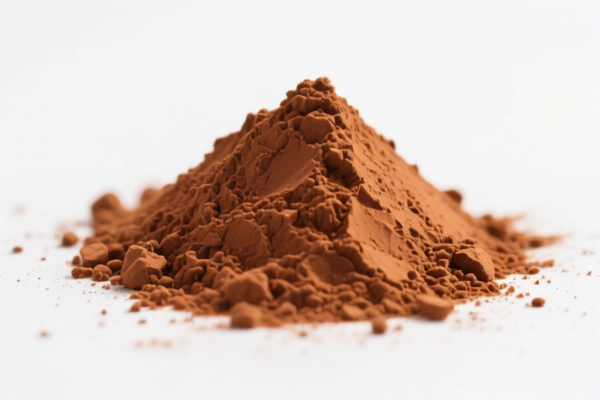

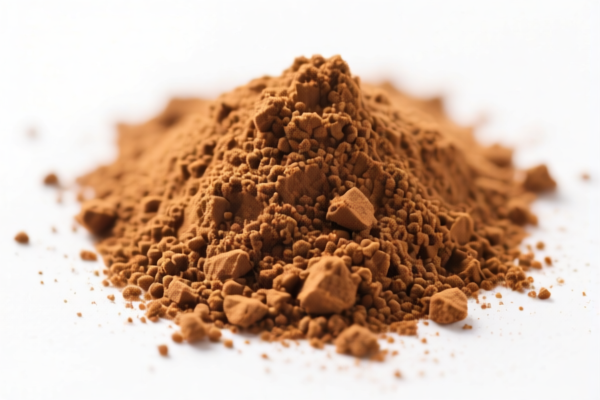
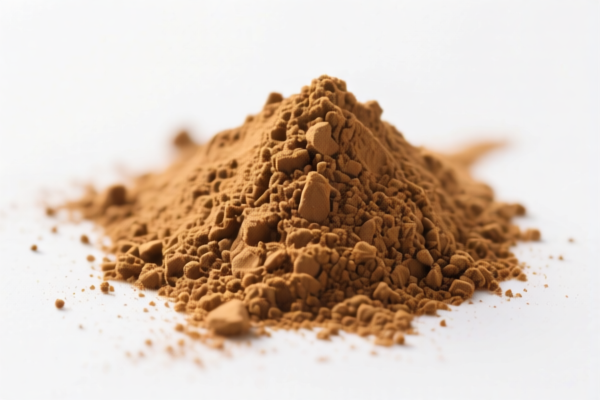
AI分析
🌲 Rosin Extract (Turpentine Spirit & Resinoids)
🌐 HS Code Reference & Customs Clearance Guide | 2026 Latest Tariff Analysis | Professional Clearance Strategy
📌 I. Product Definition & Classification: Do You Truly Understand "Rosin Extract"?
"Rosin Extract" is a broad trade term often referring to derivatives of pine resin, primarily Turpentine Spirit (Essential Oil) and Rosin Resinoids/Oleoresins. In international trade, the HS Code classification depends heavily on the physical form (oil vs. solid resin) and the extraction method (distillation vs. solvent extraction).
Misclassification is common because: 1. Distilled Pine Oil/Turpentine is often confused with general industrial chemicals. 2. Solvent-Extracted Rosinoids are sometimes misdeclared as simple "plant extracts." 3. Physical State: Is it a volatile liquid (oil) or a viscous solid/semi-solid (resin)?
⚠️ Key Distinction Point:
- If it is a volatile essential oil obtained by distillation → Likely Chapter 33 (3301 or 3301.90).
- If it is a non-volatile oleoresin/resinoid obtained by solvent extraction → Likely Chapter 13 (1301).
- If it is a mixture or crude preparation not specifically described elsewhere → Likely Chapter 38 (3807).
📦 II. HS Code Classification Details (2026 Latest Tariff Authority Comparison)
Based on the provided data for "Rosin Extract," there are five primary classification paths, each with distinct tax implications.
| HS Code | Product Description | Applicable Scenario | Key Characteristic |
|---|---|---|---|
3807.00.00.00 |
Rosin Extracts/Turpentine Spirit | Crude or refined rosin extracts, matching tarry/oily preparations | Crude/Industrial Form: Often refers to crude wood distillates or specific tarry oils not fully purified as essential oils. |
3301.90.10.50 |
Oleoresin Extracts | Solvent-extracted resinoids where rosin is the base resin | Extracted Oleoresin: Specifically identifies the "extracted" nature of the resin, fitting the "resinoid" category under essential oils. |
3301.90.50.00 |
Essential Oil Extracts | Essential oil categories, including extracted oleoresins | Essential Oil Category: Broadly covers extracted oils and resinoids that fall under the "other essential oils" umbrella. |
1301.90.40.00 |
Pine Oil/Gum Consistency | Oleoresins consistent with pine oil/gum characteristics | Pine Oleoresin: Focuses on the "gum/oil" consistency of natural resins, aligning with gum resins. |
1301.90.91.90 |
Natural Resins/Oleoresins | Natural resins, gum resins, and oleoresins (other than specific gums) | General Natural Resin: A catch-all for natural resinous materials, including rosin oleoresins not fit for other specific sub-headings. |
🔍 Critical Reminder:
-3807is often the default for crude or industrial-grade rosin extracts/turpentine.
-3301applies to high-purity essential oil extracts or solvent-extracted resinoids intended for fragrance/flavor/industrial precision.
-1301applies to natural gum resins and oleoresins in their raw or minimally processed state.
- Do not mix "essential oil" (volatile) with "resin" (non-volatile) in the same shipment without clear separation, as this triggers detailed scrutiny.
💰 III. 2026 Latest Tariff Rate Details (Including Surcharge & Policy Add-ons)
✅ Applicable Country: United States (US)
✅ Country of Origin: China (CN)
✅ Effective Date: Post-2025 Trade Policy Updates (Including IEEPA & Section 301)
🎯 1. 3807.00.00.00 —— Rosin Extracts / Crude Preparations
| Item | Content |
|---|---|
| Base Duty Rate | 0.1% (Ad Valorem) |
| Section 301 Surcharge | +25.0% |
| IEEPA Add-on | +10.0% |
| Total Effective Rate | 35.1% |
| Tax Calculation | CIF Value × 35.1% |
| De Minimis Eligibility | ❌ No (Denied for Chinese origin under current trade policies) |
| Legal Basis Path | USITC:3807.00.00.00 → Footnote 301:25% → IEEPA:10% |
📌 Explanation:
- Base 0.1%: Very low base duty, indicating it's not a primary agricultural staple.
- 25% Section 301: Standard tariff for Chinese industrial chemicals/resins.
- 10% IEEPA: Additional levy on Chinese imports under emergency economic powers.
- Total 35.1%: This is the highest tax burden among the options, making it crucial to verify if the product truly fits "crude" definitions rather than refined "essential oil" categories.
🎯 2. 3301.90.10.50 —— Extracted Oleoresins (Solvent Extracted)
| Item | Content |
|---|---|
| Base Duty Rate | 3.8% (Ad Valorem) |
| Section 301 Surcharge | +7.5% |
| IEEPA Add-on | +10.0% |
| Total Effective Rate | 21.3% |
| Tax Calculation | CIF Value × 21.3% |
| De Minimis Eligibility | ❌ No |
| Legal Basis Path | USITC:3301.90.10.50 → Footnote 301:7.5% → IEEPA:10% |
📌 Explanation:
- Base 3.8%: Higher base duty reflects its classification as a refined "essential oil/resinoid."
- 7.5% Section 301: Reduced rate compared to3807, suggesting a specific exemption or lower category for refined oleoresins.
- 10% IEEPA: Still applicable.
- Total 21.3%: Significant savings compared to3807(35.1%). Requires proof of "extracted" status (solvent extraction process).
🎯 3. 3301.90.50.00 —— Essential Oil Extracts (General)
| Item | Content |
|---|---|
| Base Duty Rate | 0.0% (Ad Valorem) |
| Section 301 Surcharge | +7.5% |
| IEEPA Add-on | +10.0% |
| Total Effective Rate | 17.5% |
| Tax Calculation | CIF Value × 17.5% |
| De Minimis Eligibility | ❌ No |
| Legal Basis Path | USITC:3301.90.50.00 → Footnote 301:7.5% → IEEPA:10% |
📌 Explanation:
- Base 0.0%: Zero base duty makes this the most tax-efficient option if the product qualifies.
- 7.5% Section 301: Same reduced rate as3301.90.10.50.
- 10% IEEPA: Standard add-on.
- Total 17.5%: Lowest Total Rate. Requires the product to be clearly defined as an "essential oil extract" rather than a crude industrial chemical.
🎯 4. 1301.90.40.00 —— Pine Oleoresins / Gum Consistency
| Item | Content |
|---|---|
| Base Duty Rate | 1.3% (Ad Valorem) |
| Section 301 Surcharge | +7.5% |
| IEEPA Add-on | +10.0% |
| Total Effective Rate | 18.8% |
| Tax Calculation | CIF Value × 18.8% |
| De Minimis Eligibility | ❌ No |
| Legal Basis Path | USITC:1301.90.40.00 → Footnote 301:7.5% → IEEPA:10% |
📌 Explanation:
- Base 1.3%: Low base duty for natural resins.
- 7.5% Section 301: Reduced rate.
- 10% IEEPA: Standard add-on.
- Total 18.8%: Competitive rate, suitable if the product is a natural oleoresin (not solvent-extracted but mechanically/physically extracted) and fits the "gum/oil" consistency description.
🎯 5. 1301.90.91.90 —— Other Natural Resins / Oleoresins
| Item | Content |
|---|---|
| Base Duty Rate | 0.0% (Ad Valorem) |
| Section 301 Surcharge | +7.5% |
| IEEPA Add-on | +10.0% |
| Total Effective Rate | 17.5% |
| Tax Calculation | CIF Value × 17.5% |
| De Minimis Eligibility | ❌ No |
| Legal Basis Path | USITC:1301.90.91.90 → Footnote 301:7.5% → IEEPA:10% |
📌 Explanation:
- Base 0.0%: Zero base duty.
- 7.5% Section 301: Reduced rate.
- 10% IEEPA: Standard add-on.
- Total 17.5%: Tied for Lowest Total Rate. Ideal if the product is a natural rosin/oleoresin that doesn't fit the specific "pine oil/gum" or "extracted oleoresin" sub-headings but still qualifies as a natural resin.
🛠️ IV. Customs Clearance Practical Advice (Real-World Pitfall Guide)
✅ 1. Preparation Checklist (All Required)
| Document | Mandatory? | Explanation |
|---|---|---|
| ✅ Product Specification Sheet | ✔️ | Must detail: Extraction Method (Distillation vs. Solvent), Chemical Composition (Alpha-pinene %), Physical State (Liquid/Solid). |
| ✅ Safety Data Sheet (SDS) | ✔️ | Essential for determining hazard class and proper handling; confirms if it's considered an essential oil or industrial chemical. |
| ✅ Commercial Invoice | ✔️ | Must clearly state "Rosin Oleoresin" or "Turpentine Spirit" not just generic "Extract." |
| ✅ Certificate of Origin (CO) | ✔️ | Critical for proving CN origin to apply specific IEEPA/301 rules. |
| ✅ Process Flow Diagram | ✔️ | Crucial for HS Code Selection: Prove if it's distilled (Ch 33) or solvent-extracted/natural (Ch 13/38). |
✅ 2. Declaration Strategy (Key Mnemonics)
🔥 "Extract Method Dictates Code, Don't Guess, Don't Rush!"
| Scenario | Correct Declaration | Wrong Approach |
|---|---|---|
| Solvent-Extracted Resinoid | 3301.90.10.50 or 3301.90.50.00 |
Declared as "Natural Resin" → Risk of 35.1% if misclassified as crude. |
| Distilled Turpentine | 3301.90.50.00 (if pure) or 3807 (if crude) |
Declared as "Essential Oil" without purity proof → Inspection delay. |
| Natural Pine Oleoresin | 1301.90.40.00 or 1301.90.91.90 |
Declared as "Industrial Chemical" → 35.1% tax. |
| Crude Wood Distillate | 3807.00.00.00 |
Declared as "Essential Oil" → High audit risk, potential penalties. |
✅ 3. Special Situation Handling
| Situation | Handling Advice |
|---|---|
| Mixed Shipment (Oil + Resin) | Split Declaration! Do not lump them. Oil goes to Ch 33, Resin to Ch 13/38. Mixed declaration leads to highest applicable rate or rejection. |
| "Essential Oil" Labeling | If labeled "Fragrance Ingredient," aim for Ch 33. Provide GC/MS analysis to prove essential oil composition. |
| Industrial Adhesive Use | If primarily for adhesives, ensure the HS Code reflects chemical nature (Ch 38 or Ch 13) rather than cosmetic use. |
| Origin Fraud | Ensure CO matches HS Code. China-origin "Rosin" is heavily scrutinized for IEEPA evasion. |
🌍 V. Global Market Clearance Comparison (2026 Latest)
| Country/Region | Recommended HS Code | Tariff Rate (China Origin) | Certification | Notes |
|---|---|---|---|---|
| 🇺🇸 USA | 3301.90.50.00 |
17.5% (Best Rate) | FDA (if cosmetic), SDS | High scrutiny on IEEPA; avoid 3807 unless necessary. |
| 🇨🇳 China | 1301.90.91.90 |
Varies (Check Local) | N/A | Domestic trade benefits from natural resin classification. |
| 🇪🇺 EU | 1301.90.91 |
0% (Most FTA benefit) | REACH | EU often treats natural resins as raw materials with low duty. |
| 🇬🇧 UK | 3301.90 |
Varies | UK REACH | Post-Brexit rules; ensure CO is UK-specific. |
| 🇯🇵 Japan | 1301.90 |
0% (Often) | FSC (Sustainability) | Japan values sustainably sourced pine resin. |
📌 Conclusion:
- USA is the most complex market due to layered tariffs (301 + IEEPA).
- EU/UK/Japan generally offer lower or zero tariffs on natural resins if properly classified under Chapter 13.
- Strategy: Aim for Chapter 33 (17.5%) or Chapter 13 (17.5%-18.8%) for US imports to minimize costs vs. Chapter 38 (35.1%).
📌 VI. Common Errors & Pitfalls (Lessons Learned)
❌ Error 1: Declaring Solvent-Extracted Rosin as "Natural Gum"
👉 Consequence: Misclassification may lead to higher duties if "Natural Gum" attracts different scrutiny, or rejection if chemical composition doesn't match.
❌ Error 2: Using "Rosin Extract" as a generic term on Invoice
👉 Consequence: Customs cannot determine HS Code → Valuation Delay or Audit. Use specific terms: "Turpentine Spirit" or "Pine Oleoresin."
❌ Error 3: Ignoring IEEPA Add-on in Cost Calculation
👉 Consequence: Profit margins erased by unexpected 10% surcharge. Always include IEEPA in landed cost models.
❌ Error 4: Confusing Essential Oil with Resinoid
👉 Consequence: 3301 (Essential Oil) vs. 1301/3807 (Resin). Different taxes, different regulations.
✅ Correct Action:
"Pine Oleoresin, Solvent-Extracted, Alpha-Pinene >90%, for Industrial Adhesives, Model XYZ, SDS Attached."
🎯 VII. Conclusion: Professional Declaration, Cost Optimization!
🎯 Remember the Mantra:
🔹 "Extract Method Defines Code, 3301 Saves Money, 3807 is Expensive, Ch 13 is Natural!"
🔹 "HS Code is King, Tax Difference is 17.6%, Declare Precisely, Save Thousands!"
📌 Pro Tip:
If your Rosin Extract is sustainably sourced (FSC Certified), mention it! While it doesn't change US tariff rates directly, it helps with EU/UK market access and brand value.
Consider applying for an Advance Ruling from US CBP if the extraction process is complex (e.g., supercritical CO2 extraction) to lock in the lower 17.5% rate.
📣 Immediate Action:
📞 Contact a licensed customs broker + Provide SDS + Confirm Extraction Method
🚀 Let your Rosin Extract, clear smoothly, reduce costs, and boost profits!
✨ Professional Clearance Starts with Accurate Classification!
💼 Every cent saved counts in the volatile chemical trade!
用户评价
关于 HS 编码归类
协调制度(HS)是由世界海关组织(WCO)制定的国际贸易商品分类标准。全球 200 多个国家采用 HS 系统作为海关关税、贸易统计和进出口监管的基础。
每个 HS 编码遵循以下层级结构:
- 章(2 位)——商品大类(例如:第 84 章:机器和机械设备)
- 品目(4 位)——章内的更具体分类
- 子目(6 位)——国际通用细分,所有 WCO 成员国统一使用
- 本国细分(8-10 位)——各国自行扩展的细分编码,如美国 HTSUS 10 位编码
正确的 HS 编码归类对于顺利通关、准确缴纳关税和遵守贸易法规至关重要。错误归类可能导致海关延误、多缴关税或罚款。
从CN进口到US时,适用的关税税率可能包括:
- 最惠国(MFN)税率——适用于 WTO 成员国的标准关税税率
- 普通税率——适用于无贸易协定国家
- 贸易救济关税——附加关税,如 301 条款(反倾销)、232 条款(国家安全)或反补贴税
本页内容仅供参考。如需正式归类,请咨询当地海关或持牌报关代理。