Rosin Extract
CN → US| HS Code | Tariff Rate | Origin | Destination | Doc |
|---|---|---|---|---|
| 3807000000 | 35.1% | CN | US | Official Doc |
| 3301901050 | 21.3% | CN | US | Official Doc |
| 3301905000 | 17.5% | CN | US | Official Doc |
| 1301904000 | 18.8% | CN | US | Official Doc |
| 1301909190 | 17.5% | CN | US | Official Doc |
Product Images
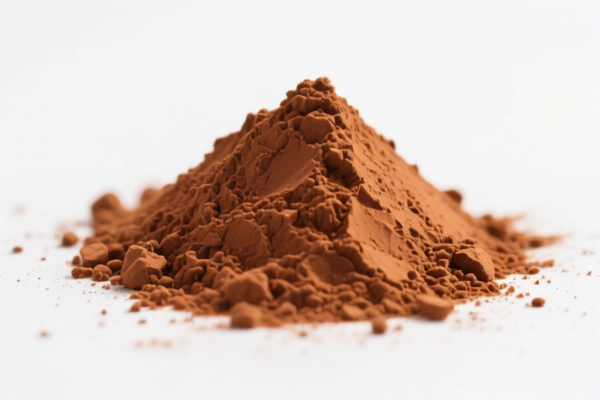

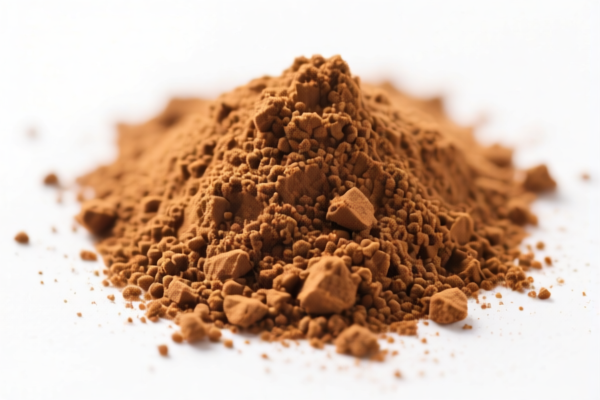
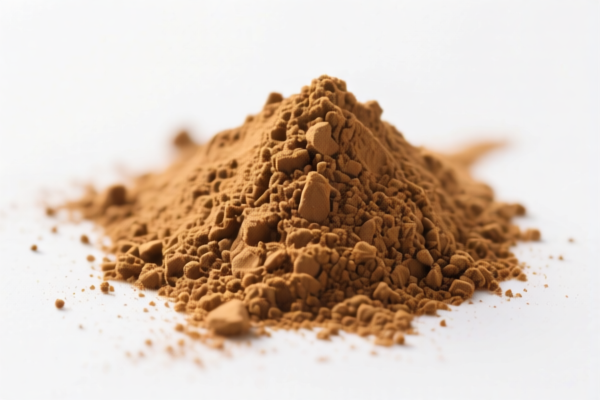
AI Analysis
🌲 Rosin Extract (Turpentine Spirit & Resinoids)
🌐 HS Code Reference & Customs Clearance Guide | 2026 Latest Tariff Analysis | Professional Clearance Strategy
📌 I. Product Definition & Classification: Do You Truly Understand "Rosin Extract"?
"Rosin Extract" is a broad trade term often referring to derivatives of pine resin, primarily Turpentine Spirit (Essential Oil) and Rosin Resinoids/Oleoresins. In international trade, the HS Code classification depends heavily on the physical form (oil vs. solid resin) and the extraction method (distillation vs. solvent extraction).
Misclassification is common because: 1. Distilled Pine Oil/Turpentine is often confused with general industrial chemicals. 2. Solvent-Extracted Rosinoids are sometimes misdeclared as simple "plant extracts." 3. Physical State: Is it a volatile liquid (oil) or a viscous solid/semi-solid (resin)?
⚠️ Key Distinction Point:
- If it is a volatile essential oil obtained by distillation → Likely Chapter 33 (3301 or 3301.90).
- If it is a non-volatile oleoresin/resinoid obtained by solvent extraction → Likely Chapter 13 (1301).
- If it is a mixture or crude preparation not specifically described elsewhere → Likely Chapter 38 (3807).
📦 II. HS Code Classification Details (2026 Latest Tariff Authority Comparison)
Based on the provided data for "Rosin Extract," there are five primary classification paths, each with distinct tax implications.
| HS Code | Product Description | Applicable Scenario | Key Characteristic |
|---|---|---|---|
3807.00.00.00 |
Rosin Extracts/Turpentine Spirit | Crude or refined rosin extracts, matching tarry/oily preparations | Crude/Industrial Form: Often refers to crude wood distillates or specific tarry oils not fully purified as essential oils. |
3301.90.10.50 |
Oleoresin Extracts | Solvent-extracted resinoids where rosin is the base resin | Extracted Oleoresin: Specifically identifies the "extracted" nature of the resin, fitting the "resinoid" category under essential oils. |
3301.90.50.00 |
Essential Oil Extracts | Essential oil categories, including extracted oleoresins | Essential Oil Category: Broadly covers extracted oils and resinoids that fall under the "other essential oils" umbrella. |
1301.90.40.00 |
Pine Oil/Gum Consistency | Oleoresins consistent with pine oil/gum characteristics | Pine Oleoresin: Focuses on the "gum/oil" consistency of natural resins, aligning with gum resins. |
1301.90.91.90 |
Natural Resins/Oleoresins | Natural resins, gum resins, and oleoresins (other than specific gums) | General Natural Resin: A catch-all for natural resinous materials, including rosin oleoresins not fit for other specific sub-headings. |
🔍 Critical Reminder:
-3807is often the default for crude or industrial-grade rosin extracts/turpentine.
-3301applies to high-purity essential oil extracts or solvent-extracted resinoids intended for fragrance/flavor/industrial precision.
-1301applies to natural gum resins and oleoresins in their raw or minimally processed state.
- Do not mix "essential oil" (volatile) with "resin" (non-volatile) in the same shipment without clear separation, as this triggers detailed scrutiny.
💰 III. 2026 Latest Tariff Rate Details (Including Surcharge & Policy Add-ons)
✅ Applicable Country: United States (US)
✅ Country of Origin: China (CN)
✅ Effective Date: Post-2025 Trade Policy Updates (Including IEEPA & Section 301)
🎯 1. 3807.00.00.00 —— Rosin Extracts / Crude Preparations
| Item | Content |
|---|---|
| Base Duty Rate | 0.1% (Ad Valorem) |
| Section 301 Surcharge | +25.0% |
| IEEPA Add-on | +10.0% |
| Total Effective Rate | 35.1% |
| Tax Calculation | CIF Value × 35.1% |
| De Minimis Eligibility | ❌ No (Denied for Chinese origin under current trade policies) |
| Legal Basis Path | USITC:3807.00.00.00 → Footnote 301:25% → IEEPA:10% |
📌 Explanation:
- Base 0.1%: Very low base duty, indicating it's not a primary agricultural staple.
- 25% Section 301: Standard tariff for Chinese industrial chemicals/resins.
- 10% IEEPA: Additional levy on Chinese imports under emergency economic powers.
- Total 35.1%: This is the highest tax burden among the options, making it crucial to verify if the product truly fits "crude" definitions rather than refined "essential oil" categories.
🎯 2. 3301.90.10.50 —— Extracted Oleoresins (Solvent Extracted)
| Item | Content |
|---|---|
| Base Duty Rate | 3.8% (Ad Valorem) |
| Section 301 Surcharge | +7.5% |
| IEEPA Add-on | +10.0% |
| Total Effective Rate | 21.3% |
| Tax Calculation | CIF Value × 21.3% |
| De Minimis Eligibility | ❌ No |
| Legal Basis Path | USITC:3301.90.10.50 → Footnote 301:7.5% → IEEPA:10% |
📌 Explanation:
- Base 3.8%: Higher base duty reflects its classification as a refined "essential oil/resinoid."
- 7.5% Section 301: Reduced rate compared to3807, suggesting a specific exemption or lower category for refined oleoresins.
- 10% IEEPA: Still applicable.
- Total 21.3%: Significant savings compared to3807(35.1%). Requires proof of "extracted" status (solvent extraction process).
🎯 3. 3301.90.50.00 —— Essential Oil Extracts (General)
| Item | Content |
|---|---|
| Base Duty Rate | 0.0% (Ad Valorem) |
| Section 301 Surcharge | +7.5% |
| IEEPA Add-on | +10.0% |
| Total Effective Rate | 17.5% |
| Tax Calculation | CIF Value × 17.5% |
| De Minimis Eligibility | ❌ No |
| Legal Basis Path | USITC:3301.90.50.00 → Footnote 301:7.5% → IEEPA:10% |
📌 Explanation:
- Base 0.0%: Zero base duty makes this the most tax-efficient option if the product qualifies.
- 7.5% Section 301: Same reduced rate as3301.90.10.50.
- 10% IEEPA: Standard add-on.
- Total 17.5%: Lowest Total Rate. Requires the product to be clearly defined as an "essential oil extract" rather than a crude industrial chemical.
🎯 4. 1301.90.40.00 —— Pine Oleoresins / Gum Consistency
| Item | Content |
|---|---|
| Base Duty Rate | 1.3% (Ad Valorem) |
| Section 301 Surcharge | +7.5% |
| IEEPA Add-on | +10.0% |
| Total Effective Rate | 18.8% |
| Tax Calculation | CIF Value × 18.8% |
| De Minimis Eligibility | ❌ No |
| Legal Basis Path | USITC:1301.90.40.00 → Footnote 301:7.5% → IEEPA:10% |
📌 Explanation:
- Base 1.3%: Low base duty for natural resins.
- 7.5% Section 301: Reduced rate.
- 10% IEEPA: Standard add-on.
- Total 18.8%: Competitive rate, suitable if the product is a natural oleoresin (not solvent-extracted but mechanically/physically extracted) and fits the "gum/oil" consistency description.
🎯 5. 1301.90.91.90 —— Other Natural Resins / Oleoresins
| Item | Content |
|---|---|
| Base Duty Rate | 0.0% (Ad Valorem) |
| Section 301 Surcharge | +7.5% |
| IEEPA Add-on | +10.0% |
| Total Effective Rate | 17.5% |
| Tax Calculation | CIF Value × 17.5% |
| De Minimis Eligibility | ❌ No |
| Legal Basis Path | USITC:1301.90.91.90 → Footnote 301:7.5% → IEEPA:10% |
📌 Explanation:
- Base 0.0%: Zero base duty.
- 7.5% Section 301: Reduced rate.
- 10% IEEPA: Standard add-on.
- Total 17.5%: Tied for Lowest Total Rate. Ideal if the product is a natural rosin/oleoresin that doesn't fit the specific "pine oil/gum" or "extracted oleoresin" sub-headings but still qualifies as a natural resin.
🛠️ IV. Customs Clearance Practical Advice (Real-World Pitfall Guide)
✅ 1. Preparation Checklist (All Required)
| Document | Mandatory? | Explanation |
|---|---|---|
| ✅ Product Specification Sheet | ✔️ | Must detail: Extraction Method (Distillation vs. Solvent), Chemical Composition (Alpha-pinene %), Physical State (Liquid/Solid). |
| ✅ Safety Data Sheet (SDS) | ✔️ | Essential for determining hazard class and proper handling; confirms if it's considered an essential oil or industrial chemical. |
| ✅ Commercial Invoice | ✔️ | Must clearly state "Rosin Oleoresin" or "Turpentine Spirit" not just generic "Extract." |
| ✅ Certificate of Origin (CO) | ✔️ | Critical for proving CN origin to apply specific IEEPA/301 rules. |
| ✅ Process Flow Diagram | ✔️ | Crucial for HS Code Selection: Prove if it's distilled (Ch 33) or solvent-extracted/natural (Ch 13/38). |
✅ 2. Declaration Strategy (Key Mnemonics)
🔥 "Extract Method Dictates Code, Don't Guess, Don't Rush!"
| Scenario | Correct Declaration | Wrong Approach |
|---|---|---|
| Solvent-Extracted Resinoid | 3301.90.10.50 or 3301.90.50.00 |
Declared as "Natural Resin" → Risk of 35.1% if misclassified as crude. |
| Distilled Turpentine | 3301.90.50.00 (if pure) or 3807 (if crude) |
Declared as "Essential Oil" without purity proof → Inspection delay. |
| Natural Pine Oleoresin | 1301.90.40.00 or 1301.90.91.90 |
Declared as "Industrial Chemical" → 35.1% tax. |
| Crude Wood Distillate | 3807.00.00.00 |
Declared as "Essential Oil" → High audit risk, potential penalties. |
✅ 3. Special Situation Handling
| Situation | Handling Advice |
|---|---|
| Mixed Shipment (Oil + Resin) | Split Declaration! Do not lump them. Oil goes to Ch 33, Resin to Ch 13/38. Mixed declaration leads to highest applicable rate or rejection. |
| "Essential Oil" Labeling | If labeled "Fragrance Ingredient," aim for Ch 33. Provide GC/MS analysis to prove essential oil composition. |
| Industrial Adhesive Use | If primarily for adhesives, ensure the HS Code reflects chemical nature (Ch 38 or Ch 13) rather than cosmetic use. |
| Origin Fraud | Ensure CO matches HS Code. China-origin "Rosin" is heavily scrutinized for IEEPA evasion. |
🌍 V. Global Market Clearance Comparison (2026 Latest)
| Country/Region | Recommended HS Code | Tariff Rate (China Origin) | Certification | Notes |
|---|---|---|---|---|
| 🇺🇸 USA | 3301.90.50.00 |
17.5% (Best Rate) | FDA (if cosmetic), SDS | High scrutiny on IEEPA; avoid 3807 unless necessary. |
| 🇨🇳 China | 1301.90.91.90 |
Varies (Check Local) | N/A | Domestic trade benefits from natural resin classification. |
| 🇪🇺 EU | 1301.90.91 |
0% (Most FTA benefit) | REACH | EU often treats natural resins as raw materials with low duty. |
| 🇬🇧 UK | 3301.90 |
Varies | UK REACH | Post-Brexit rules; ensure CO is UK-specific. |
| 🇯🇵 Japan | 1301.90 |
0% (Often) | FSC (Sustainability) | Japan values sustainably sourced pine resin. |
📌 Conclusion:
- USA is the most complex market due to layered tariffs (301 + IEEPA).
- EU/UK/Japan generally offer lower or zero tariffs on natural resins if properly classified under Chapter 13.
- Strategy: Aim for Chapter 33 (17.5%) or Chapter 13 (17.5%-18.8%) for US imports to minimize costs vs. Chapter 38 (35.1%).
📌 VI. Common Errors & Pitfalls (Lessons Learned)
❌ Error 1: Declaring Solvent-Extracted Rosin as "Natural Gum"
👉 Consequence: Misclassification may lead to higher duties if "Natural Gum" attracts different scrutiny, or rejection if chemical composition doesn't match.
❌ Error 2: Using "Rosin Extract" as a generic term on Invoice
👉 Consequence: Customs cannot determine HS Code → Valuation Delay or Audit. Use specific terms: "Turpentine Spirit" or "Pine Oleoresin."
❌ Error 3: Ignoring IEEPA Add-on in Cost Calculation
👉 Consequence: Profit margins erased by unexpected 10% surcharge. Always include IEEPA in landed cost models.
❌ Error 4: Confusing Essential Oil with Resinoid
👉 Consequence: 3301 (Essential Oil) vs. 1301/3807 (Resin). Different taxes, different regulations.
✅ Correct Action:
"Pine Oleoresin, Solvent-Extracted, Alpha-Pinene >90%, for Industrial Adhesives, Model XYZ, SDS Attached."
🎯 VII. Conclusion: Professional Declaration, Cost Optimization!
🎯 Remember the Mantra:
🔹 "Extract Method Defines Code, 3301 Saves Money, 3807 is Expensive, Ch 13 is Natural!"
🔹 "HS Code is King, Tax Difference is 17.6%, Declare Precisely, Save Thousands!"
📌 Pro Tip:
If your Rosin Extract is sustainably sourced (FSC Certified), mention it! While it doesn't change US tariff rates directly, it helps with EU/UK market access and brand value.
Consider applying for an Advance Ruling from US CBP if the extraction process is complex (e.g., supercritical CO2 extraction) to lock in the lower 17.5% rate.
📣 Immediate Action:
📞 Contact a licensed customs broker + Provide SDS + Confirm Extraction Method
🚀 Let your Rosin Extract, clear smoothly, reduce costs, and boost profits!
✨ Professional Clearance Starts with Accurate Classification!
💼 Every cent saved counts in the volatile chemical trade!
Customer Reviews
About HS Code Classification
The Harmonized System (HS) is an internationally standardized nomenclature developed by the World Customs Organization (WCO) to classify traded products. Over 200 countries use the HS system as the basis for customs tariffs, trade statistics, and import/export regulations.
Each HS code follows a hierarchical structure:
- Chapter (2 digits) — Broad category of goods (e.g., Chapter 84: Machinery and Mechanical Appliances)
- Heading (4 digits) — More specific grouping within the chapter
- Subheading (6 digits) — Internationally standardized breakdown, used by all WCO member countries
- National subdivisions (8-10 digits) — Country-specific extensions for further classification, such as US HTSUS 10-digit codes
Correct HS code classification is essential for smooth customs clearance, accurate duty payment, and compliance with trade regulations. Misclassification can lead to customs delays, overpayment of duties, or penalties.
When importing from CN to US, the applicable tariff rates may include:
- Most-Favored-Nation (MFN) rate — The standard duty rate applied to WTO members
- General rate — Applied to countries without trade agreements
- Trade remedy duties — Additional tariffs such as Section 301 (anti-dumping), Section 232 (national security), or countervailing duties
The information provided on this page is for reference purposes only. For official classification, please consult with your local customs authority or a licensed customs broker.