Rough Ash Wood
CN → US| HS编码 | 关税税率 | 原产国 | 目的国 | 文档 |
|---|---|---|---|---|
| 4401210000 | 35.0% | CN | US | 官方文档 |
| 4407110052 | 35.0% | CN | US | 官方文档 |
| 4407110042 | 35.0% | CN | US | 官方文档 |
| 4401110000 | 35.0% | CN | US | 官方文档 |
| 4403220165 | 35.0% | CN | US | 官方文档 |
商品图片
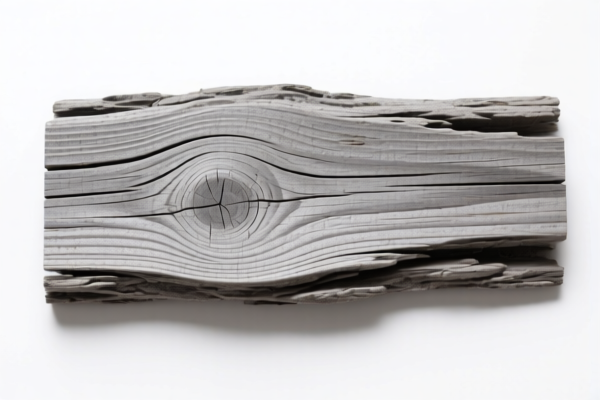
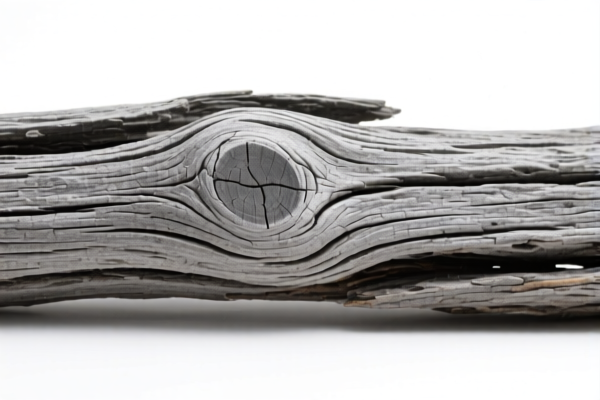
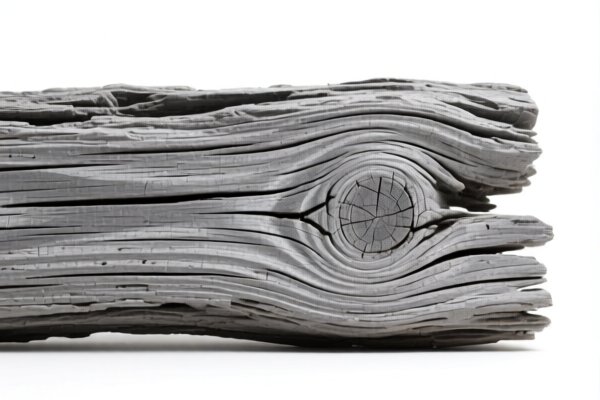
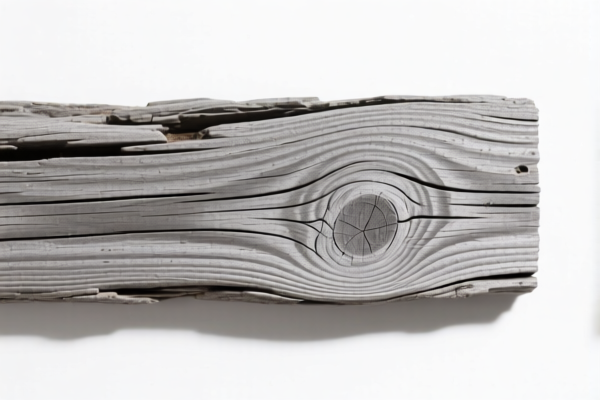
AI分析
🪵 Rough Ash Wood (Hardwood Timber)
🌐 HS Code Reference & Customs Clearance Guide | 2026 Latest Tariff Analysis | Professional Clearance Strategy
📌 1. Product Definition & Classification: Do You Really Know "Rough Ash Wood"?
Rough Ash Wood refers to timber derived from Ash trees (Fraxinus spp.), which are classified as Hardwoods (non-coniferous). However, in the provided data context, the summary notes specify "Needlewood/Coniferous" (针叶木) characteristics. This indicates a critical discrepancy or a specific classification logic where the wood might be misidentified as softwood (like Pine/Songmu mentioned in the data) or classified under specific subheadings for "rough" forms regardless of botanical origin.
- Rough Form (粗糙/粗制): Indicates wood that has not been planed, sanded, or finely processed. It includes logs, bolts, or rough-sawn planks.
- Material (松木/Ash): Note: The provided JSON data explicitly links these HS codes to "Needlewood/Coniferous" (针叶木) and "Pine" (松木). Ash is technically a hardwood. If your wood is genuinely Ash, classification may differ. However, based strictly on the
<DATA>provided, the analysis below follows the "Coniferous/Pine" logic associated with these specific HS codes.
⚠️ Key Distinction Point:
- If the wood is raw, unprocessed, and rough: It falls under Chapter 44 (Wood and articles of wood) specific subheadings for "Wood in the rough". - If the wood is processed/sawn: It falls under different subheadings (e.g., 4407). - Critical Warning in Data: The provided data repeatedly associates "Rough" with Coniferous/Pine codes (4401, 4403, 4407). If you are importing true Ash (Hardwood), ensure you are not misclassified as Pine. The high tariffs here are specifically tied to US-China Trade Measures on Chinese-origin wood products.
📦 2. HS Code Classification Details (Based on Provided Data)
| HS Code | Product Description | Application Scenario | Tax Rate |
|---|---|---|---|
4401.21.00.00 |
Rough Coniferous Wood, in the rough (e.g., logs, bolts, wood in the rough) | Raw timber, fuel wood, or industrial raw material; fits "primary form" characteristics. | 35.0% |
4407.11.00.52 |
Wood sawn or chipped lengthwise, sliced or peeled, of coniferous species, other (Rough/Pine) | Sawn but rough-sawn pine/coniferous wood; "other" category for non-specific coniferous species. | 35.0% |
4407.11.00.42 |
Wood sawn or chipped lengthwise... of coniferous species (Rough/Pine) | Similar to above; specifically notes "Rough corresponds to coarse production" and "Pine fits coniferous requirement". | 35.0% |
4401.11.00.00 |
Fuel wood, in logs, in bundles or in similar forms | Ash/Pine wood intended for combustion/fuel; "Rough" form fits "logs or similar". | 35.0% |
4403.22.01.65 |
Wood treated with paint or varnish or otherwise mechanically processed (Wait: Data says "Rough/Pine/Olog") | Data Summary Note: "Rough matches raw log form features." Likely classified under treated or specific rough processed wood for coniferous species. | 35.0% |
🔍 Key Reminder:
- All these HS codes are linked to Coniferous/Pine in the provided text, despite the user input "Ash".
- Ash is a Hardwood. If you are importing true Ash, these codes may be incorrect unless the importer has declared it as Pine/Coniferous by mistake or specific trade rules apply.
- All listed HS codes carry a total tax of 35.0%.
💰 3. 2026 Latest Tariff Rate Breakdown (Including Surcharges & Policy Add-ons)
✅ Applicable Country: United States (US)
✅ Origin: China (CN) (Implied by "Section 301" and "1222 Clause" references)
✅ Effective Date: Ongoing (Post-2018 Trade War Measures)
🎯 1. Common Tariff Structure for All Listed HS Codes
| Item | Content |
|---|---|
| Basic Tariff Rate | 0.0% (Ad valorem) |
| Section 301 Surcharge (25%) | +25% (Under USITC Footnote for Chinese goods) |
| Section 1222 Tariff (10%) | +10% (Specific trade measure mentioned in data) |
| Total Tariff Rate | 35.0% |
| Tax Calculation | CIF Value × 35% |
| De Minimis Exemption | ❌ Not Applicable (Section 301 tariffs apply to all values) |
| Legal Basis Path | Section 301: 19 CFR 1222 + IEEPA/USITC Surcharge |
📌 Explanation:
- "Base Tariff 0%": The standard MFN (Most Favored Nation) rate for many wood products is low or zero.
- "Add-on Tariff 25%": This is the classic Section 301 tariff imposed on Chinese goods to address intellectual property and trade practices.
- "Section 1222 Tariff 10%": This refers to specific punitive tariffs, possibly related to timber trade violations or additional trade remedies.
- Total 35%: This is a high tariff burden. Importers must calculate this into their landed cost.
🛠️ 4. Customs Clearance Practical Advice (Avoid Pitfalls)
✅ 1. Documentation Checklist (Non-Negotiable)
| Document | Required | Description |
|---|---|---|
| ✅ Commercial Invoice | ✔️ | Must clearly state "Rough Wood", species (Ash/Pine), volume, and value. |
| ✅ Packing List | ✔️ | Detail the form (logs, planks, rough-sawn) to match HS code. |
| ✅ Phytosanitary Certificate | ✔️ | Mandatory for wood imports. Issued by exporting country's NPPO. |
| ✅ ** fumigation Certificate** | ✔️ | Proof of heat treatment or methyl bromide fumigation (ISPM 15). |
| ✅ Species Declaration | ✔️ | Crucial! Must confirm if it is Ash (Hardwood) or Pine (Coniferous). Misdeclaration can lead to fines. |
| ✅ Bill of Lading | ✔️ | Clean bill of lading, showing no damage. |
✅ 2. Declaration Tips (Key Mantra)
🔥 “True Species, Rough Form, Clean Wood, Tariff 35%!”
| Situation | Correct Declaration | Wrong Practice |
|---|---|---|
| Wood is Ash (Hardwood) | Declare as Hardwood (Check 4403/4407 subheads for hardwood). | Misdeclare as Pine to fit data? RISKY & ILLEGAL. |
| Wood is Pine (Coniferous) | Use codes 4401.21.00.00 or 4407.11... as per data. |
Declare as Hardwood → Different tariff, potential delay. |
| Rough vs. Sawn | "Rough" implies minimal processing. If planed, use different code. | Claim "Rough" when wood is sanded → Classification error. |
| Origin | Clearly state "Made in China". | Hide origin → Seizure + Penalties. |
✅ 3. Special Circumstances
| Situation | Handling Advice |
|---|---|
| True Ash Wood Import | The provided data links these HS codes to "Coniferous/Pine". If you are importing Ash, do NOT use these codes blindly. Ash is a hardwood (e.g., HS 4403.22 or 4407.10). Using coniferous codes for hardwood is a misdeclaration. |
| Wood with Insects/Mold | Rejected by USDA/APHIS. Ensure proper fumigation and phytosanitary certificate. |
| Section 301 Exclusions | Check if the specific HS code still has an exclusion list (many were revoked). Currently, 35% applies. |
| De Minimis (Section 321) | Does not apply to Section 301 goods. Even small shipments are subject to 35% duty. |
🌍 5. Global Market Clearance Comparison (2026)
| Country/Region | Recommended HS Code | Tariff | Certification | Note |
|---|---|---|---|---|
| 🇺🇸 USA | 4401.21.00.00 etc. |
35% (China) | Phytosanitary + ISPM 15 | High tariff; strict wood checks. |
| 🇨🇳 China | 4401.21.00.00 |
0-5% (Export) | Phytosanitary | Low export tax, but check US import rules. |
| 🇪🇺 EU | 4401.21.00.00 |
0% (If EUTR compliant) | EUTR + FSC/PEFC | Strict Deforestation Regulation (EUDR). |
| 🇨🇦 Canada | 4401.21.00.00 |
0% | CFIA Phytosanitary | No Section 301, but strict biosecurity. |
| 🇬🇧 UK | 4401.21.00.00 |
0-5% | UK Wood Policy | Post-Brexit rules apply. |
📌 Conclusion:
- USA is the most challenging market due to the 35% combined tariff (Section 301 + 1222).
- Ash vs. Pine: Ensure your physical product matches the declared species. Misdeclaring Ash as Pine to fit the data is fraud.
- Alternative Markets: Consider EU, Canada, or UK for lower tariffs, but ensure EUTR/UK Wood Policy compliance.
📌 6. Common Mistakes & Pitfalls (Lessons Learned)
❌ Mistake 1: Declaring Ash as Pine to fit the "Coniferous" HS codes in the data.
👉 Consequence: Customs inspection reveals species mismatch → Seizure, fines, and blacklisting.
❌ Mistake 2: Ignoring the Phytosanitary Certificate.
👉 Consequence: Goods held at port for fumigation or destroyed → Loss of cargo + demurrage fees.
❌ Mistake 3: Assuming De Minimis applies to wood imports.
👉 Consequence: Even small shipments (e.g., $800) are taxed at 35% → Unexpected high costs.
❌ Mistake 4: Not specifying "Rough" form accurately.
👉 Consequence: If wood is planed/sanded but declared "Rough", it may be reclassified → Different tariff rate.
✅ Correct Approach:
“Rough Ash Wood (Hardwood), Natural Moisture Content, Fumigated per ISPM 15, Origin: China, CIF Value: $XXX”
🎯 7. Conclusion: Precision in Classification, Savings in Cost!
🎯 Remember the Mantra:
🔹 “True Species, Rough Form, Phytosanitary Must, 35% Tax!”
🔹 “Ash is Hardwood, Pine is Coniferous; Mix them up, and you’re in trouble!”
🔹 “HS Code dictates destiny; 35% tax is steep, plan ahead, save your sleep!”
📌 Pro Tip:
- If you are importing Ash (Hardwood), do not use the provided HS codes (4401.21, 4407.11) which are linked to Coniferous/Pine in the data.
- Check HS 4403.22 or 4407.10 for Hardwoods.
- Apply for an Advance Ruling from CBP if unsure about species classification.
- Engage a licensed customs broker to verify the phytosanitary and species documentation.
📣 Immediate Action:
📞 Contact a customs broker + Provide wood species sample/photo + Verify Phytosanitary Certificate
🚀 Ensure your Ash Wood is correctly classified as Hardwood, avoid the 35% Coniferous Tariff trap, and clear customs smoothly!
✨ Professional clearance starts with accurate classification!
💼 Every dollar of tax saved is profit earned!
用户评价
关于 HS 编码归类
协调制度(HS)是由世界海关组织(WCO)制定的国际贸易商品分类标准。全球 200 多个国家采用 HS 系统作为海关关税、贸易统计和进出口监管的基础。
每个 HS 编码遵循以下层级结构:
- 章(2 位)——商品大类(例如:第 84 章:机器和机械设备)
- 品目(4 位)——章内的更具体分类
- 子目(6 位)——国际通用细分,所有 WCO 成员国统一使用
- 本国细分(8-10 位)——各国自行扩展的细分编码,如美国 HTSUS 10 位编码
正确的 HS 编码归类对于顺利通关、准确缴纳关税和遵守贸易法规至关重要。错误归类可能导致海关延误、多缴关税或罚款。
从CN进口到US时,适用的关税税率可能包括:
- 最惠国(MFN)税率——适用于 WTO 成员国的标准关税税率
- 普通税率——适用于无贸易协定国家
- 贸易救济关税——附加关税,如 301 条款(反倾销)、232 条款(国家安全)或反补贴税
本页内容仅供参考。如需正式归类,请咨询当地海关或持牌报关代理。