Rough Ash Wood
CN → US| HS Code | Tariff Rate | Origin | Destination | Doc |
|---|---|---|---|---|
| 4401210000 | 35.0% | CN | US | Official Doc |
| 4407110052 | 35.0% | CN | US | Official Doc |
| 4407110042 | 35.0% | CN | US | Official Doc |
| 4401110000 | 35.0% | CN | US | Official Doc |
| 4403220165 | 35.0% | CN | US | Official Doc |
Product Images
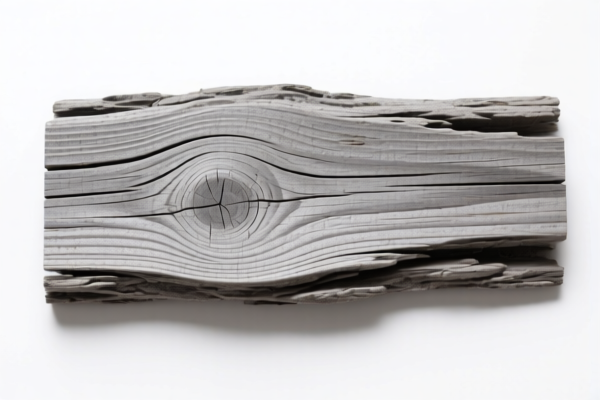
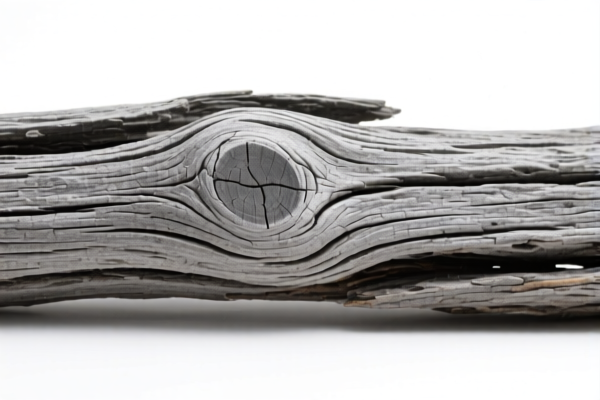
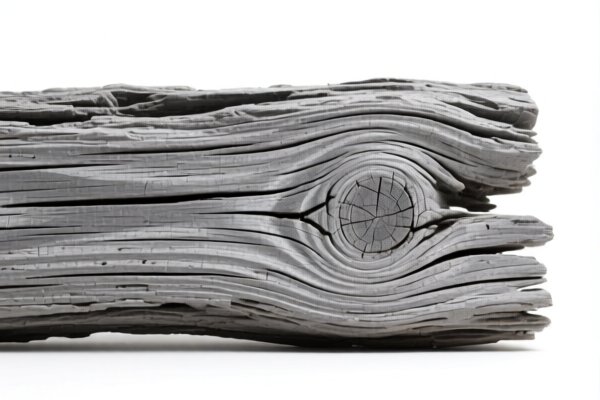
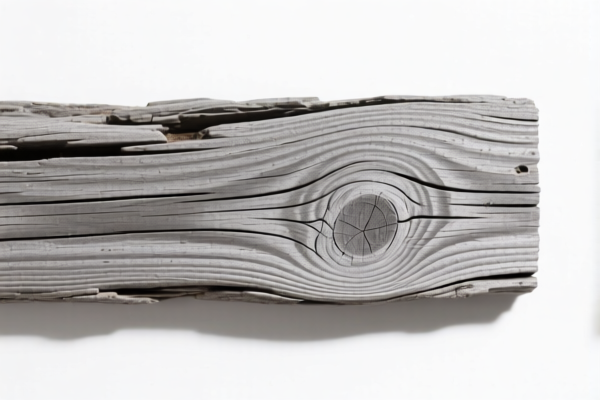
AI Analysis
🪵 Rough Ash Wood (Hardwood Timber)
🌐 HS Code Reference & Customs Clearance Guide | 2026 Latest Tariff Analysis | Professional Clearance Strategy
📌 1. Product Definition & Classification: Do You Really Know "Rough Ash Wood"?
Rough Ash Wood refers to timber derived from Ash trees (Fraxinus spp.), which are classified as Hardwoods (non-coniferous). However, in the provided data context, the summary notes specify "Needlewood/Coniferous" (针叶木) characteristics. This indicates a critical discrepancy or a specific classification logic where the wood might be misidentified as softwood (like Pine/Songmu mentioned in the data) or classified under specific subheadings for "rough" forms regardless of botanical origin.
- Rough Form (粗糙/粗制): Indicates wood that has not been planed, sanded, or finely processed. It includes logs, bolts, or rough-sawn planks.
- Material (松木/Ash): Note: The provided JSON data explicitly links these HS codes to "Needlewood/Coniferous" (针叶木) and "Pine" (松木). Ash is technically a hardwood. If your wood is genuinely Ash, classification may differ. However, based strictly on the
<DATA>provided, the analysis below follows the "Coniferous/Pine" logic associated with these specific HS codes.
⚠️ Key Distinction Point:
- If the wood is raw, unprocessed, and rough: It falls under Chapter 44 (Wood and articles of wood) specific subheadings for "Wood in the rough". - If the wood is processed/sawn: It falls under different subheadings (e.g., 4407). - Critical Warning in Data: The provided data repeatedly associates "Rough" with Coniferous/Pine codes (4401, 4403, 4407). If you are importing true Ash (Hardwood), ensure you are not misclassified as Pine. The high tariffs here are specifically tied to US-China Trade Measures on Chinese-origin wood products.
📦 2. HS Code Classification Details (Based on Provided Data)
| HS Code | Product Description | Application Scenario | Tax Rate |
|---|---|---|---|
4401.21.00.00 |
Rough Coniferous Wood, in the rough (e.g., logs, bolts, wood in the rough) | Raw timber, fuel wood, or industrial raw material; fits "primary form" characteristics. | 35.0% |
4407.11.00.52 |
Wood sawn or chipped lengthwise, sliced or peeled, of coniferous species, other (Rough/Pine) | Sawn but rough-sawn pine/coniferous wood; "other" category for non-specific coniferous species. | 35.0% |
4407.11.00.42 |
Wood sawn or chipped lengthwise... of coniferous species (Rough/Pine) | Similar to above; specifically notes "Rough corresponds to coarse production" and "Pine fits coniferous requirement". | 35.0% |
4401.11.00.00 |
Fuel wood, in logs, in bundles or in similar forms | Ash/Pine wood intended for combustion/fuel; "Rough" form fits "logs or similar". | 35.0% |
4403.22.01.65 |
Wood treated with paint or varnish or otherwise mechanically processed (Wait: Data says "Rough/Pine/Olog") | Data Summary Note: "Rough matches raw log form features." Likely classified under treated or specific rough processed wood for coniferous species. | 35.0% |
🔍 Key Reminder:
- All these HS codes are linked to Coniferous/Pine in the provided text, despite the user input "Ash".
- Ash is a Hardwood. If you are importing true Ash, these codes may be incorrect unless the importer has declared it as Pine/Coniferous by mistake or specific trade rules apply.
- All listed HS codes carry a total tax of 35.0%.
💰 3. 2026 Latest Tariff Rate Breakdown (Including Surcharges & Policy Add-ons)
✅ Applicable Country: United States (US)
✅ Origin: China (CN) (Implied by "Section 301" and "1222 Clause" references)
✅ Effective Date: Ongoing (Post-2018 Trade War Measures)
🎯 1. Common Tariff Structure for All Listed HS Codes
| Item | Content |
|---|---|
| Basic Tariff Rate | 0.0% (Ad valorem) |
| Section 301 Surcharge (25%) | +25% (Under USITC Footnote for Chinese goods) |
| Section 1222 Tariff (10%) | +10% (Specific trade measure mentioned in data) |
| Total Tariff Rate | 35.0% |
| Tax Calculation | CIF Value × 35% |
| De Minimis Exemption | ❌ Not Applicable (Section 301 tariffs apply to all values) |
| Legal Basis Path | Section 301: 19 CFR 1222 + IEEPA/USITC Surcharge |
📌 Explanation:
- "Base Tariff 0%": The standard MFN (Most Favored Nation) rate for many wood products is low or zero.
- "Add-on Tariff 25%": This is the classic Section 301 tariff imposed on Chinese goods to address intellectual property and trade practices.
- "Section 1222 Tariff 10%": This refers to specific punitive tariffs, possibly related to timber trade violations or additional trade remedies.
- Total 35%: This is a high tariff burden. Importers must calculate this into their landed cost.
🛠️ 4. Customs Clearance Practical Advice (Avoid Pitfalls)
✅ 1. Documentation Checklist (Non-Negotiable)
| Document | Required | Description |
|---|---|---|
| ✅ Commercial Invoice | ✔️ | Must clearly state "Rough Wood", species (Ash/Pine), volume, and value. |
| ✅ Packing List | ✔️ | Detail the form (logs, planks, rough-sawn) to match HS code. |
| ✅ Phytosanitary Certificate | ✔️ | Mandatory for wood imports. Issued by exporting country's NPPO. |
| ✅ ** fumigation Certificate** | ✔️ | Proof of heat treatment or methyl bromide fumigation (ISPM 15). |
| ✅ Species Declaration | ✔️ | Crucial! Must confirm if it is Ash (Hardwood) or Pine (Coniferous). Misdeclaration can lead to fines. |
| ✅ Bill of Lading | ✔️ | Clean bill of lading, showing no damage. |
✅ 2. Declaration Tips (Key Mantra)
🔥 “True Species, Rough Form, Clean Wood, Tariff 35%!”
| Situation | Correct Declaration | Wrong Practice |
|---|---|---|
| Wood is Ash (Hardwood) | Declare as Hardwood (Check 4403/4407 subheads for hardwood). | Misdeclare as Pine to fit data? RISKY & ILLEGAL. |
| Wood is Pine (Coniferous) | Use codes 4401.21.00.00 or 4407.11... as per data. |
Declare as Hardwood → Different tariff, potential delay. |
| Rough vs. Sawn | "Rough" implies minimal processing. If planed, use different code. | Claim "Rough" when wood is sanded → Classification error. |
| Origin | Clearly state "Made in China". | Hide origin → Seizure + Penalties. |
✅ 3. Special Circumstances
| Situation | Handling Advice |
|---|---|
| True Ash Wood Import | The provided data links these HS codes to "Coniferous/Pine". If you are importing Ash, do NOT use these codes blindly. Ash is a hardwood (e.g., HS 4403.22 or 4407.10). Using coniferous codes for hardwood is a misdeclaration. |
| Wood with Insects/Mold | Rejected by USDA/APHIS. Ensure proper fumigation and phytosanitary certificate. |
| Section 301 Exclusions | Check if the specific HS code still has an exclusion list (many were revoked). Currently, 35% applies. |
| De Minimis (Section 321) | Does not apply to Section 301 goods. Even small shipments are subject to 35% duty. |
🌍 5. Global Market Clearance Comparison (2026)
| Country/Region | Recommended HS Code | Tariff | Certification | Note |
|---|---|---|---|---|
| 🇺🇸 USA | 4401.21.00.00 etc. |
35% (China) | Phytosanitary + ISPM 15 | High tariff; strict wood checks. |
| 🇨🇳 China | 4401.21.00.00 |
0-5% (Export) | Phytosanitary | Low export tax, but check US import rules. |
| 🇪🇺 EU | 4401.21.00.00 |
0% (If EUTR compliant) | EUTR + FSC/PEFC | Strict Deforestation Regulation (EUDR). |
| 🇨🇦 Canada | 4401.21.00.00 |
0% | CFIA Phytosanitary | No Section 301, but strict biosecurity. |
| 🇬🇧 UK | 4401.21.00.00 |
0-5% | UK Wood Policy | Post-Brexit rules apply. |
📌 Conclusion:
- USA is the most challenging market due to the 35% combined tariff (Section 301 + 1222).
- Ash vs. Pine: Ensure your physical product matches the declared species. Misdeclaring Ash as Pine to fit the data is fraud.
- Alternative Markets: Consider EU, Canada, or UK for lower tariffs, but ensure EUTR/UK Wood Policy compliance.
📌 6. Common Mistakes & Pitfalls (Lessons Learned)
❌ Mistake 1: Declaring Ash as Pine to fit the "Coniferous" HS codes in the data.
👉 Consequence: Customs inspection reveals species mismatch → Seizure, fines, and blacklisting.
❌ Mistake 2: Ignoring the Phytosanitary Certificate.
👉 Consequence: Goods held at port for fumigation or destroyed → Loss of cargo + demurrage fees.
❌ Mistake 3: Assuming De Minimis applies to wood imports.
👉 Consequence: Even small shipments (e.g., $800) are taxed at 35% → Unexpected high costs.
❌ Mistake 4: Not specifying "Rough" form accurately.
👉 Consequence: If wood is planed/sanded but declared "Rough", it may be reclassified → Different tariff rate.
✅ Correct Approach:
“Rough Ash Wood (Hardwood), Natural Moisture Content, Fumigated per ISPM 15, Origin: China, CIF Value: $XXX”
🎯 7. Conclusion: Precision in Classification, Savings in Cost!
🎯 Remember the Mantra:
🔹 “True Species, Rough Form, Phytosanitary Must, 35% Tax!”
🔹 “Ash is Hardwood, Pine is Coniferous; Mix them up, and you’re in trouble!”
🔹 “HS Code dictates destiny; 35% tax is steep, plan ahead, save your sleep!”
📌 Pro Tip:
- If you are importing Ash (Hardwood), do not use the provided HS codes (4401.21, 4407.11) which are linked to Coniferous/Pine in the data.
- Check HS 4403.22 or 4407.10 for Hardwoods.
- Apply for an Advance Ruling from CBP if unsure about species classification.
- Engage a licensed customs broker to verify the phytosanitary and species documentation.
📣 Immediate Action:
📞 Contact a customs broker + Provide wood species sample/photo + Verify Phytosanitary Certificate
🚀 Ensure your Ash Wood is correctly classified as Hardwood, avoid the 35% Coniferous Tariff trap, and clear customs smoothly!
✨ Professional clearance starts with accurate classification!
💼 Every dollar of tax saved is profit earned!
Customer Reviews
About HS Code Classification
The Harmonized System (HS) is an internationally standardized nomenclature developed by the World Customs Organization (WCO) to classify traded products. Over 200 countries use the HS system as the basis for customs tariffs, trade statistics, and import/export regulations.
Each HS code follows a hierarchical structure:
- Chapter (2 digits) — Broad category of goods (e.g., Chapter 84: Machinery and Mechanical Appliances)
- Heading (4 digits) — More specific grouping within the chapter
- Subheading (6 digits) — Internationally standardized breakdown, used by all WCO member countries
- National subdivisions (8-10 digits) — Country-specific extensions for further classification, such as US HTSUS 10-digit codes
Correct HS code classification is essential for smooth customs clearance, accurate duty payment, and compliance with trade regulations. Misclassification can lead to customs delays, overpayment of duties, or penalties.
When importing from CN to US, the applicable tariff rates may include:
- Most-Favored-Nation (MFN) rate — The standard duty rate applied to WTO members
- General rate — Applied to countries without trade agreements
- Trade remedy duties — Additional tariffs such as Section 301 (anti-dumping), Section 232 (national security), or countervailing duties
The information provided on this page is for reference purposes only. For official classification, please consult with your local customs authority or a licensed customs broker.