Rough Square Oak (Shipbuilding Grade)
CN → US| HS编码 | 关税税率 | 原产国 | 目的国 | 文档 |
|---|---|---|---|---|
| 4407910063 | 35.0% | CN | US | 官方文档 |
| 4407910022 | 35.0% | CN | US | 官方文档 |
| 4403910040 | 35.0% | CN | US | 官方文档 |
| 4403910020 | 35.0% | CN | US | 官方文档 |
商品图片
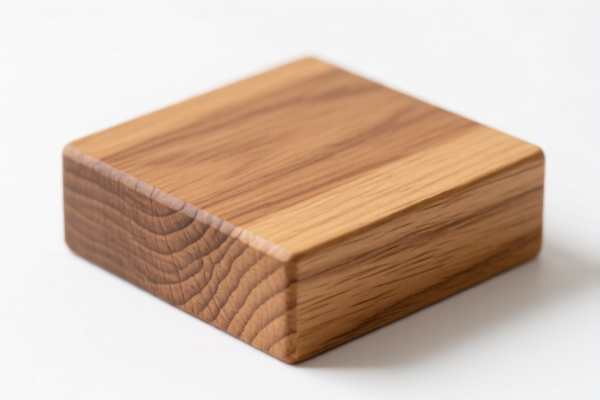
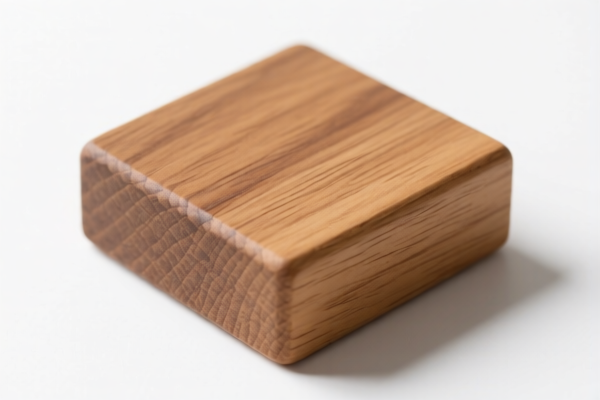
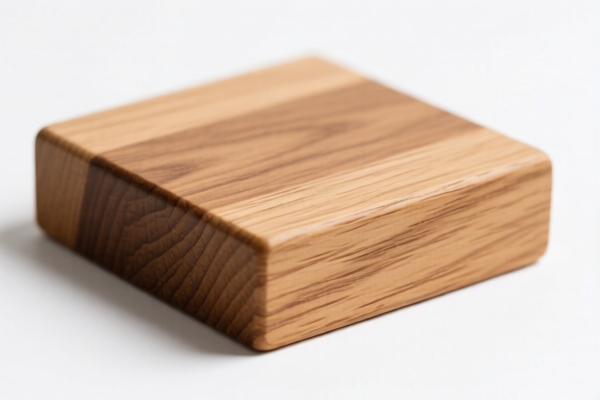

AI分析
🌲 Rough Square Oak (Shipbuilding Grade)
🌐 HS Code Reference & Customs Clearance Guide | 2026 Latest Tariff Analysis | Professional通关 Strategy
📌 I. Product Definition & Classification: Do You Really Know "Shipbuilding Oak"?
Rough Square Oak, specifically identified as Shipbuilding Grade, refers to timber that has been sawn or chipped lengthwise, sliced, or peeled, with a thickness exceeding 6 mm. It may be planed, sanded, or end-jointed, but it remains in its "rough" or semi-processed state, intended for heavy-duty structural applications like ship hulls, docks, or heavy construction.
In international trade, this product falls strictly under Chapter 44 (Wood and articles of wood; wood charcoal). Specifically, it is categorized as Sawn Wood of Oak.
⚠️ Key Distinction:
- If the wood is Red Oak (Quercus rubra and related species commonly traded as "Red Oak"), it falls under specific sub-headings.
- If the wood is Other Oak (e.g., White Oak, European Oak), it falls under different sub-headings.
- The "Shipbuilding Grade" designation itself does not change the HS Code; it only affects the quality specification and potentially the documentation required for safety/structural compliance. The core classification depends on the species and processing level.
📦 II. HS Code Classification Details (Based on Provided Data)
According to the provided data, the relevant HS Codes for Oak Sawn Wood (>6mm thickness) are:
| HS Code | Product Description | Specific Material | Thickness | Processing Level |
|---|---|---|---|---|
4407.91.00.22 |
Sawn/Sliced/Peeled Wood, >6mm | Red Oak (Quercus spp.) | >6 mm | Rough, Planed, Sanded, or End-Jointed |
4407.91.00.63 |
Sawn/Sliced/Peeled Wood, >6mm | Other Oak (Quercus spp.) | >6 mm | Rough, Planed, Sanded, or End-Jointed |
🔍 Analysis:
- "Rough Square" implies the wood has been sawn to size (square profile) but may not be finished for furniture. This fits the definition of "sawn... whether or not planed, sanded."
- "Shipbuilding Grade" is a quality grade, not a tariff classification. However, shipbuilding oak is typically White Oak or high-density Red Oak.
- Crucial Check: You must determine if the "Red Oak" in your description refers to the botanical Quercus rubra (often labeled "Red Oak" in trade) or if you are using "Red Oak" as a general term. If it is White Oak or other species, use4407.91.00.63. If it is specifically Red Oak, use4407.91.00.22.
💰 III. 2026 Latest Tariff Rate Breakdown (Including Additional Taxes)
✅ Applicable Country: United States (US)
✅ Origin: China (CN) (Assumed based on context of typical high-tariff queries; if from elsewhere, rates may vary)
✅ Effective Time: Current 2026 Tariff Structure
Both HS Codes in the provided data share the same tax structure.
🎯 1. 4407.91.00.22 —— Red Oak Sawn Wood
| Item | Content |
|---|---|
| Base Tariff Rate | 0.0% (ad valorem) |
| Additional Tariff (Section 301) | +25.0% |
| Total Tax Rate | 25.0% |
| Tax Calculation | CIF Value × 25% |
| De Minimis Eligibility | ❌ Not Applicable (Wood products >6mm generally do not qualify for de minimis exemptions in this context) |
| Legal Basis Path | HTSUS:4407.91.00.22 → USITC Footnote: Section 301 List 4 |
📌 Explanation:
- The 0% base rate reflects the standard MFN (Most Favored Nation) tariff for sawn oak wood.
- The 25% additional tariff is imposed under Section 301 of the Trade Act of 1974, targeting specific Chinese-origin goods.
- Total Effective Rate: 25%. This is a significant cost factor for shipbuilding components.
🎯 2. 4407.91.00.63 —— Other Oak Sawn Wood
| Item | Content |
|---|---|
| Base Tariff Rate | 0.0% (ad valorem) |
| Additional Tariff (Section 301) | +25.0% |
| Total Tax Rate | 25.0% |
| Tax Calculation | CIF Value × 25% |
| De Minimis Eligibility | ❌ Not Applicable |
| Legal Basis Path | HTSUS:4407.91.00.63 → USITC Footnote: Section 301 List 4 |
📌 Note:
- Identical tax treatment to Red Oak in this dataset.
- Whether you import White Oak, European Oak, or other Quercus species, the duty burden is the same under the provided data.
🛠️ IV. Customs Clearance Practical Advice (Real-World Pitfall Guide)
✅ 1. Documentation Checklist (Non-Negotiable)
| Document | Required? | Description |
|---|---|---|
| ✅ Commercial Invoice | ✔️ | Must clearly state "Sawn Wood of Oak, Quercus spp.", thickness (>6mm), and grade ("Shipbuilding Grade"). |
| ✅ Packing List | ✔️ | Detail number of bundles, board feet/m³, and dimensions. |
| ✅ Phytosanitary Certificate | ✔️ | Critical for Wood! Issued by the exporting country's agricultural authority to prove the wood is free from pests (e.g., Emerald Ash Borer, Bark Beetles). |
| ✅ Fumigation Certificate | ✔️ | Proof of treatment (e.g., heat treatment or methyl bromide) to meet ISPM 15 standards. |
| ✅ Certificate of Origin | ✔️ | To confirm origin (e.g., China). Required to apply the 25% Section 301 tariff correctly. |
| ✅ Species Declaration | ✔️ | Explicitly state if "Red Oak" or "White Oak/Other Oak" to select the correct HS Code (...22 vs ...63). |
✅ 2. Classification Tips (Key Mantras)
🔥 “Species First, Thickness Next, Process Last!”
| Scenario | Correct HS Code | Common Mistake |
|---|---|---|
| Red Oak (e.g., Quercus rubra), >6mm, sawn | 4407.91.00.22 |
Using 4407.91.00.63 → May cause customs delay for species verification. |
| White Oak or other oak species, >6mm, sawn | 4407.91.00.63 |
Using 4407.91.00.22 → Misclassification of species. |
| Oak Veneers (<6mm thick) | Not in Data (Likely Chapter 44.01 or 44.08) | Using 4407.91.xx → Wrong chapter for veneers. |
| Wood Chips (Not sawn lengthwise) | Not in Data (Likely Chapter 44.01) | Using 4407.91.xx → Wrong processing definition. |
✅ 3. Special Considerations for Shipbuilding Grade
| Situation | Handling Advice |
|---|---|
| "Shipbuilding Grade" Label | Do not create a new HS Code. This is a quality specification. Ensure the invoice matches the botanical species. |
| End-Jointed Timber | If the wood is end-jointed (finger-jointed), it is still classified under 4407.91.xx. The processing allowance covers this. |
| Fumigation Issues | If the phytosanitary certificate is missing or invalid, US Customs and Border Protection (CBP) will reject the shipment. Ensure ISPM 15 stamp is visible on packaging. |
| Origin Misdeclaration | If the wood is claimed to be from Vietnam or Mexico (to avoid 25% tariff) but originates from China, this is fraud. Use reliable supply chain documentation. |
🌍 V. Global Market Comparison (2026)
| Country/Region | Recommended HS Code | Tariff Rate (China Origin) | Key Requirements | Notes |
|---|---|---|---|---|
| 🇺🇸 USA | 4407.91.00.22 / .63 |
25% | Phytosanitary Cert, Fumigation | High duty due to Section 301. |
| 🇨🇳 China | 4407.91.00.22 / .63 |
0% - 5%* | Phytosanitary | Import duties vary by trade agreements. |
| 🇪🇺 EU | 4407.91.xx |
0%* | FSC/PEFC Certification, Timber Regulation (EUTR) | Strict anti-deforestation laws. |
| 🇬🇧 UK | 4407.91.xx |
0%* | UK Timber Regulation | Post-Brexit rules apply. |
📌 Conclusion:
- The US market has a 25% duty burden on Chinese-origin sawn oak.
- EU/UK focus more on sustainability certification (FSC) and legality than high tariffs for Chinese wood (often 0% base, but complex compliance).
- Cost Optimization: Consider sourcing oak from non-Section 301 countries (e.g., Europe, North America) if shipping to the US to avoid the 25% tariff.
📌 VI. Common Errors & Pitfall Guide (Lessons Learned)
❌ Error 1: Confusing "Red Oak" (Botanical) with "White Oak" (Botanical)
👉 Consequence: Wrong HS Code (...22 vs ...63) → CBP audit, potential penalties for misdeclaration.
✅ Fix: Always verify the scientific name (Quercus rubra vs Quercus alba or others).
❌ Error 2: Omitting Phytosanitary Certificate
👉 Consequence: Seizure and destruction of cargo by USDA APHIS.
✅ Fix: Ensure the certificate is issued by the official national plant protection organization (NPPO) of the exporting country.
❌ Error 3: Assuming "Rough" means "Unprocessed"
👉 Consequence: If planed or sanded, it is still 4407. If chipped, it is not. Misclassification leads to duty discrepancies.
✅ Fix: Describe processing accurately: "Sawn, Planed, End-Jointed".
❌ Error 4: Ignoring Section 301 Tariffs
👉 Consequence: Underpaying duties by 25% → Back taxes + Interest + Penalties.
✅ Fix: Budget for the full 25% additional tariff if the origin is China.
🎯 VII. Conclusion: Professional Declaration, Cost Control, Efficiency!
🎯 Remember the Mantra:
🔹 "Species Determines Code, Origin Determines Duty, Phytosanitary Ensures Entry!"
🔹 "Red Oak = ...22, Other Oak = ...63, Both = 25% Extra Tax (China)!"
📌 Pro Tip:
If your "Shipbuilding Grade" oak is actually sourced from North America (USA/Canada) or Europe, the 25% Section 301 tariff does NOT apply.
- Action: Verify the Country of Harvest and Milling. If it is North American, the duty may be 0% (depending on specific HTS provisions and FTAA/USMCA rules).
- Strategy: Re-evaluate your supply chain. Sourcing oak from non-China origins can save you 25% on landed cost.
📣 Immediate Action:
📞 Consult a licensed customs broker
📄 Obtain a Phytosanitary Certificate and Fumigation Report
📝 Declare the exact botanical species on the commercial invoice
🚀 Ensure compliant clearance, avoid detention, and optimize your supply chain!
✨ Professional Customs Clearance Starts with Precise Classification!
💼 Every percentage point of duty impacts your profit margin!
用户评价
关于 HS 编码归类
协调制度(HS)是由世界海关组织(WCO)制定的国际贸易商品分类标准。全球 200 多个国家采用 HS 系统作为海关关税、贸易统计和进出口监管的基础。
每个 HS 编码遵循以下层级结构:
- 章(2 位)——商品大类(例如:第 84 章:机器和机械设备)
- 品目(4 位)——章内的更具体分类
- 子目(6 位)——国际通用细分,所有 WCO 成员国统一使用
- 本国细分(8-10 位)——各国自行扩展的细分编码,如美国 HTSUS 10 位编码
正确的 HS 编码归类对于顺利通关、准确缴纳关税和遵守贸易法规至关重要。错误归类可能导致海关延误、多缴关税或罚款。
从CN进口到US时,适用的关税税率可能包括:
- 最惠国(MFN)税率——适用于 WTO 成员国的标准关税税率
- 普通税率——适用于无贸易协定国家
- 贸易救济关税——附加关税,如 301 条款(反倾销)、232 条款(国家安全)或反补贴税
本页内容仅供参考。如需正式归类,请咨询当地海关或持牌报关代理。