Rough Square Oak (Shipbuilding Grade)
CN → US| HS Code | Tariff Rate | Origin | Destination | Doc |
|---|---|---|---|---|
| 4407910063 | 35.0% | CN | US | Official Doc |
| 4407910022 | 35.0% | CN | US | Official Doc |
| 4403910040 | 35.0% | CN | US | Official Doc |
| 4403910020 | 35.0% | CN | US | Official Doc |
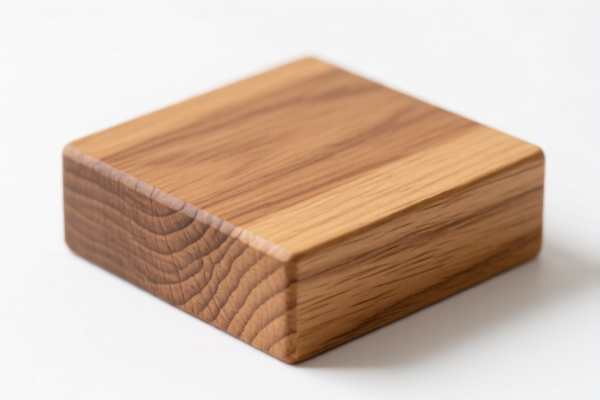
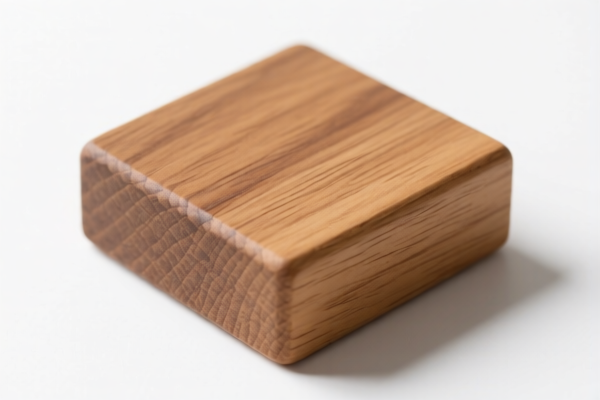
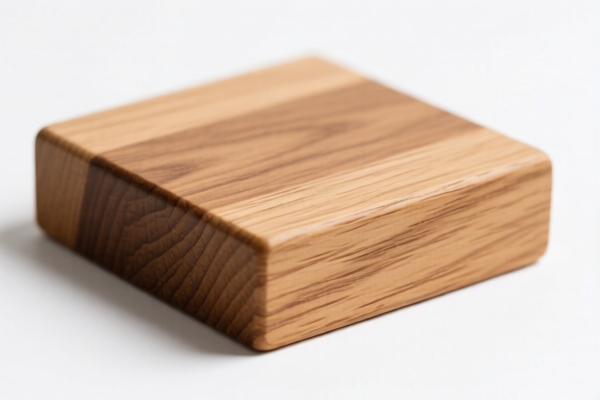
Product Images

AI Analysis
🌲 Rough Square Oak (Shipbuilding Grade)
🌐 HS Code Reference & Customs Clearance Guide | 2026 Latest Tariff Analysis | Professional通关 Strategy
📌 I. Product Definition & Classification: Do You Really Know "Shipbuilding Oak"?
Rough Square Oak, specifically identified as Shipbuilding Grade, refers to timber that has been sawn or chipped lengthwise, sliced, or peeled, with a thickness exceeding 6 mm. It may be planed, sanded, or end-jointed, but it remains in its "rough" or semi-processed state, intended for heavy-duty structural applications like ship hulls, docks, or heavy construction.
In international trade, this product falls strictly under Chapter 44 (Wood and articles of wood; wood charcoal). Specifically, it is categorized as Sawn Wood of Oak.
⚠️ Key Distinction:
- If the wood is Red Oak (Quercus rubra and related species commonly traded as "Red Oak"), it falls under specific sub-headings.
- If the wood is Other Oak (e.g., White Oak, European Oak), it falls under different sub-headings.
- The "Shipbuilding Grade" designation itself does not change the HS Code; it only affects the quality specification and potentially the documentation required for safety/structural compliance. The core classification depends on the species and processing level.
📦 II. HS Code Classification Details (Based on Provided Data)
According to the provided data, the relevant HS Codes for Oak Sawn Wood (>6mm thickness) are:
| HS Code | Product Description | Specific Material | Thickness | Processing Level |
|---|---|---|---|---|
4407.91.00.22 |
Sawn/Sliced/Peeled Wood, >6mm | Red Oak (Quercus spp.) | >6 mm | Rough, Planed, Sanded, or End-Jointed |
4407.91.00.63 |
Sawn/Sliced/Peeled Wood, >6mm | Other Oak (Quercus spp.) | >6 mm | Rough, Planed, Sanded, or End-Jointed |
🔍 Analysis:
- "Rough Square" implies the wood has been sawn to size (square profile) but may not be finished for furniture. This fits the definition of "sawn... whether or not planed, sanded."
- "Shipbuilding Grade" is a quality grade, not a tariff classification. However, shipbuilding oak is typically White Oak or high-density Red Oak.
- Crucial Check: You must determine if the "Red Oak" in your description refers to the botanical Quercus rubra (often labeled "Red Oak" in trade) or if you are using "Red Oak" as a general term. If it is White Oak or other species, use4407.91.00.63. If it is specifically Red Oak, use4407.91.00.22.
💰 III. 2026 Latest Tariff Rate Breakdown (Including Additional Taxes)
✅ Applicable Country: United States (US)
✅ Origin: China (CN) (Assumed based on context of typical high-tariff queries; if from elsewhere, rates may vary)
✅ Effective Time: Current 2026 Tariff Structure
Both HS Codes in the provided data share the same tax structure.
🎯 1. 4407.91.00.22 —— Red Oak Sawn Wood
| Item | Content |
|---|---|
| Base Tariff Rate | 0.0% (ad valorem) |
| Additional Tariff (Section 301) | +25.0% |
| Total Tax Rate | 25.0% |
| Tax Calculation | CIF Value × 25% |
| De Minimis Eligibility | ❌ Not Applicable (Wood products >6mm generally do not qualify for de minimis exemptions in this context) |
| Legal Basis Path | HTSUS:4407.91.00.22 → USITC Footnote: Section 301 List 4 |
📌 Explanation:
- The 0% base rate reflects the standard MFN (Most Favored Nation) tariff for sawn oak wood.
- The 25% additional tariff is imposed under Section 301 of the Trade Act of 1974, targeting specific Chinese-origin goods.
- Total Effective Rate: 25%. This is a significant cost factor for shipbuilding components.
🎯 2. 4407.91.00.63 —— Other Oak Sawn Wood
| Item | Content |
|---|---|
| Base Tariff Rate | 0.0% (ad valorem) |
| Additional Tariff (Section 301) | +25.0% |
| Total Tax Rate | 25.0% |
| Tax Calculation | CIF Value × 25% |
| De Minimis Eligibility | ❌ Not Applicable |
| Legal Basis Path | HTSUS:4407.91.00.63 → USITC Footnote: Section 301 List 4 |
📌 Note:
- Identical tax treatment to Red Oak in this dataset.
- Whether you import White Oak, European Oak, or other Quercus species, the duty burden is the same under the provided data.
🛠️ IV. Customs Clearance Practical Advice (Real-World Pitfall Guide)
✅ 1. Documentation Checklist (Non-Negotiable)
| Document | Required? | Description |
|---|---|---|
| ✅ Commercial Invoice | ✔️ | Must clearly state "Sawn Wood of Oak, Quercus spp.", thickness (>6mm), and grade ("Shipbuilding Grade"). |
| ✅ Packing List | ✔️ | Detail number of bundles, board feet/m³, and dimensions. |
| ✅ Phytosanitary Certificate | ✔️ | Critical for Wood! Issued by the exporting country's agricultural authority to prove the wood is free from pests (e.g., Emerald Ash Borer, Bark Beetles). |
| ✅ Fumigation Certificate | ✔️ | Proof of treatment (e.g., heat treatment or methyl bromide) to meet ISPM 15 standards. |
| ✅ Certificate of Origin | ✔️ | To confirm origin (e.g., China). Required to apply the 25% Section 301 tariff correctly. |
| ✅ Species Declaration | ✔️ | Explicitly state if "Red Oak" or "White Oak/Other Oak" to select the correct HS Code (...22 vs ...63). |
✅ 2. Classification Tips (Key Mantras)
🔥 “Species First, Thickness Next, Process Last!”
| Scenario | Correct HS Code | Common Mistake |
|---|---|---|
| Red Oak (e.g., Quercus rubra), >6mm, sawn | 4407.91.00.22 |
Using 4407.91.00.63 → May cause customs delay for species verification. |
| White Oak or other oak species, >6mm, sawn | 4407.91.00.63 |
Using 4407.91.00.22 → Misclassification of species. |
| Oak Veneers (<6mm thick) | Not in Data (Likely Chapter 44.01 or 44.08) | Using 4407.91.xx → Wrong chapter for veneers. |
| Wood Chips (Not sawn lengthwise) | Not in Data (Likely Chapter 44.01) | Using 4407.91.xx → Wrong processing definition. |
✅ 3. Special Considerations for Shipbuilding Grade
| Situation | Handling Advice |
|---|---|
| "Shipbuilding Grade" Label | Do not create a new HS Code. This is a quality specification. Ensure the invoice matches the botanical species. |
| End-Jointed Timber | If the wood is end-jointed (finger-jointed), it is still classified under 4407.91.xx. The processing allowance covers this. |
| Fumigation Issues | If the phytosanitary certificate is missing or invalid, US Customs and Border Protection (CBP) will reject the shipment. Ensure ISPM 15 stamp is visible on packaging. |
| Origin Misdeclaration | If the wood is claimed to be from Vietnam or Mexico (to avoid 25% tariff) but originates from China, this is fraud. Use reliable supply chain documentation. |
🌍 V. Global Market Comparison (2026)
| Country/Region | Recommended HS Code | Tariff Rate (China Origin) | Key Requirements | Notes |
|---|---|---|---|---|
| 🇺🇸 USA | 4407.91.00.22 / .63 |
25% | Phytosanitary Cert, Fumigation | High duty due to Section 301. |
| 🇨🇳 China | 4407.91.00.22 / .63 |
0% - 5%* | Phytosanitary | Import duties vary by trade agreements. |
| 🇪🇺 EU | 4407.91.xx |
0%* | FSC/PEFC Certification, Timber Regulation (EUTR) | Strict anti-deforestation laws. |
| 🇬🇧 UK | 4407.91.xx |
0%* | UK Timber Regulation | Post-Brexit rules apply. |
📌 Conclusion:
- The US market has a 25% duty burden on Chinese-origin sawn oak.
- EU/UK focus more on sustainability certification (FSC) and legality than high tariffs for Chinese wood (often 0% base, but complex compliance).
- Cost Optimization: Consider sourcing oak from non-Section 301 countries (e.g., Europe, North America) if shipping to the US to avoid the 25% tariff.
📌 VI. Common Errors & Pitfall Guide (Lessons Learned)
❌ Error 1: Confusing "Red Oak" (Botanical) with "White Oak" (Botanical)
👉 Consequence: Wrong HS Code (...22 vs ...63) → CBP audit, potential penalties for misdeclaration.
✅ Fix: Always verify the scientific name (Quercus rubra vs Quercus alba or others).
❌ Error 2: Omitting Phytosanitary Certificate
👉 Consequence: Seizure and destruction of cargo by USDA APHIS.
✅ Fix: Ensure the certificate is issued by the official national plant protection organization (NPPO) of the exporting country.
❌ Error 3: Assuming "Rough" means "Unprocessed"
👉 Consequence: If planed or sanded, it is still 4407. If chipped, it is not. Misclassification leads to duty discrepancies.
✅ Fix: Describe processing accurately: "Sawn, Planed, End-Jointed".
❌ Error 4: Ignoring Section 301 Tariffs
👉 Consequence: Underpaying duties by 25% → Back taxes + Interest + Penalties.
✅ Fix: Budget for the full 25% additional tariff if the origin is China.
🎯 VII. Conclusion: Professional Declaration, Cost Control, Efficiency!
🎯 Remember the Mantra:
🔹 "Species Determines Code, Origin Determines Duty, Phytosanitary Ensures Entry!"
🔹 "Red Oak = ...22, Other Oak = ...63, Both = 25% Extra Tax (China)!"
📌 Pro Tip:
If your "Shipbuilding Grade" oak is actually sourced from North America (USA/Canada) or Europe, the 25% Section 301 tariff does NOT apply.
- Action: Verify the Country of Harvest and Milling. If it is North American, the duty may be 0% (depending on specific HTS provisions and FTAA/USMCA rules).
- Strategy: Re-evaluate your supply chain. Sourcing oak from non-China origins can save you 25% on landed cost.
📣 Immediate Action:
📞 Consult a licensed customs broker
📄 Obtain a Phytosanitary Certificate and Fumigation Report
📝 Declare the exact botanical species on the commercial invoice
🚀 Ensure compliant clearance, avoid detention, and optimize your supply chain!
✨ Professional Customs Clearance Starts with Precise Classification!
💼 Every percentage point of duty impacts your profit margin!
Customer Reviews
About HS Code Classification
The Harmonized System (HS) is an internationally standardized nomenclature developed by the World Customs Organization (WCO) to classify traded products. Over 200 countries use the HS system as the basis for customs tariffs, trade statistics, and import/export regulations.
Each HS code follows a hierarchical structure:
- Chapter (2 digits) — Broad category of goods (e.g., Chapter 84: Machinery and Mechanical Appliances)
- Heading (4 digits) — More specific grouping within the chapter
- Subheading (6 digits) — Internationally standardized breakdown, used by all WCO member countries
- National subdivisions (8-10 digits) — Country-specific extensions for further classification, such as US HTSUS 10-digit codes
Correct HS code classification is essential for smooth customs clearance, accurate duty payment, and compliance with trade regulations. Misclassification can lead to customs delays, overpayment of duties, or penalties.
When importing from CN to US, the applicable tariff rates may include:
- Most-Favored-Nation (MFN) rate — The standard duty rate applied to WTO members
- General rate — Applied to countries without trade agreements
- Trade remedy duties — Additional tariffs such as Section 301 (anti-dumping), Section 232 (national security), or countervailing duties
The information provided on this page is for reference purposes only. For official classification, please consult with your local customs authority or a licensed customs broker.