Rubber Additive M (Ointment)
CN → US| HS编码 | 关税税率 | 原产国 | 目的国 | 文档 |
|---|---|---|---|---|
| 3812105000 | 40.0% | CN | US | 官方文档 |
| 3812101000 | 41.5% | CN | US | 官方文档 |
| 3824405000 | 40.0% | CN | US | 官方文档 |
| 3824991100 | 35.0% | CN | US | 官方文档 |
| 3812105000 | 40.0% | CN | US | 官方文档 |
商品图片
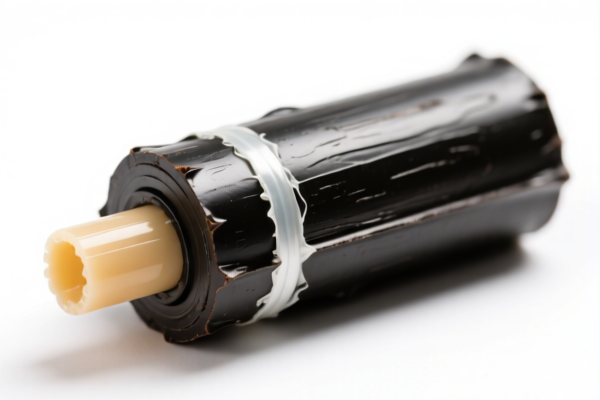
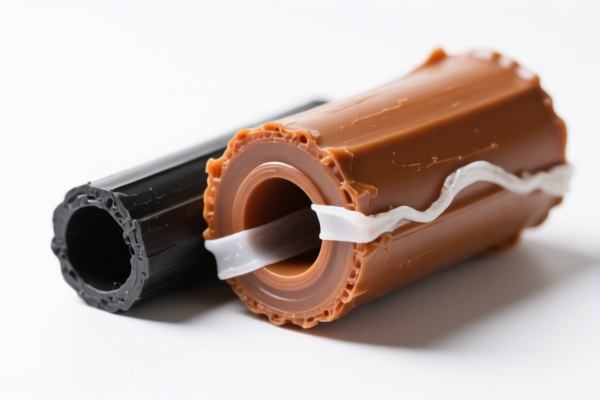
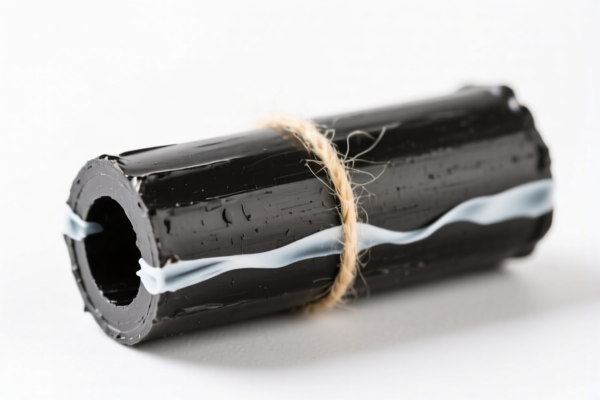
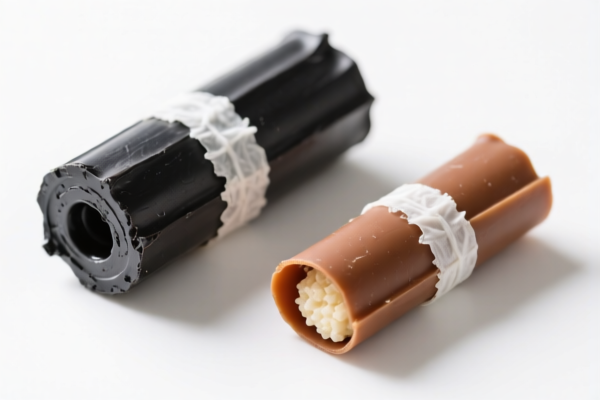
AI分析
🧪 Rubber Additive M (Ointment) | HS Code Classification & Duty Breakdown 2026
🌐 HS Code Reference & Clearance Guide | 2026 Latest Tariff Analysis | Professional Clearance Strategy
📌 I. Product Definition & Classification: What Exactly is "Rubber Additive M (Ointment)"?
Rubber Additives are essential chemical compounds used in the rubber manufacturing industry to improve processing characteristics, accelerate curing (vulcanization), or enhance the physical properties of the final rubber product.
This specific product is classified as: * Chemical Nature: A "Rubber Additive" (specifically labeled "M"). * Physical Form: "Ointment" – A semi-solid, paste-like consistency.
In international trade, the distinction between Powder, Liquid, and Ointment/Paste forms is critical because it often determines whether the item falls under specific sub-headings for "Rubber Accelerators" (Ch. 3812) or general "Chemical Preparations" (Ch. 3824).
⚠️ Key Distinction Point: * If the product is a Powder: It may be classified under 3824.40.50.00 or 3824.99.11.00 as a general chemical preparation. * If the product is an Ointment/Paste: It is often grouped with 3812.10.50.00 because ointments are a common physical form for specific rubber accelerators and additives, sharing material attributes with standard rubber aids.
📦 II. HS Code Classification Details (2026 Latest Tariff Reference)
Based on the provided data, there are two primary classification paths for "Rubber Additive M (Ointment)":
| HS Code | Product Description | Reason for Classification |
|---|---|---|
3812.10.50.00 |
Rubber Additive AA/M (Ointment) | Primary Match: The summary states that "Rubber Additive" matches the material attribute of "Rubber Accelerators," and "Ointment" is a common form for chemical aids. |
3812.10.10.00 |
Rubber Additive AA/M (Ointment) | Alternative Match: Similar to above, "Rubber Additive" aligns with "Rubber Accelerators," and "Ointment" is considered a chemical preparation. Note the slight variation in base duty. |
🔍 Note on Other Variants: * Rubber Additives M (Powder) is NOT classified here. Powder forms are typically classified under 3824.40.50.00 or 3824.99.11.00 because powder is treated as a general chemical industrial preparation rather than a specific accelerated aid form. * Rubber Additive AA (Ointment) uses the same logic as "Rubber Additive M (Ointment)" and shares the 3812.10.50.00 classification.
💰 III. 2026 Latest Tariff Rate Details (Including Additional Taxes)
✅ Applicable Country: United States (US)
✅ Origin: China (CN)
✅ Effective Date: From November 10, 2025 onwards
🎯 1. 3812.10.50.00 —— Rubber Additive (Ointment Form)
| Item | Content |
|---|---|
| Base Tariff | 5.0% |
| Section 301 Additional Tariff | +25.0% |
| IEEPA Additional Tariff (Section 122) | +10.0% |
| Total Effective Tariff | 40.0% |
| Tax Calculation | CIF Value × 40% |
| De Minimis Exemption Available? | ❌ No (deny_de_minimis) |
| Legal Basis Path | USITC:3812.10.50.00 → FOOTNOTE:301 → IEEPA:Section122 |
📌 Explanation: * The 5% base tariff applies to rubber accelerators and vulcanization initiators under Chapter 3812. * The 25% Section 301 tariff is applied to most Chinese-origin goods in this category. * The 10% IEEPA (Section 122) tariff is a specific additional levy on Chinese chemical products/exports effective from late 2025. * Total: 40% is a high cost factor. Importers must account for this in their landed cost calculations.
🎯 2. 3812.10.10.00 —— Rubber Additive (Ointment Form)
| Item | Content |
|---|---|
| Base Tariff | 6.5% |
| Section 301 Additional Tariff | +25.0% |
| IEEPA Additional Tariff (Section 122) | +10.0% |
| Total Effective Tariff | 41.5% |
| Tax Calculation | CIF Value × 41.5% |
| De Minimis Exemption Available? | ❌ No (deny_de_minimis) |
| Legal Basis Path | USITC:3812.10.10.00 → FOOTNOTE:301 → IEEPA:Section122 |
📌 Explanation: * This sub-heading has a slightly higher base tariff (6.5%) compared to 3812.10.50.00. * The additional taxes remain the same (25% + 10%). * Total: 41.5% is the higher-end cost scenario. * Why two codes? Classification disputes often arise between 3812.10.10.00 and 3812.10.50.00 based on precise chemical formulation. 3812.10.50.00 is often preferred if the additive fits the broader "accelerator" definition more accurately.
🛠️ IV. Clearance Practical Advice (Battle-Tested Pitfall Avoidance)
✅ 1. Preparation Checklist (Non-Negotiable)
| Document | Must Provide | Description |
|---|---|---|
| ✅ Technical Data Sheet (TDS) | ✔️ | Must clearly state physical form (Ointment/Paste) and chemical composition. |
| ✅ Material Safety Data Sheet (MSDS) | ✔️ | Required for chemical clearance; confirms hazard class. |
| ✅ Product Photos | ✔️ | Show the semi-solid/ointment texture to distinguish from powder. |
| ✅ Commercial Invoice | ✔️ | Clearly describe as "Rubber Additive, Ointment Form" – do NOT just write "Chemical." |
| ✅ Origin Certificate (CO) | ✔️ | To prove Chinese origin (triggering tariffs) or exemption if applicable. |
| ✅ Usage Declaration | ✔️ | Confirm use in Rubber Manufacturing (supports Ch. 3812 classification). |
✅ 2. Declaration Strategy (Key Mantras)
🔥 "Form Matters: Ointment = 3812, Powder = 3824. Name it Right, Tariff Takes Flight!"
| Scenario | Correct Declaration | Incorrect Action |
|---|---|---|
| Ointment/Paste Form | 3812.10.50.00 (Preferred) or 3812.10.10.00 |
Misdeclaring as Powder → Leads to 3824 codes with different duty structures. |
| Powder Form | 3824.40.50.00 or 3824.99.11.00 |
Misdeclaring as Ointment → Risk of Audit & Penalty. |
| Generic Name | "Rubber Vulcanization Accelerator, Paste" | "Chemical Mix" or "Glue" → High risk of misclassification. |
| Packaging | Industrial Drum/Bucket | Retail Jar → May raise questions about end-use. |
📌 Critical Warning: * If you declare "Rubber Additive M (Powder)" but ship "Ointment", Customs will flag a material discrepancy. * The summary explicitly links Ointment to 3812.10.50.00 due to shared material attributes with rubber accelerators. * Powder forms are explicitly linked to 3824.40.50.00 or 3824.99.11.00. Do not mix these up.
✅ 3. Special Handling
| Situation | Advice |
|---|---|
| OEM/Contract Manufacturing | Provide the customer’s specification sheet showing "Ointment" consistency to justify Ch. 3812. |
| Mixed Shipments (Powder + Ointment) | Split Declaration! Do not combine. Powder → 3824; Ointment → 3812. Mixing leads to confusion and potential denial. |
| Chemical Analysis | Be prepared for Customs to request a chemical analysis report to verify it is indeed a "Rubber Additive" and not a generic industrial paste. |
🌍 V. Global Market Comparison (2026)
| Country/Region | Recommended HS Code | Base Duty | Total Duty (US Origin) | Notes |
|---|---|---|---|---|
| 🇺🇸 USA | 3812.10.50.00 |
5.0% | 40.0% | Includes 301 + IEEPA 10%. High cost. |
| 🇨🇳 China | 3812.10.50.00 |
~10-15% | ~15% | No Section 301/IEEPA for domestic. |
| 🇪🇺 EU | 3824.40.00 |
~6.5% | ~6.5% | EU often classifies rubber additives under 3824 regardless of form. |
| 🇲🇽 Mexico | 3812.10.50 |
0-5% | 0-5% | Check USMCA eligibility. |
📌 Conclusion: * The US market imposes significant additional tariffs (35% total surcharge) on these products. * Classification Accuracy is Vital: Using the wrong code (e.g., 3824 for an ointment) may lead to underpayment (if 3824 had lower base duty) or overpayment. * For Ointment, 3812.10.50.00 is the most consistent recommendation in the provided data.
📌 VI. Common Mistakes & Pitfalls (Blood Lessons)
❌ Mistake 1: Declaring "Rubber Additive" without specifying form (Powder vs. Ointment). 👉 Consequence: Customs may assign 3824.99.11.00 (if they assume generic) or 3812.10.50.00. If they choose 3824.99.11.00, the duty is 35.0% (Base 0% + 25% + 10%), which is LOWER than 40%. Wait, is this a risk?
⚠️ Actually: If Customs classifies it as 3824.99.11.00, duty is 35%. If you declare 3812.10.50.00, duty is 40%. BUT: If you intend 3812 but they force 3824, you might be penalized for misdeclaration if the product is legally a "Rubber Accelerator." However, if you intend 3824 but it's actually 3812, you underpay. Best Practice: Align with the material property. If it's a specific accelerator, 3812 is more accurate. 40% vs 35% is a small difference, but accuracy prevents audits.
❌ Mistake 2: Confusing "Rubber Additive AA" with "Rubber Additive M". 👉 Consequence: Both are often classified under 3812.10.50.00 (40% duty). No significant duty difference, but chemical composition must match the invoice description.
❌ Mistake 3: Using "Glue" or "Adhesive" as the product name. 👉 Consequence: May be classified under 3506 (Adhesives) or 3906 (Resins), leading to different tariffs and potential FDA/ASTM compliance issues if misidentified.
✅ Correct Declaration:
"Rubber Vulcanization Accelerator, Type M, Ointment Form, for Rubber Manufacturing, HS Code 3812.10.50.00, Made in China."
🎯 VII. Conclusion: Precision Saves Money!
🎯 Remember the Mantra:
🔹 "Ointment goes to 3812, Powder to 3824. Don't mix them, or Customs will take a break."
🔹 "40% Duty on Ointment, 35% on Powder (generic). Be accurate to avoid re-classification headaches."
📌 Pro Tip:
If your supplier provides both Powder and Ointment forms, ensure your Commercial Invoice and Packing List explicitly state the form for each line item. Never generalize.
📣 Take Action Now:
📞 Confirm with your Customs Broker: Provide the MSDS and TDS to verify if 3812.10.50.00 is the safest classification for your specific "Rubber Additive M" formulation. 🚀 Ensure your invoices clearly state "Ointment" to support the 3812 classification.
✨ Professional Classification, Smooth Clearance!
💼 Your Cost Control Starts with the Right HS Code!
用户评价
关于 HS 编码归类
协调制度(HS)是由世界海关组织(WCO)制定的国际贸易商品分类标准。全球 200 多个国家采用 HS 系统作为海关关税、贸易统计和进出口监管的基础。
每个 HS 编码遵循以下层级结构:
- 章(2 位)——商品大类(例如:第 84 章:机器和机械设备)
- 品目(4 位)——章内的更具体分类
- 子目(6 位)——国际通用细分,所有 WCO 成员国统一使用
- 本国细分(8-10 位)——各国自行扩展的细分编码,如美国 HTSUS 10 位编码
正确的 HS 编码归类对于顺利通关、准确缴纳关税和遵守贸易法规至关重要。错误归类可能导致海关延误、多缴关税或罚款。
从CN进口到US时,适用的关税税率可能包括:
- 最惠国(MFN)税率——适用于 WTO 成员国的标准关税税率
- 普通税率——适用于无贸易协定国家
- 贸易救济关税——附加关税,如 301 条款(反倾销)、232 条款(国家安全)或反补贴税
本页内容仅供参考。如需正式归类,请咨询当地海关或持牌报关代理。