Rubber Additive M (Ointment)
CN → US| HS Code | Tariff Rate | Origin | Destination | Doc |
|---|---|---|---|---|
| 3812105000 | 40.0% | CN | US | Official Doc |
| 3812101000 | 41.5% | CN | US | Official Doc |
| 3824405000 | 40.0% | CN | US | Official Doc |
| 3824991100 | 35.0% | CN | US | Official Doc |
| 3812105000 | 40.0% | CN | US | Official Doc |
Product Images
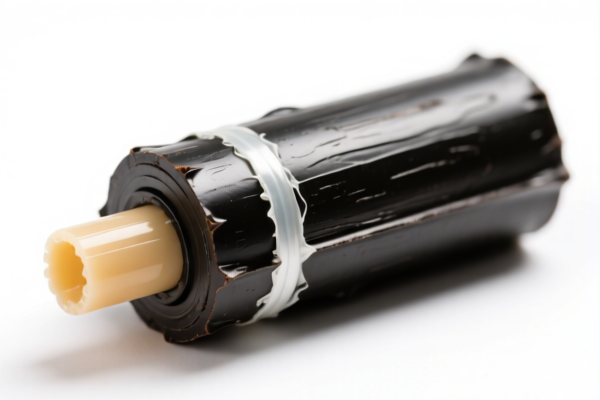

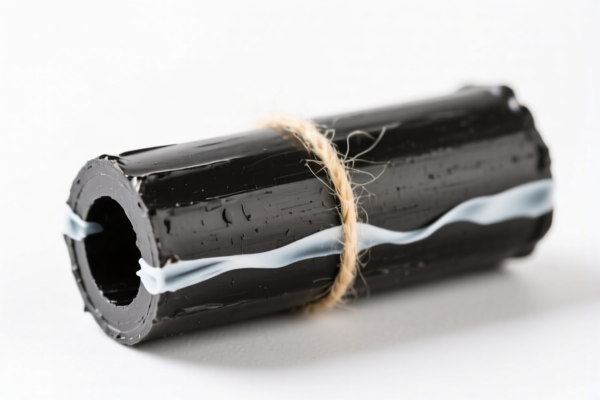
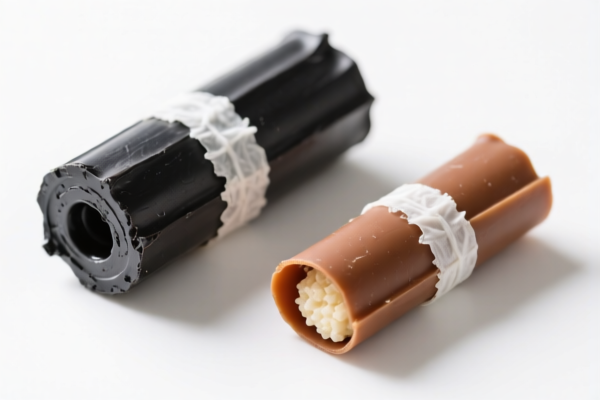
AI Analysis
🧪 Rubber Additive M (Ointment) | HS Code Classification & Duty Breakdown 2026
🌐 HS Code Reference & Clearance Guide | 2026 Latest Tariff Analysis | Professional Clearance Strategy
📌 I. Product Definition & Classification: What Exactly is "Rubber Additive M (Ointment)"?
Rubber Additives are essential chemical compounds used in the rubber manufacturing industry to improve processing characteristics, accelerate curing (vulcanization), or enhance the physical properties of the final rubber product.
This specific product is classified as: * Chemical Nature: A "Rubber Additive" (specifically labeled "M"). * Physical Form: "Ointment" – A semi-solid, paste-like consistency.
In international trade, the distinction between Powder, Liquid, and Ointment/Paste forms is critical because it often determines whether the item falls under specific sub-headings for "Rubber Accelerators" (Ch. 3812) or general "Chemical Preparations" (Ch. 3824).
⚠️ Key Distinction Point: * If the product is a Powder: It may be classified under 3824.40.50.00 or 3824.99.11.00 as a general chemical preparation. * If the product is an Ointment/Paste: It is often grouped with 3812.10.50.00 because ointments are a common physical form for specific rubber accelerators and additives, sharing material attributes with standard rubber aids.
📦 II. HS Code Classification Details (2026 Latest Tariff Reference)
Based on the provided data, there are two primary classification paths for "Rubber Additive M (Ointment)":
| HS Code | Product Description | Reason for Classification |
|---|---|---|
3812.10.50.00 |
Rubber Additive AA/M (Ointment) | Primary Match: The summary states that "Rubber Additive" matches the material attribute of "Rubber Accelerators," and "Ointment" is a common form for chemical aids. |
3812.10.10.00 |
Rubber Additive AA/M (Ointment) | Alternative Match: Similar to above, "Rubber Additive" aligns with "Rubber Accelerators," and "Ointment" is considered a chemical preparation. Note the slight variation in base duty. |
🔍 Note on Other Variants: * Rubber Additives M (Powder) is NOT classified here. Powder forms are typically classified under 3824.40.50.00 or 3824.99.11.00 because powder is treated as a general chemical industrial preparation rather than a specific accelerated aid form. * Rubber Additive AA (Ointment) uses the same logic as "Rubber Additive M (Ointment)" and shares the 3812.10.50.00 classification.
💰 III. 2026 Latest Tariff Rate Details (Including Additional Taxes)
✅ Applicable Country: United States (US)
✅ Origin: China (CN)
✅ Effective Date: From November 10, 2025 onwards
🎯 1. 3812.10.50.00 —— Rubber Additive (Ointment Form)
| Item | Content |
|---|---|
| Base Tariff | 5.0% |
| Section 301 Additional Tariff | +25.0% |
| IEEPA Additional Tariff (Section 122) | +10.0% |
| Total Effective Tariff | 40.0% |
| Tax Calculation | CIF Value × 40% |
| De Minimis Exemption Available? | ❌ No (deny_de_minimis) |
| Legal Basis Path | USITC:3812.10.50.00 → FOOTNOTE:301 → IEEPA:Section122 |
📌 Explanation: * The 5% base tariff applies to rubber accelerators and vulcanization initiators under Chapter 3812. * The 25% Section 301 tariff is applied to most Chinese-origin goods in this category. * The 10% IEEPA (Section 122) tariff is a specific additional levy on Chinese chemical products/exports effective from late 2025. * Total: 40% is a high cost factor. Importers must account for this in their landed cost calculations.
🎯 2. 3812.10.10.00 —— Rubber Additive (Ointment Form)
| Item | Content |
|---|---|
| Base Tariff | 6.5% |
| Section 301 Additional Tariff | +25.0% |
| IEEPA Additional Tariff (Section 122) | +10.0% |
| Total Effective Tariff | 41.5% |
| Tax Calculation | CIF Value × 41.5% |
| De Minimis Exemption Available? | ❌ No (deny_de_minimis) |
| Legal Basis Path | USITC:3812.10.10.00 → FOOTNOTE:301 → IEEPA:Section122 |
📌 Explanation: * This sub-heading has a slightly higher base tariff (6.5%) compared to 3812.10.50.00. * The additional taxes remain the same (25% + 10%). * Total: 41.5% is the higher-end cost scenario. * Why two codes? Classification disputes often arise between 3812.10.10.00 and 3812.10.50.00 based on precise chemical formulation. 3812.10.50.00 is often preferred if the additive fits the broader "accelerator" definition more accurately.
🛠️ IV. Clearance Practical Advice (Battle-Tested Pitfall Avoidance)
✅ 1. Preparation Checklist (Non-Negotiable)
| Document | Must Provide | Description |
|---|---|---|
| ✅ Technical Data Sheet (TDS) | ✔️ | Must clearly state physical form (Ointment/Paste) and chemical composition. |
| ✅ Material Safety Data Sheet (MSDS) | ✔️ | Required for chemical clearance; confirms hazard class. |
| ✅ Product Photos | ✔️ | Show the semi-solid/ointment texture to distinguish from powder. |
| ✅ Commercial Invoice | ✔️ | Clearly describe as "Rubber Additive, Ointment Form" – do NOT just write "Chemical." |
| ✅ Origin Certificate (CO) | ✔️ | To prove Chinese origin (triggering tariffs) or exemption if applicable. |
| ✅ Usage Declaration | ✔️ | Confirm use in Rubber Manufacturing (supports Ch. 3812 classification). |
✅ 2. Declaration Strategy (Key Mantras)
🔥 "Form Matters: Ointment = 3812, Powder = 3824. Name it Right, Tariff Takes Flight!"
| Scenario | Correct Declaration | Incorrect Action |
|---|---|---|
| Ointment/Paste Form | 3812.10.50.00 (Preferred) or 3812.10.10.00 |
Misdeclaring as Powder → Leads to 3824 codes with different duty structures. |
| Powder Form | 3824.40.50.00 or 3824.99.11.00 |
Misdeclaring as Ointment → Risk of Audit & Penalty. |
| Generic Name | "Rubber Vulcanization Accelerator, Paste" | "Chemical Mix" or "Glue" → High risk of misclassification. |
| Packaging | Industrial Drum/Bucket | Retail Jar → May raise questions about end-use. |
📌 Critical Warning: * If you declare "Rubber Additive M (Powder)" but ship "Ointment", Customs will flag a material discrepancy. * The summary explicitly links Ointment to 3812.10.50.00 due to shared material attributes with rubber accelerators. * Powder forms are explicitly linked to 3824.40.50.00 or 3824.99.11.00. Do not mix these up.
✅ 3. Special Handling
| Situation | Advice |
|---|---|
| OEM/Contract Manufacturing | Provide the customer’s specification sheet showing "Ointment" consistency to justify Ch. 3812. |
| Mixed Shipments (Powder + Ointment) | Split Declaration! Do not combine. Powder → 3824; Ointment → 3812. Mixing leads to confusion and potential denial. |
| Chemical Analysis | Be prepared for Customs to request a chemical analysis report to verify it is indeed a "Rubber Additive" and not a generic industrial paste. |
🌍 V. Global Market Comparison (2026)
| Country/Region | Recommended HS Code | Base Duty | Total Duty (US Origin) | Notes |
|---|---|---|---|---|
| 🇺🇸 USA | 3812.10.50.00 |
5.0% | 40.0% | Includes 301 + IEEPA 10%. High cost. |
| 🇨🇳 China | 3812.10.50.00 |
~10-15% | ~15% | No Section 301/IEEPA for domestic. |
| 🇪🇺 EU | 3824.40.00 |
~6.5% | ~6.5% | EU often classifies rubber additives under 3824 regardless of form. |
| 🇲🇽 Mexico | 3812.10.50 |
0-5% | 0-5% | Check USMCA eligibility. |
📌 Conclusion: * The US market imposes significant additional tariffs (35% total surcharge) on these products. * Classification Accuracy is Vital: Using the wrong code (e.g., 3824 for an ointment) may lead to underpayment (if 3824 had lower base duty) or overpayment. * For Ointment, 3812.10.50.00 is the most consistent recommendation in the provided data.
📌 VI. Common Mistakes & Pitfalls (Blood Lessons)
❌ Mistake 1: Declaring "Rubber Additive" without specifying form (Powder vs. Ointment). 👉 Consequence: Customs may assign 3824.99.11.00 (if they assume generic) or 3812.10.50.00. If they choose 3824.99.11.00, the duty is 35.0% (Base 0% + 25% + 10%), which is LOWER than 40%. Wait, is this a risk?
⚠️ Actually: If Customs classifies it as 3824.99.11.00, duty is 35%. If you declare 3812.10.50.00, duty is 40%. BUT: If you intend 3812 but they force 3824, you might be penalized for misdeclaration if the product is legally a "Rubber Accelerator." However, if you intend 3824 but it's actually 3812, you underpay. Best Practice: Align with the material property. If it's a specific accelerator, 3812 is more accurate. 40% vs 35% is a small difference, but accuracy prevents audits.
❌ Mistake 2: Confusing "Rubber Additive AA" with "Rubber Additive M". 👉 Consequence: Both are often classified under 3812.10.50.00 (40% duty). No significant duty difference, but chemical composition must match the invoice description.
❌ Mistake 3: Using "Glue" or "Adhesive" as the product name. 👉 Consequence: May be classified under 3506 (Adhesives) or 3906 (Resins), leading to different tariffs and potential FDA/ASTM compliance issues if misidentified.
✅ Correct Declaration:
"Rubber Vulcanization Accelerator, Type M, Ointment Form, for Rubber Manufacturing, HS Code 3812.10.50.00, Made in China."
🎯 VII. Conclusion: Precision Saves Money!
🎯 Remember the Mantra:
🔹 "Ointment goes to 3812, Powder to 3824. Don't mix them, or Customs will take a break."
🔹 "40% Duty on Ointment, 35% on Powder (generic). Be accurate to avoid re-classification headaches."
📌 Pro Tip:
If your supplier provides both Powder and Ointment forms, ensure your Commercial Invoice and Packing List explicitly state the form for each line item. Never generalize.
📣 Take Action Now:
📞 Confirm with your Customs Broker: Provide the MSDS and TDS to verify if 3812.10.50.00 is the safest classification for your specific "Rubber Additive M" formulation. 🚀 Ensure your invoices clearly state "Ointment" to support the 3812 classification.
✨ Professional Classification, Smooth Clearance!
💼 Your Cost Control Starts with the Right HS Code!
Customer Reviews
About HS Code Classification
The Harmonized System (HS) is an internationally standardized nomenclature developed by the World Customs Organization (WCO) to classify traded products. Over 200 countries use the HS system as the basis for customs tariffs, trade statistics, and import/export regulations.
Each HS code follows a hierarchical structure:
- Chapter (2 digits) — Broad category of goods (e.g., Chapter 84: Machinery and Mechanical Appliances)
- Heading (4 digits) — More specific grouping within the chapter
- Subheading (6 digits) — Internationally standardized breakdown, used by all WCO member countries
- National subdivisions (8-10 digits) — Country-specific extensions for further classification, such as US HTSUS 10-digit codes
Correct HS code classification is essential for smooth customs clearance, accurate duty payment, and compliance with trade regulations. Misclassification can lead to customs delays, overpayment of duties, or penalties.
When importing from CN to US, the applicable tariff rates may include:
- Most-Favored-Nation (MFN) rate — The standard duty rate applied to WTO members
- General rate — Applied to countries without trade agreements
- Trade remedy duties — Additional tariffs such as Section 301 (anti-dumping), Section 232 (national security), or countervailing duties
The information provided on this page is for reference purposes only. For official classification, please consult with your local customs authority or a licensed customs broker.