Rubber Anti cracking Agent
CN → US| HS编码 | 关税税率 | 原产国 | 目的国 | 文档 |
|---|---|---|---|---|
| 3824405000 | 40.0% | CN | US | 官方文档 |
| 3824991100 | 35.0% | CN | US | 官方文档 |
| 38089400 | 0.0% | CN | US | 官方文档 |
| 38129000 | 0.0% | CN | US | 官方文档 |
| 3403191000 | 35.2% | CN | US | 官方文档 |
| 3403990000 | 41.5% | CN | US | 官方文档 |
商品图片

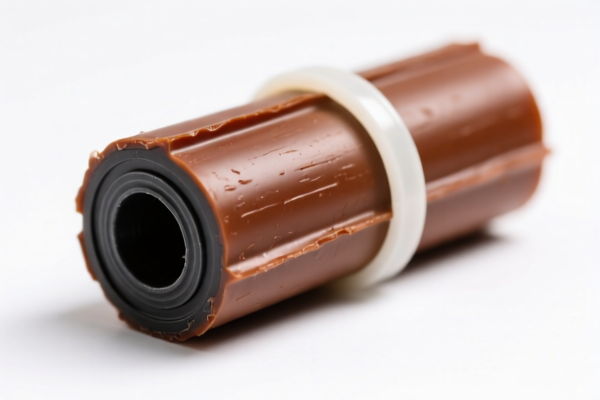
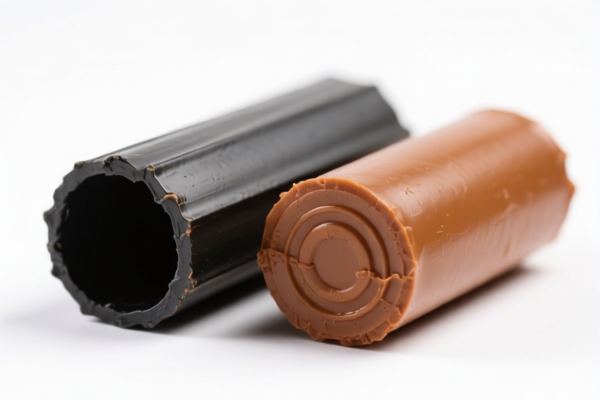
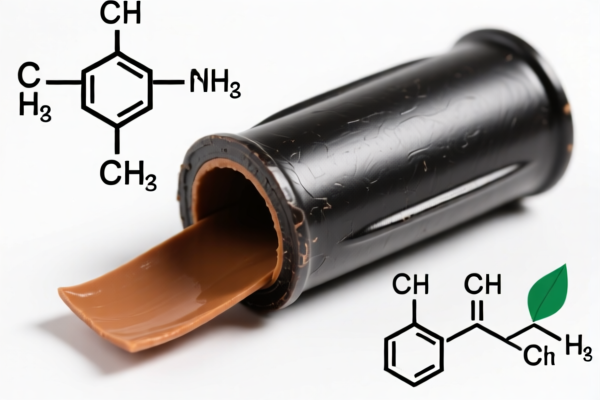
AI分析
🧪 Rubber Anti-Cracking Agent (Rubber Additives)
🌐 HS Code Reference & Customs Clearance Guide | 2026 Latest Tariff Analysis | Professional Clearance Strategy
📌 I. Product Definition & Classification: What exactly is "Rubber Anti-Cracking Agent"?
A Rubber Anti-Cracking Agent is a specialized chemical additive used in the processing of rubber products to prevent surface cracking, aging, and degradation. These agents are typically formulated as stabilizers, antioxidants, or anti-ozonants.
In international trade, the classification depends heavily on the specific chemical function and composition:
- Chemical Products (3808/3812): If the product is a general-purpose chemical mixture or preparation for preventing cracking in rubber processing.
- Prepared Binders/Additives for Construction (3824): If the product is specifically a prepared additive for cements, mortars, or concretes (often confused if the rubber is used in construction joints).
- Cultured Crystals/Ingots (3824.99.11): Rare, but if the "agent" consists of specific weighed cultured crystals used as industrial additives (less common for standard rubber additives, but present in the data).
⚠️ Critical Distinction:
- If it is a liquid/paste additive for rubber manufacturing → Typically 3808.94.00 or 3812.90.00.
- If it is a preparation for concrete/cement (even if used in rubber-concrete joints) → 3824.40.50.00.
- If it is a specific crystalline form weighing ≥2.5g → 3824.99.11.00.
📦 II. HS Code Classification Details (2026 Latest Tariff Authority Reference)
| HS Code | Product Description | Application Scenario | Tax Status |
|---|---|---|---|
3808.94.00 |
Other chemical products not elsewhere specified; rubber anti-cracking agents used in rubber processing to prevent cracking. | Standard rubber additives, stabilizers, anti-aging agents for tire/rubber goods manufacturing. | ⚠️ Error (Failed to retrieve tax info) |
3812.90.00 |
Miscellaneous chemical products; rubber additives (including anti-cracking agents) to enhance durability/performance. | General rubber additives, performance enhancers, durability boosters. | ⚠️ Error (Failed to retrieve tax info) |
3824.40.50.00 |
Prepared additives for cements, mortars or concretes: Other. | Additives specifically formulated for cement/concrete industries (note: misclassification risk if used in rubber). | ✅ 30.0% (Base 5% + 25% Surcharge) |
3824.99.11.00 |
Cultured crystals (≥2.5g each) in the form of ingots. | Specific crystalline chemical forms used as industrial additives (rare for standard liquid rubber agents). | ✅ 25.0% (Base 0% + 25% Surcharge) |
🔍 Key Reminder:
- The majority of standard rubber anti-cracking agents fall under Chapter 38 (Miscellaneous Chemical Products).
- However, if the supplier provides vague descriptions, customs may misclassify them as Construction Additives (3824) or Miscellaneous (3812), leading to significant tax discrepancies.
- Do not assume 0% tax! Many "Error" entries in reference data indicate missing specific HTS details for the destination country (e.g., US Section 301 tariffs may apply).
💰 III. 2026 Latest Tariff Rate Details (Including Surcharges)
✅ Applicable Country: United States (US)
✅ Origin: China (CN)
✅ Effective Date: Post-2025 trade policy updates
🎯 1. 3808.94.00 & 3812.90.00 —— Rubber Anti-Cracking Agents (Chemical Additives)
| Item | Content |
|---|---|
| Base Tax Rate | 0.0% - 5.0% (Varies by specific chemical composition; reference data shows "Error" for retrieval) |
| Section 301 Surcharge | +25.0% (Typical for many chemical products from China under US Trade Act Section 301) |
| IEEPA Surcharge | +10% (If applicable under International Emergency Economic Powers Act for specific Chinese goods) |
| Total Estimated Tax | 25.0% - 30.0% (Highly likely to be 25% if base is 0%, or 30% if base is 5%) |
| Tax Calculation | CIF Value × Total Rate |
| De Minimis Exemption | ❌ Not Applicable (Chemical products usually excluded from $800 de minimis for large shipments, check specific volume rules) |
| Legal Basis Path | HTSUS:3808.94.00 / 3812.90.00 → USITC:301 Footnote → Trade Act: Section 301 |
📌 Explanation:
- Chapter 38 products are often subject to Section 301 tariffs (25%) if they are deemed to benefit from unfair trade practices.
- The "Error" in tax retrieval suggests these codes may have variable rates based on specific chemical ingredients (e.g., whether they contain petroleum distillates).
- Recommendation: Assume a 25% total tax for budgeting purposes, unless a specific HTS lookup confirms otherwise.
🎯 2. 3824.40.50.00 —— Prepared Additives for Cements/Mortars (Misclassification Risk)
| Item | Content |
|---|---|
| Base Tax Rate | 5.0% |
| Section 301 Surcharge | +25.0% |
| Total Tax Rate | 30.0% |
| Tax Calculation | CIF Value × 30% |
| Risk Level | ⚠️ High if misclassified |
📌 Note:
- If your rubber anti-cracking agent is not for cement, this code is incorrect.
- Misclassification can lead to penalties and back taxes.
- Only use this if the product is explicitly a construction chemical (e.g., expansion joint sealant for concrete).
🎯 3. 3824.99.11.00 —— Cultured Crystals/Ingots (Uncommon for Rubber Agents)
| Item | Content |
|---|---|
| Base Tax Rate | 0.0% |
| Section 301 Surcharge | +25.0% |
| Total Tax Rate | 25.0% |
| Applicability | Only if the product is solid crystals/ingots ≥2.5g. |
📌 Note:
- Standard liquid/paste rubber additives do not qualify.
- Using this code incorrectly will result in customs rejection or reclassification.
🛠️ IV. Customs Clearance Practical Advice (Avoid Pitfalls)
✅ 1. Required Documentation Checklist (Mandatory)
| Document | Must Provide | Description |
|---|---|---|
| ✅ Product Specification Sheet | ✔️ | Detailed chemical composition, CAS numbers, concentration of active ingredients. |
| ✅ SDS (Safety Data Sheet) | ✔️ | Crucial for chemical classification; helps determine if it's "petroleum-based" or "organic solvent-based." |
| ✅ Product Photos | ✔️ | Show packaging, label, and physical state (liquid/paste/powder/crystal). |
| ✅ Statement of Use | ✔️ | Explicitly state: "Used as an additive in rubber manufacturing to prevent cracking." Do NOT say "for cement." |
| ✅ Commercial Invoice | ✔️ | Must clearly describe the product as "Rubber Anti-Cracking Agent" or "Rubber Additive." |
| ✅ Certificate of Origin | ✔️ | To determine applicable tariffs (e.g., US-China trade status). |
✅ 2. Declaration Tips (Key Mantras)
🔥 "Be Specific, Avoid Generic Terms, Clarify Use!"
| Scenario | Correct Declaration | Incorrect Practice |
|---|---|---|
| Liquid Rubber Additive | "Rubber Anti-Cracking Agent, Chemical Composition: [X]% [Y], Liquid Form, for Rubber Processing" | "Chemical Mixture" or "Additive" |
| Misused as Cement Additive | If truly for cement → "Prepared Additive for Concrete: [Name]" | Declaring cement product as "rubber agent" |
| Crystalline Form | "Cultured Crystal, [Weight], for Industrial Use" | "Rubber Powder" |
✅ 3. Special Situation Handling
| Situation | Handling Advice |
|---|---|
| Uncertain HS Code | Apply for Advance Ruling from CBP (U.S. Customs and Border Protection) before shipment. |
| Petroleum-Based Components | If >50% petroleum, may be classified under 3403 (Lubricants), which has 25.2% tax (Base 0.2% + 25% Surcharge). Check composition! |
| Mixed Shipments | Separate rubber agents from other chemicals to avoid complex duty calculations. |
| OEM Custom Formulas | Provide patent or formula disclosure if requested; generic names may trigger "Error" tax retrievals. |
🌍 V. Global Market Comparison (2026 Latest)
| Country/Region | Recommended HS Code | Estimated Tax (China Origin) | Certification Requirements | Notes |
|---|---|---|---|---|
| 🇺🇸 USA | 3808.94.00 or 3812.90.00 |
25% (Base + 301 Surcharge) | EPA, TSCA, OSHA SDS | High scrutiny on chemical composition. |
| 🇨🇳 China | 3808.94.00 or 3812.90.00 |
0% - 5% | None specific | Lower tariffs for imports. |
| 🇪🇺 EU | 3808.94.00 or 3812.90.00 |
4.5% - 6.5% | REACH Registration | REACH compliance is critical for chemicals. |
| 🇬🇧 UK | 3808.94.00 or 3812.90.00 |
4.5% - 6.5% | UK REACH | Post-Brexit regulations apply. |
📌 Conclusion:
- USA remains the most challenging market due to Section 301 tariffs (25%).
- EU/UK require REACH/UK REACH compliance for chemical imports.
- Always verify if the product contains petroleum distillates (>50%), as this shifts classification to 3403 (Lubricants), changing tax dynamics.
📌 VI. Common Errors & Pitfalls Guide (Lessons Learned)
❌ Error 1: Declaring "Rubber Anti-Cracking Agent" as "General Chemical"
👉 Consequence: HS Code ambiguity → Customs Audit → Delay + Potential Misclassification Penalty.
❌ Error 2: Using 3824.40.50.00 for non-concrete products
👉 Consequence: 30% Tax instead of 25%; Risk of fraud allegations if intent is misrepresented.
❌ Error 3: Ignoring Petroleum Content
👉 Consequence: If >50% petroleum, it should be 3403.19.10.00 (25.2% Tax). Misclassification leads to underpayment.
❌ Error 4: Omitting SDS
👉 Consequence: Refused Entry in USA/EU due to safety regulation non-compliance.
✅ Correct Approach:
"Rubber Anti-Cracking Agent, Liquid, Non-Petroleum Based (or >50% Petroleum), CAS No. [XXX-XXX-X], Used in Rubber Manufacturing, SDS Attached."
🎯 VII. Conclusion: Professional Classification Saves Money!
🎯 Remember the Mantra:
🔹 "Chemical Clarity is King, SDS is your Shield!"
🔹 "25% is the Standard for US Chemicals, Check Petroleum Content!"
🔹 "Don't Guess HS Codes, Get Advance Rulings!"
📌 Pro Tip:
If your rubber anti-cracking agent is OEM-based or has a unique formulation, request the supplier to provide a detailed chemical breakdown. This helps in selecting the most accurate HS Code and avoiding "Error" tax retrievals.
📣 Immediate Action:
📞 Contact a Licensed Customs Broker + Provide SDS + Apply for Advance Ruling (if high value)
🚀 Ensure Smooth Clearance, Avoid Penalties, and Protect Your Margins!
✨ Professional Classification Starts with Precision!
💼 Your Cost Efficiency Depends on Accurate HTS Codes!
用户评价
关于 HS 编码归类
协调制度(HS)是由世界海关组织(WCO)制定的国际贸易商品分类标准。全球 200 多个国家采用 HS 系统作为海关关税、贸易统计和进出口监管的基础。
每个 HS 编码遵循以下层级结构:
- 章(2 位)——商品大类(例如:第 84 章:机器和机械设备)
- 品目(4 位)——章内的更具体分类
- 子目(6 位)——国际通用细分,所有 WCO 成员国统一使用
- 本国细分(8-10 位)——各国自行扩展的细分编码,如美国 HTSUS 10 位编码
正确的 HS 编码归类对于顺利通关、准确缴纳关税和遵守贸易法规至关重要。错误归类可能导致海关延误、多缴关税或罚款。
从CN进口到US时,适用的关税税率可能包括:
- 最惠国(MFN)税率——适用于 WTO 成员国的标准关税税率
- 普通税率——适用于无贸易协定国家
- 贸易救济关税——附加关税,如 301 条款(反倾销)、232 条款(国家安全)或反补贴税
本页内容仅供参考。如需正式归类,请咨询当地海关或持牌报关代理。