Rubber Anti cracking Agent
CN → US| HS Code | Tariff Rate | Origin | Destination | Doc |
|---|---|---|---|---|
| 3824405000 | 40.0% | CN | US | Official Doc |
| 3824991100 | 35.0% | CN | US | Official Doc |
| 38089400 | 0.0% | CN | US | Official Doc |
| 38129000 | 0.0% | CN | US | Official Doc |
| 3403191000 | 35.2% | CN | US | Official Doc |
| 3403990000 | 41.5% | CN | US | Official Doc |
Product Images

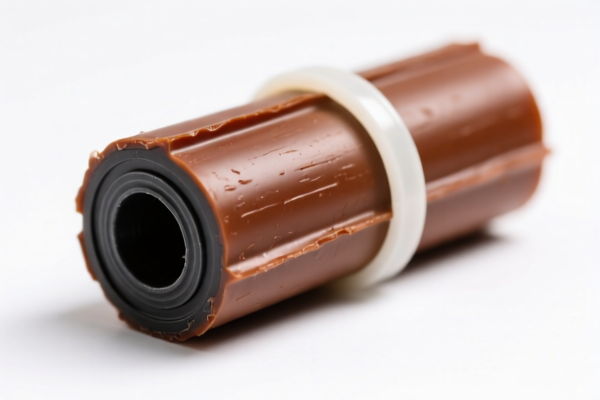
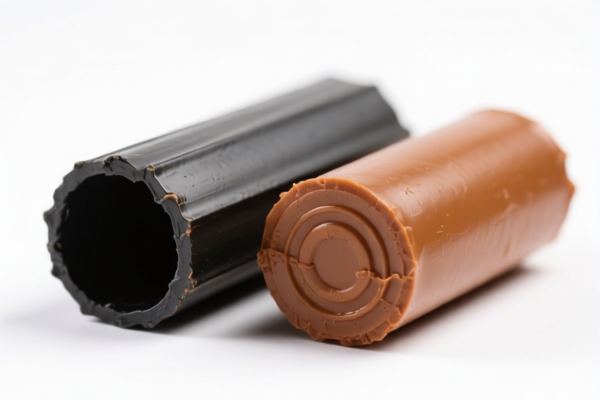
AI Analysis
🧪 Rubber Anti-Cracking Agent (Rubber Additives)
🌐 HS Code Reference & Customs Clearance Guide | 2026 Latest Tariff Analysis | Professional Clearance Strategy
📌 I. Product Definition & Classification: What exactly is "Rubber Anti-Cracking Agent"?
A Rubber Anti-Cracking Agent is a specialized chemical additive used in the processing of rubber products to prevent surface cracking, aging, and degradation. These agents are typically formulated as stabilizers, antioxidants, or anti-ozonants.
In international trade, the classification depends heavily on the specific chemical function and composition:
- Chemical Products (3808/3812): If the product is a general-purpose chemical mixture or preparation for preventing cracking in rubber processing.
- Prepared Binders/Additives for Construction (3824): If the product is specifically a prepared additive for cements, mortars, or concretes (often confused if the rubber is used in construction joints).
- Cultured Crystals/Ingots (3824.99.11): Rare, but if the "agent" consists of specific weighed cultured crystals used as industrial additives (less common for standard rubber additives, but present in the data).
⚠️ Critical Distinction:
- If it is a liquid/paste additive for rubber manufacturing → Typically 3808.94.00 or 3812.90.00.
- If it is a preparation for concrete/cement (even if used in rubber-concrete joints) → 3824.40.50.00.
- If it is a specific crystalline form weighing ≥2.5g → 3824.99.11.00.
📦 II. HS Code Classification Details (2026 Latest Tariff Authority Reference)
| HS Code | Product Description | Application Scenario | Tax Status |
|---|---|---|---|
3808.94.00 |
Other chemical products not elsewhere specified; rubber anti-cracking agents used in rubber processing to prevent cracking. | Standard rubber additives, stabilizers, anti-aging agents for tire/rubber goods manufacturing. | ⚠️ Error (Failed to retrieve tax info) |
3812.90.00 |
Miscellaneous chemical products; rubber additives (including anti-cracking agents) to enhance durability/performance. | General rubber additives, performance enhancers, durability boosters. | ⚠️ Error (Failed to retrieve tax info) |
3824.40.50.00 |
Prepared additives for cements, mortars or concretes: Other. | Additives specifically formulated for cement/concrete industries (note: misclassification risk if used in rubber). | ✅ 30.0% (Base 5% + 25% Surcharge) |
3824.99.11.00 |
Cultured crystals (≥2.5g each) in the form of ingots. | Specific crystalline chemical forms used as industrial additives (rare for standard liquid rubber agents). | ✅ 25.0% (Base 0% + 25% Surcharge) |
🔍 Key Reminder:
- The majority of standard rubber anti-cracking agents fall under Chapter 38 (Miscellaneous Chemical Products).
- However, if the supplier provides vague descriptions, customs may misclassify them as Construction Additives (3824) or Miscellaneous (3812), leading to significant tax discrepancies.
- Do not assume 0% tax! Many "Error" entries in reference data indicate missing specific HTS details for the destination country (e.g., US Section 301 tariffs may apply).
💰 III. 2026 Latest Tariff Rate Details (Including Surcharges)
✅ Applicable Country: United States (US)
✅ Origin: China (CN)
✅ Effective Date: Post-2025 trade policy updates
🎯 1. 3808.94.00 & 3812.90.00 —— Rubber Anti-Cracking Agents (Chemical Additives)
| Item | Content |
|---|---|
| Base Tax Rate | 0.0% - 5.0% (Varies by specific chemical composition; reference data shows "Error" for retrieval) |
| Section 301 Surcharge | +25.0% (Typical for many chemical products from China under US Trade Act Section 301) |
| IEEPA Surcharge | +10% (If applicable under International Emergency Economic Powers Act for specific Chinese goods) |
| Total Estimated Tax | 25.0% - 30.0% (Highly likely to be 25% if base is 0%, or 30% if base is 5%) |
| Tax Calculation | CIF Value × Total Rate |
| De Minimis Exemption | ❌ Not Applicable (Chemical products usually excluded from $800 de minimis for large shipments, check specific volume rules) |
| Legal Basis Path | HTSUS:3808.94.00 / 3812.90.00 → USITC:301 Footnote → Trade Act: Section 301 |
📌 Explanation:
- Chapter 38 products are often subject to Section 301 tariffs (25%) if they are deemed to benefit from unfair trade practices.
- The "Error" in tax retrieval suggests these codes may have variable rates based on specific chemical ingredients (e.g., whether they contain petroleum distillates).
- Recommendation: Assume a 25% total tax for budgeting purposes, unless a specific HTS lookup confirms otherwise.
🎯 2. 3824.40.50.00 —— Prepared Additives for Cements/Mortars (Misclassification Risk)
| Item | Content |
|---|---|
| Base Tax Rate | 5.0% |
| Section 301 Surcharge | +25.0% |
| Total Tax Rate | 30.0% |
| Tax Calculation | CIF Value × 30% |
| Risk Level | ⚠️ High if misclassified |
📌 Note:
- If your rubber anti-cracking agent is not for cement, this code is incorrect.
- Misclassification can lead to penalties and back taxes.
- Only use this if the product is explicitly a construction chemical (e.g., expansion joint sealant for concrete).
🎯 3. 3824.99.11.00 —— Cultured Crystals/Ingots (Uncommon for Rubber Agents)
| Item | Content |
|---|---|
| Base Tax Rate | 0.0% |
| Section 301 Surcharge | +25.0% |
| Total Tax Rate | 25.0% |
| Applicability | Only if the product is solid crystals/ingots ≥2.5g. |
📌 Note:
- Standard liquid/paste rubber additives do not qualify.
- Using this code incorrectly will result in customs rejection or reclassification.
🛠️ IV. Customs Clearance Practical Advice (Avoid Pitfalls)
✅ 1. Required Documentation Checklist (Mandatory)
| Document | Must Provide | Description |
|---|---|---|
| ✅ Product Specification Sheet | ✔️ | Detailed chemical composition, CAS numbers, concentration of active ingredients. |
| ✅ SDS (Safety Data Sheet) | ✔️ | Crucial for chemical classification; helps determine if it's "petroleum-based" or "organic solvent-based." |
| ✅ Product Photos | ✔️ | Show packaging, label, and physical state (liquid/paste/powder/crystal). |
| ✅ Statement of Use | ✔️ | Explicitly state: "Used as an additive in rubber manufacturing to prevent cracking." Do NOT say "for cement." |
| ✅ Commercial Invoice | ✔️ | Must clearly describe the product as "Rubber Anti-Cracking Agent" or "Rubber Additive." |
| ✅ Certificate of Origin | ✔️ | To determine applicable tariffs (e.g., US-China trade status). |
✅ 2. Declaration Tips (Key Mantras)
🔥 "Be Specific, Avoid Generic Terms, Clarify Use!"
| Scenario | Correct Declaration | Incorrect Practice |
|---|---|---|
| Liquid Rubber Additive | "Rubber Anti-Cracking Agent, Chemical Composition: [X]% [Y], Liquid Form, for Rubber Processing" | "Chemical Mixture" or "Additive" |
| Misused as Cement Additive | If truly for cement → "Prepared Additive for Concrete: [Name]" | Declaring cement product as "rubber agent" |
| Crystalline Form | "Cultured Crystal, [Weight], for Industrial Use" | "Rubber Powder" |
✅ 3. Special Situation Handling
| Situation | Handling Advice |
|---|---|
| Uncertain HS Code | Apply for Advance Ruling from CBP (U.S. Customs and Border Protection) before shipment. |
| Petroleum-Based Components | If >50% petroleum, may be classified under 3403 (Lubricants), which has 25.2% tax (Base 0.2% + 25% Surcharge). Check composition! |
| Mixed Shipments | Separate rubber agents from other chemicals to avoid complex duty calculations. |
| OEM Custom Formulas | Provide patent or formula disclosure if requested; generic names may trigger "Error" tax retrievals. |
🌍 V. Global Market Comparison (2026 Latest)
| Country/Region | Recommended HS Code | Estimated Tax (China Origin) | Certification Requirements | Notes |
|---|---|---|---|---|
| 🇺🇸 USA | 3808.94.00 or 3812.90.00 |
25% (Base + 301 Surcharge) | EPA, TSCA, OSHA SDS | High scrutiny on chemical composition. |
| 🇨🇳 China | 3808.94.00 or 3812.90.00 |
0% - 5% | None specific | Lower tariffs for imports. |
| 🇪🇺 EU | 3808.94.00 or 3812.90.00 |
4.5% - 6.5% | REACH Registration | REACH compliance is critical for chemicals. |
| 🇬🇧 UK | 3808.94.00 or 3812.90.00 |
4.5% - 6.5% | UK REACH | Post-Brexit regulations apply. |
📌 Conclusion:
- USA remains the most challenging market due to Section 301 tariffs (25%).
- EU/UK require REACH/UK REACH compliance for chemical imports.
- Always verify if the product contains petroleum distillates (>50%), as this shifts classification to 3403 (Lubricants), changing tax dynamics.
📌 VI. Common Errors & Pitfalls Guide (Lessons Learned)
❌ Error 1: Declaring "Rubber Anti-Cracking Agent" as "General Chemical"
👉 Consequence: HS Code ambiguity → Customs Audit → Delay + Potential Misclassification Penalty.
❌ Error 2: Using 3824.40.50.00 for non-concrete products
👉 Consequence: 30% Tax instead of 25%; Risk of fraud allegations if intent is misrepresented.
❌ Error 3: Ignoring Petroleum Content
👉 Consequence: If >50% petroleum, it should be 3403.19.10.00 (25.2% Tax). Misclassification leads to underpayment.
❌ Error 4: Omitting SDS
👉 Consequence: Refused Entry in USA/EU due to safety regulation non-compliance.
✅ Correct Approach:
"Rubber Anti-Cracking Agent, Liquid, Non-Petroleum Based (or >50% Petroleum), CAS No. [XXX-XXX-X], Used in Rubber Manufacturing, SDS Attached."
🎯 VII. Conclusion: Professional Classification Saves Money!
🎯 Remember the Mantra:
🔹 "Chemical Clarity is King, SDS is your Shield!"
🔹 "25% is the Standard for US Chemicals, Check Petroleum Content!"
🔹 "Don't Guess HS Codes, Get Advance Rulings!"
📌 Pro Tip:
If your rubber anti-cracking agent is OEM-based or has a unique formulation, request the supplier to provide a detailed chemical breakdown. This helps in selecting the most accurate HS Code and avoiding "Error" tax retrievals.
📣 Immediate Action:
📞 Contact a Licensed Customs Broker + Provide SDS + Apply for Advance Ruling (if high value)
🚀 Ensure Smooth Clearance, Avoid Penalties, and Protect Your Margins!
✨ Professional Classification Starts with Precision!
💼 Your Cost Efficiency Depends on Accurate HTS Codes!
Customer Reviews
About HS Code Classification
The Harmonized System (HS) is an internationally standardized nomenclature developed by the World Customs Organization (WCO) to classify traded products. Over 200 countries use the HS system as the basis for customs tariffs, trade statistics, and import/export regulations.
Each HS code follows a hierarchical structure:
- Chapter (2 digits) — Broad category of goods (e.g., Chapter 84: Machinery and Mechanical Appliances)
- Heading (4 digits) — More specific grouping within the chapter
- Subheading (6 digits) — Internationally standardized breakdown, used by all WCO member countries
- National subdivisions (8-10 digits) — Country-specific extensions for further classification, such as US HTSUS 10-digit codes
Correct HS code classification is essential for smooth customs clearance, accurate duty payment, and compliance with trade regulations. Misclassification can lead to customs delays, overpayment of duties, or penalties.
When importing from CN to US, the applicable tariff rates may include:
- Most-Favored-Nation (MFN) rate — The standard duty rate applied to WTO members
- General rate — Applied to countries without trade agreements
- Trade remedy duties — Additional tariffs such as Section 301 (anti-dumping), Section 232 (national security), or countervailing duties
The information provided on this page is for reference purposes only. For official classification, please consult with your local customs authority or a licensed customs broker.