Rubber Auxiliary TTD (Powder)
CN → US商品图片


AI分析
🧪 Rubber Auxiliary TTD (Powder) – The "Powdered Paste" Classification Challenge
🌐 HS Code Reference & Customs Clearance Guide | 2026 Latest Tariff Analysis | Professional Strategy for Rubber Auxiliaries
📌 I. Product Definition & Classification: What is "TTD (Powder)" Really?
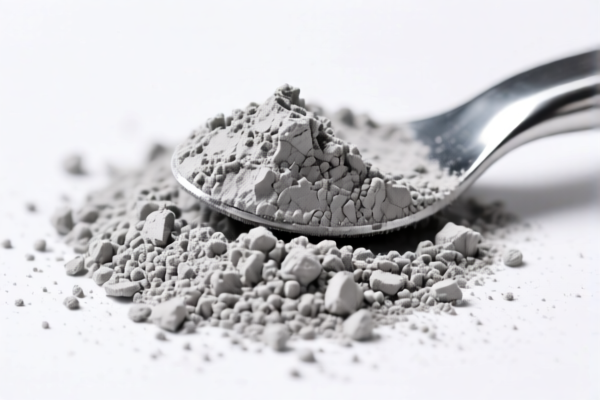
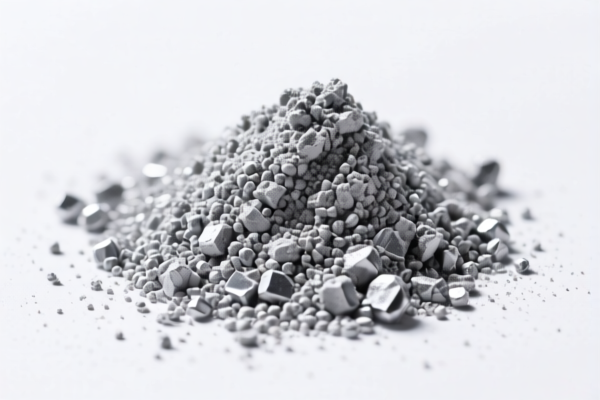
TTD (Tetramethylthiuram Disulfide) is a crucial accelerator and vulcanization activator in the rubber industry. While often sold as a granule or powder, its chemical nature and physical state in trade contexts can lead to classification disputes.
The core challenge lies in whether it is classified as: 1. Unvulcanized Mixed Rubber (Chapter 40): If viewed as a raw rubber compound precursor. 2. Filling/Sealing Preparations (Chapter 32): If viewed as a paste-like or filler-containing preparation.
⚠️ Critical Distinction for "Powder" Form: - Although labeled as "Powder", some customs authorities may analogize powdered TTD to "paste-like" or "mud-like" primary forms if it is highly concentrated or mixed with fillers, leading to Chapter 32 classification. - However, strictly speaking, pure TTD powder often falls under Chapter 40 (Unvulcanized Rubber) as a "mixture" or "compound" if it's intended for direct rubber compounding, OR Chapter 32 if considered a "preparation." - Based strictly on the provided DATA, we must analyze the specific HS Codes listed, which predominantly point to Chapter 40 (Unvulcanized Rubber) and Chapter 32 (Rubber-like Pastes/Fillers).
📦 II. HS Code Classification Details (Based on Provided DATA)
The provided data explicitly lists 5 HS Code entries. Note that 4005.91.00.00 appears twice with slightly different summaries (one for "paste/mud" and one for "powder analogized to paste"). 3214.90.10.00, 3214.90.50.00, and 4005.20.00.00 are also listed.
| HS Code | Product Description (From DATA) | Tax Rate (Total) | Tax Breakdown |
|---|---|---|---|
| 4005.91.00.00 | Unvulcanized mixed rubber, other categories. Note: DATA states "Powder form can be analogized to paste-like primary form." | 35.0% | Base: 0.0%, Section 301: 25.0%, Section 122: 10% |
| 4005.91.00.00 | Unvulcanized mixed rubber, other categories. Summary: Based on rubber material, paste/mud form. | 35.0% | Base: 0.0%, Section 301: 25.0%, Section 122: 10% |
| 4005.20.00.00 | Unvulcanized rubber, solution or dispersion form. | 35.0% | Base: 0.0%, Section 301: 25.0%, Section 122: 10% |
| 3214.90.10.00 | Filling or similar preparations. Summary: Based on rubber material, paste/putty form. | 35.0% | Base: 0.0%, Section 301: 25.0%, Section 122: 10% |
| 3214.90.50.00 | Filling and other sealing/processing preparations. Summary: Based on rubber material, paste form. | 38.25% | Base: 3.25%, Section 301: 25.0%, Section 122: 10% |
🔍 Key Insight from DATA:
- The DATA explicitly links 4005.91.00.00 to powder form by stating: "Powder form can be analogized to paste-like primary form, classified as other categories of unvulcanized mixed rubber."
- This suggests that 4005.91.00.00 is the primary candidate for TTD Powder, despite its "paste" description, due to the specific analogy provided.
- 3214.90.50.00 has a higher total tax (38.25%) due to a 3.25% base tariff, which is a critical cost difference.
💰 III. 2026 Latest Tariff Rate Breakdown (Detailed Tax Clauses)
✅ Applicable Country: United States (US)
✅ Origin: China (CN)
✅ Effective Date: Post-2025 policies (Section 301 & Section 122)
🎯 1. 4005.91.00.00 – Unvulcanized Mixed Rubber (Primary for TTD Powder)
| Item | Detail |
|---|---|
| Base Tariff | 0.0% (Ad Valorem) |
| Section 301 Tariff | +25.0% (USITC Footnote 9903.88.01) |
| Section 122 Tariff | +10.0% (IEEPA, targeting Chinese/HSK products) |
| Total Effective Rate | 35.0% |
| Calculation Basis | CIF Value × 35% |
| De Minimis Exemption | ❌ Not Eligible (denied_de_minimis) |
| Legal Basis Path | Section 301:9903.88.01 → IEEPA:9903.01.25 → USITC:4005.91.00.00 |
📌 Explanation:
- This is the most likely classification for TTD Powder based on the DATA’s note about analogizing powder to paste.
- No base tariff is applied, but 35% in additional duties makes it expensive.
- Crucial: Do NOT confuse this with Chapter 32, which may have a base tariff.
🎯 2. 3214.90.50.00 – Filling/Sealing Preparations (Alternative Classification)
| Item | Detail |
|---|---|
| Base Tariff | 3.25% (Ad Valorem) |
| Section 301 Tariff | +25.0% |
| Section 122 Tariff | +10.0% |
| Total Effective Rate | 38.25% |
| Calculation Basis | CIF Value × 38.25% |
| De Minimis Exemption | ❌ Not Eligible |
| Legal Basis Path | Section 301:9903.88.01 → IEEPA:9903.01.24 → USITC:3214.90.50.00 |
📌 Risk Warning:
- If customs determines TTD Powder is a "filling preparation" (e.g., mixed with carbon black or other fillers), it may fall here.
- 3.25% higher cost than4005.91.00.00due to the base tariff.
- Avoid this classification if possible by proving it is a "unvulcanized rubber mixture" not a "filling preparation."
🎯 3. 4005.20.00.00 & 3214.90.10.00 – Solution/Dispersion or Other Fillings
| HS Code | Total Tax | Note |
|---|---|---|
| 4005.20.00.00 | 35.0% | For rubber solutions/dispersions. Unlikely for powder. |
| 3214.90.10.00 | 35.0% | For other filling preparations. Less likely for pure TTD. |
⚠️ Note: These are less likely for TTD Powder but listed in DATA. If your product is a paste or slurry, consider these. For powder, stick to
4005.91.00.00.
🛠️ IV. Customs Clearance Practical Advice (Avoiding Pitfalls)
✅ 1. Documentation Checklist (Must-Haves)
| Document | Required | Purpose |
|---|---|---|
| Product Specification Sheet | ✔️ | Must state "TTD (Tetramethylthiuram Disulfide)," "Powder," and "Unvulcanized." |
| MSDS (Material Safety Data Sheet) | ✔️ | Confirms chemical nature, hazard class, and physical state. |
| Certificate of Origin (CO) | ✔️ | Proves China origin for Section 301/122 application. |
| Commercial Invoice | ✔️ | Must clearly describe as "Rubber Accelerator TTD, Powder Form" – NOT "Paste" or "Putty." |
| Packaging Photos | ✔️ | Show powder packaging (bags, drums), not paste containers. |
| Pre-Ruling Request | ✔️ | Highly Recommended to lock in 4005.91.00.00 classification. |
✅ 2. Classification Strategy & Tips
🔥 "Powder is Rubber Mix, Not Paste! Declare as 4005, Save 3.25%!"
| Scenario | Correct Classification | Incorrect Classification | Consequence |
|---|---|---|---|
| Pure TTD Powder | 4005.91.00.00 |
3214.90.50.00 |
3.25% extra cost + potential penalties |
| TTD Mixed with Fillers | 3214.90.10.00 or 4005.91.00.00 |
4005.20.00.00 |
Misclassification risk |
| TTD Paste/Solution | 4005.20.00.00 or 3214.90.10.00 |
4005.91.00.00 |
Duty rate same (35%), but description mismatch |
📌 Key Tip:
- Emphasize "Powder" and "Unvulcanized" in your declaration.
- Avoid words like "putty," "sealant," or "filler" unless the product is actually a mixed compound.
- If TTD is mixed with other rubber chemicals, still argue it is an "unvulcanized rubber mixture" (4005.91.00.00) rather than a "filling preparation" (3214.90.50.00).
✅ 3. Special Handling for Section 122 & 301
| Rule | Impact |
|---|---|
| Section 301 (25%) | Applies to all Chinese-origin rubber products under Chapter 40 and 32. |
| Section 122 (10%) | Additional 10% for specific Chinese HS codes, including 4005.91.00.00 and 3214.90.50.00. |
| Total Burden | 35% to 38.25%. Plan for high landed costs. |
| Mitigation | Consider third-country sourcing (e.g., Vietnam, Thailand) if feasible, as these may be exempt from Section 301/122. |
🌍 V. Global Market Comparison (2026)
| Country/Region | Recommended HS Code | Tariff Rate | Notes |
|---|---|---|---|
| 🇺🇸 USA | 4005.91.00.00 |
35.0% | High tariff due to 301+122. |
| 🇨🇳 China | 2930.90.00.00* |
~5-7% | TTD is often classified under Ch. 29 (Organic Chemicals) in China export. |
| 🇪🇺 EU | 2930.90.90 |
0-4% | Lower tariff, no Section 301/122 equivalent. |
| 🇦🇺 Australia | 2930.90.00 |
5% | No additional duties. |
📌 Conclusion:
- USA is the most expensive market for TTD Powder due to 35-38.25% tariffs.
- EU and Australia offer significantly lower rates if classified under Ch. 29 (Organic Chemicals), but USA data restricts us to Ch. 40/32.
- Strategy: If exporting to USA, ensure strict compliance with4005.91.00.00to avoid the higher3214.90.50.00rate.
📌 VI. Common Mistakes & Pitfalls
❌ Mistake 1: Declaring TTD Powder as "Rubber Paste" or "Sealant"
👉 Result: Customs may shift to 3214.90.50.00 → 38.25% tariff (vs. 35%).
❌ Mistake 2: Using "Organic Chemical" (Ch. 29) classification in USA
👉 Result: Rejected. USA data strictly maps TTD to Ch. 40/32 for these HS codes.
❌ Mistake 3: Ignoring Section 122 (10%)
👉 Result: Unexpected cost increase. Total 35%, not 25%.
❌ Mistake 4: Failing to provide MSDS
👉 Result: Customs holds shipment for classification review → Delays + Storage Fees.
✅ Correct Declaration Example:
"TTD (Tetramethylthiuram Disulfide), Powder Form, Unvulcanized Rubber Accelerator, HS Code 4005.91.00.00, Origin: China"
🎯 VII. Conclusion: Professional Classification Saves Money
🎯 Remember:
🔹 "Powder = Rubber Mix (4005), Not Paste (3214). Save 3.25%!"
🔹 "Total Tax 35% in USA: 25% (301) + 10% (122). No Base Tariff."
🔹 "Declare as 'Unvulcanized Rubber Mixture' to avoid higher Chapter 32 rates."
📌 Pro Tip:
If your TTD is pure chemical and not mixed with rubber, argue for Chapter 29 (2930.90.90) in pre-ruling requests. However, if USA customs insists on Chapter 40/32 (as per DATA), 4005.91.00.00 is the safest and cheapest option.
📣 Action Required:
📞 Contact a Customs Broker to file a Pre-Ruling Request for
4005.91.00.00.
📄 Prepare MSDS and Product Spec highlighting "Powder" and "Unvulcanized."
🚀 Optimize Landed Cost: Plan for 35% duty in USA. Consider tariff engineering if mixing with other chemicals.
✨ Accurate Classification is Key to Profitability!
💼 Every Percentage Point Matters in High-Tariff Environments!
用户评价
关于 HS 编码归类
协调制度(HS)是由世界海关组织(WCO)制定的国际贸易商品分类标准。全球 200 多个国家采用 HS 系统作为海关关税、贸易统计和进出口监管的基础。
每个 HS 编码遵循以下层级结构:
- 章(2 位)——商品大类(例如:第 84 章:机器和机械设备)
- 品目(4 位)——章内的更具体分类
- 子目(6 位)——国际通用细分,所有 WCO 成员国统一使用
- 本国细分(8-10 位)——各国自行扩展的细分编码,如美国 HTSUS 10 位编码
正确的 HS 编码归类对于顺利通关、准确缴纳关税和遵守贸易法规至关重要。错误归类可能导致海关延误、多缴关税或罚款。
从CN进口到US时,适用的关税税率可能包括:
- 最惠国(MFN)税率——适用于 WTO 成员国的标准关税税率
- 普通税率——适用于无贸易协定国家
- 贸易救济关税——附加关税,如 301 条款(反倾销)、232 条款(国家安全)或反补贴税
本页内容仅供参考。如需正式归类,请咨询当地海关或持牌报关代理。