Rubber Auxiliary TTD (Powder)
CN → US| HS Code | Tariff Rate | Origin | Destination | Doc |
|---|---|---|---|---|
| 38089400 | 0.0% | CN | US | Official Doc |
| 38159000 | 0.0% | CN | US | Official Doc |
Product Images


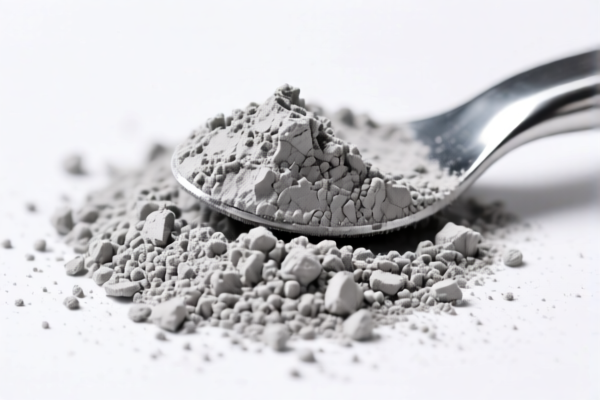
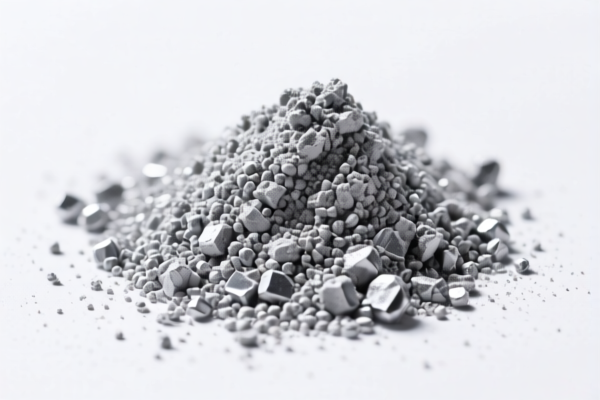
AI Analysis
🧪 Rubber Auxiliary TTD (Powder) – The "Powdered Paste" Classification Challenge
🌐 HS Code Reference & Customs Clearance Guide | 2026 Latest Tariff Analysis | Professional Strategy for Rubber Auxiliaries
📌 I. Product Definition & Classification: What is "TTD (Powder)" Really?
TTD (Tetramethylthiuram Disulfide) is a crucial accelerator and vulcanization activator in the rubber industry. While often sold as a granule or powder, its chemical nature and physical state in trade contexts can lead to classification disputes.
The core challenge lies in whether it is classified as: 1. Unvulcanized Mixed Rubber (Chapter 40): If viewed as a raw rubber compound precursor. 2. Filling/Sealing Preparations (Chapter 32): If viewed as a paste-like or filler-containing preparation.
⚠️ Critical Distinction for "Powder" Form: - Although labeled as "Powder", some customs authorities may analogize powdered TTD to "paste-like" or "mud-like" primary forms if it is highly concentrated or mixed with fillers, leading to Chapter 32 classification. - However, strictly speaking, pure TTD powder often falls under Chapter 40 (Unvulcanized Rubber) as a "mixture" or "compound" if it's intended for direct rubber compounding, OR Chapter 32 if considered a "preparation." - Based strictly on the provided DATA, we must analyze the specific HS Codes listed, which predominantly point to Chapter 40 (Unvulcanized Rubber) and Chapter 32 (Rubber-like Pastes/Fillers).
📦 II. HS Code Classification Details (Based on Provided DATA)
The provided data explicitly lists 5 HS Code entries. Note that 4005.91.00.00 appears twice with slightly different summaries (one for "paste/mud" and one for "powder analogized to paste"). 3214.90.10.00, 3214.90.50.00, and 4005.20.00.00 are also listed.
| HS Code | Product Description (From DATA) | Tax Rate (Total) | Tax Breakdown |
|---|---|---|---|
| 4005.91.00.00 | Unvulcanized mixed rubber, other categories. Note: DATA states "Powder form can be analogized to paste-like primary form." | 35.0% | Base: 0.0%, Section 301: 25.0%, Section 122: 10% |
| 4005.91.00.00 | Unvulcanized mixed rubber, other categories. Summary: Based on rubber material, paste/mud form. | 35.0% | Base: 0.0%, Section 301: 25.0%, Section 122: 10% |
| 4005.20.00.00 | Unvulcanized rubber, solution or dispersion form. | 35.0% | Base: 0.0%, Section 301: 25.0%, Section 122: 10% |
| 3214.90.10.00 | Filling or similar preparations. Summary: Based on rubber material, paste/putty form. | 35.0% | Base: 0.0%, Section 301: 25.0%, Section 122: 10% |
| 3214.90.50.00 | Filling and other sealing/processing preparations. Summary: Based on rubber material, paste form. | 38.25% | Base: 3.25%, Section 301: 25.0%, Section 122: 10% |
🔍 Key Insight from DATA:
- The DATA explicitly links 4005.91.00.00 to powder form by stating: "Powder form can be analogized to paste-like primary form, classified as other categories of unvulcanized mixed rubber."
- This suggests that 4005.91.00.00 is the primary candidate for TTD Powder, despite its "paste" description, due to the specific analogy provided.
- 3214.90.50.00 has a higher total tax (38.25%) due to a 3.25% base tariff, which is a critical cost difference.
💰 III. 2026 Latest Tariff Rate Breakdown (Detailed Tax Clauses)
✅ Applicable Country: United States (US)
✅ Origin: China (CN)
✅ Effective Date: Post-2025 policies (Section 301 & Section 122)
🎯 1. 4005.91.00.00 – Unvulcanized Mixed Rubber (Primary for TTD Powder)
| Item | Detail |
|---|---|
| Base Tariff | 0.0% (Ad Valorem) |
| Section 301 Tariff | +25.0% (USITC Footnote 9903.88.01) |
| Section 122 Tariff | +10.0% (IEEPA, targeting Chinese/HSK products) |
| Total Effective Rate | 35.0% |
| Calculation Basis | CIF Value × 35% |
| De Minimis Exemption | ❌ Not Eligible (denied_de_minimis) |
| Legal Basis Path | Section 301:9903.88.01 → IEEPA:9903.01.25 → USITC:4005.91.00.00 |
📌 Explanation:
- This is the most likely classification for TTD Powder based on the DATA’s note about analogizing powder to paste.
- No base tariff is applied, but 35% in additional duties makes it expensive.
- Crucial: Do NOT confuse this with Chapter 32, which may have a base tariff.
🎯 2. 3214.90.50.00 – Filling/Sealing Preparations (Alternative Classification)
| Item | Detail |
|---|---|
| Base Tariff | 3.25% (Ad Valorem) |
| Section 301 Tariff | +25.0% |
| Section 122 Tariff | +10.0% |
| Total Effective Rate | 38.25% |
| Calculation Basis | CIF Value × 38.25% |
| De Minimis Exemption | ❌ Not Eligible |
| Legal Basis Path | Section 301:9903.88.01 → IEEPA:9903.01.24 → USITC:3214.90.50.00 |
📌 Risk Warning:
- If customs determines TTD Powder is a "filling preparation" (e.g., mixed with carbon black or other fillers), it may fall here.
- 3.25% higher cost than4005.91.00.00due to the base tariff.
- Avoid this classification if possible by proving it is a "unvulcanized rubber mixture" not a "filling preparation."
🎯 3. 4005.20.00.00 & 3214.90.10.00 – Solution/Dispersion or Other Fillings
| HS Code | Total Tax | Note |
|---|---|---|
| 4005.20.00.00 | 35.0% | For rubber solutions/dispersions. Unlikely for powder. |
| 3214.90.10.00 | 35.0% | For other filling preparations. Less likely for pure TTD. |
⚠️ Note: These are less likely for TTD Powder but listed in DATA. If your product is a paste or slurry, consider these. For powder, stick to
4005.91.00.00.
🛠️ IV. Customs Clearance Practical Advice (Avoiding Pitfalls)
✅ 1. Documentation Checklist (Must-Haves)
| Document | Required | Purpose |
|---|---|---|
| Product Specification Sheet | ✔️ | Must state "TTD (Tetramethylthiuram Disulfide)," "Powder," and "Unvulcanized." |
| MSDS (Material Safety Data Sheet) | ✔️ | Confirms chemical nature, hazard class, and physical state. |
| Certificate of Origin (CO) | ✔️ | Proves China origin for Section 301/122 application. |
| Commercial Invoice | ✔️ | Must clearly describe as "Rubber Accelerator TTD, Powder Form" – NOT "Paste" or "Putty." |
| Packaging Photos | ✔️ | Show powder packaging (bags, drums), not paste containers. |
| Pre-Ruling Request | ✔️ | Highly Recommended to lock in 4005.91.00.00 classification. |
✅ 2. Classification Strategy & Tips
🔥 "Powder is Rubber Mix, Not Paste! Declare as 4005, Save 3.25%!"
| Scenario | Correct Classification | Incorrect Classification | Consequence |
|---|---|---|---|
| Pure TTD Powder | 4005.91.00.00 |
3214.90.50.00 |
3.25% extra cost + potential penalties |
| TTD Mixed with Fillers | 3214.90.10.00 or 4005.91.00.00 |
4005.20.00.00 |
Misclassification risk |
| TTD Paste/Solution | 4005.20.00.00 or 3214.90.10.00 |
4005.91.00.00 |
Duty rate same (35%), but description mismatch |
📌 Key Tip:
- Emphasize "Powder" and "Unvulcanized" in your declaration.
- Avoid words like "putty," "sealant," or "filler" unless the product is actually a mixed compound.
- If TTD is mixed with other rubber chemicals, still argue it is an "unvulcanized rubber mixture" (4005.91.00.00) rather than a "filling preparation" (3214.90.50.00).
✅ 3. Special Handling for Section 122 & 301
| Rule | Impact |
|---|---|
| Section 301 (25%) | Applies to all Chinese-origin rubber products under Chapter 40 and 32. |
| Section 122 (10%) | Additional 10% for specific Chinese HS codes, including 4005.91.00.00 and 3214.90.50.00. |
| Total Burden | 35% to 38.25%. Plan for high landed costs. |
| Mitigation | Consider third-country sourcing (e.g., Vietnam, Thailand) if feasible, as these may be exempt from Section 301/122. |
🌍 V. Global Market Comparison (2026)
| Country/Region | Recommended HS Code | Tariff Rate | Notes |
|---|---|---|---|
| 🇺🇸 USA | 4005.91.00.00 |
35.0% | High tariff due to 301+122. |
| 🇨🇳 China | 2930.90.00.00* |
~5-7% | TTD is often classified under Ch. 29 (Organic Chemicals) in China export. |
| 🇪🇺 EU | 2930.90.90 |
0-4% | Lower tariff, no Section 301/122 equivalent. |
| 🇦🇺 Australia | 2930.90.00 |
5% | No additional duties. |
📌 Conclusion:
- USA is the most expensive market for TTD Powder due to 35-38.25% tariffs.
- EU and Australia offer significantly lower rates if classified under Ch. 29 (Organic Chemicals), but USA data restricts us to Ch. 40/32.
- Strategy: If exporting to USA, ensure strict compliance with4005.91.00.00to avoid the higher3214.90.50.00rate.
📌 VI. Common Mistakes & Pitfalls
❌ Mistake 1: Declaring TTD Powder as "Rubber Paste" or "Sealant"
👉 Result: Customs may shift to 3214.90.50.00 → 38.25% tariff (vs. 35%).
❌ Mistake 2: Using "Organic Chemical" (Ch. 29) classification in USA
👉 Result: Rejected. USA data strictly maps TTD to Ch. 40/32 for these HS codes.
❌ Mistake 3: Ignoring Section 122 (10%)
👉 Result: Unexpected cost increase. Total 35%, not 25%.
❌ Mistake 4: Failing to provide MSDS
👉 Result: Customs holds shipment for classification review → Delays + Storage Fees.
✅ Correct Declaration Example:
"TTD (Tetramethylthiuram Disulfide), Powder Form, Unvulcanized Rubber Accelerator, HS Code 4005.91.00.00, Origin: China"
🎯 VII. Conclusion: Professional Classification Saves Money
🎯 Remember:
🔹 "Powder = Rubber Mix (4005), Not Paste (3214). Save 3.25%!"
🔹 "Total Tax 35% in USA: 25% (301) + 10% (122). No Base Tariff."
🔹 "Declare as 'Unvulcanized Rubber Mixture' to avoid higher Chapter 32 rates."
📌 Pro Tip:
If your TTD is pure chemical and not mixed with rubber, argue for Chapter 29 (2930.90.90) in pre-ruling requests. However, if USA customs insists on Chapter 40/32 (as per DATA), 4005.91.00.00 is the safest and cheapest option.
📣 Action Required:
📞 Contact a Customs Broker to file a Pre-Ruling Request for
4005.91.00.00.
📄 Prepare MSDS and Product Spec highlighting "Powder" and "Unvulcanized."
🚀 Optimize Landed Cost: Plan for 35% duty in USA. Consider tariff engineering if mixing with other chemicals.
✨ Accurate Classification is Key to Profitability!
💼 Every Percentage Point Matters in High-Tariff Environments!
Customer Reviews
About HS Code Classification
The Harmonized System (HS) is an internationally standardized nomenclature developed by the World Customs Organization (WCO) to classify traded products. Over 200 countries use the HS system as the basis for customs tariffs, trade statistics, and import/export regulations.
Each HS code follows a hierarchical structure:
- Chapter (2 digits) — Broad category of goods (e.g., Chapter 84: Machinery and Mechanical Appliances)
- Heading (4 digits) — More specific grouping within the chapter
- Subheading (6 digits) — Internationally standardized breakdown, used by all WCO member countries
- National subdivisions (8-10 digits) — Country-specific extensions for further classification, such as US HTSUS 10-digit codes
Correct HS code classification is essential for smooth customs clearance, accurate duty payment, and compliance with trade regulations. Misclassification can lead to customs delays, overpayment of duties, or penalties.
When importing from CN to US, the applicable tariff rates may include:
- Most-Favored-Nation (MFN) rate — The standard duty rate applied to WTO members
- General rate — Applied to countries without trade agreements
- Trade remedy duties — Additional tariffs such as Section 301 (anti-dumping), Section 232 (national security), or countervailing duties
The information provided on this page is for reference purposes only. For official classification, please consult with your local customs authority or a licensed customs broker.