Rubber Buffer Tire
CN → US| HS编码 | 关税税率 | 原产国 | 目的国 | 文档 |
|---|---|---|---|---|
| 4012118000 | 38.4% | CN | US | 官方文档 |
| 4012124035 | 39.0% | CN | US | 官方文档 |
| 4013100010 | 38.7% | CN | US | 官方文档 |
| 8708995500 | 37.5% | CN | US | 官方文档 |
| 3926901000 | 20.9% | CN | US | 官方文档 |
商品图片
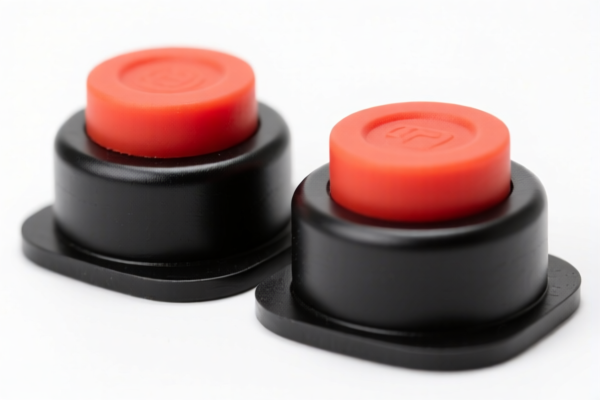
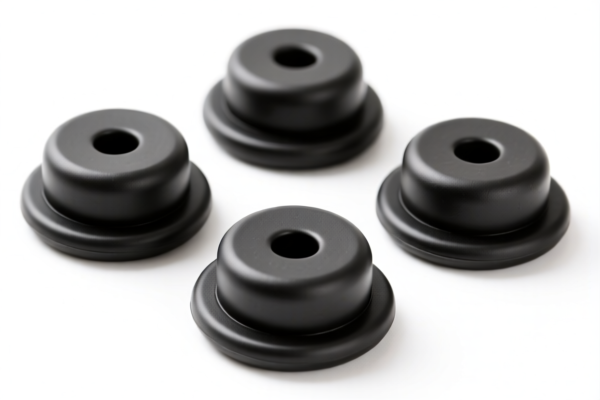
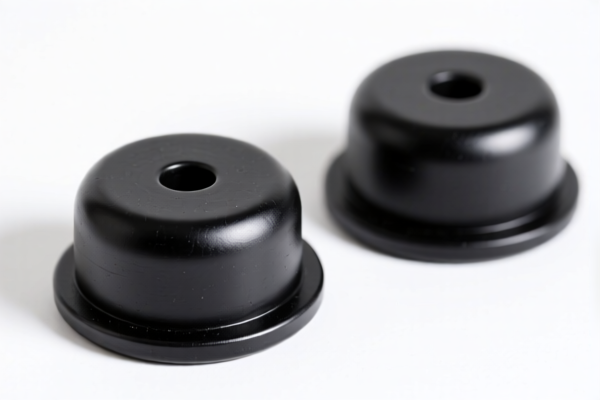
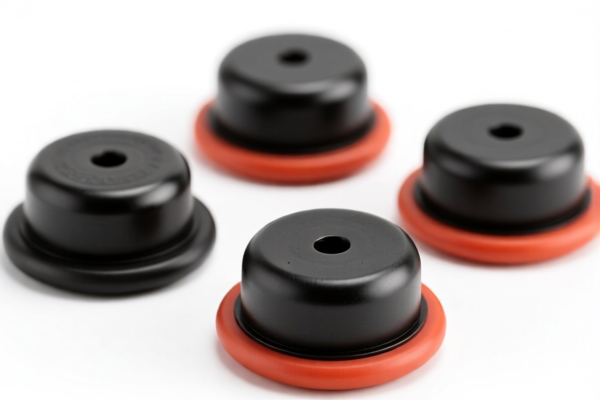
AI分析
🛞 Rubber Buffer Tire (Rubber Tire Cushion / Protective Pad)
🌐 HS Code Reference & Customs Clearance Guide | 2026 Latest Tariff Analysis | Professional-Level Strategy
📌 I. Product Definition & Classification: What is a "Rubber Buffer Tire"?
A Rubber Buffer Tire (often referred to as a tire cushion, tire protector, or rubber tire pad) is typically a protective accessory for tires, not the tire itself. It is designed to absorb shock, prevent damage to the tire sidewall, or serve as a buffer between the wheel and the rim/axle in specific industrial or automotive applications.
In international trade, the distinction between a "Tire" (HS Chapter 40.12/40.13) and a "Rubber Article/Accessory" (HS Chapter 40 or 39) is critical. Customs authorities look at: 1. Primary Function: Is it primarily for riding/propulsion (Tire) or for protection/damping (Accessory)? 2. Structure: Does it have a bead, casing, and tread designed for road contact? Or is it a solid pad/cushion? 3. Material Composition: Is it 100% natural/synthetic rubber (Chapter 40) or a blend/polymer composite (Chapter 39)?
⚠️ Key Distinction:
- If it is a functional pneumatic or solid tire for vehicles → HS 4012 / 4013
- If it is a protective pad, shock absorber, or cushion → HS 8708 (Vehicle Parts) or HS 3926/4016 (Rubber Articles)
📦 II. HS Code Classification Details (2026 Latest Tariff Reference)
Based on the provided data, here are the five possible classifications for "Rubber Buffer Tire," ranging from pure tires to protective accessories.
| HS Code | Product Description | Application Scenario | Classification Logic |
|---|---|---|---|
4012.11.80.00 |
Tires of rubber, other than those of heading 40.11 (e.g., pneumatic tires for cars) | Vehicle tires, bus tires, truck tires | ✅ Core Element: Rubber + Tire Shape |
4012.12.40.35 |
Retreaded or used pneumatic tires of rubber | Retreaded tires, recycled tire products | ✅ Other Category: Matches retreaded/used rules |
4013.10.00.10 |
Pneumatic tires of rubber, new, for bicycles/motorcycles | Bicycle tires, motorcycle tires | ✅ Reference Core: Material & Use match core elements |
8708.99.55.00 |
Parts and accessories of motor vehicles (Rubber tire protectors/buffers) | Shock-absorbing pads, rim protectors, tire guards | ✅ Shape/Function: Cushioning/Protection class |
3926.90.10.00 |
Other articles of plastics / Rubber-polymer blends | Rubberized plastic pads, composite buffer blocks | ✅ Polymer Category: Falls under polymer制品 if composite |
🔍 Critical Reminder:
- If the product is a standard tire meant to be mounted on a vehicle wheel →4012.11or4013.10.
- If the product is a pad/cushion placed on or around a tire for protection →8708.99or3926.90.
- Misclassification Risk: Declaring a protective pad as a "Tire" may trigger audits for vehicle safety standards (DOT/ECE), while declaring a tire as a "Pad" may result in underpayment of duties.
💰 III. 2026 Latest Tariff Rate Breakdown (Including Surtaxes & Policy Add-ons)
✅ Applicable Country: United States (US)
✅ Country of Origin: China (CN)
✅ Effective Date: November 10, 2025 (and subsequent imports)
🎯 1. 4012.11.80.00 —— Rubber Tires (Standard Pneumatic/Solid)
| Item | Content |
|---|---|
| Basic Tariff | 3.4% (Ad Valorem) |
| Section 301 Surtax | +25.0% (China-specific, Trade Act Section 301) |
| Section 122 Tariff | +10.0% (Special administrative surcharge) |
| Total Tariff | 38.4% |
| Calculation | CIF Value × 38.4% |
| De Minimis Exemption | ❌ Not Eligible (High tariff threshold blocks de minimis) |
| Legal Basis Path | USITC:4012.11.80.00 → SECTION_301:25% → SECTION_122:10% |
📌 Explanation:
- Standard tires are heavily taxed due to US domestic manufacturing protection policies. - The 38.4% rate is significant. Importers must factor this into landed cost calculations.
🎯 2. 4012.12.40.35 —— Retreaded/Used Tires
| Item | Content |
|---|---|
| Basic Tariff | 4.0% |
| Section 301 Surtax | +25.0% |
| Section 122 Tariff | +10.0% |
| Total Tariff | 39.0% |
| Calculation | CIF Value × 39.0% |
| De Minimis Exemption | ❌ Not Eligible |
| Legal Basis Path | USITC:4012.12.40.35 → SECTION_301:25% → SECTION_122:10% |
📌 Note:
- Slightly higher than new tires due to regulatory inspection costs associated with used/retreaded goods. - Requires strict documentation of origin and condition.
🎯 3. 4013.10.00.10 —— Pneumatic Tires for Bicycles/Motorcycles
| Item | Content |
|---|---|
| Basic Tariff | 3.7% |
| Section 301 Surtax | +25.0% |
| Section 122 Tariff | +10.0% |
| Total Tariff | 38.7% |
| Calculation | CIF Value × 38.7% |
| De Minimis Exemption | ❌ Not Eligible |
| Legal Basis Path | USITC:4013.10.00.10 → SECTION_301:25% → SECTION_122:10% |
📌 Clarification:
- Even small tires (bicycle/motorcycle) are subject to the same heavy surtaxes if they meet the definition of "pneumatic tires." - Core element match: Material (Rubber) and Use (Tire) are identical to larger tires.
🎯 4. 8708.99.55.00 —— Parts & Accessories of Motor Vehicles (Rubber Protectors)
| Item | Content |
|---|---|
| Basic Tariff | 2.5% |
| Section 301 Surtax | +25.0% |
| Section 122 Tariff | +10.0% |
| Total Tariff | 37.5% |
| Calculation | CIF Value × 37.5% |
| De Minimis Exemption | ❌ Not Eligible |
| Legal Basis Path | USITC:8708.99.55.00 → SECTION_301:25% → SECTION_122:10% |
📌 Strategic Advantage:
- This is the lowest total tariff (37.5%) among the tire-related codes. - Key Condition: The product must clearly be a part/accessory (e.g., tire guard, rim protector, shock buffer), NOT the tire itself. - Declaration Tip: Use terms like "Rubber Tire Protector," "Shock Absorbing Pad," or "Vehicle Accessory."
🎯 5. 3926.90.10.00 —— Other Plastic/Rubber Articles (Composite/Polymer)
| Item | Content |
|---|---|
| Basic Tariff | 3.4% |
| Section 301 Surtax | +7.5% (Reduced rate for specific polymer articles) |
| Section 122 Tariff | +10.0% |
| Total Tariff | 20.9% |
| Calculation | CIF Value × 20.9% |
| De Minimis Exemption | ❌ Not Eligible |
| Legal Basis Path | USITC:3926.90.10.00 → SECTION_301:7.5% → SECTION_122:10% |
📌 Major Opportunity:
- This is the MOST COST-EFFECTIVE classification at 20.9%. - Eligibility Criteria: The product must be classified as a polymer article or a composite material (e.g., rubber-plastic blend) rather than pure rubber. - Risk: High scrutiny. Customs will examine the material composition. If it is >90% rubber, it may be reclassified to Chapter 40.
🛠️ IV. Customs Clearance Practical Advice (Pitfall Avoidance Guide)
✅ 1. Documentation Checklist (Must-Haves)
| Document | Required | Description |
|---|---|---|
| ✅ Product Specification Sheet | ✔️ | Detail dimensions, weight, material composition (e.g., "80% Rubber, 20% Plastic") |
| ✅ Function Description | ✔️ | Explicitly state: "Used for protection/shock absorption, NOT for vehicle propulsion" |
| ✅ Product Photos | ✔️ | Show clear views of the item, labeling, and installation context |
| ✅ Commercial Invoice | ✔️ | Describe as "Rubber Buffer Pad" or "Tire Protector," avoid generic "Tire" |
| ✅ Material Test Report | ✔️ | Certificate of Analysis (COA) proving polymer/rubber ratio for 3926.90 claim |
| ✅ Packing List | ✔️ | Ensure no spare tires are included unless declared separately |
✅ 2. Declaration Strategy (Key Mantras)
🔥 "Function is King, Material is Key, Name Matters!"
| Scenario | Correct Declaration | Wrong Action |
|---|---|---|
| Solid Rubber Pad for Rim Protection | 8708.99.55.00 (Parts/Accessories) |
Misdeclare as "Tire" → 38.4% |
| Polymer-Rubber Composite Buffer | 3926.90.10.00 (Plastic/Composite) |
Misdeclare as "Rubber Tire" → 38.4% |
| Standard Pneumatic Tire | 4012.11.80.00 (Tire) |
Misdeclare as "Pad" → 20.9% (But Risk Audit/Retreat) |
| Mixed Lot (Tires + Pads) | Split Declaration | Mixed HS Code → Confiscation/Fine |
📌 Pro Tip:
- If using3926.90.10.00(20.9% rate), ensure your Material Safety Data Sheet (MSDS) or Supplier Declaration explicitly mentions "Plastic/Polymer Composite" or "Synthetic Rubber Blend."
- Pure rubber products will likely be forced into4012or8708.
✅ 3. Special Cases Handling
| Situation | Handling Advice |
|---|---|
| OEM Custom Buffers | Provide client order + design specs to prove "Accessory" status |
| Tires with Pre-mounted Pads | Split the shipment or declare separately. Mixed classification is complex. |
| Importing from Non-CN Origin | Check if IEEPA surtax applies. If from Vietnam/Mexico, rates may be lower. |
| Small Quantity (De Minimis) | ⚠️ Warning: All listed HS codes exceed the de minimis threshold due to Section 301/122 tariffs. No duty-free entry under $800. |
🌍 V. Global Market Clearance Comparison (2026 Update)
| Country/Region | Recommended HS Code | Tariff (CN Origin) | Key Requirement |
|---|---|---|---|
| 🇺🇸 USA | 3926.90.10.00 (if composite) |
20.9% | Material composition proof |
| 🇺🇸 USA | 8708.99.55.00 (parts) |
37.5% | Function as accessory |
| 🇺🇸 USA | 4012.11.80.00 (tire) |
38.4% | DOT/ECE certification |
| 🇨🇳 China | 4012.11.80.00 |
5% | Standard import |
| 🇪🇺 EU | 4012.11.80.00 |
0% (if MFN) | CE marking, REACH |
📌 Conclusion:
- The USA remains the most expensive market due to Section 301 + 122 tariffs.
- Optimization: Aim for3926.90.10.00(20.9%) if the product has a polymer component. This saves ~17.5% compared to pure rubber tire classification.
📌 VI. Common Mistakes & Pitfalls (Lessons Learned)
❌ Mistake 1: Calling a "Tire Protector" a "Tire"
👉 Consequence: No benefit. You pay 38.4% and risk unnecessary safety inspections.
❌ Mistake 2: Calling a "Pure Rubber Tire" a "Polymer Pad"
👉 Consequence: Customs audit → Reclassification to 4012 → Back taxes + Penalties + Delay.
❌ Mistake 3: Ignoring Section 122 Tariff
👉 Consequence: Underestimating landed cost. The 10% surtax applies to ALL these codes.
❌ Mistake 4: Assuming De Minimis applies
👉 Consequence: Package held at border. All these HS codes are subject to full duty calculation.
✅ Correct Approach:
"Rubber-Polymer Composite Shock Buffer, Model X, for Vehicle Rim Protection, Non-Pneumatic, 80% Rubber/20% Plastic"
🎯 VII. Conclusion: Precise Classification Saves Money!
🎯 Remember the Mantra:
🔹 "Pure Rubber Tire? 38%. Accessory Pad? 37.5%. Polymer Blend? 20.9%!"
🔹 "If it rolls, it's a Tire. If it cushions, it's an Accessory. If it's mixed, check the %!"
📌 Pro Tip:
- If your product is >50% polymer by weight/value, aggressively pursue 3926.90.10.00 with lab reports.
- If it is 100% rubber, choose 8708.99.55.00 (Parts) over 4012 (Tires) to save ~1%, but ensure the "Accessory" definition is robust.
📣 Immediate Action:
📞 Consult your customs broker with material composition data.
📝 Request a Pre-Ruling (Advance Ruling) from CBP if the product is a novel composite.
🚀 Clearance Success = Accurate HS Code + Solid Documentation!
✨ Professional Clearance Starts with Accurate Classification!
💼 Every 1% of tariff saved is pure profit!
用户评价
关于 HS 编码归类
协调制度(HS)是由世界海关组织(WCO)制定的国际贸易商品分类标准。全球 200 多个国家采用 HS 系统作为海关关税、贸易统计和进出口监管的基础。
每个 HS 编码遵循以下层级结构:
- 章(2 位)——商品大类(例如:第 84 章:机器和机械设备)
- 品目(4 位)——章内的更具体分类
- 子目(6 位)——国际通用细分,所有 WCO 成员国统一使用
- 本国细分(8-10 位)——各国自行扩展的细分编码,如美国 HTSUS 10 位编码
正确的 HS 编码归类对于顺利通关、准确缴纳关税和遵守贸易法规至关重要。错误归类可能导致海关延误、多缴关税或罚款。
从CN进口到US时,适用的关税税率可能包括:
- 最惠国(MFN)税率——适用于 WTO 成员国的标准关税税率
- 普通税率——适用于无贸易协定国家
- 贸易救济关税——附加关税,如 301 条款(反倾销)、232 条款(国家安全)或反补贴税
本页内容仅供参考。如需正式归类,请咨询当地海关或持牌报关代理。