Rubber Buffer Tire
CN → US| HS Code | Tariff Rate | Origin | Destination | Doc |
|---|---|---|---|---|
| 4012118000 | 38.4% | CN | US | Official Doc |
| 4012124035 | 39.0% | CN | US | Official Doc |
| 4013100010 | 38.7% | CN | US | Official Doc |
| 8708995500 | 37.5% | CN | US | Official Doc |
| 3926901000 | 20.9% | CN | US | Official Doc |
Product Images
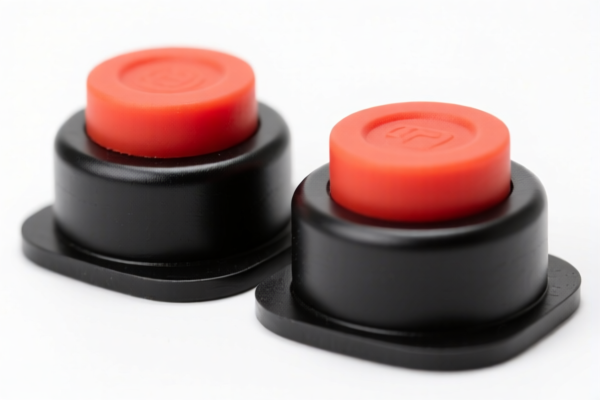
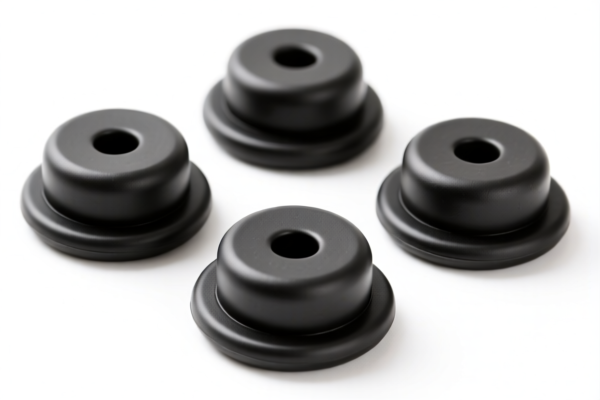
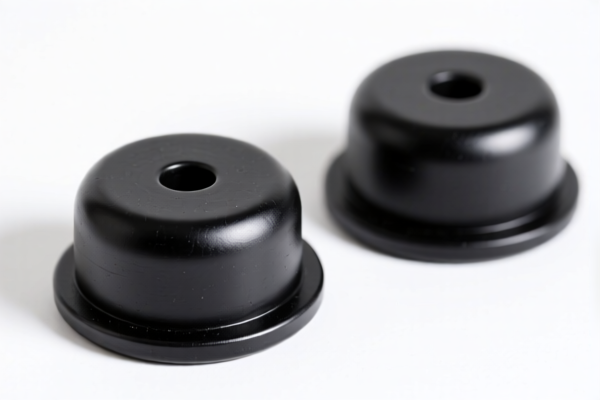
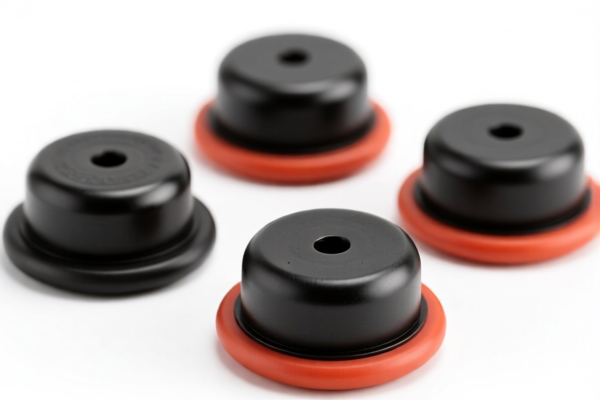
AI Analysis
🛞 Rubber Buffer Tire (Rubber Tire Cushion / Protective Pad)
🌐 HS Code Reference & Customs Clearance Guide | 2026 Latest Tariff Analysis | Professional-Level Strategy
📌 I. Product Definition & Classification: What is a "Rubber Buffer Tire"?
A Rubber Buffer Tire (often referred to as a tire cushion, tire protector, or rubber tire pad) is typically a protective accessory for tires, not the tire itself. It is designed to absorb shock, prevent damage to the tire sidewall, or serve as a buffer between the wheel and the rim/axle in specific industrial or automotive applications.
In international trade, the distinction between a "Tire" (HS Chapter 40.12/40.13) and a "Rubber Article/Accessory" (HS Chapter 40 or 39) is critical. Customs authorities look at: 1. Primary Function: Is it primarily for riding/propulsion (Tire) or for protection/damping (Accessory)? 2. Structure: Does it have a bead, casing, and tread designed for road contact? Or is it a solid pad/cushion? 3. Material Composition: Is it 100% natural/synthetic rubber (Chapter 40) or a blend/polymer composite (Chapter 39)?
⚠️ Key Distinction:
- If it is a functional pneumatic or solid tire for vehicles → HS 4012 / 4013
- If it is a protective pad, shock absorber, or cushion → HS 8708 (Vehicle Parts) or HS 3926/4016 (Rubber Articles)
📦 II. HS Code Classification Details (2026 Latest Tariff Reference)
Based on the provided data, here are the five possible classifications for "Rubber Buffer Tire," ranging from pure tires to protective accessories.
| HS Code | Product Description | Application Scenario | Classification Logic |
|---|---|---|---|
4012.11.80.00 |
Tires of rubber, other than those of heading 40.11 (e.g., pneumatic tires for cars) | Vehicle tires, bus tires, truck tires | ✅ Core Element: Rubber + Tire Shape |
4012.12.40.35 |
Retreaded or used pneumatic tires of rubber | Retreaded tires, recycled tire products | ✅ Other Category: Matches retreaded/used rules |
4013.10.00.10 |
Pneumatic tires of rubber, new, for bicycles/motorcycles | Bicycle tires, motorcycle tires | ✅ Reference Core: Material & Use match core elements |
8708.99.55.00 |
Parts and accessories of motor vehicles (Rubber tire protectors/buffers) | Shock-absorbing pads, rim protectors, tire guards | ✅ Shape/Function: Cushioning/Protection class |
3926.90.10.00 |
Other articles of plastics / Rubber-polymer blends | Rubberized plastic pads, composite buffer blocks | ✅ Polymer Category: Falls under polymer制品 if composite |
🔍 Critical Reminder:
- If the product is a standard tire meant to be mounted on a vehicle wheel →4012.11or4013.10.
- If the product is a pad/cushion placed on or around a tire for protection →8708.99or3926.90.
- Misclassification Risk: Declaring a protective pad as a "Tire" may trigger audits for vehicle safety standards (DOT/ECE), while declaring a tire as a "Pad" may result in underpayment of duties.
💰 III. 2026 Latest Tariff Rate Breakdown (Including Surtaxes & Policy Add-ons)
✅ Applicable Country: United States (US)
✅ Country of Origin: China (CN)
✅ Effective Date: November 10, 2025 (and subsequent imports)
🎯 1. 4012.11.80.00 —— Rubber Tires (Standard Pneumatic/Solid)
| Item | Content |
|---|---|
| Basic Tariff | 3.4% (Ad Valorem) |
| Section 301 Surtax | +25.0% (China-specific, Trade Act Section 301) |
| Section 122 Tariff | +10.0% (Special administrative surcharge) |
| Total Tariff | 38.4% |
| Calculation | CIF Value × 38.4% |
| De Minimis Exemption | ❌ Not Eligible (High tariff threshold blocks de minimis) |
| Legal Basis Path | USITC:4012.11.80.00 → SECTION_301:25% → SECTION_122:10% |
📌 Explanation:
- Standard tires are heavily taxed due to US domestic manufacturing protection policies. - The 38.4% rate is significant. Importers must factor this into landed cost calculations.
🎯 2. 4012.12.40.35 —— Retreaded/Used Tires
| Item | Content |
|---|---|
| Basic Tariff | 4.0% |
| Section 301 Surtax | +25.0% |
| Section 122 Tariff | +10.0% |
| Total Tariff | 39.0% |
| Calculation | CIF Value × 39.0% |
| De Minimis Exemption | ❌ Not Eligible |
| Legal Basis Path | USITC:4012.12.40.35 → SECTION_301:25% → SECTION_122:10% |
📌 Note:
- Slightly higher than new tires due to regulatory inspection costs associated with used/retreaded goods. - Requires strict documentation of origin and condition.
🎯 3. 4013.10.00.10 —— Pneumatic Tires for Bicycles/Motorcycles
| Item | Content |
|---|---|
| Basic Tariff | 3.7% |
| Section 301 Surtax | +25.0% |
| Section 122 Tariff | +10.0% |
| Total Tariff | 38.7% |
| Calculation | CIF Value × 38.7% |
| De Minimis Exemption | ❌ Not Eligible |
| Legal Basis Path | USITC:4013.10.00.10 → SECTION_301:25% → SECTION_122:10% |
📌 Clarification:
- Even small tires (bicycle/motorcycle) are subject to the same heavy surtaxes if they meet the definition of "pneumatic tires." - Core element match: Material (Rubber) and Use (Tire) are identical to larger tires.
🎯 4. 8708.99.55.00 —— Parts & Accessories of Motor Vehicles (Rubber Protectors)
| Item | Content |
|---|---|
| Basic Tariff | 2.5% |
| Section 301 Surtax | +25.0% |
| Section 122 Tariff | +10.0% |
| Total Tariff | 37.5% |
| Calculation | CIF Value × 37.5% |
| De Minimis Exemption | ❌ Not Eligible |
| Legal Basis Path | USITC:8708.99.55.00 → SECTION_301:25% → SECTION_122:10% |
📌 Strategic Advantage:
- This is the lowest total tariff (37.5%) among the tire-related codes. - Key Condition: The product must clearly be a part/accessory (e.g., tire guard, rim protector, shock buffer), NOT the tire itself. - Declaration Tip: Use terms like "Rubber Tire Protector," "Shock Absorbing Pad," or "Vehicle Accessory."
🎯 5. 3926.90.10.00 —— Other Plastic/Rubber Articles (Composite/Polymer)
| Item | Content |
|---|---|
| Basic Tariff | 3.4% |
| Section 301 Surtax | +7.5% (Reduced rate for specific polymer articles) |
| Section 122 Tariff | +10.0% |
| Total Tariff | 20.9% |
| Calculation | CIF Value × 20.9% |
| De Minimis Exemption | ❌ Not Eligible |
| Legal Basis Path | USITC:3926.90.10.00 → SECTION_301:7.5% → SECTION_122:10% |
📌 Major Opportunity:
- This is the MOST COST-EFFECTIVE classification at 20.9%. - Eligibility Criteria: The product must be classified as a polymer article or a composite material (e.g., rubber-plastic blend) rather than pure rubber. - Risk: High scrutiny. Customs will examine the material composition. If it is >90% rubber, it may be reclassified to Chapter 40.
🛠️ IV. Customs Clearance Practical Advice (Pitfall Avoidance Guide)
✅ 1. Documentation Checklist (Must-Haves)
| Document | Required | Description |
|---|---|---|
| ✅ Product Specification Sheet | ✔️ | Detail dimensions, weight, material composition (e.g., "80% Rubber, 20% Plastic") |
| ✅ Function Description | ✔️ | Explicitly state: "Used for protection/shock absorption, NOT for vehicle propulsion" |
| ✅ Product Photos | ✔️ | Show clear views of the item, labeling, and installation context |
| ✅ Commercial Invoice | ✔️ | Describe as "Rubber Buffer Pad" or "Tire Protector," avoid generic "Tire" |
| ✅ Material Test Report | ✔️ | Certificate of Analysis (COA) proving polymer/rubber ratio for 3926.90 claim |
| ✅ Packing List | ✔️ | Ensure no spare tires are included unless declared separately |
✅ 2. Declaration Strategy (Key Mantras)
🔥 "Function is King, Material is Key, Name Matters!"
| Scenario | Correct Declaration | Wrong Action |
|---|---|---|
| Solid Rubber Pad for Rim Protection | 8708.99.55.00 (Parts/Accessories) |
Misdeclare as "Tire" → 38.4% |
| Polymer-Rubber Composite Buffer | 3926.90.10.00 (Plastic/Composite) |
Misdeclare as "Rubber Tire" → 38.4% |
| Standard Pneumatic Tire | 4012.11.80.00 (Tire) |
Misdeclare as "Pad" → 20.9% (But Risk Audit/Retreat) |
| Mixed Lot (Tires + Pads) | Split Declaration | Mixed HS Code → Confiscation/Fine |
📌 Pro Tip:
- If using3926.90.10.00(20.9% rate), ensure your Material Safety Data Sheet (MSDS) or Supplier Declaration explicitly mentions "Plastic/Polymer Composite" or "Synthetic Rubber Blend."
- Pure rubber products will likely be forced into4012or8708.
✅ 3. Special Cases Handling
| Situation | Handling Advice |
|---|---|
| OEM Custom Buffers | Provide client order + design specs to prove "Accessory" status |
| Tires with Pre-mounted Pads | Split the shipment or declare separately. Mixed classification is complex. |
| Importing from Non-CN Origin | Check if IEEPA surtax applies. If from Vietnam/Mexico, rates may be lower. |
| Small Quantity (De Minimis) | ⚠️ Warning: All listed HS codes exceed the de minimis threshold due to Section 301/122 tariffs. No duty-free entry under $800. |
🌍 V. Global Market Clearance Comparison (2026 Update)
| Country/Region | Recommended HS Code | Tariff (CN Origin) | Key Requirement |
|---|---|---|---|
| 🇺🇸 USA | 3926.90.10.00 (if composite) |
20.9% | Material composition proof |
| 🇺🇸 USA | 8708.99.55.00 (parts) |
37.5% | Function as accessory |
| 🇺🇸 USA | 4012.11.80.00 (tire) |
38.4% | DOT/ECE certification |
| 🇨🇳 China | 4012.11.80.00 |
5% | Standard import |
| 🇪🇺 EU | 4012.11.80.00 |
0% (if MFN) | CE marking, REACH |
📌 Conclusion:
- The USA remains the most expensive market due to Section 301 + 122 tariffs.
- Optimization: Aim for3926.90.10.00(20.9%) if the product has a polymer component. This saves ~17.5% compared to pure rubber tire classification.
📌 VI. Common Mistakes & Pitfalls (Lessons Learned)
❌ Mistake 1: Calling a "Tire Protector" a "Tire"
👉 Consequence: No benefit. You pay 38.4% and risk unnecessary safety inspections.
❌ Mistake 2: Calling a "Pure Rubber Tire" a "Polymer Pad"
👉 Consequence: Customs audit → Reclassification to 4012 → Back taxes + Penalties + Delay.
❌ Mistake 3: Ignoring Section 122 Tariff
👉 Consequence: Underestimating landed cost. The 10% surtax applies to ALL these codes.
❌ Mistake 4: Assuming De Minimis applies
👉 Consequence: Package held at border. All these HS codes are subject to full duty calculation.
✅ Correct Approach:
"Rubber-Polymer Composite Shock Buffer, Model X, for Vehicle Rim Protection, Non-Pneumatic, 80% Rubber/20% Plastic"
🎯 VII. Conclusion: Precise Classification Saves Money!
🎯 Remember the Mantra:
🔹 "Pure Rubber Tire? 38%. Accessory Pad? 37.5%. Polymer Blend? 20.9%!"
🔹 "If it rolls, it's a Tire. If it cushions, it's an Accessory. If it's mixed, check the %!"
📌 Pro Tip:
- If your product is >50% polymer by weight/value, aggressively pursue 3926.90.10.00 with lab reports.
- If it is 100% rubber, choose 8708.99.55.00 (Parts) over 4012 (Tires) to save ~1%, but ensure the "Accessory" definition is robust.
📣 Immediate Action:
📞 Consult your customs broker with material composition data.
📝 Request a Pre-Ruling (Advance Ruling) from CBP if the product is a novel composite.
🚀 Clearance Success = Accurate HS Code + Solid Documentation!
✨ Professional Clearance Starts with Accurate Classification!
💼 Every 1% of tariff saved is pure profit!
Customer Reviews
About HS Code Classification
The Harmonized System (HS) is an internationally standardized nomenclature developed by the World Customs Organization (WCO) to classify traded products. Over 200 countries use the HS system as the basis for customs tariffs, trade statistics, and import/export regulations.
Each HS code follows a hierarchical structure:
- Chapter (2 digits) — Broad category of goods (e.g., Chapter 84: Machinery and Mechanical Appliances)
- Heading (4 digits) — More specific grouping within the chapter
- Subheading (6 digits) — Internationally standardized breakdown, used by all WCO member countries
- National subdivisions (8-10 digits) — Country-specific extensions for further classification, such as US HTSUS 10-digit codes
Correct HS code classification is essential for smooth customs clearance, accurate duty payment, and compliance with trade regulations. Misclassification can lead to customs delays, overpayment of duties, or penalties.
When importing from CN to US, the applicable tariff rates may include:
- Most-Favored-Nation (MFN) rate — The standard duty rate applied to WTO members
- General rate — Applied to countries without trade agreements
- Trade remedy duties — Additional tariffs such as Section 301 (anti-dumping), Section 232 (national security), or countervailing duties
The information provided on this page is for reference purposes only. For official classification, please consult with your local customs authority or a licensed customs broker.