Rubber Building Profile
CN → US| HS编码 | 关税税率 | 原产国 | 目的国 | 文档 |
|---|---|---|---|---|
| 4016996050 | 37.5% | CN | US | 官方文档 |
| 4016990300 | 38.0% | CN | US | 官方文档 |
| 4008196000 | 38.3% | CN | US | 官方文档 |
| 4008292000 | 37.9% | CN | US | 官方文档 |
| 4016996050 | 37.5% | CN | US | 官方文档 |
商品图片
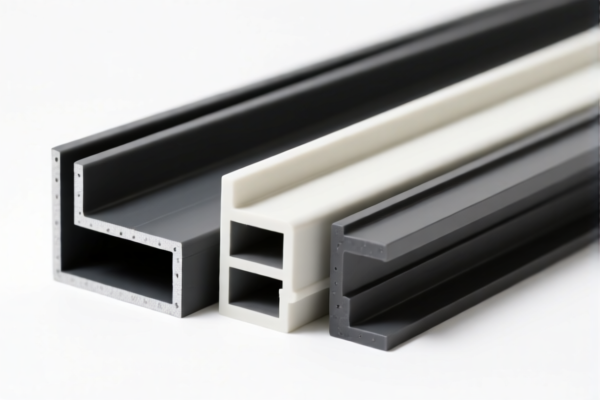
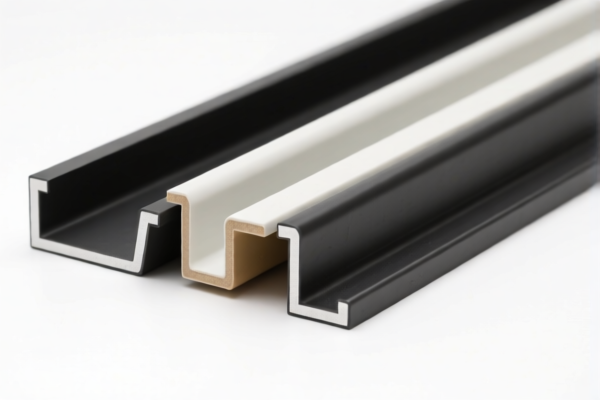
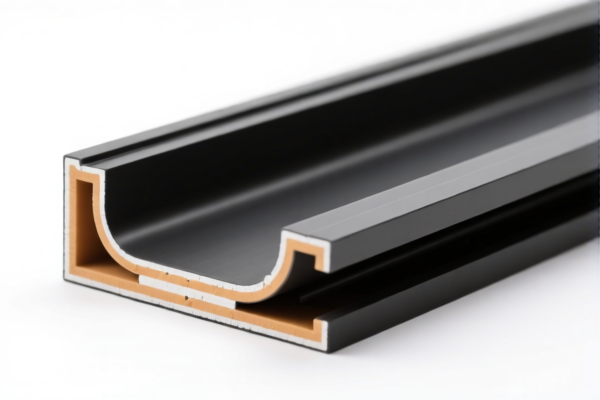
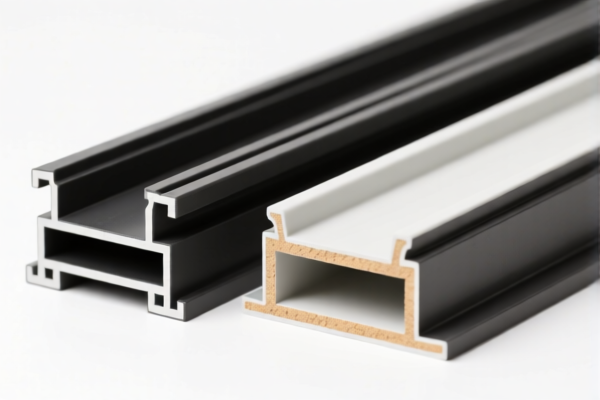
AI分析
🏗️ Rubber Building Profile: The Ultimate HS Code & Tariff Guide (2024-2026)
🌐 HS Code Reference & Customs Clearance Strategy | Complete Tariff Breakdown | Professional Compliance Guide
📌 I. Product Definition & Classification: Do You Really Understand "Rubber Building Profiles"?
"Rubber Building Profile" is a generic term that covers various shapes and forms of rubber products used in construction. In international trade, classification is strictly determined by material properties (hardness/processing state) and specific function. Misclassification can lead to significant duty discrepancies due to US-China trade tensions (Section 301 & 122).
Key Classification Drivers: * Material State: Is it hard rubber or soft/vulcanized rubber? * Form: Is it a raw "profile/extrusion" or a finished "article/part"? * End Use: Is it specifically for construction? (Note: HS codes rarely use "building" as a primary classifier for rubber; functionality and material matter more).
⚠️ Critical Distinction:
- If it is a semi-finished extrusion (profile) without complex assembly → Likely 4008
- If it is a finished manufactured part (gasket, seal, molded part) → Likely 4016
- Do not assume all rubber construction materials fall under one code.
📦 II. HS Code Classification Matrix (Based on Provided Data)
The following analysis is strictly derived from the provided <DATA> set. These are the only applicable codes for this specific input.
| HS Code | Product Summary (From Data) | Material/Form Description | Total Tax Rate |
|---|---|---|---|
4008.19.60.00 |
Rubber Building Profile | Material: Rubber Form: Profile Type: Non-hard rubber processed form |
38.3% |
4008.29.20.00 |
Rubber Building Profile | Material: Rubber Form: Profile Type: Matches standard profile definition |
37.9% |
4016.99.60.50 |
Rubber Building Profile | Material: Vulcanized Rubber Form: Article/Product Type: Other vulcanized rubber articles |
37.5% |
4016.99.03.00 |
Rubber Building Profile | Material: Rubber Form: Building Profile Type: Other vulcanized rubber articles |
38.0% |
🔍 Key Observation:
The data distinguishes between profiles (Chapter 40.08) and articles/products (Chapter 40.16). - 4008 Codes imply the product is in a semi-finished or specific processed form (extrusions/profiles). - 4016 Codes imply the product is a finished good ("articles") made of vulcanized rubber.
💰 III. 2026 Latest Tariff Rate Details (Detailed Breakdown)
✅ Applicable Country: United States (US)
✅ Origin: China (CN)
✅ Context: High-tariff environment due to trade restrictions.
🎯 1. 4008.19.60.00 —— Rubber Profile (Non-Hard)
| Item | Content |
|---|---|
| Basic Tariff | 3.3% |
| Section 301 Additional Tariff | 25.0% |
| Section 122 Tariff | 10.0% |
| Total Effective Rate | 38.3% |
| Calculation Base | CIF Value × 38.3% |
| De Minimis Exemption? | ❌ NO (High total rate disqualifies de minimis in most practical scenarios, though technically de minimis applies to duties < $800, the high rate makes it costly for bulk). |
| Legal Basis Path | HTSUS:4008.19.60.00 → Section 301 (Footnote 3) → Section 122 |
📌 Explanation:
- This code is for non-hard rubber profiles. - The 3.3% is the standard MFN (Most Favored Nation) duty. - The 25.0% is the standard Section 301 tariff for Chapter 40 rubber products. - The 10.0% is an additional levy under Section 122 (often applied to specific strategic goods or as a temporary measure depending on the exact year's enactment).
🎯 2. 4008.29.20.00 —— Rubber Profile (Standard Match)
| Item | Content |
|---|---|
| Basic Tariff | 2.9% |
| Section 301 Additional Tariff | 25.0% |
| Section 122 Tariff | 10.0% |
| Total Effective Rate | 37.9% |
| Calculation Base | CIF Value × 37.9% |
| De Minimis Exemption? | ❌ NO |
| Legal Basis Path | HTSUS:4008.29.20.00 → Section 301 → Section 122 |
📌 Explanation:
- Slightly lower basic duty (2.9%) than the previous code, resulting in a 0.4% total savings. - Requires strict adherence to the "profile" definition in the tariff schedule.
🎯 3. 4016.99.60.50 —— Other Vulcanized Rubber Articles
| Item | Content |
|---|---|
| Basic Tariff | 2.5% |
| Section 301 Additional Tariff | 25.0% |
| Section 122 Tariff | 10.0% |
| Total Effective Rate | 37.5% |
| Calculation Base | CIF Value × 37.5% |
| De Minimis Exemption? | ❌ NO |
| Legal Basis Path | HTSUS:4016.99.60.50 → Section 301 → Section 122 |
📌 Explanation:
- Lowest Total Rate (37.5%) among the options. - Classifies the product as a finished article of vulcanized rubber, not a raw profile. - Risk: If the product is actually a semi-finished profile, this misclassification can lead to penalties and back-taxes. Only use if the item is a finished molded part or seal.
🎯 4. 4016.99.03.00 —— Other Vulcanized Rubber Articles (Building Profile Specific)
| Item | Content |
|---|---|
| Basic Tariff | 3.0% |
| Section 301 Additional Tariff | 25.0% |
| Section 122 Tariff | 10.0% |
| Total Effective Rate | 38.0% |
| Calculation Base | CIF Value × 38.0% |
| De Minimis Exemption? | ❌ NO |
| Legal Basis Path | HTSUS:4016.99.03.00 → Section 301 → Section 122 |
📌 Explanation:
- Another "Other Articles" code, but with a slightly higher basic duty (3.0%). - Total rate is 38.0%. - Useful if the product is a specialized building profile classified as an "article" rather than a generic rubber good.
🛠️ IV. Customs Clearance Practical Advice (Pitfall Avoidance Guide)
✅ 1. Preparation Checklist (Non-Negotiable)
| Document | Must Provide? | Description |
|---|---|---|
| ✅ Product Specification Sheet | ✔️ | Must clearly state: Material (Vulcanized Rubber), Hardness (Shore A), Form (Profile/Extrusion vs. Molded Article). |
| ✅ Technical Drawings | ✔️ | Cross-sections of the profile. Crucial for distinguishing between 4008 (profile) and 4016 (article). |
| ✅ Product Photos | ✔️ | Clear images of the packaging, labeling, and the item itself. |
| ✅ Commercial Invoice | ✔️ | Must list "Rubber Building Profile" or "Vulcanized Rubber Article" – do not use vague terms like "Gadget". |
| ✅ Certificate of Origin | ✔️ | Essential to prove Chinese origin for Section 301/122 applicability. |
| ✅ Material Safety Data Sheet (MSDS) | ✔️ | Often required for rubber products to verify composition. |
✅ 2. Declaration Strategy (Key Tips)
🔥 "Profile vs. Article: Know Your Form!"
| Scenario | Correct HS Code | Incorrect Code | Consequence |
|---|---|---|---|
| Long, continuous rubber extrusion (Unmolded) | 4008.19.60.00 or 4008.29.20.00 |
4016.99... |
Misclassification Risk: If declared as 4016 but it's a profile, CBP may audit the difference in basic duties (2.5-3.0% vs 2.9-3.3%). |
| Finished rubber seal/gasket (Molded) | 4016.99.60.50 (Best Rate 37.5%) |
4008.19... |
Risk: Overpaying duty if 37.5% is available but you paid 38.3%. |
| Custom Extruded Profile | 4008.29.20.00 |
4016.99.03.00 |
Risk: Underpaying if the profile is considered a "finished article". |
📌 Pro Tip:
- If the product is cut to size but retains its extruded profile shape, it often stays in 4008. - If the product is molded into a final shape (e.g., a door seal with integrated clips), it moves to 4016.
✅ 3. Special Considerations for Section 122 & 301
- Section 301 (25%): Applies to almost all rubber products from China. No exemption for most building profiles.
- Section 122 (10%): This is an additional tax. Ensure your customs broker applies both 25% AND 10% on top of the basic duty. Missing Section 122 can lead to penalties.
- Total Burden: Expect 37.5% - 38.3% in duties alone. Factor this into your FOB/CIF pricing.
🌍 V. Global Market Comparison (2026 Outlook)
| Region | Recommended HS Code | Approx. Duty (China Origin) | Notes |
|---|---|---|---|
| 🇺🇸 USA | 4016.99.60.50 |
37.5% - 38.3% | Highest cost due to 301+122. Use 4016 for lowest base rate if product qualifies as "article". |
| 🇨🇳 China | 4016.99.90.90 |
~5-10% | Import duties into China are lower, but check for VAT (13%). |
| 🇪🇺 EU | 4016.99.90 |
0-6.5% | Generally lower duties, but strict REACH compliance for rubber chemicals. No Section 301. |
| 🇨🇦 Canada | 4016.99.90.00 |
~5% | CUSMA may allow 0% if originating in North America (not applicable for CN origin). |
📌 Conclusion:
- USA is the most expensive market for Chinese rubber building profiles. - Optimize for4016.99.60.50(37.5%) if your product can be legally classified as a finished "vulcanized rubber article" rather than a raw "profile". - Avoid4008.19.60.00(38.3%) unless the product is strictly a non-hard rubber profile in extruded form.
📌 VI. Common Errors & Pitfalls (Lessons Learned)
❌ Error 1: Using "Rubber Strip" or "Weatherstrip" without specifying material state.
👉 Result: CBP may assign a generic code with higher duty or request additional info, delaying shipment.
❌ Error 2: Confusing "Hard Rubber" with "Vulcanized Rubber".
👉 Result: 4008 covers "hard rubber" in some subheadings. If your profile is soft/vulcanized, it must go to 4016. Misclassification leads to 25% Section 301 disputes.
❌ Error 3: Ignoring Section 122.
👉 Result: Underpayment of 10%. CBP will assess back duties + interest + penalties.
✅ Correct Declaration Example:
"Vulcanized Rubber Building Profile, Extruded Form, Used for Door Seals, Not Hard Rubber, HS 4016.99.60.50"
🎯 VII. Conclusion: Strategic Cost Saving
🎯 Key Takeaway:
🔹 "Profile" (4008) vs "Article" (4016) is your biggest lever.
🔹 "4016.99.60.50" offers the lowest total tax (37.5%) among the provided options.
🔹 "Section 122" is mandatory. Do not forget it.
📌 Action Item:
📞 Consult a Customs Broker to confirm if your specific "Building Profile" qualifies as a Finished Article (4016) or a Semi-Finished Profile (4008).
🚀 Optimize your supply chain to absorb the ~38% tariff burden, or explore tariff engineering to change the product form.
✨ Professional Customs Clearance Starts with Precise Classification!
💼 Every percentage point counts in your profit margin!
用户评价
关于 HS 编码归类
协调制度(HS)是由世界海关组织(WCO)制定的国际贸易商品分类标准。全球 200 多个国家采用 HS 系统作为海关关税、贸易统计和进出口监管的基础。
每个 HS 编码遵循以下层级结构:
- 章(2 位)——商品大类(例如:第 84 章:机器和机械设备)
- 品目(4 位)——章内的更具体分类
- 子目(6 位)——国际通用细分,所有 WCO 成员国统一使用
- 本国细分(8-10 位)——各国自行扩展的细分编码,如美国 HTSUS 10 位编码
正确的 HS 编码归类对于顺利通关、准确缴纳关税和遵守贸易法规至关重要。错误归类可能导致海关延误、多缴关税或罚款。
从CN进口到US时,适用的关税税率可能包括:
- 最惠国(MFN)税率——适用于 WTO 成员国的标准关税税率
- 普通税率——适用于无贸易协定国家
- 贸易救济关税——附加关税,如 301 条款(反倾销)、232 条款(国家安全)或反补贴税
本页内容仅供参考。如需正式归类,请咨询当地海关或持牌报关代理。