Rubber Building Profile
CN → US| HS Code | Tariff Rate | Origin | Destination | Doc |
|---|---|---|---|---|
| 4016996050 | 37.5% | CN | US | Official Doc |
| 4016990300 | 38.0% | CN | US | Official Doc |
| 4008196000 | 38.3% | CN | US | Official Doc |
| 4008292000 | 37.9% | CN | US | Official Doc |
| 4016996050 | 37.5% | CN | US | Official Doc |
Product Images
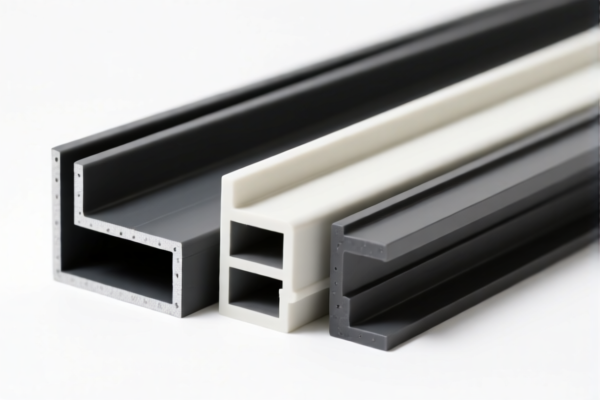
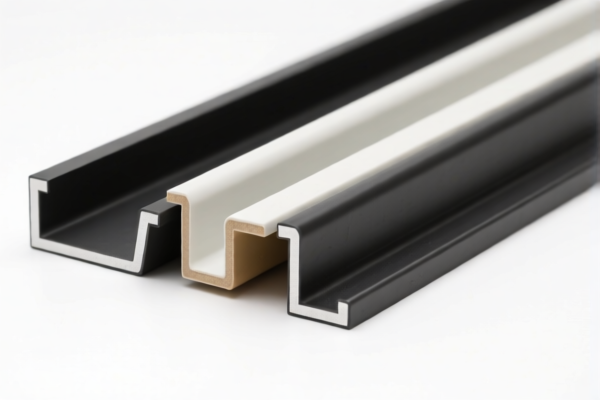
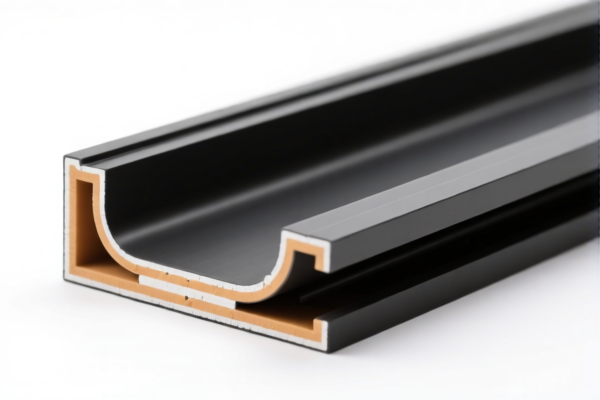
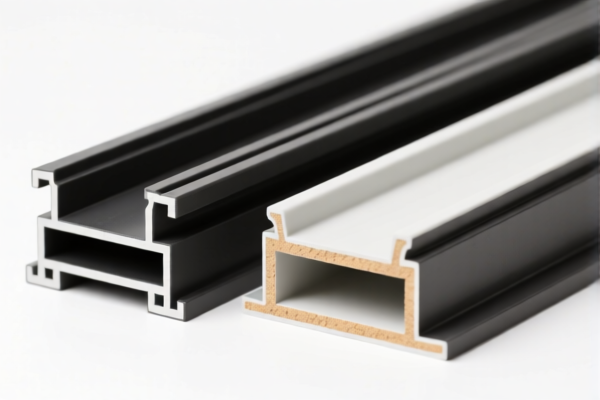
AI Analysis
🏗️ Rubber Building Profile: The Ultimate HS Code & Tariff Guide (2024-2026)
🌐 HS Code Reference & Customs Clearance Strategy | Complete Tariff Breakdown | Professional Compliance Guide
📌 I. Product Definition & Classification: Do You Really Understand "Rubber Building Profiles"?
"Rubber Building Profile" is a generic term that covers various shapes and forms of rubber products used in construction. In international trade, classification is strictly determined by material properties (hardness/processing state) and specific function. Misclassification can lead to significant duty discrepancies due to US-China trade tensions (Section 301 & 122).
Key Classification Drivers: * Material State: Is it hard rubber or soft/vulcanized rubber? * Form: Is it a raw "profile/extrusion" or a finished "article/part"? * End Use: Is it specifically for construction? (Note: HS codes rarely use "building" as a primary classifier for rubber; functionality and material matter more).
⚠️ Critical Distinction:
- If it is a semi-finished extrusion (profile) without complex assembly → Likely 4008
- If it is a finished manufactured part (gasket, seal, molded part) → Likely 4016
- Do not assume all rubber construction materials fall under one code.
📦 II. HS Code Classification Matrix (Based on Provided Data)
The following analysis is strictly derived from the provided <DATA> set. These are the only applicable codes for this specific input.
| HS Code | Product Summary (From Data) | Material/Form Description | Total Tax Rate |
|---|---|---|---|
4008.19.60.00 |
Rubber Building Profile | Material: Rubber Form: Profile Type: Non-hard rubber processed form |
38.3% |
4008.29.20.00 |
Rubber Building Profile | Material: Rubber Form: Profile Type: Matches standard profile definition |
37.9% |
4016.99.60.50 |
Rubber Building Profile | Material: Vulcanized Rubber Form: Article/Product Type: Other vulcanized rubber articles |
37.5% |
4016.99.03.00 |
Rubber Building Profile | Material: Rubber Form: Building Profile Type: Other vulcanized rubber articles |
38.0% |
🔍 Key Observation:
The data distinguishes between profiles (Chapter 40.08) and articles/products (Chapter 40.16). - 4008 Codes imply the product is in a semi-finished or specific processed form (extrusions/profiles). - 4016 Codes imply the product is a finished good ("articles") made of vulcanized rubber.
💰 III. 2026 Latest Tariff Rate Details (Detailed Breakdown)
✅ Applicable Country: United States (US)
✅ Origin: China (CN)
✅ Context: High-tariff environment due to trade restrictions.
🎯 1. 4008.19.60.00 —— Rubber Profile (Non-Hard)
| Item | Content |
|---|---|
| Basic Tariff | 3.3% |
| Section 301 Additional Tariff | 25.0% |
| Section 122 Tariff | 10.0% |
| Total Effective Rate | 38.3% |
| Calculation Base | CIF Value × 38.3% |
| De Minimis Exemption? | ❌ NO (High total rate disqualifies de minimis in most practical scenarios, though technically de minimis applies to duties < $800, the high rate makes it costly for bulk). |
| Legal Basis Path | HTSUS:4008.19.60.00 → Section 301 (Footnote 3) → Section 122 |
📌 Explanation:
- This code is for non-hard rubber profiles. - The 3.3% is the standard MFN (Most Favored Nation) duty. - The 25.0% is the standard Section 301 tariff for Chapter 40 rubber products. - The 10.0% is an additional levy under Section 122 (often applied to specific strategic goods or as a temporary measure depending on the exact year's enactment).
🎯 2. 4008.29.20.00 —— Rubber Profile (Standard Match)
| Item | Content |
|---|---|
| Basic Tariff | 2.9% |
| Section 301 Additional Tariff | 25.0% |
| Section 122 Tariff | 10.0% |
| Total Effective Rate | 37.9% |
| Calculation Base | CIF Value × 37.9% |
| De Minimis Exemption? | ❌ NO |
| Legal Basis Path | HTSUS:4008.29.20.00 → Section 301 → Section 122 |
📌 Explanation:
- Slightly lower basic duty (2.9%) than the previous code, resulting in a 0.4% total savings. - Requires strict adherence to the "profile" definition in the tariff schedule.
🎯 3. 4016.99.60.50 —— Other Vulcanized Rubber Articles
| Item | Content |
|---|---|
| Basic Tariff | 2.5% |
| Section 301 Additional Tariff | 25.0% |
| Section 122 Tariff | 10.0% |
| Total Effective Rate | 37.5% |
| Calculation Base | CIF Value × 37.5% |
| De Minimis Exemption? | ❌ NO |
| Legal Basis Path | HTSUS:4016.99.60.50 → Section 301 → Section 122 |
📌 Explanation:
- Lowest Total Rate (37.5%) among the options. - Classifies the product as a finished article of vulcanized rubber, not a raw profile. - Risk: If the product is actually a semi-finished profile, this misclassification can lead to penalties and back-taxes. Only use if the item is a finished molded part or seal.
🎯 4. 4016.99.03.00 —— Other Vulcanized Rubber Articles (Building Profile Specific)
| Item | Content |
|---|---|
| Basic Tariff | 3.0% |
| Section 301 Additional Tariff | 25.0% |
| Section 122 Tariff | 10.0% |
| Total Effective Rate | 38.0% |
| Calculation Base | CIF Value × 38.0% |
| De Minimis Exemption? | ❌ NO |
| Legal Basis Path | HTSUS:4016.99.03.00 → Section 301 → Section 122 |
📌 Explanation:
- Another "Other Articles" code, but with a slightly higher basic duty (3.0%). - Total rate is 38.0%. - Useful if the product is a specialized building profile classified as an "article" rather than a generic rubber good.
🛠️ IV. Customs Clearance Practical Advice (Pitfall Avoidance Guide)
✅ 1. Preparation Checklist (Non-Negotiable)
| Document | Must Provide? | Description |
|---|---|---|
| ✅ Product Specification Sheet | ✔️ | Must clearly state: Material (Vulcanized Rubber), Hardness (Shore A), Form (Profile/Extrusion vs. Molded Article). |
| ✅ Technical Drawings | ✔️ | Cross-sections of the profile. Crucial for distinguishing between 4008 (profile) and 4016 (article). |
| ✅ Product Photos | ✔️ | Clear images of the packaging, labeling, and the item itself. |
| ✅ Commercial Invoice | ✔️ | Must list "Rubber Building Profile" or "Vulcanized Rubber Article" – do not use vague terms like "Gadget". |
| ✅ Certificate of Origin | ✔️ | Essential to prove Chinese origin for Section 301/122 applicability. |
| ✅ Material Safety Data Sheet (MSDS) | ✔️ | Often required for rubber products to verify composition. |
✅ 2. Declaration Strategy (Key Tips)
🔥 "Profile vs. Article: Know Your Form!"
| Scenario | Correct HS Code | Incorrect Code | Consequence |
|---|---|---|---|
| Long, continuous rubber extrusion (Unmolded) | 4008.19.60.00 or 4008.29.20.00 |
4016.99... |
Misclassification Risk: If declared as 4016 but it's a profile, CBP may audit the difference in basic duties (2.5-3.0% vs 2.9-3.3%). |
| Finished rubber seal/gasket (Molded) | 4016.99.60.50 (Best Rate 37.5%) |
4008.19... |
Risk: Overpaying duty if 37.5% is available but you paid 38.3%. |
| Custom Extruded Profile | 4008.29.20.00 |
4016.99.03.00 |
Risk: Underpaying if the profile is considered a "finished article". |
📌 Pro Tip:
- If the product is cut to size but retains its extruded profile shape, it often stays in 4008. - If the product is molded into a final shape (e.g., a door seal with integrated clips), it moves to 4016.
✅ 3. Special Considerations for Section 122 & 301
- Section 301 (25%): Applies to almost all rubber products from China. No exemption for most building profiles.
- Section 122 (10%): This is an additional tax. Ensure your customs broker applies both 25% AND 10% on top of the basic duty. Missing Section 122 can lead to penalties.
- Total Burden: Expect 37.5% - 38.3% in duties alone. Factor this into your FOB/CIF pricing.
🌍 V. Global Market Comparison (2026 Outlook)
| Region | Recommended HS Code | Approx. Duty (China Origin) | Notes |
|---|---|---|---|
| 🇺🇸 USA | 4016.99.60.50 |
37.5% - 38.3% | Highest cost due to 301+122. Use 4016 for lowest base rate if product qualifies as "article". |
| 🇨🇳 China | 4016.99.90.90 |
~5-10% | Import duties into China are lower, but check for VAT (13%). |
| 🇪🇺 EU | 4016.99.90 |
0-6.5% | Generally lower duties, but strict REACH compliance for rubber chemicals. No Section 301. |
| 🇨🇦 Canada | 4016.99.90.00 |
~5% | CUSMA may allow 0% if originating in North America (not applicable for CN origin). |
📌 Conclusion:
- USA is the most expensive market for Chinese rubber building profiles. - Optimize for4016.99.60.50(37.5%) if your product can be legally classified as a finished "vulcanized rubber article" rather than a raw "profile". - Avoid4008.19.60.00(38.3%) unless the product is strictly a non-hard rubber profile in extruded form.
📌 VI. Common Errors & Pitfalls (Lessons Learned)
❌ Error 1: Using "Rubber Strip" or "Weatherstrip" without specifying material state.
👉 Result: CBP may assign a generic code with higher duty or request additional info, delaying shipment.
❌ Error 2: Confusing "Hard Rubber" with "Vulcanized Rubber".
👉 Result: 4008 covers "hard rubber" in some subheadings. If your profile is soft/vulcanized, it must go to 4016. Misclassification leads to 25% Section 301 disputes.
❌ Error 3: Ignoring Section 122.
👉 Result: Underpayment of 10%. CBP will assess back duties + interest + penalties.
✅ Correct Declaration Example:
"Vulcanized Rubber Building Profile, Extruded Form, Used for Door Seals, Not Hard Rubber, HS 4016.99.60.50"
🎯 VII. Conclusion: Strategic Cost Saving
🎯 Key Takeaway:
🔹 "Profile" (4008) vs "Article" (4016) is your biggest lever.
🔹 "4016.99.60.50" offers the lowest total tax (37.5%) among the provided options.
🔹 "Section 122" is mandatory. Do not forget it.
📌 Action Item:
📞 Consult a Customs Broker to confirm if your specific "Building Profile" qualifies as a Finished Article (4016) or a Semi-Finished Profile (4008).
🚀 Optimize your supply chain to absorb the ~38% tariff burden, or explore tariff engineering to change the product form.
✨ Professional Customs Clearance Starts with Precise Classification!
💼 Every percentage point counts in your profit margin!
Customer Reviews
About HS Code Classification
The Harmonized System (HS) is an internationally standardized nomenclature developed by the World Customs Organization (WCO) to classify traded products. Over 200 countries use the HS system as the basis for customs tariffs, trade statistics, and import/export regulations.
Each HS code follows a hierarchical structure:
- Chapter (2 digits) — Broad category of goods (e.g., Chapter 84: Machinery and Mechanical Appliances)
- Heading (4 digits) — More specific grouping within the chapter
- Subheading (6 digits) — Internationally standardized breakdown, used by all WCO member countries
- National subdivisions (8-10 digits) — Country-specific extensions for further classification, such as US HTSUS 10-digit codes
Correct HS code classification is essential for smooth customs clearance, accurate duty payment, and compliance with trade regulations. Misclassification can lead to customs delays, overpayment of duties, or penalties.
When importing from CN to US, the applicable tariff rates may include:
- Most-Favored-Nation (MFN) rate — The standard duty rate applied to WTO members
- General rate — Applied to countries without trade agreements
- Trade remedy duties — Additional tariffs such as Section 301 (anti-dumping), Section 232 (national security), or countervailing duties
The information provided on this page is for reference purposes only. For official classification, please consult with your local customs authority or a licensed customs broker.