Rubber Cushion Tires (Low Noise)
CN → US| HS编码 | 关税税率 | 原产国 | 目的国 | 文档 |
|---|---|---|---|---|
| 8714100020 | 17.5% | CN | US | 官方文档 |
| 8714921000 | 0.0% | CN | US | 官方文档 |
| 4012909000 | 37.7% | CN | US | 官方文档 |
| 4012901000 | 35.0% | CN | US | 官方文档 |
| 8708990300 | 35.0% | CN | US | 官方文档 |
商品图片
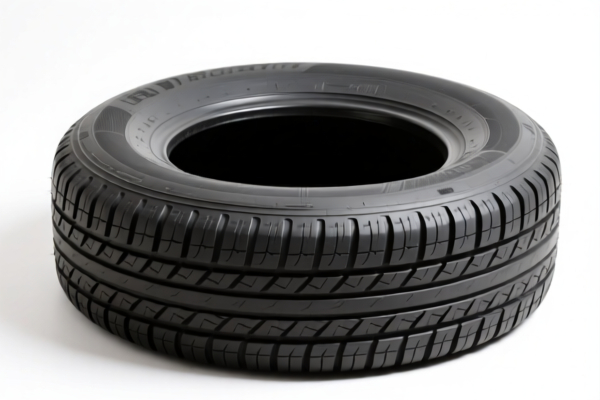
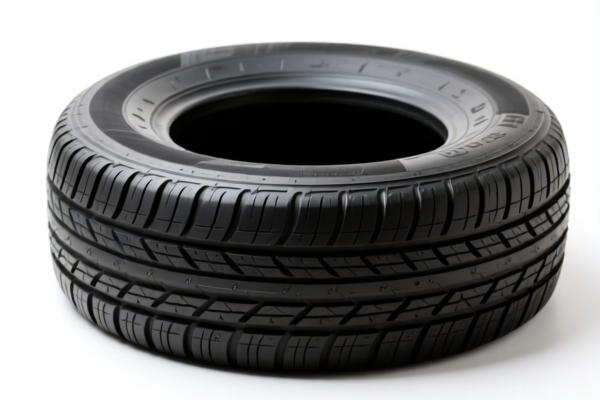
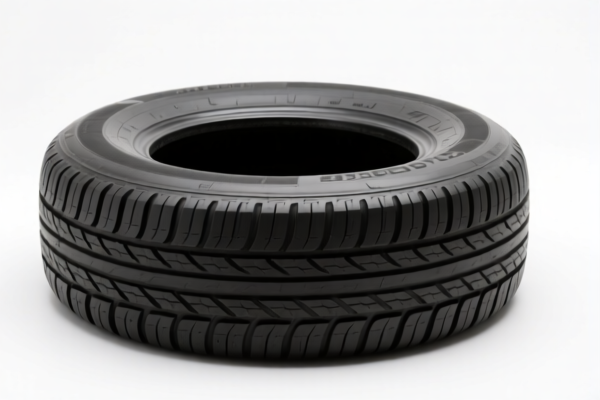
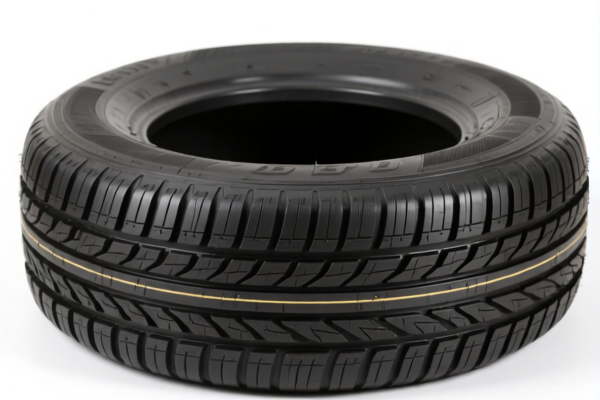
AI分析
🛞 Rubber Cushion Tires (Low Noise)
🌐 HS Code Reference & Customs Clearance Guide | 2026 Latest Tariff Analysis | Professional Strategy for High-Load Applications
📌 I. Product Definition & Classification: Are You Importing Wheels or Tires?
Rubber Cushion Tires (specifically Low Noise variants) are solid or semi-solid tires designed primarily for forklifts, pallet jacks, and industrial logistics vehicles. Their key characteristics are: 1. Material: Rubber (Solid/Elastomeric). 2. Function: Shock absorption, load bearing, and noise reduction in industrial environments. 3. Form: Non-pneumatic (Solid/Pneumatic-free) "Cushion" type.
In international trade, the critical distinction is whether they are classified as Parts of Vehicles (Chapter 87) or Rubber Articles (Chapter 40). This choice drastically impacts the tariff burden.
⚠️ Key Distinction Point:
- If classified under 8714 (Parts of Vehicles): Treated as "Rims/Wheels" components. Logic: They are essential rotating parts of the vehicle chassis.
- If classified under 4012 (Rubber Products): Treated as "Solid/Rubber Tires". Logic: They are made of rubber and function as shock-absorbing cushion tires.
- Note: Some interpretations may link them to 8708 (Other Parts/Accessories) if deemed "Shock Absorbing" components, though this is less common for tires themselves.
📦 II. HS Code Classification Details (2026 Latest Authority Comparison)
Based on the provided data, here are the potential HS Codes and their matching logic:
| HS Code | Product Description | Matching Logic & Summary | Applicability |
|---|---|---|---|
| 8714.10.00.20 | Rims and Wheel Parts | Match Basis: Product form is a tire (component of wheel/rims), material is rubber (common attribute), usage is high-load buffering. Consistent with the classification logic of wheel/rims in HS code. | ⭐ High Probability if viewed as a wheel assembly/component. |
| 8714.92.10.00 | Parts of Motor Vehicles | Match Basis: 'Rubber' matches material commonality for rims/tires; 'Tires' falls under vehicle axle/rim attachments. No material conflict. | Possible, but often tires are separated into Ch 40 unless part of a specific wheel unit. |
| 4012.90.90.00 | Other Used/Reconditioned Tires | Match Basis: Material is Rubber (Rubber), form fits "Cushion Tires", falls under 'Rubber solid or cushion tires'. | Specific: Usually for used/reconditioned, but the summary notes it fits "Rubber solid/cushion tires". |
| 4012.90.10.00 | Solid Rubber Tires | Match Success: Product material (Rubber) and form (Cushion Tires) fully match the classification explanation for "Rubber solid or cushion tires". | ⭐ Very High Probability for new, solid cushion tires. |
| 8708.99.03.00 | Other Parts and Accessories | Match Success: 'Rubber' matches "containing rubber"; 'Shock Absorbing' matches "shock absorbing". Although it's a tire, as a vehicle accessory, its shock-absorbing function aligns with shock absorber category logic. | Alternative View: Focuses on the function (shock absorption) rather than the form (tread). |
🔍 Critical Reminder:
- Chapter 40 (4012.90.10.00) is the most direct fit for "Rubber Cushion Tires" as they are defined by their rubber composition and solid/cushion nature.
- Chapter 87 (8714.10.00.20) may apply if customs authorities view them strictly as "Wheel Components" rather than standalone rubber products, especially if they are mounted on rims.
- Do not confuse with pneumatic tires (Ch 40.11) or used tires (Ch 40.12.90.90).
💰 III. 2026 Latest Tariff Rate Details (Including Surcharges & Policy Add-ons)
✅ Applicable Country: United States (US)
✅ Origin: China (CN) (Assumed based on "122 Clause" and typical trade context in data)
✅ Effective Time: 2025/2026 Period
🎯 1. 8714.10.00.20 —— Rims and Wheel Parts (High-Load Buffering)
| Item | Content |
|---|---|
| Base Tariff | 0.0% (ad valorem) |
| USITC Surcharge | +7.5% (Specific to this subheading per data) |
| Section 122 Tariff | +10% (China-specific add-on) |
| Total Rate | 17.5% |
| Tax Calculation | CIF Value × 17.5% |
| De Minimis Exemption | ❌ Not Eligible (Assumed for commercial shipments) |
| Legal Basis Path | Base: 0% → Surcharge: 7.5% → 122 Clause: 10% |
📌 Explanation:
- This is the lowest tariff option among the valid classifications.
- The "7.5%" surcharge is specific to this wheel part classification.
- Strategy: If your tires are sold as part of a wheel assembly or clearly defined as "wheel components" rather than standalone "rubber articles," this code offers significant savings.
🎯 2. 8714.92.10.00 —— Other Parts of Motor Vehicles (Rubber/Tire Context)
| Item | Content |
|---|---|
| Base Tariff | 5.0% |
| USITC Surcharge | +25.0% (Standard Section 301 rate) |
| Section 122 Tariff | +10% (China-specific add-on) |
| Total Rate | 5% + 35% = 40% (Note: Data says "5% +35.0%", implying 5 base + 25 surcharge + 10 122 = 40% total, or potentially 5+35=40. Data format suggests 5 base + 35 total surcharges) |
| Tax Calculation | CIF Value × 40% |
| De Minimis Exemption | ❌ Not Eligible |
| Legal Basis Path | Base: 5% → Surcharge: 25% → 122 Clause: 10% |
📌 Note:
- Higher than8714.10.00.20due to the higher base tariff (5%) and standard 301 surcharges.
- Risk: Misclassification risk if deemed a "tire" rather than a general vehicle part.
🎯 3. 4012.90.90.00 —— Other Rubber Tires (Used/Reconditioned or General)
| Item | Content |
|---|---|
| Base Tariff | 2.7% |
| USITC Surcharge | +25.0% (Standard Section 301 rate) |
| Section 122 Tariff | +10% (China-specific add-on) |
| Total Rate | 37.7% |
| Tax Calculation | CIF Value × 37.7% |
| De Minimis Exemption | ❌ Not Eligible |
| Legal Basis Path | Base: 2.7% → Surcharge: 25% → 122 Clause: 10% |
📌 Note:
- This code is often reserved for used or reconditioned tires. If your product is new, this classification might be challenged by customs unless it fits a specific "other" category for new cushion tires.
- High total tariff burden.
🎯 4. 4012.90.10.00 —— Solid Rubber Tires (Perfect Match)
| Item | Content |
|---|---|
| Base Tariff | 0.0% |
| USITC Surcharge | +25.0% (Standard Section 301 rate) |
| Section 122 Tariff | +10% (China-specific add-on) |
| Total Rate | 35.0% |
| Tax Calculation | CIF Value × 35.0% |
| De Minimis Exemption | ❌ Not Eligible |
| Legal Basis Path | Base: 0% → Surcharge: 25% → 122 Clause: 10% |
📌 Explanation:
- Best Fit for "Rubber Cushion Tires" in terms of material and form description.
- "Match Success" indicates this is the most technically accurate description for "Rubber" + "Cushion Tires".
- Total 35% is moderate compared to other vehicle parts but higher than the wheel component classification (8714.10.00.20).
🎯 5. 8708.99.03.00 —— Other Parts and Accessories (Shock Absorbing)
| Item | Content |
|---|---|
| Base Tariff | 0.0% |
| USITC Surcharge | +25.0% (Standard Section 301 rate) |
| Section 122 Tariff | +10% (China-specific add-on) |
| Total Rate | 35.0% |
| Tax Calculation | CIF Value × 35.0% |
| De Minimis Exemption | ❌ Not Eligible |
| Legal Basis Path | Base: 0% → Surcharge: 25% → 122 Clause: 10% |
📌 Explanation:
- Relies on the functional argument ("Shock Absorbing") rather than the material/form.
- Same total rate as4012.90.10.00, but classification logic is more subjective and risky if customs focuses on "tire" definition.
🛠️ IV. Customs Clearance Practical Advice (Battle-Tested Pitfall Avoidance)
✅ 1. Preparation Checklist (Non-negotiable)
| Document | Required | Explanation |
|---|---|---|
| ✅ Product Specification Sheet | ✔️ | Must specify: Material (Rubber), Type (Solid/Cushion), Load Capacity, Noise Level (Low Noise), Application (Forklift/Industrial). |
| ✅ Photos (Clear & Labeled) | ✔️ | Show tread pattern, sidewall markings, and any "Non-Pneumatic" or "Solid" labels. |
| ✅ Commercial Invoice | ✔️ | Describe as "Rubber Cushion Tires for Industrial Vehicles" or "Wheel Components for Forklifts". Avoid vague terms like "Parts". |
| ✅ Country of Origin Certificate | ✔️ | Required for 122 Clause assessment. |
| ✅ Technical Diagram | ✔️ | Helpful to prove if it is a standalone tire or part of a wheel assembly. |
✅ 2. Declaration Strategy (Key Mnemonics)
🔥 "Form Determines Chapter, Function May Shift Tariff!"
| Scenario | Recommended HS Code | Risk Level | Total Rate |
|---|---|---|---|
| Standalone Rubber Tire (Most Common) | 4012.90.10.00 |
🟢 Low (Accurate) | 35.0% |
| Wheel Assembly Component (Mounted/Part of Wheel) | 8714.10.00.20 |
🟡 Medium (Needs justification) | 17.5% 💰 CHEAPEST |
| General Vehicle Part (No specific tire logic) | 8714.92.10.00 |
🔴 High (Misclassification Risk) | 40.0% |
| Shock Absorbing Accessory (Unconventional) | 8708.99.03.00 |
🔴 High (Functional Argument Risk) | 35.0% |
📌 Strategic Advice:
- If your tires are sold without rims as replacement tires,4012.90.10.00is the safest and most standard classification.
- If they are sold as part of a wheel unit or clearly marketed as "Wheel Components" to emphasize their structural role, you might argue for8714.10.00.20to save 17.5% in duties. However, this requires strong documentation proving they are integral wheel parts.
- Avoid8714.92.10.00and8708.99.03.00unless you have a specific legal precedent, as they offer no cost advantage over4012.90.10.00and carry higher classification risk.
✅ 3. Special Cases & Handling
| Case | Handling Suggestion |
|---|---|
| OEM Custom Tires | Provide OEM contracts and design specs. Clearly state "Solid Rubber Cushion Tire for [Vehicle Model]". |
| "Low Noise" Feature | Highlight this in specs, but it does not change HS code. It may justify higher quality claims but not tariff reductions. |
| Used vs. New | If Used, 4012.90.90.00 may apply, but rates are higher (37.7%). Ensure goods are declared as New if applicable. |
| Misdeclaration Risk | Do not declare as "Tires for Cars" (Ch 40.11). Industrial cushion tires are distinct. |
🌍 V. Global Market Comparison (2026 Outlook)
| Country/Region | Recommended HS Code | Tariff (China Origin) | Certification | Notes |
|---|---|---|---|---|
| 🇺🇸 USA | 4012.90.10.00 or 8714.10.00.20 |
35% or 17.5% | None specific, but FDA/OSHA may apply for workplace safety | 122 Clause adds 10%. Section 301 adds 25%. |
| 🇨🇳 China | 4011.92 or 4012.90 |
~5-10% | CCC (if for vehicles) | Lower tariffs, no surcharges. |
| 🇪🇺 EU | 4012.10 or 4012.90 |
0% (Most) | CE, REACH | No US-style surcharges. |
| 🇦🇺 Australia | 4012.90 |
5% | ADR/Work Health & Safety | Standard MFN rates. |
📌 Conclusion:
- USA is the only major market with significant surcharges (122 + 301).
- Choice of HS Code between 35% and 17.5% is a 17.5% tariff differential on the CIF value.
- Justification is key: To achieve the lower 17.5% rate (8714.10.00.20), you must prove the item is a "Wheel Part" and not just a "Rubber Article".
📌 VI. Common Errors & Pitfall Guide (Blood Lessons)
❌ Error 1: Declaring as "Car Tires" (4011)
👉 Consequence: Misclassification. Industrial cushion tires are solid/non-pneumatic. Car tires are pneumatic. High fine risk.
❌ Error 2: Declaring as "General Rubber Parts" without specifying "Cushion Tire"
👉 Consequence: Customs may classify under the highest duty "Other Rubber Articles" or demand reclassification.
❌ Error 3: Ignoring the 122 Clause
👉 Consequence: Even with 0% base tariff, the 10% add-on applies. Budget accordingly.
❌ Error 4: Confusing "Cushion Tire" with "Shock Absorber" (8708)
👉 Consequence: While functionally similar, HS rules prioritize form/material. 4012 is preferred for tires. Using 8708 may trigger audits.
✅ Correct Practice:
"Solid Rubber Cushion Tire, Low Noise, For Forklifts, Model XYZ, New, China Origin"
🎯 VII. Conclusion: Professional Declaration, Cost Optimization!
🎯 Key Takeaway:
🔹 "Solid Rubber = 4012.90.10.00 (35%)"
🔹 "Wheel Component = 8714.10.00.20 (17.5%)"
🔹 "Choose wisely based on packaging and description!"
📌 Pro Tip:
If you are importing large volumes, consider structuring the product as a wheel assembly (if technically feasible) or providing detailed documentation that emphasizes the wheel component aspect to leverage the 17.5% rate. Otherwise, stick to the standard 35% for 4012.90.10.00 to ensure smooth, risk-free clearance.
📣 Immediate Action:
📞 Consult your customs broker with product photos and spec sheets.
📝 Request an Advance Ruling if the classification between4012and8714is critical to your profit margin.
🚀 Optimize your HS Code, Secure your Margin, Clear Customs with Confidence!
✨ Precision in Classification, Profit in Clearance!
💼 Every Percent Matters in International Trade!
用户评价
关于 HS 编码归类
协调制度(HS)是由世界海关组织(WCO)制定的国际贸易商品分类标准。全球 200 多个国家采用 HS 系统作为海关关税、贸易统计和进出口监管的基础。
每个 HS 编码遵循以下层级结构:
- 章(2 位)——商品大类(例如:第 84 章:机器和机械设备)
- 品目(4 位)——章内的更具体分类
- 子目(6 位)——国际通用细分,所有 WCO 成员国统一使用
- 本国细分(8-10 位)——各国自行扩展的细分编码,如美国 HTSUS 10 位编码
正确的 HS 编码归类对于顺利通关、准确缴纳关税和遵守贸易法规至关重要。错误归类可能导致海关延误、多缴关税或罚款。
从CN进口到US时,适用的关税税率可能包括:
- 最惠国(MFN)税率——适用于 WTO 成员国的标准关税税率
- 普通税率——适用于无贸易协定国家
- 贸易救济关税——附加关税,如 301 条款(反倾销)、232 条款(国家安全)或反补贴税
本页内容仅供参考。如需正式归类,请咨询当地海关或持牌报关代理。