Rubber Mixture
CN → US| HS编码 | 关税税率 | 原产国 | 目的国 | 文档 |
|---|---|---|---|---|
| 3824994900 | 41.5% | CN | US | 官方文档 |
| 4005100000 | 35.0% | CN | US | 官方文档 |
| 3403112000 | 35.2% | CN | US | 官方文档 |
| 3403115000 | 36.4% | CN | US | 官方文档 |
| 4005200000 | 35.0% | CN | US | 官方文档 |
商品图片
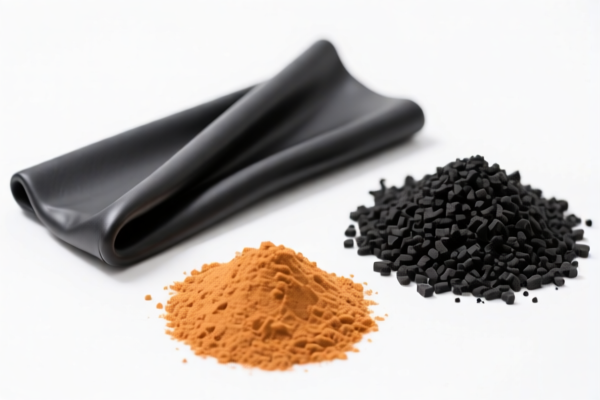
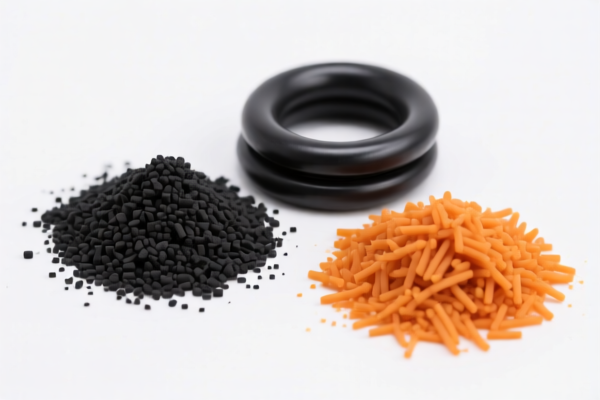
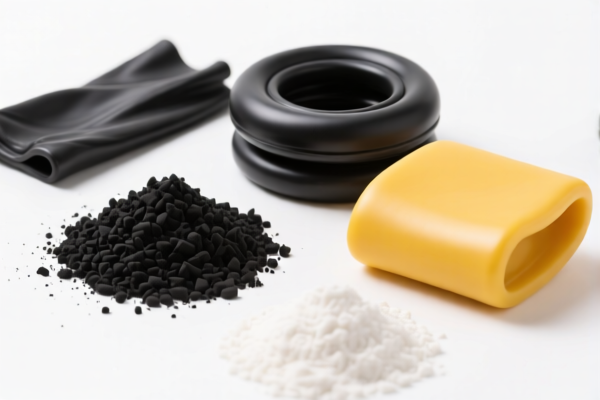
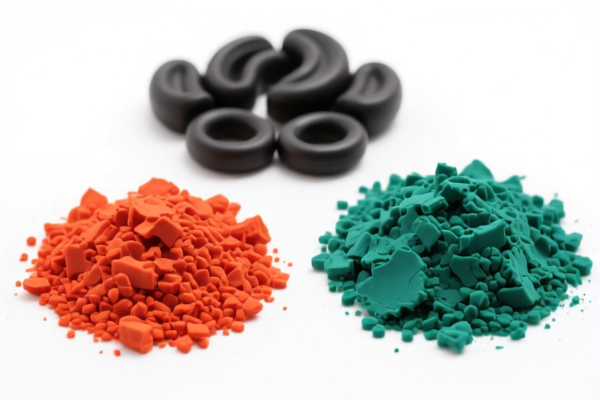
AI分析
🛠️ Rubber Mixture (Chemical Compounds for Rubber Processing)
🌐 HS Code Classification & Customs Clearance Guide | 2026 Updated Tariff Analysis | Pro-Level Import Strategy
📌 One, Product Definition & Classification: What Exactly Is a "Rubber Mixture"?
A rubber mixture refers to a pre-blended chemical formulation used in the rubber manufacturing process — typically composed of raw rubber, additives, accelerators, vulcanizing agents, and processing aids. It is not yet vulcanized, but is ready for shaping, molding, or further processing into final rubber products.
⚠️ Key Distinction:
- If it's a blend of rubber and chemicals for industrial processing → HS Code 3824.99.49.00
- If it's pure unvulcanized rubber compound (no added chemicals) → HS Code 4005.10.00.00 or 4005.20.00.00
- If it's a chemical formulation used for surface treatment or coating → HS Code 3403.11.20.00 / 3403.11.50.00
📦 Two, HS Code Breakdown (2026 Updated Tariff Authority)
| HS Code | Product Description | Use Case | Material Status | Chemical Additives? |
|---|---|---|---|---|
3824.99.49.00 |
Rubber chemicals mixture — chemical formulation for rubber processing | Industrial rubber compounding, tire manufacturing, conveyor belts | Pre-mixed, unvulcanized | ✅ Yes |
4005.10.00.00 |
Unvulcanized rubber mixtures, not compounded with other materials | Raw rubber blends for industrial use | Unvulcanized, but no chemical additives | ❌ No |
3403.11.20.00 |
Chemical preparations for rubber processing, non-foaming, non-solvent | Surface treatment, adhesion promotion, anti-aging agents | Chemical formulation, not bulk rubber | ✅ Yes |
3403.11.50.00 |
Chemical preparations for rubber processing, foaming or solvent-based | Specialized rubber treatments, foam rubber production | Chemical formulation, with additives | ✅ Yes |
4005.20.00.00 |
Unvulcanized mixtures of rubber, including those with additives | Tire treads, industrial seals, hoses | Unvulcanized, contains chemical additives | ✅ Yes |
🔍 Critical Insight:
- "Rubber mixture" is not automatically "rubber" — if chemicals are added, it’s a chemical compound, not a raw rubber material. - The presence of additives (e.g., sulfur, accelerators, fillers) triggers chemical classification, not rubber classification.
💰 Three, 2026 Updated Tariff & Duty Breakdown (With Full Legal Clauses)
✅ Applicable Country: United States (US)
✅ Origin: China (CN)
✅ Effective Date: November 10, 2025 (inclusive)
✅ Legal Basis: IEEPA + USITC Section 301 + Footnote 9903.88.01
🎯 1. 3824.99.49.00 — Rubber Chemicals Mixture (Chemical Formulation)
| Item | Detail |
|---|---|
| Base Duty | 6.5% (ad valorem) |
| USITC Section 301 Additional Duty | +25.0% |
| IEEPA Emergency Economic Powers Act (10%) | +10.0% |
| Total Effective Duty | 41.5% |
| Tax Calculation | CIF Value × 41.5% |
| De Minimis Threshold | ❌ Not applicable (denied) |
| Legal Pathway | IEEPA:9903.01.25 → IEEPA:9903.01.24 → USITC:3824.99.49.00 → FOOTNOTE:9903.88.01 |
📌 Explanation:
- This is a chemical industrial compound, not raw rubber.
- USITC 25% comes from Section 301 tariffs on Chinese chemical products.
- IEEPA 10% is a national emergency tariff under the International Emergency Economic Powers Act.
- Total: 41.5% — one of the highest tariffs in the rubber chemical sector.
🎯 2. 4005.10.00.00 — Unvulcanized Rubber Mixtures (No Additives)
| Item | Detail |
|---|---|
| Base Duty | 0.0% |
| USITC Section 301 Additional Duty | +25.0% |
| IEEPA Emergency Economic Powers Act (10%) | +10.0% |
| Total Effective Duty | 35.0% |
| Tax Calculation | CIF Value × 35.0% |
| De Minimis Threshold | ❌ Not applicable |
| Legal Pathway | IEEPA:9903.01.25 → IEEPA:9903.01.24 → USITC:4005.10.00.00 → FOOTNOTE:9903.88.01 |
📌 Note:
- Despite 0% base duty, the 25% + 10% = 35% total rate applies if origin is China.
- Applies only to pure rubber mixtures without chemical additives.
🎯 3. 3403.11.20.00 — Chemical Preparations for Rubber Processing (Non-Solvent)
| Item | Detail |
|---|---|
| Base Duty | 0.2% |
| USITC Section 301 Additional Duty | +25.0% |
| IEEPA Emergency Economic Powers Act (10%) | +10.0% |
| Total Effective Duty | 35.2% |
| Tax Calculation | CIF Value × 35.2% |
| De Minimis Threshold | ❌ Not applicable |
| Legal Pathway | IEEPA:9903.01.25 → IEEPA:9903.01.24 → USITC:3403.11.20.00 → FOOTNOTE:9903.88.01 |
📌 Use Case:
- Used for rubber surface treatment, adhesion promotion, anti-aging, anti-oxidation.
- Not bulk rubber, but chemical formulation — hence classified under 3403.
🎯 4. 3403.11.50.00 — Chemical Preparations for Rubber Processing (Foaming/Solvent-Based)
| Item | Detail |
|---|---|
| Base Duty | 1.4% |
| USITC Section 301 Additional Duty | +25.0% |
| IEEPA Emergency Economic Powers Act (10%) | +10.0% |
| Total Effective Duty | 36.4% |
| Tax Calculation | CIF Value × 36.4% |
| De Minimis Threshold | ❌ Not applicable |
| Legal Pathway | IEEPA:9903.01.25 → IEEPA:9903.01.24 → USITC:3403.11.50.00 → FOOTNOTE:9903.88.01 |
📌 Critical Note:
- Higher base duty (1.4%) due to foaming agents or solvent content.
- Still subject to 25% + 10% — total 36.4%.
- Common in foam rubber, sealants, adhesives.
🎯 5. 4005.20.00.00 — Unvulcanized Rubber Mixtures (With Additives)
| Item | Detail |
|---|---|
| Base Duty | 0.0% |
| USITC Section 301 Additional Duty | +25.0% |
| IEEPA Emergency Economic Powers Act (10%) | +10.0% |
| Total Effective Duty | 35.0% |
| Tax Calculation | CIF Value × 35.0% |
| De Minimis Threshold | ❌ Not applicable |
| Legal Pathway | IEEPA:9903.01.25 → IEEPA:9903.01.24 → USITC:4005.20.00.00 → FOOTNOTE:9903.88.01 |
📌 Key Point:
- Same 35% total rate as 4005.10.00.00, but includes additives.
- Used in tires, hoses, gaskets, industrial belts.
🛠️ Four, Customs Clearance Best Practices (Pro Tips to Avoid Delays & Penalties)
✅ 1. Required Documentation (Must-Have Checklist)
| Document | Required? | Purpose |
|---|---|---|
| ✅ Product Specification Sheet | ✔️ | Shows composition, additives, intended use |
| ✅ Material Safety Data Sheet (MSDS/SDS) | ✔️ | Proves chemical content |
| ✅ Certificate of Origin (CO) | ✔️ | Determines tariff eligibility |
| ✅ Commercial Invoice | ✔️ | Must clearly state "Rubber Mixture for Industrial Processing" |
| ✅ Test Report (e.g., ASTM, ISO) | ✔️ | Validates chemical properties |
| ✅ Packaging & Labeling Details | ✔️ | For customs inspection |
| ✅ 3D/Photo of Product | ✔️ | Proves physical form (liquid, paste, solid) |
✅ 2.申报技巧 (申报口诀)
🔥 “看成分,分化学,添加剂,进3824;纯橡胶,看状态,未硫化,进4005;表面处理,用3403,别乱归类!”
| Scenario | Correct HS Code | Wrong Code | Risk |
|---|---|---|---|
| Rubber + accelerators + fillers | 3824.99.49.00 |
4005.20.00.00 |
41.5% vs 35.0% → higher tax |
| Pure unvulcanized rubber | 4005.10.00.00 |
3824.99.49.00 |
35% vs 41.5% → underpay → penalty |
| Anti-aging chemical agent | 3403.11.20.00 |
4005.20.00.00 |
35.2% vs 35.0% → minor but risky |
| Foaming rubber additive | 3403.11.50.00 |
3824.99.49.00 |
36.4% vs 41.5% → better to use 3403 |
✅ 3. Special Cases & Risk Mitigation
| Situation | Recommended Action |
|---|---|
| Mixed shipment (rubber + chemicals) | Declare separately — don’t combine under one HS Code |
| OEM custom formulation | Provide technical data sheet + client agreement to prove intended use |
| Used in tire manufacturing | Still falls under 3824.99.49.00 or 4005.20.00.00 — no exemption |
| Export from Vietnam/Mexico | Can apply for IEEPA exemption → 0% duty if origin is not China |
| Pre-arrival review needed | Apply for Advance Ruling (Pre-Approval) — avoid post-entry audits |
🌍 Five, Global Market Tariff Comparison (2026)
| Country/Region | Recommended HS Code | Tariff Rate | Certification Required | Notes |
|---|---|---|---|---|
| 🇺🇸 USA | 3824.99.49.00 |
41.5% (China) | FDA, SDS, EPA | Highest tariff |
| 🇨🇳 China | 3824.99.49.00 |
5% | CCC, RoHS | No extra tariffs |
| 🇪🇺 EU | 3824.99.49.00 |
0% (if REACH compliant) | REACH, CE | No 301/IEEPA |
| 🇦🇺 Australia | 3824.99.49.00 |
5% | RCM | No extra duties |
| 🇯🇵 Japan | 3824.99.49.00 |
0% | PSE | No 301/IEEPA |
📌 Conclusion:
- The U.S. is the only market imposing 35–41.5% tariffs on Chinese rubber mixtures.
- Vietnam/Mexico origin products can avoid IEEPA — consider relocation or joint production.
📌 Six, Common Mistakes & How to Avoid Them (Real-World Pitfalls)
❌ Mistake 1: Calling a "rubber mixture with accelerators" a "raw rubber"
👉 Result: Misclassified as 4005.20.00.00 → underpaid duty → penalty + audit
❌ Mistake 2: Using 3824.99.49.00 for pure rubber without additives
👉 Result: Overpaid duty (41.5% vs 35%) → loss of profit
❌ Mistake 3: Not providing SDS or chemical composition
👉 Result: Customs holds shipment → delay + storage fees
❌ Mistake 4: Declaring "rubber compound" without specifying additives
👉 Result: Customs may reclassify → higher duty or seizure
✅ Correct Declaration Example:
"Rubber Mixture for Tire Manufacturing, Containing Sulfur, Zinc Oxide, and Accelerators, Unvulcanized, 100 kg Drum, SDS Attached, Origin: China"
🎯 Seven, Final Verdict: Precision Matters — Your Profit Depends on It!
🎯 Remember the Golden Rule:
🔹 "If it’s a chemical blend, it’s 3824.99.49.00 or 3403.11.xx.00 — not 4005!"
🔹 "Additives = Chemicals = Higher duty, but correct classification saves you from penalties!"
📌 Pro Tip:
If your rubber mixture is produced in Vietnam, Mexico, or Thailand, apply for IEEPA exemption — duty drops to 0%–5%.
Apply for Advance Ruling (Pre-Approval) — get a binding decision before shipment.
📣 Take Action Now:
📞 Contact a licensed customs broker + provide product specs + SDS + photos
🚀 Get your HS Code pre-approved — avoid delays, fines, and lost profits!
✨ Smart Importing Starts with Smart Classification!
💼 Your bottom line is worth protecting — get it right the first time!
用户评价
关于 HS 编码归类
协调制度(HS)是由世界海关组织(WCO)制定的国际贸易商品分类标准。全球 200 多个国家采用 HS 系统作为海关关税、贸易统计和进出口监管的基础。
每个 HS 编码遵循以下层级结构:
- 章(2 位)——商品大类(例如:第 84 章:机器和机械设备)
- 品目(4 位)——章内的更具体分类
- 子目(6 位)——国际通用细分,所有 WCO 成员国统一使用
- 本国细分(8-10 位)——各国自行扩展的细分编码,如美国 HTSUS 10 位编码
正确的 HS 编码归类对于顺利通关、准确缴纳关税和遵守贸易法规至关重要。错误归类可能导致海关延误、多缴关税或罚款。
从CN进口到US时,适用的关税税率可能包括:
- 最惠国(MFN)税率——适用于 WTO 成员国的标准关税税率
- 普通税率——适用于无贸易协定国家
- 贸易救济关税——附加关税,如 301 条款(反倾销)、232 条款(国家安全)或反补贴税
本页内容仅供参考。如需正式归类,请咨询当地海关或持牌报关代理。