Rubber Mixture
CN → US| HS Code | Tariff Rate | Origin | Destination | Doc |
|---|---|---|---|---|
| 3824994900 | 41.5% | CN | US | Official Doc |
| 4005100000 | 35.0% | CN | US | Official Doc |
| 3403112000 | 35.2% | CN | US | Official Doc |
| 3403115000 | 36.4% | CN | US | Official Doc |
| 4005200000 | 35.0% | CN | US | Official Doc |
Product Images
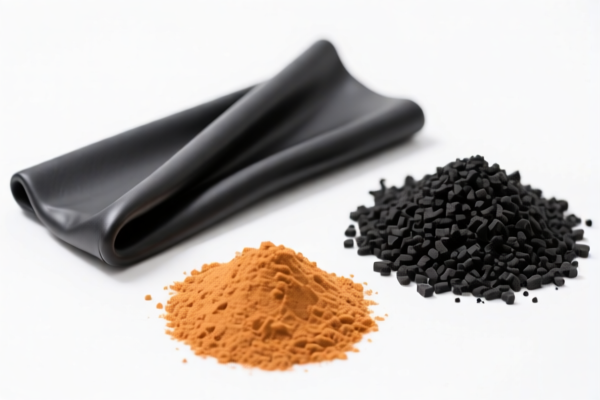
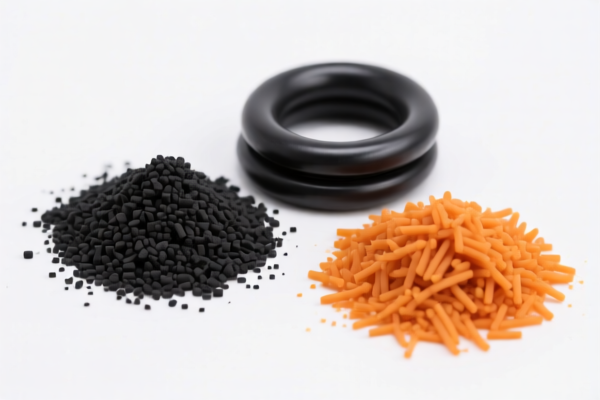
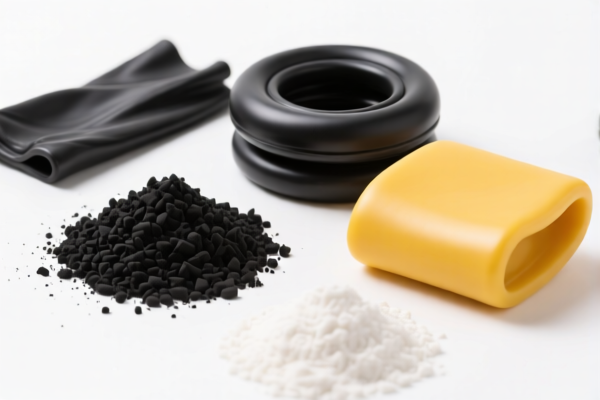
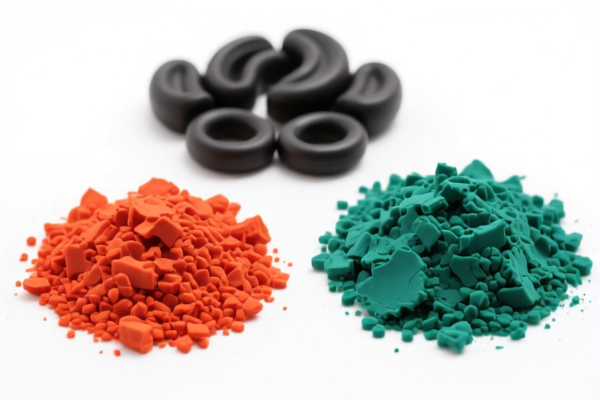
AI Analysis
🛠️ Rubber Mixture (Chemical Compounds for Rubber Processing)
🌐 HS Code Classification & Customs Clearance Guide | 2026 Updated Tariff Analysis | Pro-Level Import Strategy
📌 One, Product Definition & Classification: What Exactly Is a "Rubber Mixture"?
A rubber mixture refers to a pre-blended chemical formulation used in the rubber manufacturing process — typically composed of raw rubber, additives, accelerators, vulcanizing agents, and processing aids. It is not yet vulcanized, but is ready for shaping, molding, or further processing into final rubber products.
⚠️ Key Distinction:
- If it's a blend of rubber and chemicals for industrial processing → HS Code 3824.99.49.00
- If it's pure unvulcanized rubber compound (no added chemicals) → HS Code 4005.10.00.00 or 4005.20.00.00
- If it's a chemical formulation used for surface treatment or coating → HS Code 3403.11.20.00 / 3403.11.50.00
📦 Two, HS Code Breakdown (2026 Updated Tariff Authority)
| HS Code | Product Description | Use Case | Material Status | Chemical Additives? |
|---|---|---|---|---|
3824.99.49.00 |
Rubber chemicals mixture — chemical formulation for rubber processing | Industrial rubber compounding, tire manufacturing, conveyor belts | Pre-mixed, unvulcanized | ✅ Yes |
4005.10.00.00 |
Unvulcanized rubber mixtures, not compounded with other materials | Raw rubber blends for industrial use | Unvulcanized, but no chemical additives | ❌ No |
3403.11.20.00 |
Chemical preparations for rubber processing, non-foaming, non-solvent | Surface treatment, adhesion promotion, anti-aging agents | Chemical formulation, not bulk rubber | ✅ Yes |
3403.11.50.00 |
Chemical preparations for rubber processing, foaming or solvent-based | Specialized rubber treatments, foam rubber production | Chemical formulation, with additives | ✅ Yes |
4005.20.00.00 |
Unvulcanized mixtures of rubber, including those with additives | Tire treads, industrial seals, hoses | Unvulcanized, contains chemical additives | ✅ Yes |
🔍 Critical Insight:
- "Rubber mixture" is not automatically "rubber" — if chemicals are added, it’s a chemical compound, not a raw rubber material. - The presence of additives (e.g., sulfur, accelerators, fillers) triggers chemical classification, not rubber classification.
💰 Three, 2026 Updated Tariff & Duty Breakdown (With Full Legal Clauses)
✅ Applicable Country: United States (US)
✅ Origin: China (CN)
✅ Effective Date: November 10, 2025 (inclusive)
✅ Legal Basis: IEEPA + USITC Section 301 + Footnote 9903.88.01
🎯 1. 3824.99.49.00 — Rubber Chemicals Mixture (Chemical Formulation)
| Item | Detail |
|---|---|
| Base Duty | 6.5% (ad valorem) |
| USITC Section 301 Additional Duty | +25.0% |
| IEEPA Emergency Economic Powers Act (10%) | +10.0% |
| Total Effective Duty | 41.5% |
| Tax Calculation | CIF Value × 41.5% |
| De Minimis Threshold | ❌ Not applicable (denied) |
| Legal Pathway | IEEPA:9903.01.25 → IEEPA:9903.01.24 → USITC:3824.99.49.00 → FOOTNOTE:9903.88.01 |
📌 Explanation:
- This is a chemical industrial compound, not raw rubber.
- USITC 25% comes from Section 301 tariffs on Chinese chemical products.
- IEEPA 10% is a national emergency tariff under the International Emergency Economic Powers Act.
- Total: 41.5% — one of the highest tariffs in the rubber chemical sector.
🎯 2. 4005.10.00.00 — Unvulcanized Rubber Mixtures (No Additives)
| Item | Detail |
|---|---|
| Base Duty | 0.0% |
| USITC Section 301 Additional Duty | +25.0% |
| IEEPA Emergency Economic Powers Act (10%) | +10.0% |
| Total Effective Duty | 35.0% |
| Tax Calculation | CIF Value × 35.0% |
| De Minimis Threshold | ❌ Not applicable |
| Legal Pathway | IEEPA:9903.01.25 → IEEPA:9903.01.24 → USITC:4005.10.00.00 → FOOTNOTE:9903.88.01 |
📌 Note:
- Despite 0% base duty, the 25% + 10% = 35% total rate applies if origin is China.
- Applies only to pure rubber mixtures without chemical additives.
🎯 3. 3403.11.20.00 — Chemical Preparations for Rubber Processing (Non-Solvent)
| Item | Detail |
|---|---|
| Base Duty | 0.2% |
| USITC Section 301 Additional Duty | +25.0% |
| IEEPA Emergency Economic Powers Act (10%) | +10.0% |
| Total Effective Duty | 35.2% |
| Tax Calculation | CIF Value × 35.2% |
| De Minimis Threshold | ❌ Not applicable |
| Legal Pathway | IEEPA:9903.01.25 → IEEPA:9903.01.24 → USITC:3403.11.20.00 → FOOTNOTE:9903.88.01 |
📌 Use Case:
- Used for rubber surface treatment, adhesion promotion, anti-aging, anti-oxidation.
- Not bulk rubber, but chemical formulation — hence classified under 3403.
🎯 4. 3403.11.50.00 — Chemical Preparations for Rubber Processing (Foaming/Solvent-Based)
| Item | Detail |
|---|---|
| Base Duty | 1.4% |
| USITC Section 301 Additional Duty | +25.0% |
| IEEPA Emergency Economic Powers Act (10%) | +10.0% |
| Total Effective Duty | 36.4% |
| Tax Calculation | CIF Value × 36.4% |
| De Minimis Threshold | ❌ Not applicable |
| Legal Pathway | IEEPA:9903.01.25 → IEEPA:9903.01.24 → USITC:3403.11.50.00 → FOOTNOTE:9903.88.01 |
📌 Critical Note:
- Higher base duty (1.4%) due to foaming agents or solvent content.
- Still subject to 25% + 10% — total 36.4%.
- Common in foam rubber, sealants, adhesives.
🎯 5. 4005.20.00.00 — Unvulcanized Rubber Mixtures (With Additives)
| Item | Detail |
|---|---|
| Base Duty | 0.0% |
| USITC Section 301 Additional Duty | +25.0% |
| IEEPA Emergency Economic Powers Act (10%) | +10.0% |
| Total Effective Duty | 35.0% |
| Tax Calculation | CIF Value × 35.0% |
| De Minimis Threshold | ❌ Not applicable |
| Legal Pathway | IEEPA:9903.01.25 → IEEPA:9903.01.24 → USITC:4005.20.00.00 → FOOTNOTE:9903.88.01 |
📌 Key Point:
- Same 35% total rate as 4005.10.00.00, but includes additives.
- Used in tires, hoses, gaskets, industrial belts.
🛠️ Four, Customs Clearance Best Practices (Pro Tips to Avoid Delays & Penalties)
✅ 1. Required Documentation (Must-Have Checklist)
| Document | Required? | Purpose |
|---|---|---|
| ✅ Product Specification Sheet | ✔️ | Shows composition, additives, intended use |
| ✅ Material Safety Data Sheet (MSDS/SDS) | ✔️ | Proves chemical content |
| ✅ Certificate of Origin (CO) | ✔️ | Determines tariff eligibility |
| ✅ Commercial Invoice | ✔️ | Must clearly state "Rubber Mixture for Industrial Processing" |
| ✅ Test Report (e.g., ASTM, ISO) | ✔️ | Validates chemical properties |
| ✅ Packaging & Labeling Details | ✔️ | For customs inspection |
| ✅ 3D/Photo of Product | ✔️ | Proves physical form (liquid, paste, solid) |
✅ 2.申报技巧 (申报口诀)
🔥 “看成分,分化学,添加剂,进3824;纯橡胶,看状态,未硫化,进4005;表面处理,用3403,别乱归类!”
| Scenario | Correct HS Code | Wrong Code | Risk |
|---|---|---|---|
| Rubber + accelerators + fillers | 3824.99.49.00 |
4005.20.00.00 |
41.5% vs 35.0% → higher tax |
| Pure unvulcanized rubber | 4005.10.00.00 |
3824.99.49.00 |
35% vs 41.5% → underpay → penalty |
| Anti-aging chemical agent | 3403.11.20.00 |
4005.20.00.00 |
35.2% vs 35.0% → minor but risky |
| Foaming rubber additive | 3403.11.50.00 |
3824.99.49.00 |
36.4% vs 41.5% → better to use 3403 |
✅ 3. Special Cases & Risk Mitigation
| Situation | Recommended Action |
|---|---|
| Mixed shipment (rubber + chemicals) | Declare separately — don’t combine under one HS Code |
| OEM custom formulation | Provide technical data sheet + client agreement to prove intended use |
| Used in tire manufacturing | Still falls under 3824.99.49.00 or 4005.20.00.00 — no exemption |
| Export from Vietnam/Mexico | Can apply for IEEPA exemption → 0% duty if origin is not China |
| Pre-arrival review needed | Apply for Advance Ruling (Pre-Approval) — avoid post-entry audits |
🌍 Five, Global Market Tariff Comparison (2026)
| Country/Region | Recommended HS Code | Tariff Rate | Certification Required | Notes |
|---|---|---|---|---|
| 🇺🇸 USA | 3824.99.49.00 |
41.5% (China) | FDA, SDS, EPA | Highest tariff |
| 🇨🇳 China | 3824.99.49.00 |
5% | CCC, RoHS | No extra tariffs |
| 🇪🇺 EU | 3824.99.49.00 |
0% (if REACH compliant) | REACH, CE | No 301/IEEPA |
| 🇦🇺 Australia | 3824.99.49.00 |
5% | RCM | No extra duties |
| 🇯🇵 Japan | 3824.99.49.00 |
0% | PSE | No 301/IEEPA |
📌 Conclusion:
- The U.S. is the only market imposing 35–41.5% tariffs on Chinese rubber mixtures.
- Vietnam/Mexico origin products can avoid IEEPA — consider relocation or joint production.
📌 Six, Common Mistakes & How to Avoid Them (Real-World Pitfalls)
❌ Mistake 1: Calling a "rubber mixture with accelerators" a "raw rubber"
👉 Result: Misclassified as 4005.20.00.00 → underpaid duty → penalty + audit
❌ Mistake 2: Using 3824.99.49.00 for pure rubber without additives
👉 Result: Overpaid duty (41.5% vs 35%) → loss of profit
❌ Mistake 3: Not providing SDS or chemical composition
👉 Result: Customs holds shipment → delay + storage fees
❌ Mistake 4: Declaring "rubber compound" without specifying additives
👉 Result: Customs may reclassify → higher duty or seizure
✅ Correct Declaration Example:
"Rubber Mixture for Tire Manufacturing, Containing Sulfur, Zinc Oxide, and Accelerators, Unvulcanized, 100 kg Drum, SDS Attached, Origin: China"
🎯 Seven, Final Verdict: Precision Matters — Your Profit Depends on It!
🎯 Remember the Golden Rule:
🔹 "If it’s a chemical blend, it’s 3824.99.49.00 or 3403.11.xx.00 — not 4005!"
🔹 "Additives = Chemicals = Higher duty, but correct classification saves you from penalties!"
📌 Pro Tip:
If your rubber mixture is produced in Vietnam, Mexico, or Thailand, apply for IEEPA exemption — duty drops to 0%–5%.
Apply for Advance Ruling (Pre-Approval) — get a binding decision before shipment.
📣 Take Action Now:
📞 Contact a licensed customs broker + provide product specs + SDS + photos
🚀 Get your HS Code pre-approved — avoid delays, fines, and lost profits!
✨ Smart Importing Starts with Smart Classification!
💼 Your bottom line is worth protecting — get it right the first time!
Customer Reviews
About HS Code Classification
The Harmonized System (HS) is an internationally standardized nomenclature developed by the World Customs Organization (WCO) to classify traded products. Over 200 countries use the HS system as the basis for customs tariffs, trade statistics, and import/export regulations.
Each HS code follows a hierarchical structure:
- Chapter (2 digits) — Broad category of goods (e.g., Chapter 84: Machinery and Mechanical Appliances)
- Heading (4 digits) — More specific grouping within the chapter
- Subheading (6 digits) — Internationally standardized breakdown, used by all WCO member countries
- National subdivisions (8-10 digits) — Country-specific extensions for further classification, such as US HTSUS 10-digit codes
Correct HS code classification is essential for smooth customs clearance, accurate duty payment, and compliance with trade regulations. Misclassification can lead to customs delays, overpayment of duties, or penalties.
When importing from CN to US, the applicable tariff rates may include:
- Most-Favored-Nation (MFN) rate — The standard duty rate applied to WTO members
- General rate — Applied to countries without trade agreements
- Trade remedy duties — Additional tariffs such as Section 301 (anti-dumping), Section 232 (national security), or countervailing duties
The information provided on this page is for reference purposes only. For official classification, please consult with your local customs authority or a licensed customs broker.