Rubber Plug
CN → US| HS编码 | 关税税率 | 原产国 | 目的国 | 文档 |
|---|---|---|---|---|
| 3926904510 | 38.5% | CN | US | 官方文档 |
| 4016991500 | 20.2% | CN | US | 官方文档 |
| 4016990500 | 20.9% | CN | US | 官方文档 |
| 4016935010 | 37.5% | CN | US | 官方文档 |
| 4016991500 | 20.2% | CN | US | 官方文档 |
商品图片
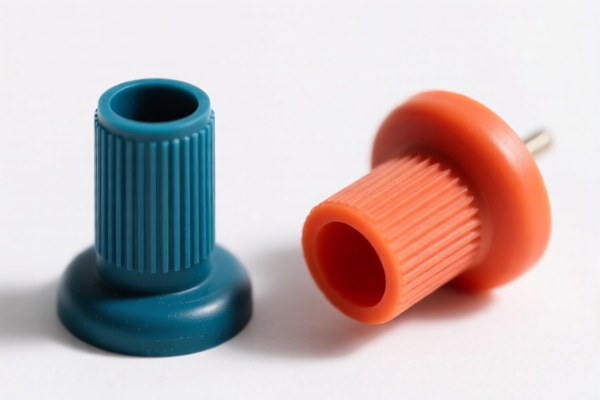
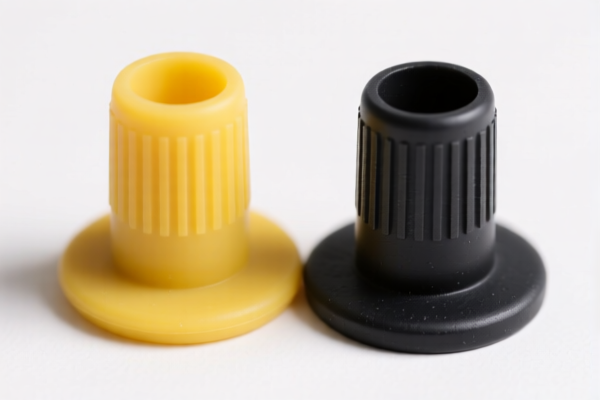
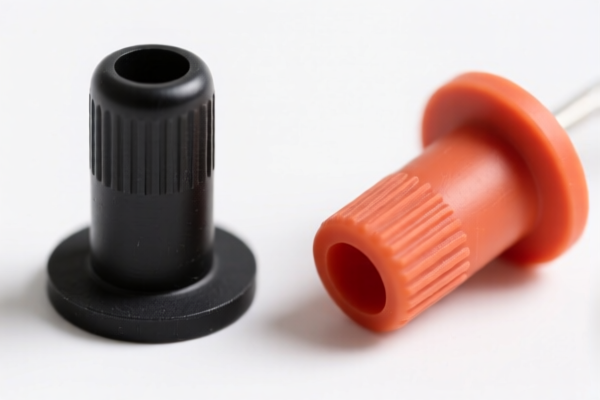
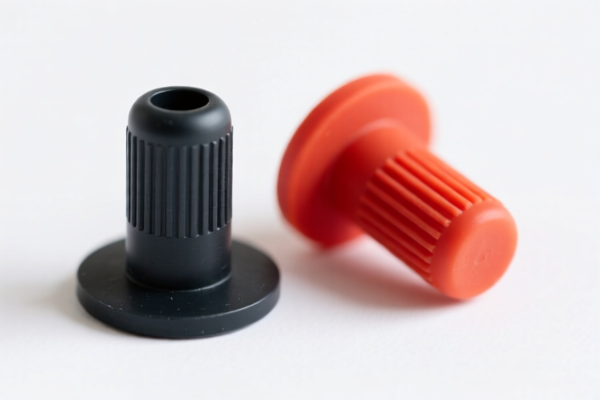
AI分析
🛑 Rubber Plugs (Rubber Stoppers) – HS Code & Duty Analysis | 2026 Customs Clearance Guide
🌐 HS Code Reference & Clearance Guide | Latest Tariff Breakdown for Rubber Seals | Professional Import Strategy
📌 I. Product Definition: What Exactly is a "Rubber Plug"?
A "Rubber Plug" (or Rubber Stoper/Seal) is a versatile rubber component used primarily for sealing, closing, or protecting openings in containers, tubes, pipes, or machinery. In international trade, the correct HS Code depends entirely on the material composition and specific form/usage of the plug.
⚠️ Key Distinction:
- Is it made of Natural Rubber or Synthetic/Vulcanized Rubber?
- Is it a simple stopper or a specialized gasket/seal?
- Does it have specific industrial applications (e.g., medical, automotive)?Mistakes in classification can lead to duty rates ranging from 20.2% to 38.5%+, significantly impacting profitability.
📦 II. HS Code Classification Matrix (Based on Provided Data)
| HS Code | Product Summary | Key Characteristics | Total Tax Rate* |
|---|---|---|---|
3926.90.45.10 |
Rubber Tube Stopper | Material: Rubber; Use: Sealing/Gaskets | 38.5% |
4016.99.15.00 |
Rubber Tube Stopper | Material: Rubber; Form: Plug/Stopper | 20.2% |
4016.99.05.00 |
Rubber Product | Material: Vulcanized Rubber; Form: Plug; General Use | 20.9% |
4016.93.50.10 |
Natural Rubber Plug | Material: Natural Rubber; Form: Seal | 37.5% |
4016.99.15.00 |
Natural Rubber Plug | Material: Natural Rubber; Form: Plug | 20.2% |
*Total Tax Rates include Base, Additional, and Section 301/IEEPA tariffs.
💰 III. Detailed Tariff Breakdown & Legal Basis
✅ Applicable Market: United States (US)
✅ Origin: China (CN)
✅ Effective Date: Tariffs applied based on 2025-2026 trade regulations (Section 301 & IEEPA)
🎯 1. 3926.90.45.10 – Rubber Seals/Gaskets
Why this Code?
This classification is used when the rubber plug is primarily categorized under "Other articles of plastics" or specific sealing materials where the rubber is treated as a gasket-like article.
Note: Despite the name "Rubber," some regulatory frameworks may categorize certain rubber compositions under Chapter 39 if they meet specific plastic-like criteria or if the product is defined as a "gasket" rather than a raw rubber article.
| Item | Details |
|---|---|
| Base Tariff | 3.5% |
| Section 301 Additional Tariff | 25.0% |
| IEEPA Additional Tariff | 10.0% |
| Total Effective Rate | 38.5% |
| Calculation | CIF Value × 38.5% |
| De Minimis Exemption | ❌ Not Eligible |
| Legal Path | Base Duty + USITC Footnote 9903.88.01 + IEEPA Proclamation |
📌 Warning: This is the highest tax bracket in the provided data. Avoid this code unless your product is explicitly defined as a gasket/seal in a plastic-like format.
🎯 2. 4016.99.15.00 – Rubber Plugs (Most Common & Cost-Effective)
Why this Code?
This is the preferred classification for standard rubber tube stoppers, whether made from synthetic rubber or natural rubber, provided they are specifically identified as "plugs" or "stoppers" and not general gaskets.
| Item | Details |
|---|---|
| Base Tariff | 2.7% |
| Section 301 Additional Tariff | 7.5% |
| IEEPA Additional Tariff | 10.0% |
| Total Effective Rate | 20.2% |
| Calculation | CIF Value × 20.2% |
| De Minimis Exemption | ❌ Not Eligible |
| Legal Path | Chapter 40 (Rubber) → Heading 4016 → Subheading 99.15 |
📌 Strategy: If your product is a simple rubber plug for tubing, always aim for this HS Code. It saves you 18.3% compared to
3926.90.45.10.
🎯 3. 4016.99.05.00 – Vulcanized Rubber Plugs (General)
Why this Code?
Used for rubber plugs that are vulcanized (a chemical process that hardens rubber) and fall under "Other rubber articles." This is a broader category than specific plug codes.
| Item | Details |
|---|---|
| Base Tariff | 3.4% |
| Section 301 Additional Tariff | 7.5% |
| IEEPA Additional Tariff | 10.0% |
| Total Effective Rate | 20.9% |
| Calculation | CIF Value × 20.9% |
| De Minimis Exemption | ❌ Not Eligible |
| Legal Path | Chapter 40 → 4016.99.05 |
📌 Note: Slightly higher than
4016.99.15.00. Use only if the specific "plug" subheading is not applicable.
🎯 4. 4016.93.50.10 – Natural Rubber Seals (High Risk)
Why this Code?
This code applies specifically to Natural Rubber articles used as seals. Natural rubber often faces stricter scrutiny or different base rates due to agricultural trade policies.
| Item | Details |
|---|---|
| Base Tariff | 2.5% |
| Section 301 Additional Tariff | 25.0% |
| IEEPA Additional Tariff | 10.0% |
| Total Effective Rate | 37.5% |
| Calculation | CIF Value × 37.5% |
| De Minimis Exemption | ❌ Not Eligible |
| Legal Path | Chapter 40 → 4016.93 (Natural Rubber) |
📌 Critical: If your product is Natural Rubber, do NOT use this code unless it is explicitly a "seal" and not a "plug." Using
4016.99.15.00for natural rubber plugs can save you 17.3% (37.5% vs 20.2%).
🛠️ IV. Customs Clearance Advice & Best Practices
✅ 1. Documentation Checklist (Essential for Clearance)
| Document | Requirement | Reason |
|---|---|---|
| Commercial Invoice | Must specify "Rubber Plug" or "Rubber Stoper" | Avoids vague descriptions like "Rubber Part" |
| Product Description | Detail: Material (Natural/Synthetic), Form (Plug/Seal), Use (Tube/Container) | Helps CBP determine correct HS Code |
| Material Safety Data Sheet (MSDS) | Required for all rubber products | Confirms chemical composition |
| Certificate of Origin (CO) | If claiming FTZ benefits or avoiding certain tariffs | Critical for origin determination |
| Photo of Product | Clear image showing the plug shape and labeling | Prevents misclassification disputes |
✅ 2. Strategic Classification Tips
🔥 "Plug vs. Seal: The 18% Difference!"
| Scenario | Recommended HS Code | Duty Rate | Savings |
|---|---|---|---|
| Standard Rubber Tube Stopper (Synthetic) | 4016.99.15.00 |
20.2% | Baseline |
| Same Product Misclassified as "Gasket" | 3926.90.45.10 |
38.5% | ❌ Loss of 18.3% |
| Natural Rubber Plug (Correctly Declared as Plug) | 4016.99.15.00 |
20.2% | Baseline |
| Natural Rubber Plug (Misclassified as "Seal") | 4016.93.50.10 |
37.5% | ❌ Loss of 17.3% |
📌 Golden Rule:
- Use "Rubber Plug" or "Rubber Stoper" in your commercial invoice.
- Avoid words like "Gasket," "Seal," or "O-ring" unless it is specifically designed for static sealing under pressure.
- Explicitly state "Natural Rubber" or "Vulcanized Rubber" to match the HS Code description.
✅ 3. Common Pitfalls to Avoid
❌ Error 1: Calling a rubber plug a "Seal" or "Gasket"
👉 Consequence: CBP may assign 3926.90.45.10 or 4016.93.50.10, leading to 37.5%-38.5% duty instead of 20.2%.
❌ Error 2: Failing to distinguish between Natural and Synthetic Rubber
👉 Consequence: Misdeclaration can lead to audits, fines, or retrospective duty adjustments.
❌ Error 3: Using vague terms like "Rubber Part"
👉 Consequence: Customs will hold the shipment for classification review, causing delays and potential demurrage fees.
🌍 V. Global Market Comparison (2026)
| Market | Recommended HS Code | Estimated Duty (China Origin) | Notes |
|---|---|---|---|
| 🇺🇸 USA | 4016.99.15.00 |
20.2% | Includes Section 301 + IEEPA |
| 🇨🇳 China | 4016.99.15.00 |
~5-10% | No additional trade tariffs |
| 🇪🇺 EU | 4016.99.90 |
~0-6.5% | No additional trade tariffs (if non-CE restricted) |
| 🇲🇽 Mexico | 4016.99.15 |
0% (Under USMCA) | Must meet Rules of Origin |
📌 Conclusion:
- USA remains the most challenging market due to Section 301 and IEEPA tariffs.
- Cost Optimization: Ensure correct classification to stay at 20.2% instead of 38.5%.
- Supply Chain: Consider sourcing from Mexico or Vietnam to avoid US tariffs if volume is high.
📌 VI. Summary & Action Plan
- Identify Your Product: Is it a Plug or a Seal? Is it Natural or Synthetic?
- Choose the Right HS Code:
- ✅ Best Case:
4016.99.15.00(20.2% duty) - ❌ Avoid:
3926.90.45.10(38.5% duty) and4016.93.50.10(37.5% duty) - Prepare Documents: Clear description, MSDS, and photos.
- Consult a Customs Broker: For high-volume imports, apply for a Binding Ruling from CBP to lock in the 20.2% rate.
🎯 Final Tip:
"Plug it right, save 18% light!"
Don't let misclassification eat your margins.
Use4016.99.15.00for standard rubber plugs.
Avoid3926.90.45.10unless it's a specialized gasket.
✨ Precision in Classification = Profit in Your Pocket
💼 Stay Compliant, Stay Competitive.
用户评价
关于 HS 编码归类
协调制度(HS)是由世界海关组织(WCO)制定的国际贸易商品分类标准。全球 200 多个国家采用 HS 系统作为海关关税、贸易统计和进出口监管的基础。
每个 HS 编码遵循以下层级结构:
- 章(2 位)——商品大类(例如:第 84 章:机器和机械设备)
- 品目(4 位)——章内的更具体分类
- 子目(6 位)——国际通用细分,所有 WCO 成员国统一使用
- 本国细分(8-10 位)——各国自行扩展的细分编码,如美国 HTSUS 10 位编码
正确的 HS 编码归类对于顺利通关、准确缴纳关税和遵守贸易法规至关重要。错误归类可能导致海关延误、多缴关税或罚款。
从CN进口到US时,适用的关税税率可能包括:
- 最惠国(MFN)税率——适用于 WTO 成员国的标准关税税率
- 普通税率——适用于无贸易协定国家
- 贸易救济关税——附加关税,如 301 条款(反倾销)、232 条款(国家安全)或反补贴税
本页内容仅供参考。如需正式归类,请咨询当地海关或持牌报关代理。