Rubber Plug
CN → US| HS Code | Tariff Rate | Origin | Destination | Doc |
|---|---|---|---|---|
| 3926904510 | 38.5% | CN | US | Official Doc |
| 4016991500 | 20.2% | CN | US | Official Doc |
| 4016990500 | 20.9% | CN | US | Official Doc |
| 4016935010 | 37.5% | CN | US | Official Doc |
| 4016991500 | 20.2% | CN | US | Official Doc |
Product Images
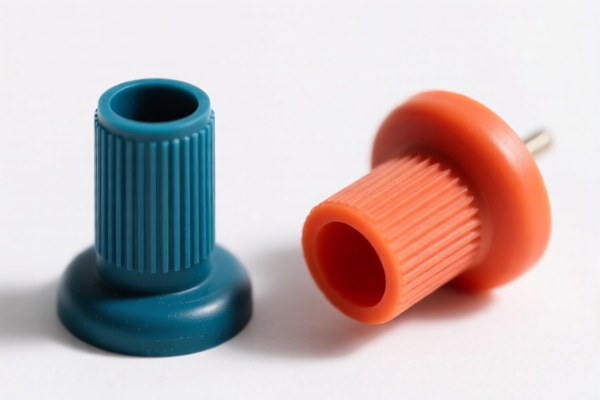
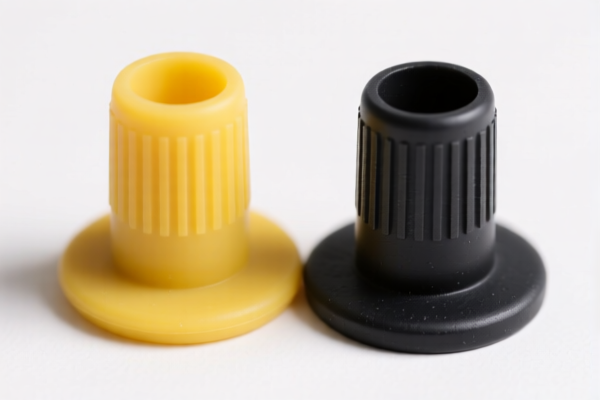
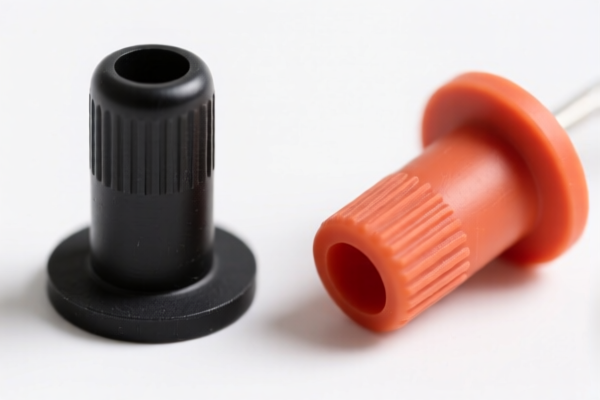
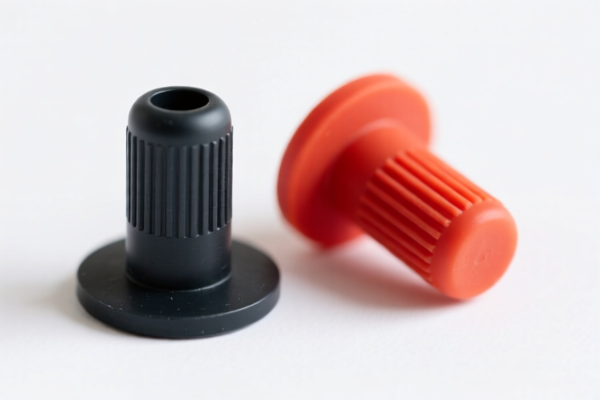
AI Analysis
🛑 Rubber Plugs (Rubber Stoppers) – HS Code & Duty Analysis | 2026 Customs Clearance Guide
🌐 HS Code Reference & Clearance Guide | Latest Tariff Breakdown for Rubber Seals | Professional Import Strategy
📌 I. Product Definition: What Exactly is a "Rubber Plug"?
A "Rubber Plug" (or Rubber Stoper/Seal) is a versatile rubber component used primarily for sealing, closing, or protecting openings in containers, tubes, pipes, or machinery. In international trade, the correct HS Code depends entirely on the material composition and specific form/usage of the plug.
⚠️ Key Distinction:
- Is it made of Natural Rubber or Synthetic/Vulcanized Rubber?
- Is it a simple stopper or a specialized gasket/seal?
- Does it have specific industrial applications (e.g., medical, automotive)?Mistakes in classification can lead to duty rates ranging from 20.2% to 38.5%+, significantly impacting profitability.
📦 II. HS Code Classification Matrix (Based on Provided Data)
| HS Code | Product Summary | Key Characteristics | Total Tax Rate* |
|---|---|---|---|
3926.90.45.10 |
Rubber Tube Stopper | Material: Rubber; Use: Sealing/Gaskets | 38.5% |
4016.99.15.00 |
Rubber Tube Stopper | Material: Rubber; Form: Plug/Stopper | 20.2% |
4016.99.05.00 |
Rubber Product | Material: Vulcanized Rubber; Form: Plug; General Use | 20.9% |
4016.93.50.10 |
Natural Rubber Plug | Material: Natural Rubber; Form: Seal | 37.5% |
4016.99.15.00 |
Natural Rubber Plug | Material: Natural Rubber; Form: Plug | 20.2% |
*Total Tax Rates include Base, Additional, and Section 301/IEEPA tariffs.
💰 III. Detailed Tariff Breakdown & Legal Basis
✅ Applicable Market: United States (US)
✅ Origin: China (CN)
✅ Effective Date: Tariffs applied based on 2025-2026 trade regulations (Section 301 & IEEPA)
🎯 1. 3926.90.45.10 – Rubber Seals/Gaskets
Why this Code?
This classification is used when the rubber plug is primarily categorized under "Other articles of plastics" or specific sealing materials where the rubber is treated as a gasket-like article.
Note: Despite the name "Rubber," some regulatory frameworks may categorize certain rubber compositions under Chapter 39 if they meet specific plastic-like criteria or if the product is defined as a "gasket" rather than a raw rubber article.
| Item | Details |
|---|---|
| Base Tariff | 3.5% |
| Section 301 Additional Tariff | 25.0% |
| IEEPA Additional Tariff | 10.0% |
| Total Effective Rate | 38.5% |
| Calculation | CIF Value × 38.5% |
| De Minimis Exemption | ❌ Not Eligible |
| Legal Path | Base Duty + USITC Footnote 9903.88.01 + IEEPA Proclamation |
📌 Warning: This is the highest tax bracket in the provided data. Avoid this code unless your product is explicitly defined as a gasket/seal in a plastic-like format.
🎯 2. 4016.99.15.00 – Rubber Plugs (Most Common & Cost-Effective)
Why this Code?
This is the preferred classification for standard rubber tube stoppers, whether made from synthetic rubber or natural rubber, provided they are specifically identified as "plugs" or "stoppers" and not general gaskets.
| Item | Details |
|---|---|
| Base Tariff | 2.7% |
| Section 301 Additional Tariff | 7.5% |
| IEEPA Additional Tariff | 10.0% |
| Total Effective Rate | 20.2% |
| Calculation | CIF Value × 20.2% |
| De Minimis Exemption | ❌ Not Eligible |
| Legal Path | Chapter 40 (Rubber) → Heading 4016 → Subheading 99.15 |
📌 Strategy: If your product is a simple rubber plug for tubing, always aim for this HS Code. It saves you 18.3% compared to
3926.90.45.10.
🎯 3. 4016.99.05.00 – Vulcanized Rubber Plugs (General)
Why this Code?
Used for rubber plugs that are vulcanized (a chemical process that hardens rubber) and fall under "Other rubber articles." This is a broader category than specific plug codes.
| Item | Details |
|---|---|
| Base Tariff | 3.4% |
| Section 301 Additional Tariff | 7.5% |
| IEEPA Additional Tariff | 10.0% |
| Total Effective Rate | 20.9% |
| Calculation | CIF Value × 20.9% |
| De Minimis Exemption | ❌ Not Eligible |
| Legal Path | Chapter 40 → 4016.99.05 |
📌 Note: Slightly higher than
4016.99.15.00. Use only if the specific "plug" subheading is not applicable.
🎯 4. 4016.93.50.10 – Natural Rubber Seals (High Risk)
Why this Code?
This code applies specifically to Natural Rubber articles used as seals. Natural rubber often faces stricter scrutiny or different base rates due to agricultural trade policies.
| Item | Details |
|---|---|
| Base Tariff | 2.5% |
| Section 301 Additional Tariff | 25.0% |
| IEEPA Additional Tariff | 10.0% |
| Total Effective Rate | 37.5% |
| Calculation | CIF Value × 37.5% |
| De Minimis Exemption | ❌ Not Eligible |
| Legal Path | Chapter 40 → 4016.93 (Natural Rubber) |
📌 Critical: If your product is Natural Rubber, do NOT use this code unless it is explicitly a "seal" and not a "plug." Using
4016.99.15.00for natural rubber plugs can save you 17.3% (37.5% vs 20.2%).
🛠️ IV. Customs Clearance Advice & Best Practices
✅ 1. Documentation Checklist (Essential for Clearance)
| Document | Requirement | Reason |
|---|---|---|
| Commercial Invoice | Must specify "Rubber Plug" or "Rubber Stoper" | Avoids vague descriptions like "Rubber Part" |
| Product Description | Detail: Material (Natural/Synthetic), Form (Plug/Seal), Use (Tube/Container) | Helps CBP determine correct HS Code |
| Material Safety Data Sheet (MSDS) | Required for all rubber products | Confirms chemical composition |
| Certificate of Origin (CO) | If claiming FTZ benefits or avoiding certain tariffs | Critical for origin determination |
| Photo of Product | Clear image showing the plug shape and labeling | Prevents misclassification disputes |
✅ 2. Strategic Classification Tips
🔥 "Plug vs. Seal: The 18% Difference!"
| Scenario | Recommended HS Code | Duty Rate | Savings |
|---|---|---|---|
| Standard Rubber Tube Stopper (Synthetic) | 4016.99.15.00 |
20.2% | Baseline |
| Same Product Misclassified as "Gasket" | 3926.90.45.10 |
38.5% | ❌ Loss of 18.3% |
| Natural Rubber Plug (Correctly Declared as Plug) | 4016.99.15.00 |
20.2% | Baseline |
| Natural Rubber Plug (Misclassified as "Seal") | 4016.93.50.10 |
37.5% | ❌ Loss of 17.3% |
📌 Golden Rule:
- Use "Rubber Plug" or "Rubber Stoper" in your commercial invoice.
- Avoid words like "Gasket," "Seal," or "O-ring" unless it is specifically designed for static sealing under pressure.
- Explicitly state "Natural Rubber" or "Vulcanized Rubber" to match the HS Code description.
✅ 3. Common Pitfalls to Avoid
❌ Error 1: Calling a rubber plug a "Seal" or "Gasket"
👉 Consequence: CBP may assign 3926.90.45.10 or 4016.93.50.10, leading to 37.5%-38.5% duty instead of 20.2%.
❌ Error 2: Failing to distinguish between Natural and Synthetic Rubber
👉 Consequence: Misdeclaration can lead to audits, fines, or retrospective duty adjustments.
❌ Error 3: Using vague terms like "Rubber Part"
👉 Consequence: Customs will hold the shipment for classification review, causing delays and potential demurrage fees.
🌍 V. Global Market Comparison (2026)
| Market | Recommended HS Code | Estimated Duty (China Origin) | Notes |
|---|---|---|---|
| 🇺🇸 USA | 4016.99.15.00 |
20.2% | Includes Section 301 + IEEPA |
| 🇨🇳 China | 4016.99.15.00 |
~5-10% | No additional trade tariffs |
| 🇪🇺 EU | 4016.99.90 |
~0-6.5% | No additional trade tariffs (if non-CE restricted) |
| 🇲🇽 Mexico | 4016.99.15 |
0% (Under USMCA) | Must meet Rules of Origin |
📌 Conclusion:
- USA remains the most challenging market due to Section 301 and IEEPA tariffs.
- Cost Optimization: Ensure correct classification to stay at 20.2% instead of 38.5%.
- Supply Chain: Consider sourcing from Mexico or Vietnam to avoid US tariffs if volume is high.
📌 VI. Summary & Action Plan
- Identify Your Product: Is it a Plug or a Seal? Is it Natural or Synthetic?
- Choose the Right HS Code:
- ✅ Best Case:
4016.99.15.00(20.2% duty) - ❌ Avoid:
3926.90.45.10(38.5% duty) and4016.93.50.10(37.5% duty) - Prepare Documents: Clear description, MSDS, and photos.
- Consult a Customs Broker: For high-volume imports, apply for a Binding Ruling from CBP to lock in the 20.2% rate.
🎯 Final Tip:
"Plug it right, save 18% light!"
Don't let misclassification eat your margins.
Use4016.99.15.00for standard rubber plugs.
Avoid3926.90.45.10unless it's a specialized gasket.
✨ Precision in Classification = Profit in Your Pocket
💼 Stay Compliant, Stay Competitive.
Customer Reviews
About HS Code Classification
The Harmonized System (HS) is an internationally standardized nomenclature developed by the World Customs Organization (WCO) to classify traded products. Over 200 countries use the HS system as the basis for customs tariffs, trade statistics, and import/export regulations.
Each HS code follows a hierarchical structure:
- Chapter (2 digits) — Broad category of goods (e.g., Chapter 84: Machinery and Mechanical Appliances)
- Heading (4 digits) — More specific grouping within the chapter
- Subheading (6 digits) — Internationally standardized breakdown, used by all WCO member countries
- National subdivisions (8-10 digits) — Country-specific extensions for further classification, such as US HTSUS 10-digit codes
Correct HS code classification is essential for smooth customs clearance, accurate duty payment, and compliance with trade regulations. Misclassification can lead to customs delays, overpayment of duties, or penalties.
When importing from CN to US, the applicable tariff rates may include:
- Most-Favored-Nation (MFN) rate — The standard duty rate applied to WTO members
- General rate — Applied to countries without trade agreements
- Trade remedy duties — Additional tariffs such as Section 301 (anti-dumping), Section 232 (national security), or countervailing duties
The information provided on this page is for reference purposes only. For official classification, please consult with your local customs authority or a licensed customs broker.