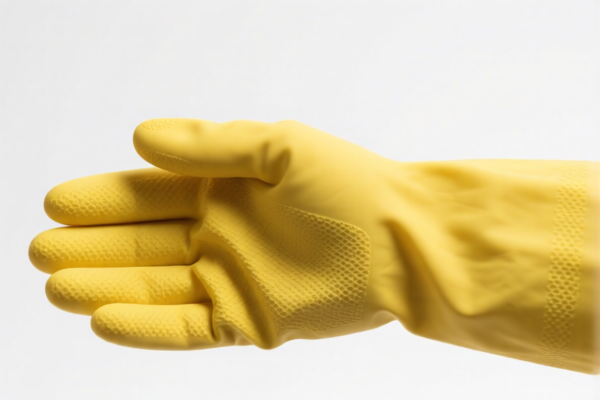
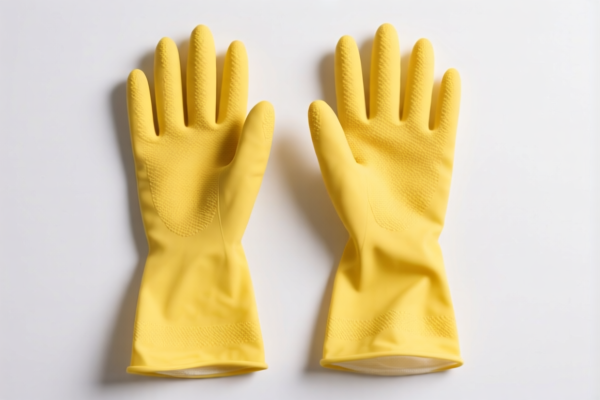
Rubber Short Sleeve Gloves
CN → US| HS编码 | 关税税率 | 原产国 | 目的国 | 文档 |
|---|---|---|---|---|
| 6116109500 | 24.5% | CN | US | 官方文档 |
| 3926204050 | 16.5% | CN | US | 官方文档 |
| 4015191150 | 38.0% | CN | US | 官方文档 |
| 6116106500 | 24.5% | CN | US | 官方文档 |
| 4015195100 | 49.0% | CN | US | 官方文档 |
商品图片


AI分析
🧤 Rubber Short Sleeve Gloves (Agricultural & Industrial Use)
🌐 HS Code Reference & Clearance Guide | 2026 Latest Tariff Analysis | Professional-Level Compliance Strategy
📌 I. Product Definition & Classification: Do You Really Understand "Rubber Gloves"?
Rubber short sleeve gloves are essential protective equipment in agriculture, gardening, and industrial cleaning. In international trade, the classification hinges on two critical factors: Material Composition (Natural Rubber vs. Synthetic/Plastic) and Construction Method (Knitted/Coated vs. Solid/Vulcanized).
1. Knitted/Coated Gloves (Textile Base + Rubber Coating):
Gloves made of knitted or crocheted fabric (like cotton or synthetic yarn) that are dipped, immersed, or coated with rubber. These fall under Chapter 61 (Knitted/Crocheted Apparel).
2. Solid/Vulcanized Rubber Gloves (Non-Knitted):
Gloves made entirely of vulcanized rubber without a textile base, forming a continuous protective layer. These fall under Chapter 40 (Rubber and Articles Thereof).
⚠️ Key Distinction Point:
- If the glove has a knitted fabric inside and a rubber coating outside →归类 to Chapter 61.
- If the glove is solid rubber (like a dive glove or heavy-duty industrial glove) with no fabric base → 归类 to Chapter 40.
- Misclassification Risk: Declaring solid rubber gloves as "knitted" can lead to severe penalties.
📦 II. HS Code Classification Details (2026 Latest Tariff Authority Comparison)
Based on the provided data, here are the 5 possible classifications for Rubber Short Sleeve Gloves, ranging from agricultural use to industrial apparel.
| HS Code | Product Description | Applicable Scenario | Tax Rate (Total) |
|---|---|---|---|
| 6116.10.95.00 | Rubber-coated gloves, knitted/crocheted, other than agricultural or medical | General purpose, light industrial, home cleaning | 24.5% |
| 3926.20.40.50 | Articles of rubber/plastics, gloves, classified under plastics due to functional similarity | Agricultural use, flexible plastic/rubber blend | 16.5% |
| 4015.19.11.50 | Vulcanized rubber garments & accessories, other (short sleeve) | Heavy-duty industrial, vulcanized rubber construction | 38.0% |
| 6116.10.65.00 | Rubber-immersed or coated gloves, knitted/crocheted | Agricultural use, typical gardening gloves | 24.5% |
| 4015.19.51.00 | Vulcanized rubber garments & accessories, other (other than short sleeve) | Note: Description says "other than short sleeve" but listed for rubber gloves | 49.0% |
🔍 Critical Note on Data Provided:
- 3926.20.40.50 is unique: It classifies rubber gloves under Plastics due to "high consistency with plastic products" in certain usage scenarios, resulting in the lowest total tax (16.5%).
- 4015.19.51.00 has the highest tax (49.0%). Ensure the glove is indeed "not short sleeve" if this code is selected, or risk misclassification.
- 6116.10.65.00 and 6116.10.95.00 are both 24.5% but differ in specific sub-category details (e.g., agricultural vs. other).
💰 III. 2026 Latest Tariff Rate Breakdown (Including Add-Ons & Policy Surcharges)
✅ Applicable Country: United States (US)
✅ Country of Origin: China (CN)
✅ Effective Time: Current rates apply (Section 301 & IEEPA)
🎯 1. 3926.20.40.50 — Lowest Tax Option (Plastics Category)
| Item | Detail |
|---|---|
| Base Tariff | 6.5% |
| Section 301 Add-On | 0.0% |
| IEEPA (Section 122) Add-On | 10% |
| Total Tariff | 16.5% |
| Calculation | CIF Value × 16.5% |
| De Minimis Eligibility | ❌ No (Deny de minimis) |
| Legal Basis | USITC:3926.20.40.50 → IEEPA:122 |
📌 Explanation:
- This code benefits from 0% Section 301 tax because it’s classified under plastics (Chapter 39) rather than rubber/textiles in this specific sub-heading.
- Only the 10% IEEPA surcharge applies.
- Strategy: If your gloves can be justified as "plastic-like" or flexible plastic-rubber blends for agricultural use, this is the most cost-effective classification.
🎯 2. 6116.10.65.00 & 6116.10.95.00 — Standard Knitted/Rubber Coated (24.5%)
| Item | Detail |
|---|---|
| Base Tariff | 7.0% |
| Section 301 Add-On | 7.5% |
| IEEPA (Section 122) Add-On | 10% |
| Total Tariff | 24.5% |
| Calculation | CIF Value × 24.5% |
| De Minimis Eligibility | ❌ No (Deny de minimis) |
| Legal Basis | USITC:6116.10.65.00/95.00 → Section 301 → IEEPA:122 |
📌 Explanation:
- These codes fall under Chapter 61 (Knitted/Crocheted).
- Both Section 301 (7.5%) and IEEPA (10%) apply.
- Difference:6116.10.65.00is typically for agricultural gloves, while6116.10.95.00is for other rubber-coated gloves.
- Strategy: If gloves are knitted with rubber coating, this is the standard classification. Ensure accurate description to avoid disputes.
🎯 3. 4015.19.11.50 — Vulcanized Rubber Industrial Gloves (38.0%)
| Item | Detail |
|---|---|
| Base Tariff | 3.0% |
| Section 301 Add-On | 25.0% |
| IEEPA (Section 122) Add-On | 10% |
| Total Tariff | 38.0% |
| Calculation | CIF Value × 38.0% |
| De Minimis Eligibility | ❌ No (Deny de minimis) |
| Legal Basis | USITC:4015.19.11.50 → Section 301 → IEEPA:122 |
📌 Explanation:
- Falls under Chapter 40 (Rubber Articles).
- High Section 301 tax (25%) due to rubber classification.
- Strategy: Only use if gloves are solid vulcanized rubber (no fabric base). High tax risk.
🎯 4. 4015.19.51.00 — Highest Tax Bracket (49.0%)
| Item | Detail |
|---|---|
| Base Tariff | 14.0% |
| Section 301 Add-On | 25.0% |
| IEEPA (Section 122) Add-On | 10% |
| Total Tariff | 49.0% |
| Calculation | CIF Value × 49.0% |
| De Minimis Eligibility | ❌ No (Deny de minimis) |
| Legal Basis | USITC:4015.19.51.00 → Section 301 → IEEPA:122 |
📌 Warning:
- This is the highest tax rate.
- The summary states "other than short sleeve." If your product is short sleeve, misclassifying here could lead to overpayment or audits.
- Strategy: Avoid unless the product clearly falls outside "short sleeve" definition (e.g., elbow-length or long cuff).
🛠️ IV. Customs Clearance Practical Advice (Real-World Pitfall Guide)
✅ 1. Documentation Checklist (Non-Negotiable)
| Document | Required | Explanation |
|---|---|---|
| ✅ Product Specification Sheet | ✔️ | Must detail: Material (Natural/Synthetic Rubber), Liner (Knitted/None), Length (Short Sleeve), Intended Use (Agricultural/Industrial). |
| ✅ Cross-Section Photo | ✔️ | Essential to prove knitted fabric inside vs. solid rubber. This determines Chapter 61 vs. Chapter 40. |
| ✅ Commercial Invoice | ✔️ | Must state: "Rubber Short Sleeve Gloves, Agricultural Use, Model XYZ, HS Code: [Selected]" |
| ✅ Material Test Report | ✔️ | SGS/Intertek report confirming rubber composition (e.g., Natural Latex, Nitrile, PVC). |
| ✅ Packaging Photos | ✔️ | Show labels, size, and branding. |
✅ 2. Declaration Tips (Key Mantra)
🔥 “Material Defines Chapter, Structure Defines Code, Use Defines Rate!”
| Scenario | Correct HS Code | Wrong Code | Consequence |
|---|---|---|---|
| Knitted glove + Rubber coating | 6116.10.65.00 (24.5%) |
4015.19.11.50 (38.0%) |
Overpay 13.5% + potential audit |
| Solid Vulcanized Rubber | 4015.19.11.50 (38.0%) |
6116.10.65.00 (24.5%) |
Under-declaration risk, penalties |
| Agricultural Flexible Glove | 3926.20.40.50 (16.5%) |
6116.10.95.00 (24.5%) |
Overpay 8% if justification is strong |
| Short Sleeve vs. Long | Match sleeve length | 4015.19.51.00 (49.0%) |
Critical Error: 49% applies to non-short sleeve; misclassification leads to huge overpayment or penalties if understated. |
✅ 3. Special Case Handling
| Situation | Recommendation |
|---|---|
| OEM Custom Gloves | Provide design files showing exact construction (knit vs. solid). |
| Mixed Packaging | Declare separately if HS codes differ (e.g., gloves + cleaning brushes). Do not bundle unless same HS code. |
| Plastic-Rubber Blend | If >50% plastic by weight/value, argue for 3926.20.40.50 (16.5%) with material report. |
| Agricultural vs. General Use | Explicitly state "For Agricultural Use" to support 6116.10.65.00 or 3926.20.40.50. |
🌍 V. Global Market Comparison (2026 Latest)
| Country/Region | Recommended HS Code | Tariff | Certification | Notes |
|---|---|---|---|---|
| 🇺🇸 USA | 3926.20.40.50 |
16.5% | None specific | Lowest tax for flexible gloves. |
| 🇺🇸 USA | 6116.10.65.00 |
24.5% | None specific | Standard for knitted/rubber. |
| 🇺🇸 USA | 4015.19.11.50 |
38.0% | None specific | High tax for solid rubber. |
| 🇨🇳 China | 4015.19.11.50 |
~6-10% | None | Lower base tariffs. |
| 🇪🇺 EU | 4015.19 |
0-4% | REACH | No Section 301/IEEPA. |
| 🇬🇧 UK | 4015.19 |
0-4% | UKCA | Post-Brexit alignment with EU. |
📌 Conclusion:
- USA has the highest compliance cost due to IEEPA and Section 301.
- Optimize for3926.20.40.50(16.5%) if the product allows (plastic-like flexible gloves).
- Avoid4015.19.51.00(49%) unless the product is definitely not short sleeve.
📌 VI. Common Mistakes & Pitfall Guide (Lessons Learned)
❌ Mistake 1: Declaring knitted gloves as solid rubber (4015.19.11.50)
👉 Consequence: 38% tax instead of 24.5% or 16.5%. Overpay 13.5%+.
❌ Mistake 2: Not specifying "Agricultural Use"
👉 Consequence: May be classified as 6116.10.95.00 (24.5%) instead of 3926.20.40.50 (16.5%) if flexibility allows. Overpay 8%.
❌ Mistake 3: Misclassifying Short Sleeve as Long Sleeve (4015.19.51.00)
👉 Consequence: 49% tax instead of 24.5-38%. Massive overpayment.
❌ Mistake 4: Using "Rubber Gloves" as a vague description
👉 Consequence: CBP (Customs Border Protection) will request detailed specs, causing delays or auto-assessment at highest rate.
✅ Correct Practice:
"Short Sleeve Rubber Coated Cotton Gloves, Agricultural Use, Natural Latex, Knitted Liner, Model ABC"
🎯 VII. Conclusion: Precise Classification, Cost Savings, Smooth Clearance!
🎯 Remember the Mantra:
🔹 "Knitted = Chapter 61 (24.5%); Solid = Chapter 40 (38-49%); Plastic-like = Chapter 39 (16.5%)!"
🔹 "Short Sleeve is Key! Don't Pay 49% for Short Sleeves!"
📌 Pro Tip:
- If your gloves are made in Vietnam, Thailand, or Malaysia, you may qualify for Section 301 exemptions or lower IEEPA rates.
- Apply for Advance Ruling with CBP if unsure about "Knitted vs. Solid" classification.
📣 Immediate Action:
📞 Consult with a licensed customs broker.
📦 Provide cross-section photos and material reports.
🚀 Optimize for 16.5% (3926.20.40.50) if possible!
✨ Professional Clearance Starts with Precise Classification!
💼 Every Cent Saved is Profit Made!
用户评价
关于 HS 编码归类
协调制度(HS)是由世界海关组织(WCO)制定的国际贸易商品分类标准。全球 200 多个国家采用 HS 系统作为海关关税、贸易统计和进出口监管的基础。
每个 HS 编码遵循以下层级结构:
- 章(2 位)——商品大类(例如:第 84 章:机器和机械设备)
- 品目(4 位)——章内的更具体分类
- 子目(6 位)——国际通用细分,所有 WCO 成员国统一使用
- 本国细分(8-10 位)——各国自行扩展的细分编码,如美国 HTSUS 10 位编码
正确的 HS 编码归类对于顺利通关、准确缴纳关税和遵守贸易法规至关重要。错误归类可能导致海关延误、多缴关税或罚款。
从CN进口到US时,适用的关税税率可能包括:
- 最惠国(MFN)税率——适用于 WTO 成员国的标准关税税率
- 普通税率——适用于无贸易协定国家
- 贸易救济关税——附加关税,如 301 条款(反倾销)、232 条款(国家安全)或反补贴税
本页内容仅供参考。如需正式归类,请咨询当地海关或持牌报关代理。