Rubber Short Sleeve Gloves
CN → US| HS Code | Tariff Rate | Origin | Destination | Doc |
|---|---|---|---|---|
| 6116109500 | 24.5% | CN | US | Official Doc |
| 3926204050 | 16.5% | CN | US | Official Doc |
| 4015191150 | 38.0% | CN | US | Official Doc |
| 6116106500 | 24.5% | CN | US | Official Doc |
| 4015195100 | 49.0% | CN | US | Official Doc |
Product Images
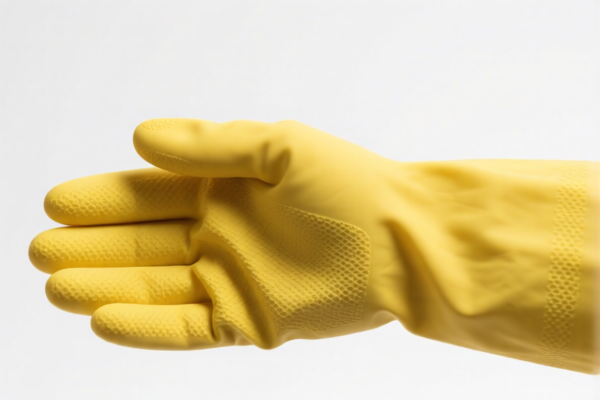



AI Analysis
🧤 Rubber Short Sleeve Gloves (Agricultural & Industrial Use)
🌐 HS Code Reference & Clearance Guide | 2026 Latest Tariff Analysis | Professional-Level Compliance Strategy
📌 I. Product Definition & Classification: Do You Really Understand "Rubber Gloves"?
Rubber short sleeve gloves are essential protective equipment in agriculture, gardening, and industrial cleaning. In international trade, the classification hinges on two critical factors: Material Composition (Natural Rubber vs. Synthetic/Plastic) and Construction Method (Knitted/Coated vs. Solid/Vulcanized).
1. Knitted/Coated Gloves (Textile Base + Rubber Coating):
Gloves made of knitted or crocheted fabric (like cotton or synthetic yarn) that are dipped, immersed, or coated with rubber. These fall under Chapter 61 (Knitted/Crocheted Apparel).
2. Solid/Vulcanized Rubber Gloves (Non-Knitted):
Gloves made entirely of vulcanized rubber without a textile base, forming a continuous protective layer. These fall under Chapter 40 (Rubber and Articles Thereof).
⚠️ Key Distinction Point:
- If the glove has a knitted fabric inside and a rubber coating outside →归类 to Chapter 61.
- If the glove is solid rubber (like a dive glove or heavy-duty industrial glove) with no fabric base → 归类 to Chapter 40.
- Misclassification Risk: Declaring solid rubber gloves as "knitted" can lead to severe penalties.
📦 II. HS Code Classification Details (2026 Latest Tariff Authority Comparison)
Based on the provided data, here are the 5 possible classifications for Rubber Short Sleeve Gloves, ranging from agricultural use to industrial apparel.
| HS Code | Product Description | Applicable Scenario | Tax Rate (Total) |
|---|---|---|---|
| 6116.10.95.00 | Rubber-coated gloves, knitted/crocheted, other than agricultural or medical | General purpose, light industrial, home cleaning | 24.5% |
| 3926.20.40.50 | Articles of rubber/plastics, gloves, classified under plastics due to functional similarity | Agricultural use, flexible plastic/rubber blend | 16.5% |
| 4015.19.11.50 | Vulcanized rubber garments & accessories, other (short sleeve) | Heavy-duty industrial, vulcanized rubber construction | 38.0% |
| 6116.10.65.00 | Rubber-immersed or coated gloves, knitted/crocheted | Agricultural use, typical gardening gloves | 24.5% |
| 4015.19.51.00 | Vulcanized rubber garments & accessories, other (other than short sleeve) | Note: Description says "other than short sleeve" but listed for rubber gloves | 49.0% |
🔍 Critical Note on Data Provided:
- 3926.20.40.50 is unique: It classifies rubber gloves under Plastics due to "high consistency with plastic products" in certain usage scenarios, resulting in the lowest total tax (16.5%).
- 4015.19.51.00 has the highest tax (49.0%). Ensure the glove is indeed "not short sleeve" if this code is selected, or risk misclassification.
- 6116.10.65.00 and 6116.10.95.00 are both 24.5% but differ in specific sub-category details (e.g., agricultural vs. other).
💰 III. 2026 Latest Tariff Rate Breakdown (Including Add-Ons & Policy Surcharges)
✅ Applicable Country: United States (US)
✅ Country of Origin: China (CN)
✅ Effective Time: Current rates apply (Section 301 & IEEPA)
🎯 1. 3926.20.40.50 — Lowest Tax Option (Plastics Category)
| Item | Detail |
|---|---|
| Base Tariff | 6.5% |
| Section 301 Add-On | 0.0% |
| IEEPA (Section 122) Add-On | 10% |
| Total Tariff | 16.5% |
| Calculation | CIF Value × 16.5% |
| De Minimis Eligibility | ❌ No (Deny de minimis) |
| Legal Basis | USITC:3926.20.40.50 → IEEPA:122 |
📌 Explanation:
- This code benefits from 0% Section 301 tax because it’s classified under plastics (Chapter 39) rather than rubber/textiles in this specific sub-heading.
- Only the 10% IEEPA surcharge applies.
- Strategy: If your gloves can be justified as "plastic-like" or flexible plastic-rubber blends for agricultural use, this is the most cost-effective classification.
🎯 2. 6116.10.65.00 & 6116.10.95.00 — Standard Knitted/Rubber Coated (24.5%)
| Item | Detail |
|---|---|
| Base Tariff | 7.0% |
| Section 301 Add-On | 7.5% |
| IEEPA (Section 122) Add-On | 10% |
| Total Tariff | 24.5% |
| Calculation | CIF Value × 24.5% |
| De Minimis Eligibility | ❌ No (Deny de minimis) |
| Legal Basis | USITC:6116.10.65.00/95.00 → Section 301 → IEEPA:122 |
📌 Explanation:
- These codes fall under Chapter 61 (Knitted/Crocheted).
- Both Section 301 (7.5%) and IEEPA (10%) apply.
- Difference:6116.10.65.00is typically for agricultural gloves, while6116.10.95.00is for other rubber-coated gloves.
- Strategy: If gloves are knitted with rubber coating, this is the standard classification. Ensure accurate description to avoid disputes.
🎯 3. 4015.19.11.50 — Vulcanized Rubber Industrial Gloves (38.0%)
| Item | Detail |
|---|---|
| Base Tariff | 3.0% |
| Section 301 Add-On | 25.0% |
| IEEPA (Section 122) Add-On | 10% |
| Total Tariff | 38.0% |
| Calculation | CIF Value × 38.0% |
| De Minimis Eligibility | ❌ No (Deny de minimis) |
| Legal Basis | USITC:4015.19.11.50 → Section 301 → IEEPA:122 |
📌 Explanation:
- Falls under Chapter 40 (Rubber Articles).
- High Section 301 tax (25%) due to rubber classification.
- Strategy: Only use if gloves are solid vulcanized rubber (no fabric base). High tax risk.
🎯 4. 4015.19.51.00 — Highest Tax Bracket (49.0%)
| Item | Detail |
|---|---|
| Base Tariff | 14.0% |
| Section 301 Add-On | 25.0% |
| IEEPA (Section 122) Add-On | 10% |
| Total Tariff | 49.0% |
| Calculation | CIF Value × 49.0% |
| De Minimis Eligibility | ❌ No (Deny de minimis) |
| Legal Basis | USITC:4015.19.51.00 → Section 301 → IEEPA:122 |
📌 Warning:
- This is the highest tax rate.
- The summary states "other than short sleeve." If your product is short sleeve, misclassifying here could lead to overpayment or audits.
- Strategy: Avoid unless the product clearly falls outside "short sleeve" definition (e.g., elbow-length or long cuff).
🛠️ IV. Customs Clearance Practical Advice (Real-World Pitfall Guide)
✅ 1. Documentation Checklist (Non-Negotiable)
| Document | Required | Explanation |
|---|---|---|
| ✅ Product Specification Sheet | ✔️ | Must detail: Material (Natural/Synthetic Rubber), Liner (Knitted/None), Length (Short Sleeve), Intended Use (Agricultural/Industrial). |
| ✅ Cross-Section Photo | ✔️ | Essential to prove knitted fabric inside vs. solid rubber. This determines Chapter 61 vs. Chapter 40. |
| ✅ Commercial Invoice | ✔️ | Must state: "Rubber Short Sleeve Gloves, Agricultural Use, Model XYZ, HS Code: [Selected]" |
| ✅ Material Test Report | ✔️ | SGS/Intertek report confirming rubber composition (e.g., Natural Latex, Nitrile, PVC). |
| ✅ Packaging Photos | ✔️ | Show labels, size, and branding. |
✅ 2. Declaration Tips (Key Mantra)
🔥 “Material Defines Chapter, Structure Defines Code, Use Defines Rate!”
| Scenario | Correct HS Code | Wrong Code | Consequence |
|---|---|---|---|
| Knitted glove + Rubber coating | 6116.10.65.00 (24.5%) |
4015.19.11.50 (38.0%) |
Overpay 13.5% + potential audit |
| Solid Vulcanized Rubber | 4015.19.11.50 (38.0%) |
6116.10.65.00 (24.5%) |
Under-declaration risk, penalties |
| Agricultural Flexible Glove | 3926.20.40.50 (16.5%) |
6116.10.95.00 (24.5%) |
Overpay 8% if justification is strong |
| Short Sleeve vs. Long | Match sleeve length | 4015.19.51.00 (49.0%) |
Critical Error: 49% applies to non-short sleeve; misclassification leads to huge overpayment or penalties if understated. |
✅ 3. Special Case Handling
| Situation | Recommendation |
|---|---|
| OEM Custom Gloves | Provide design files showing exact construction (knit vs. solid). |
| Mixed Packaging | Declare separately if HS codes differ (e.g., gloves + cleaning brushes). Do not bundle unless same HS code. |
| Plastic-Rubber Blend | If >50% plastic by weight/value, argue for 3926.20.40.50 (16.5%) with material report. |
| Agricultural vs. General Use | Explicitly state "For Agricultural Use" to support 6116.10.65.00 or 3926.20.40.50. |
🌍 V. Global Market Comparison (2026 Latest)
| Country/Region | Recommended HS Code | Tariff | Certification | Notes |
|---|---|---|---|---|
| 🇺🇸 USA | 3926.20.40.50 |
16.5% | None specific | Lowest tax for flexible gloves. |
| 🇺🇸 USA | 6116.10.65.00 |
24.5% | None specific | Standard for knitted/rubber. |
| 🇺🇸 USA | 4015.19.11.50 |
38.0% | None specific | High tax for solid rubber. |
| 🇨🇳 China | 4015.19.11.50 |
~6-10% | None | Lower base tariffs. |
| 🇪🇺 EU | 4015.19 |
0-4% | REACH | No Section 301/IEEPA. |
| 🇬🇧 UK | 4015.19 |
0-4% | UKCA | Post-Brexit alignment with EU. |
📌 Conclusion:
- USA has the highest compliance cost due to IEEPA and Section 301.
- Optimize for3926.20.40.50(16.5%) if the product allows (plastic-like flexible gloves).
- Avoid4015.19.51.00(49%) unless the product is definitely not short sleeve.
📌 VI. Common Mistakes & Pitfall Guide (Lessons Learned)
❌ Mistake 1: Declaring knitted gloves as solid rubber (4015.19.11.50)
👉 Consequence: 38% tax instead of 24.5% or 16.5%. Overpay 13.5%+.
❌ Mistake 2: Not specifying "Agricultural Use"
👉 Consequence: May be classified as 6116.10.95.00 (24.5%) instead of 3926.20.40.50 (16.5%) if flexibility allows. Overpay 8%.
❌ Mistake 3: Misclassifying Short Sleeve as Long Sleeve (4015.19.51.00)
👉 Consequence: 49% tax instead of 24.5-38%. Massive overpayment.
❌ Mistake 4: Using "Rubber Gloves" as a vague description
👉 Consequence: CBP (Customs Border Protection) will request detailed specs, causing delays or auto-assessment at highest rate.
✅ Correct Practice:
"Short Sleeve Rubber Coated Cotton Gloves, Agricultural Use, Natural Latex, Knitted Liner, Model ABC"
🎯 VII. Conclusion: Precise Classification, Cost Savings, Smooth Clearance!
🎯 Remember the Mantra:
🔹 "Knitted = Chapter 61 (24.5%); Solid = Chapter 40 (38-49%); Plastic-like = Chapter 39 (16.5%)!"
🔹 "Short Sleeve is Key! Don't Pay 49% for Short Sleeves!"
📌 Pro Tip:
- If your gloves are made in Vietnam, Thailand, or Malaysia, you may qualify for Section 301 exemptions or lower IEEPA rates.
- Apply for Advance Ruling with CBP if unsure about "Knitted vs. Solid" classification.
📣 Immediate Action:
📞 Consult with a licensed customs broker.
📦 Provide cross-section photos and material reports.
🚀 Optimize for 16.5% (3926.20.40.50) if possible!
✨ Professional Clearance Starts with Precise Classification!
💼 Every Cent Saved is Profit Made!
Customer Reviews
About HS Code Classification
The Harmonized System (HS) is an internationally standardized nomenclature developed by the World Customs Organization (WCO) to classify traded products. Over 200 countries use the HS system as the basis for customs tariffs, trade statistics, and import/export regulations.
Each HS code follows a hierarchical structure:
- Chapter (2 digits) — Broad category of goods (e.g., Chapter 84: Machinery and Mechanical Appliances)
- Heading (4 digits) — More specific grouping within the chapter
- Subheading (6 digits) — Internationally standardized breakdown, used by all WCO member countries
- National subdivisions (8-10 digits) — Country-specific extensions for further classification, such as US HTSUS 10-digit codes
Correct HS code classification is essential for smooth customs clearance, accurate duty payment, and compliance with trade regulations. Misclassification can lead to customs delays, overpayment of duties, or penalties.
When importing from CN to US, the applicable tariff rates may include:
- Most-Favored-Nation (MFN) rate — The standard duty rate applied to WTO members
- General rate — Applied to countries without trade agreements
- Trade remedy duties — Additional tariffs such as Section 301 (anti-dumping), Section 232 (national security), or countervailing duties
The information provided on this page is for reference purposes only. For official classification, please consult with your local customs authority or a licensed customs broker.