Rubber Solid Tires
CN → US| HS编码 | 关税税率 | 原产国 | 目的国 | 文档 |
|---|---|---|---|---|
| 4016993000 | 35.0% | CN | US | 官方文档 |
| 4011901050 | 35.0% | CN | US | 官方文档 |
| 4012118000 | 38.4% | CN | US | 官方文档 |
| 4012124035 | 39.0% | CN | US | 官方文档 |
| 4013100010 | 38.7% | CN | US | 官方文档 |
商品图片
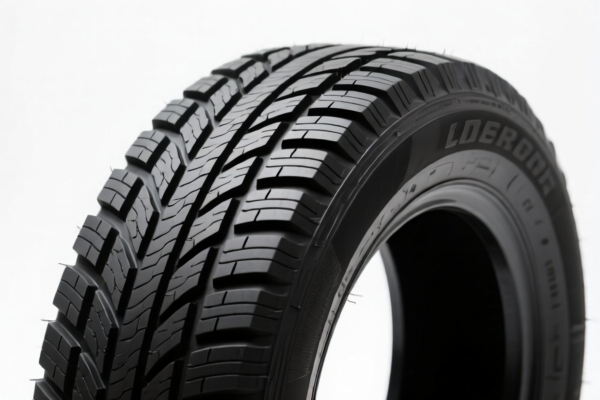
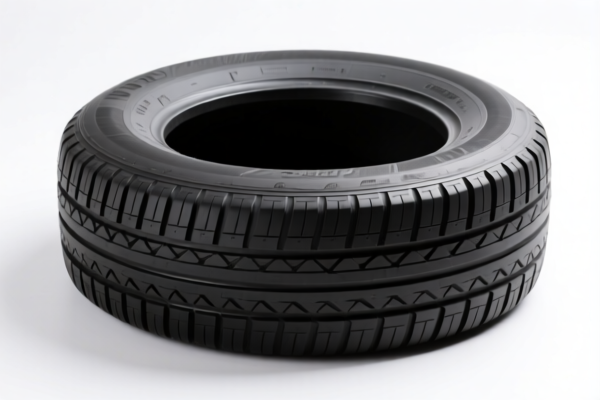
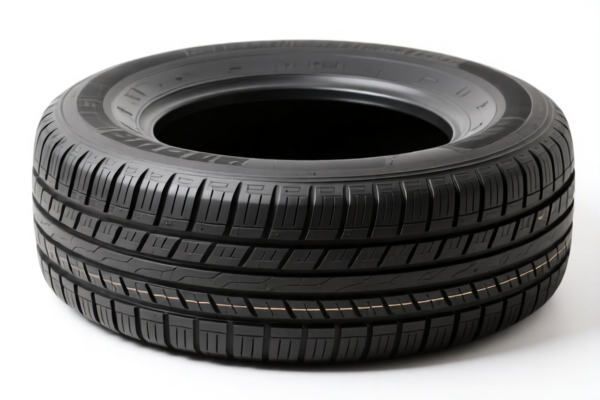
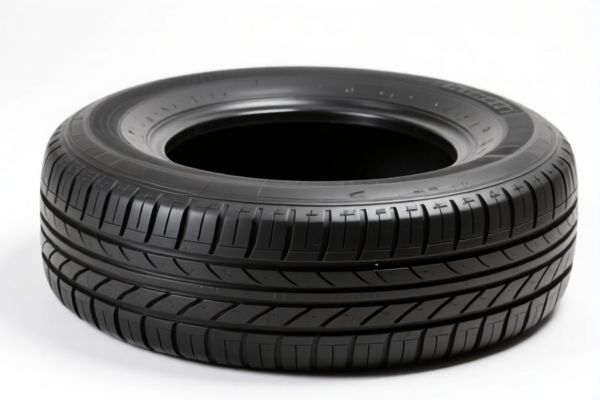
AI分析
🚛 Rubber Solid Tires (Solid Pneumatic Tires)
🌐 HS Code Reference & Customs Clearance Guide | 2026 Latest Tariff Analysis | Professional Compliance Strategy
📌 I. Product Definition & Classification: What Exactly Are "Solid Tires"?
Rubber Solid Tires, also known as Solid Pneumatic Tires (SPTs) or Non-pneumatic Tires (NPTs), are solid rubber wheels designed primarily for industrial equipment (forklifts, pallet jacks) and heavy-duty vehicles. Unlike traditional air-filled tires, they contain no air chamber, offering puncture-proof reliability and high load-bearing capacity.
In international trade, the classification hinges on two critical factors: 1. Structure: Is it a "solid" insert (often used as liners or replacement cores for cushion tires) or a complete tire assembly? 2. Function: Is it used for shock absorption/vibration damping (减震/缓冲) or strictly for vehicle traction/mobility?
⚠️ Critical Distinction:
- If the product is strictly a solid rubber block/insert used for shock absorption or as a component within a suspension system, it may fall under Chapter 40 heading 4016 (Other articles of vulcanized rubber).
- If the product is a complete tire (even if solid) intended to be mounted on a wheel rim for vehicle movement, it generally falls under Chapter 40 heading 4011 (New pneumatic tires, including solid or cushion tires) or 4012 (Retreaded/Used tires).
- Note: The data provided indicates specific classifications for "Solid Tires" as shock-absorbing items (4016) AND as tires (4011/4012/4013). This creates a classification conflict that must be resolved based on the specific physical form and intended use.
📦 II. HS Code Classification Details (Based on Provided Data)
| HS Code | Product Description | Logic/Justification | Key Characteristics |
|--------|--------------------------|-----------------------------|
| 4016.99.30.00 | Rubber Solid Tires as Shock Absorbers | Classified under "Other articles of vulcanized rubber" because they function primarily as shock-absorbing/buffering components (减震/缓冲类产品), aligning with the logic of vehicle suspension parts rather than standard rolling tires. | ✅ No air chamber
✅ Used for damping/vibration
✅ Functional classification overrides structural |
| 4011.90.10.50 | Rubber Solid Tires (Other Category) | Classified under "Other new pneumatic tires" (note: HS heading 4011 covers "pneumatic tires, including solid or cushion tires"). It is used when the item is recognized as a tire but doesn't fit specific sub-categories, leveraging material consistency (rubber) without usage conflict. | ✅ Solid rubber
✅ Tire shape/form
✅ Alternative tire classification |
| 4012.11.80.00 | Rubber Tires | Classified under "Retreaded or used pneumatic tires" (Heading 4012). This implies the goods might be considered used or retreaded, or the specific sub-heading captures a specific type of rubber tire that doesn't fit 4011. The logic is based on material (rubber) and form (tire). | ✅ Rubber material
✅ Tire form
⚠️ Potential risk: May be misclassified if new |
| 4012.12.40.35 | Rubber Tires (Other Category Rule) | Another classification under Heading 4012. Based on "other category rules," it matches the material and form. This is often a residual category for tires that don't fit primary 4011 definitions. | ✅ Rubber material
✅ Tire form
⚠️ Check if "New" or "Used" |
| 4013.10.00.10 | Rubber Tires (Core Elements) | Classified under "Inner tubes for pneumatic tires" or related rubber articles. The logic states that the material and usage align with the core elements of the reference classification. Note: Heading 4013 is typically for inner tubes; if applied to solid tires, it suggests a specific component-based classification. | ✅ Rubber material
✅ Core element alignment
⚠️ Unusual for solid tires unless specified |
🔍 Key Insight:
- The highest tax rate is associated with Heading 4012 (38.4%-39.0%), likely because these codes often catch used/retreaded tires or specific sub-categories with higher base duties.
- Heading 4016 has the lowest total tax (35.0%) because the Base Duty is 0%, despite the same surcharges. This makes it the most economically favorable if the product qualifies as a "shock-absorbing article" rather than a "tire."
💰 III. 2026 Latest Tariff Rate Breakdown (Including Surcharges)
✅ Applicable Country: United States (US)
✅ Origin: China (CN)
✅ Effective Time: Post-2025 (Continued application of Section 301 & IEEPA tariffs)
🎯 1. 4016.99.30.00 — Rubber Solid Tires (Shocks/Absorbers)
| Item | Content |
|---|---|
| Base Duty | 0.0% |
| Section 301 Surcharge | +25.0% |
| IEEPA Surcharge (122 Clause) | +10.0% |
| Total Effective Rate | 35.0% |
| Tax Calculation | CIF Value × 35% |
| De Minimis Eligibility | ❌ NO (Denied) |
| Legal Basis Path | Section 301: Footnote 9903.88.01 → IEEPA: 9903.01.25 → USITC: 4016.99.30.00 |
📌 Explanation:
- Why 0% Base?: Heading 4016 (Other articles of vulcanized rubber) often has low or zero base duties for specific sub-categories.
- Total 35%: This is the most cost-effective option among the listed HS codes, provided you can justify the product as a "shock-absorbing article" rather than a "tire."
🎯 2. 4011.90.10.50 — Rubber Solid Tires (Other Tire Category)
| Item | Content |
|---|---|
| Base Duty | 0.0% |
| Section 301 Surcharge | +25.0% |
| IEEPA Surcharge (122 Clause) | +10.0% |
| Total Effective Rate | 35.0% |
| Tax Calculation | CIF Value × 35% |
| De Minimis Eligibility | ❌ NO (Denied) |
| Legal Basis Path | Section 301: Footnote 9903.88.01 → IEEPA: 9903.01.25 → USITC: 4011.90.10.50 |
📌 Note:
- Same tax burden as 4016.99.30.00.
- This classification accepts the product as a tire but under a "catch-all" sub-heading where the base duty is still 0%.
🎯 3. 4012.11.80.00 & 4012.12.40.35 — Rubber Tires (Higher Base Duty)
| Item | Content |
|---|---|
| Base Duty | 3.4% - 4.0% |
| Section 301 Surcharge | +25.0% |
| IEEPA Surcharge (122 Clause) | +10.0% |
| Total Effective Rate | 38.4% - 39.0% |
| Tax Calculation | CIF Value × (Base + 35%) |
| De Minimis Eligibility | ❌ NO (Denied) |
| Legal Basis Path | Section 301: Footnote 9903.88.01 → IEEPA: 9903.01.25 → USITC: 4012.xx |
📌 Warning:
- These codes carry a higher base duty (3.4% or 4.0%).
- Heading 4012 is often for used/retreaded tires. If your solid tires are new, misclassifying them here could lead to customs penalties or rejection, as new tires should ideally be under 4011.
- Total Tax is ~39%, which is 4-5% higher than the 35% options.
🎯 4. 4013.10.00.10 — Rubber Tires (Core Elements)
| Item | Content |
|---|---|
| Base Duty | 3.7% |
| Section 301 Surcharge | +25.0% |
| IEEPA Surcharge (122 Clause) | +10.0% |
| Total Effective Rate | 38.7% |
| Tax Calculation | CIF Value × 38.7% |
| De Minimis Eligibility | ❌ NO (Denied) |
| Legal Basis Path | Section 301: Footnote 9903.88.01 → IEEPA: 9903.01.25 → USITC: 4013.10.00.10 |
📌 Note:
- Heading 4013 typically refers to inner tubes. Using this for solid tires is highly risky and may require strong justification that the solid tire is a "core component" or "part" rather than a finished tire.
- Total Tax is 38.7%, again higher than the 35% options.
🛠️ IV. Customs Clearance Practical Advice (Battle-Tested Pitfall Avoidance)
✅ 1. Essential Documentation Checklist (Non-Negotiable)
| Document | Required | Explanation |
|---|---|---|
| ✅ Product Specification Sheet | ✔️ | Must detail: Material (Vulcanized Rubber), Dimensions, Load Capacity, Hardness (Shore A), and Intended Use (e.g., "For Forklift Shock Absorption"). |
| ✅ Technical Drawings/Cutaway Views | ✔️ | Crucial to prove whether it is a solid block (shock absorber) or a tire (with tread pattern, bead, etc.). |
| ✅ Product Photos (Including Label) | ✔️ | Clear images of the product, including any model numbers and warnings. |
| ✅ Commercial Invoice | ✔️ | Must clearly state: "Rubber Solid Tires for Industrial Equipment" or "Vulcanized Rubber Shock Absorbing Inserts." Avoid vague terms like "Wheels." |
| ✅ Packing List | ✔️ | Detailed breakdown of units, weights, and dimensions. |
| ✅ Declaration of Origin | ✔️ | Required for US import. |
✅ 2. Declaration Strategy (Key Mantra)
🔥 "Define Function, Not Just Form! Shock Absorber vs. Tire!"
| Scenario | Recommended HS Code | Risk Level |
|---|---|---|
| Solid Rubber Insert/Block used in suspension/forklift cushions | 4016.99.30.00 |
✅ Low Risk if documented as "Shocks/Absorbers" |
| Complete Solid Tire (with tread, bead) for forklift/wheelbarrow | 4011.90.10.50 |
✅ Medium Risk (Must prove it's a "tire") |
| Used/Retreaded Solid Tires | 4012.11.80.00 |
⚠️ High Risk if declared as New |
| Any "Tire" declared as "Inner Tube" (4013) | 4013.10.00.10 |
❌ Very High Risk (Misclassification) |
✅ 3. Special Case Handling
| Situation | Handling Advice |
|---|---|
| OEM Custom Solid Tires | Provide the customer’s design specs. If it’s a custom shock absorber shape, lean towards 4016. |
| Solid Tires with Metal Rims | If sold as an assembly, the classification may change. Declare separately or as a whole unit depending on the primary characteristic. |
| "122 Clause" (IEEPA) Applicability | All listed HS codes are subject to the 10% IEEPA surcharge. Ensure your supplier is Chinese-origin. If manufactured in Vietnam/Mexico, you may qualify for exemptions. |
| De Minimis (Section 321) | DO NOT use de minimis for these items. They are explicitly excluded from the $800 exemption due to Section 301 and IEEPA. |
🌍 V. Global Market Comparison (2026 Update)
| Country/Region | Recommended HS Code | Estimated Duty | Certification | Notes |
|---|---|---|---|---|
| 🇺🇸 USA | 4016.99.30.00 |
35% (Min) | No specific | Avoid 4012 if new; too high base duty. |
| 🇨🇳 China | 4011.90.10.50 |
~5-10% | CCC (if applicable) | Lower duties, no IEEPA. |
| 🇪🇺 EU | 4011.90.10.50 |
~0-3% | CE (if machinery) | Check if "Solid" is treated as "Non-pneumatic." |
| 🇬🇧 UK | 4011.90.10.50 |
~0-3% | UKCA | Post-Brexit rules apply. |
📌 Conclusion:
- The USA is the most challenging market due to Section 301 (25%) + IEEPA (10%).
- Maximize Cost Savings by justifying the product as a shock-absorbing article (4016) rather than a standard tire, if structurally possible.
- Never misdeclare new tires as used (4012) to avoid penalties.
📌 VI. Common Errors & Pitfall Guide (Lessons Learned)
❌ Error 1: Declaring "Solid Tires" as "Pneumatic Tires" without specifying "Solid"
👉 Consequence: Customs may reject or reclassify, leading to delays.
❌ Error 2: Using HS Code 4012 (Used/Retreaded) for New Solid Tires
👉 Consequence: High base duty (3.4-4.0%) + Penalties for misdeclaration.
❌ Error 3: Ignoring the IEEPA 10% Surcharge
👉 Consequence: Underpayment of duties, leading to fines and cargo holds.
❌ Error 4: Claiming De Minimis ($800 exemption)
👉 Consequence: Illegal. All Section 301/IEEPA goods are excluded. Cargo will be seized or taxed retroactively.
✅ Correct Practice:
"Vulcanized Rubber Solid Tires, Non-Pneumatic, for Forklift Shock Absorption, Model XYZ, Made in China."
🎯 VII. Conclusion: Precision Classification for Cost Efficiency
🎯 Remember the Mantra:
🔹 "Function First, Form Second!"
🔹 "4016 = Shock Absorber (0% Base), 4011 = Tire (0% Base), 4012 = Used (High Base)."
🔹 "Total Tax = Base + 25% (301) + 10% (IEEPA)."
📌 Pro Tip:
If your solid tires are manufactured outside China (e.g., Vietnam, Thailand), you may be exempt from the 25% Section 301 and 10% IEEPA tariffs.
Action:
1. Verify the Country of Origin carefully.
2. Obtain a Certificate of Origin from the non-China country.
3. Apply for Tariff Exclusion or use the correct HS code for the non-China origin.
📣 Immediate Action Required:
📞 Consult a licensed customs broker.
📄 Submit your product specs for a Pre-Ruling (Advance Ruling) to lock in the 35% rate (4016or4011) and avoid the 39% rate (4012).
🚀 Clear Customs Smoothly, Maximize Profit, Stay Compliant!
✨ Professional Customs Clearance Starts with Accurate Classification!
💼 Every Percent Saved is Pure Profit!
用户评价
关于 HS 编码归类
协调制度(HS)是由世界海关组织(WCO)制定的国际贸易商品分类标准。全球 200 多个国家采用 HS 系统作为海关关税、贸易统计和进出口监管的基础。
每个 HS 编码遵循以下层级结构:
- 章(2 位)——商品大类(例如:第 84 章:机器和机械设备)
- 品目(4 位)——章内的更具体分类
- 子目(6 位)——国际通用细分,所有 WCO 成员国统一使用
- 本国细分(8-10 位)——各国自行扩展的细分编码,如美国 HTSUS 10 位编码
正确的 HS 编码归类对于顺利通关、准确缴纳关税和遵守贸易法规至关重要。错误归类可能导致海关延误、多缴关税或罚款。
从CN进口到US时,适用的关税税率可能包括:
- 最惠国(MFN)税率——适用于 WTO 成员国的标准关税税率
- 普通税率——适用于无贸易协定国家
- 贸易救济关税——附加关税,如 301 条款(反倾销)、232 条款(国家安全)或反补贴税
本页内容仅供参考。如需正式归类,请咨询当地海关或持牌报关代理。