Rubber Solid Tires
CN → US| HS Code | Tariff Rate | Origin | Destination | Doc |
|---|---|---|---|---|
| 4016993000 | 35.0% | CN | US | Official Doc |
| 4011901050 | 35.0% | CN | US | Official Doc |
| 4012118000 | 38.4% | CN | US | Official Doc |
| 4012124035 | 39.0% | CN | US | Official Doc |
| 4013100010 | 38.7% | CN | US | Official Doc |
Product Images
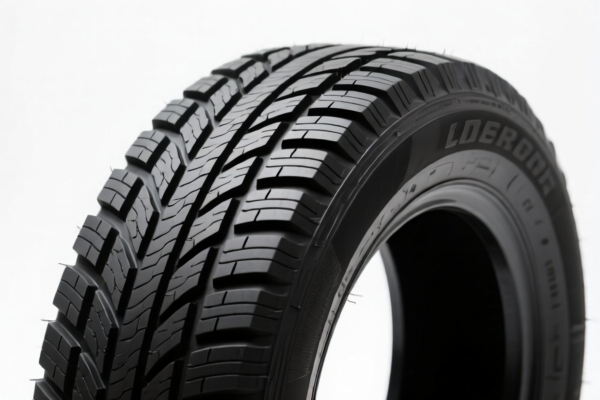
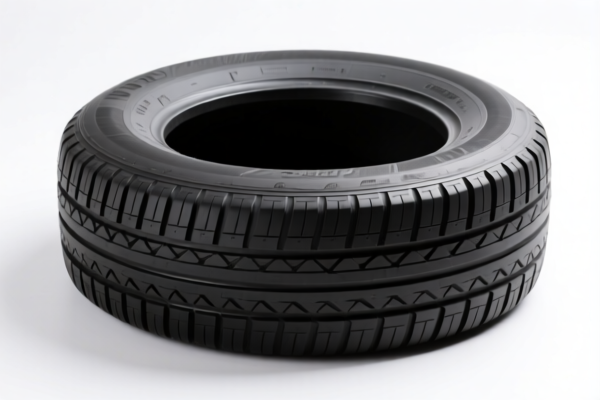
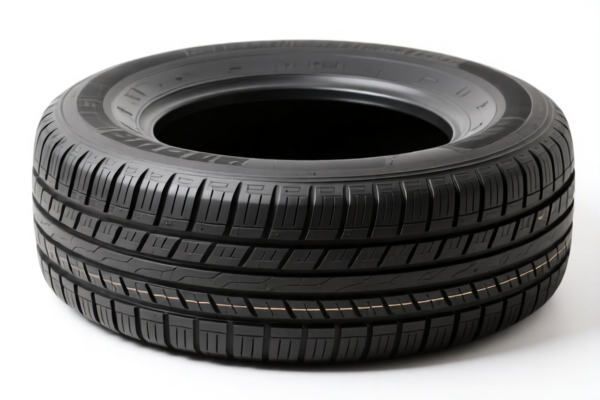
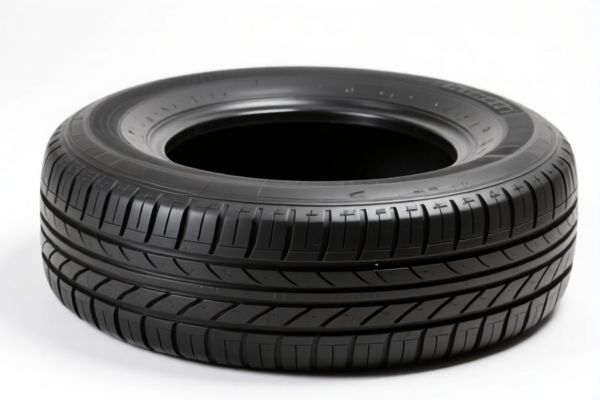
AI Analysis
🚛 Rubber Solid Tires (Solid Pneumatic Tires)
🌐 HS Code Reference & Customs Clearance Guide | 2026 Latest Tariff Analysis | Professional Compliance Strategy
📌 I. Product Definition & Classification: What Exactly Are "Solid Tires"?
Rubber Solid Tires, also known as Solid Pneumatic Tires (SPTs) or Non-pneumatic Tires (NPTs), are solid rubber wheels designed primarily for industrial equipment (forklifts, pallet jacks) and heavy-duty vehicles. Unlike traditional air-filled tires, they contain no air chamber, offering puncture-proof reliability and high load-bearing capacity.
In international trade, the classification hinges on two critical factors: 1. Structure: Is it a "solid" insert (often used as liners or replacement cores for cushion tires) or a complete tire assembly? 2. Function: Is it used for shock absorption/vibration damping (减震/缓冲) or strictly for vehicle traction/mobility?
⚠️ Critical Distinction:
- If the product is strictly a solid rubber block/insert used for shock absorption or as a component within a suspension system, it may fall under Chapter 40 heading 4016 (Other articles of vulcanized rubber).
- If the product is a complete tire (even if solid) intended to be mounted on a wheel rim for vehicle movement, it generally falls under Chapter 40 heading 4011 (New pneumatic tires, including solid or cushion tires) or 4012 (Retreaded/Used tires).
- Note: The data provided indicates specific classifications for "Solid Tires" as shock-absorbing items (4016) AND as tires (4011/4012/4013). This creates a classification conflict that must be resolved based on the specific physical form and intended use.
📦 II. HS Code Classification Details (Based on Provided Data)
| HS Code | Product Description | Logic/Justification | Key Characteristics |
|--------|--------------------------|-----------------------------|
| 4016.99.30.00 | Rubber Solid Tires as Shock Absorbers | Classified under "Other articles of vulcanized rubber" because they function primarily as shock-absorbing/buffering components (减震/缓冲类产品), aligning with the logic of vehicle suspension parts rather than standard rolling tires. | ✅ No air chamber
✅ Used for damping/vibration
✅ Functional classification overrides structural |
| 4011.90.10.50 | Rubber Solid Tires (Other Category) | Classified under "Other new pneumatic tires" (note: HS heading 4011 covers "pneumatic tires, including solid or cushion tires"). It is used when the item is recognized as a tire but doesn't fit specific sub-categories, leveraging material consistency (rubber) without usage conflict. | ✅ Solid rubber
✅ Tire shape/form
✅ Alternative tire classification |
| 4012.11.80.00 | Rubber Tires | Classified under "Retreaded or used pneumatic tires" (Heading 4012). This implies the goods might be considered used or retreaded, or the specific sub-heading captures a specific type of rubber tire that doesn't fit 4011. The logic is based on material (rubber) and form (tire). | ✅ Rubber material
✅ Tire form
⚠️ Potential risk: May be misclassified if new |
| 4012.12.40.35 | Rubber Tires (Other Category Rule) | Another classification under Heading 4012. Based on "other category rules," it matches the material and form. This is often a residual category for tires that don't fit primary 4011 definitions. | ✅ Rubber material
✅ Tire form
⚠️ Check if "New" or "Used" |
| 4013.10.00.10 | Rubber Tires (Core Elements) | Classified under "Inner tubes for pneumatic tires" or related rubber articles. The logic states that the material and usage align with the core elements of the reference classification. Note: Heading 4013 is typically for inner tubes; if applied to solid tires, it suggests a specific component-based classification. | ✅ Rubber material
✅ Core element alignment
⚠️ Unusual for solid tires unless specified |
🔍 Key Insight:
- The highest tax rate is associated with Heading 4012 (38.4%-39.0%), likely because these codes often catch used/retreaded tires or specific sub-categories with higher base duties.
- Heading 4016 has the lowest total tax (35.0%) because the Base Duty is 0%, despite the same surcharges. This makes it the most economically favorable if the product qualifies as a "shock-absorbing article" rather than a "tire."
💰 III. 2026 Latest Tariff Rate Breakdown (Including Surcharges)
✅ Applicable Country: United States (US)
✅ Origin: China (CN)
✅ Effective Time: Post-2025 (Continued application of Section 301 & IEEPA tariffs)
🎯 1. 4016.99.30.00 — Rubber Solid Tires (Shocks/Absorbers)
| Item | Content |
|---|---|
| Base Duty | 0.0% |
| Section 301 Surcharge | +25.0% |
| IEEPA Surcharge (122 Clause) | +10.0% |
| Total Effective Rate | 35.0% |
| Tax Calculation | CIF Value × 35% |
| De Minimis Eligibility | ❌ NO (Denied) |
| Legal Basis Path | Section 301: Footnote 9903.88.01 → IEEPA: 9903.01.25 → USITC: 4016.99.30.00 |
📌 Explanation:
- Why 0% Base?: Heading 4016 (Other articles of vulcanized rubber) often has low or zero base duties for specific sub-categories.
- Total 35%: This is the most cost-effective option among the listed HS codes, provided you can justify the product as a "shock-absorbing article" rather than a "tire."
🎯 2. 4011.90.10.50 — Rubber Solid Tires (Other Tire Category)
| Item | Content |
|---|---|
| Base Duty | 0.0% |
| Section 301 Surcharge | +25.0% |
| IEEPA Surcharge (122 Clause) | +10.0% |
| Total Effective Rate | 35.0% |
| Tax Calculation | CIF Value × 35% |
| De Minimis Eligibility | ❌ NO (Denied) |
| Legal Basis Path | Section 301: Footnote 9903.88.01 → IEEPA: 9903.01.25 → USITC: 4011.90.10.50 |
📌 Note:
- Same tax burden as 4016.99.30.00.
- This classification accepts the product as a tire but under a "catch-all" sub-heading where the base duty is still 0%.
🎯 3. 4012.11.80.00 & 4012.12.40.35 — Rubber Tires (Higher Base Duty)
| Item | Content |
|---|---|
| Base Duty | 3.4% - 4.0% |
| Section 301 Surcharge | +25.0% |
| IEEPA Surcharge (122 Clause) | +10.0% |
| Total Effective Rate | 38.4% - 39.0% |
| Tax Calculation | CIF Value × (Base + 35%) |
| De Minimis Eligibility | ❌ NO (Denied) |
| Legal Basis Path | Section 301: Footnote 9903.88.01 → IEEPA: 9903.01.25 → USITC: 4012.xx |
📌 Warning:
- These codes carry a higher base duty (3.4% or 4.0%).
- Heading 4012 is often for used/retreaded tires. If your solid tires are new, misclassifying them here could lead to customs penalties or rejection, as new tires should ideally be under 4011.
- Total Tax is ~39%, which is 4-5% higher than the 35% options.
🎯 4. 4013.10.00.10 — Rubber Tires (Core Elements)
| Item | Content |
|---|---|
| Base Duty | 3.7% |
| Section 301 Surcharge | +25.0% |
| IEEPA Surcharge (122 Clause) | +10.0% |
| Total Effective Rate | 38.7% |
| Tax Calculation | CIF Value × 38.7% |
| De Minimis Eligibility | ❌ NO (Denied) |
| Legal Basis Path | Section 301: Footnote 9903.88.01 → IEEPA: 9903.01.25 → USITC: 4013.10.00.10 |
📌 Note:
- Heading 4013 typically refers to inner tubes. Using this for solid tires is highly risky and may require strong justification that the solid tire is a "core component" or "part" rather than a finished tire.
- Total Tax is 38.7%, again higher than the 35% options.
🛠️ IV. Customs Clearance Practical Advice (Battle-Tested Pitfall Avoidance)
✅ 1. Essential Documentation Checklist (Non-Negotiable)
| Document | Required | Explanation |
|---|---|---|
| ✅ Product Specification Sheet | ✔️ | Must detail: Material (Vulcanized Rubber), Dimensions, Load Capacity, Hardness (Shore A), and Intended Use (e.g., "For Forklift Shock Absorption"). |
| ✅ Technical Drawings/Cutaway Views | ✔️ | Crucial to prove whether it is a solid block (shock absorber) or a tire (with tread pattern, bead, etc.). |
| ✅ Product Photos (Including Label) | ✔️ | Clear images of the product, including any model numbers and warnings. |
| ✅ Commercial Invoice | ✔️ | Must clearly state: "Rubber Solid Tires for Industrial Equipment" or "Vulcanized Rubber Shock Absorbing Inserts." Avoid vague terms like "Wheels." |
| ✅ Packing List | ✔️ | Detailed breakdown of units, weights, and dimensions. |
| ✅ Declaration of Origin | ✔️ | Required for US import. |
✅ 2. Declaration Strategy (Key Mantra)
🔥 "Define Function, Not Just Form! Shock Absorber vs. Tire!"
| Scenario | Recommended HS Code | Risk Level |
|---|---|---|
| Solid Rubber Insert/Block used in suspension/forklift cushions | 4016.99.30.00 |
✅ Low Risk if documented as "Shocks/Absorbers" |
| Complete Solid Tire (with tread, bead) for forklift/wheelbarrow | 4011.90.10.50 |
✅ Medium Risk (Must prove it's a "tire") |
| Used/Retreaded Solid Tires | 4012.11.80.00 |
⚠️ High Risk if declared as New |
| Any "Tire" declared as "Inner Tube" (4013) | 4013.10.00.10 |
❌ Very High Risk (Misclassification) |
✅ 3. Special Case Handling
| Situation | Handling Advice |
|---|---|
| OEM Custom Solid Tires | Provide the customer’s design specs. If it’s a custom shock absorber shape, lean towards 4016. |
| Solid Tires with Metal Rims | If sold as an assembly, the classification may change. Declare separately or as a whole unit depending on the primary characteristic. |
| "122 Clause" (IEEPA) Applicability | All listed HS codes are subject to the 10% IEEPA surcharge. Ensure your supplier is Chinese-origin. If manufactured in Vietnam/Mexico, you may qualify for exemptions. |
| De Minimis (Section 321) | DO NOT use de minimis for these items. They are explicitly excluded from the $800 exemption due to Section 301 and IEEPA. |
🌍 V. Global Market Comparison (2026 Update)
| Country/Region | Recommended HS Code | Estimated Duty | Certification | Notes |
|---|---|---|---|---|
| 🇺🇸 USA | 4016.99.30.00 |
35% (Min) | No specific | Avoid 4012 if new; too high base duty. |
| 🇨🇳 China | 4011.90.10.50 |
~5-10% | CCC (if applicable) | Lower duties, no IEEPA. |
| 🇪🇺 EU | 4011.90.10.50 |
~0-3% | CE (if machinery) | Check if "Solid" is treated as "Non-pneumatic." |
| 🇬🇧 UK | 4011.90.10.50 |
~0-3% | UKCA | Post-Brexit rules apply. |
📌 Conclusion:
- The USA is the most challenging market due to Section 301 (25%) + IEEPA (10%).
- Maximize Cost Savings by justifying the product as a shock-absorbing article (4016) rather than a standard tire, if structurally possible.
- Never misdeclare new tires as used (4012) to avoid penalties.
📌 VI. Common Errors & Pitfall Guide (Lessons Learned)
❌ Error 1: Declaring "Solid Tires" as "Pneumatic Tires" without specifying "Solid"
👉 Consequence: Customs may reject or reclassify, leading to delays.
❌ Error 2: Using HS Code 4012 (Used/Retreaded) for New Solid Tires
👉 Consequence: High base duty (3.4-4.0%) + Penalties for misdeclaration.
❌ Error 3: Ignoring the IEEPA 10% Surcharge
👉 Consequence: Underpayment of duties, leading to fines and cargo holds.
❌ Error 4: Claiming De Minimis ($800 exemption)
👉 Consequence: Illegal. All Section 301/IEEPA goods are excluded. Cargo will be seized or taxed retroactively.
✅ Correct Practice:
"Vulcanized Rubber Solid Tires, Non-Pneumatic, for Forklift Shock Absorption, Model XYZ, Made in China."
🎯 VII. Conclusion: Precision Classification for Cost Efficiency
🎯 Remember the Mantra:
🔹 "Function First, Form Second!"
🔹 "4016 = Shock Absorber (0% Base), 4011 = Tire (0% Base), 4012 = Used (High Base)."
🔹 "Total Tax = Base + 25% (301) + 10% (IEEPA)."
📌 Pro Tip:
If your solid tires are manufactured outside China (e.g., Vietnam, Thailand), you may be exempt from the 25% Section 301 and 10% IEEPA tariffs.
Action:
1. Verify the Country of Origin carefully.
2. Obtain a Certificate of Origin from the non-China country.
3. Apply for Tariff Exclusion or use the correct HS code for the non-China origin.
📣 Immediate Action Required:
📞 Consult a licensed customs broker.
📄 Submit your product specs for a Pre-Ruling (Advance Ruling) to lock in the 35% rate (4016or4011) and avoid the 39% rate (4012).
🚀 Clear Customs Smoothly, Maximize Profit, Stay Compliant!
✨ Professional Customs Clearance Starts with Accurate Classification!
💼 Every Percent Saved is Pure Profit!
Customer Reviews
About HS Code Classification
The Harmonized System (HS) is an internationally standardized nomenclature developed by the World Customs Organization (WCO) to classify traded products. Over 200 countries use the HS system as the basis for customs tariffs, trade statistics, and import/export regulations.
Each HS code follows a hierarchical structure:
- Chapter (2 digits) — Broad category of goods (e.g., Chapter 84: Machinery and Mechanical Appliances)
- Heading (4 digits) — More specific grouping within the chapter
- Subheading (6 digits) — Internationally standardized breakdown, used by all WCO member countries
- National subdivisions (8-10 digits) — Country-specific extensions for further classification, such as US HTSUS 10-digit codes
Correct HS code classification is essential for smooth customs clearance, accurate duty payment, and compliance with trade regulations. Misclassification can lead to customs delays, overpayment of duties, or penalties.
When importing from CN to US, the applicable tariff rates may include:
- Most-Favored-Nation (MFN) rate — The standard duty rate applied to WTO members
- General rate — Applied to countries without trade agreements
- Trade remedy duties — Additional tariffs such as Section 301 (anti-dumping), Section 232 (national security), or countervailing duties
The information provided on this page is for reference purposes only. For official classification, please consult with your local customs authority or a licensed customs broker.