Rubber Waterstop Strip
CN → US| HS编码 | 关税税率 | 原产国 | 目的国 | 文档 |
|---|---|---|---|---|
| 3926904510 | 38.5% | CN | US | 官方文档 |
| 4008111000 | 35.0% | CN | US | 官方文档 |
| 4008210000 | 35.0% | CN | US | 官方文档 |
商品图片
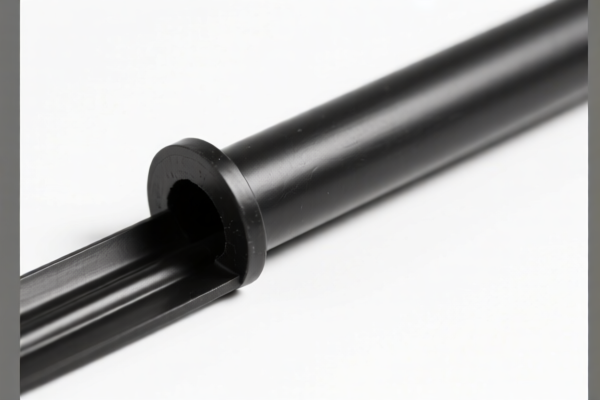
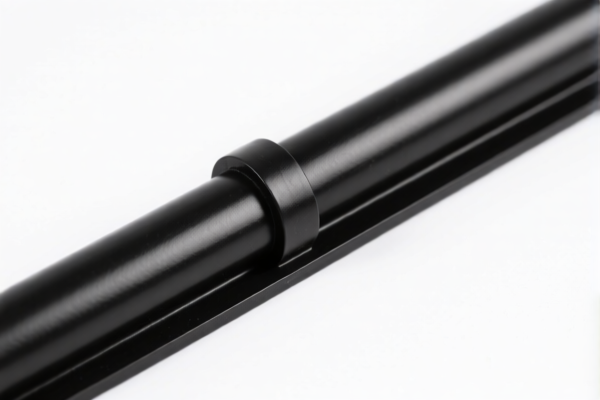
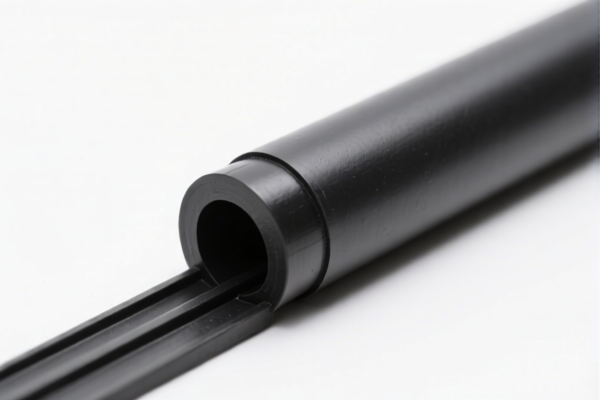
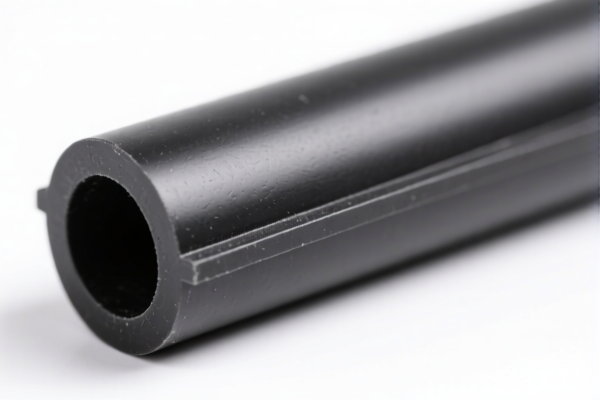
AI分析
🏗️ Rubber Waterstop Strip (Sealing Bands for Construction)
🌐 HS Code Reference & Customs Clearance Guide | 2026 Latest Tariff Analysis | Professional-Level Clearance Strategy
📌 I. Product Definition & Classification: Do You Really Understand "Rubber Waterstop Strips"?
A Rubber Waterstop Strip is a critical sealing component used in construction joints (concrete-to-concrete, concrete-to-metal, etc.) to prevent water penetration. In international trade, its classification hinges on material composition and physical form.
The item is broadly categorized into two main paths: 1. Natural Rubber Products: If made from natural rubber, it falls under Chapter 40. The key distinction is whether it is "foam" or "solid." 2. Plastics/Other Materials: If the material is ambiguous or synthetic, it might fall under Chapter 39 (Plastics) or general plastic articles.
⚠️ Key Classification Point:
- If it is solid, non-foam rubber (standard waterstops) →归类 to Chapter 40.
- If it is foam rubber → Likely falls under 4008.39 (not in provided data, but important context).
- If material is synthetic/rubber-like plastic → Might fall under Chapter 39 (Plastics).
📦 II. HS Code Classification Details (Based on Provided Data)
| HS Code | Product Description | Application Scenario | Material/Form Analysis |
|---|---|---|---|
4008.11.10.00 |
Plates, sheets, and strips, of rubber other than foam rubber; of natural rubber | Standard solid rubber waterstops for construction joints | ✅ Natural Rubber, Solid Strip (Summary: "Strip" form matches. "Rubber" keyword maps to "Natural Rubber") |
4008.21.00.00 |
Plates, sheets, and strips, of rubber other than foam rubber; of synthetic rubber | Synthetic rubber waterstops or ambiguous rubber types | ✅ Synthetic/General Rubber, Solid Strip (Summary: "Rubber" and "Strip" match. Assumed non-foam due to lack of "foam" indication) |
3926.90.45.10 |
Other articles of plastics and articles of other materials of heading 3901 to 3914 | Misclassification risk: Rubber-like plastic seals | ⚠️ Plastic/Synthetic Alternative (Summary: Inferred as rubber-compatible plastic. Fits sealing function but material conflict possible) |
🔍 Important Note:
-4008.11.10.00is the most precise code if the product is solid natural rubber.
-4008.21.00.00is the safe fallback for solid synthetic rubber or unspecified rubber strips.
-3926.90.45.10is a higher-tax risk code, likely applied if customs deems the material as "plastic-like" or if documentation lacks clear rubber proof.
💰 III. 2026 Latest Tariff Rate Breakdown (Including Surcharge & Policy Surcharges)
✅ Applicable Country: United States (US)
✅ Origin: China (CN)
✅ Effective Date: November 10, 2025 (and subsequent imports)
🎯 1. 4008.11.10.00 – Natural Rubber Strips (Solid)
| Item | Content |
|---|---|
| Base Duty | 0% (ad valorem) |
| Section 301 Duty (USITC) | +25% (Added tariff on Chinese rubber products) |
| 122-Clause Duty (IEEPA) | +10% (Specific surcharge on Chinese rubber/articles) |
| Total Duty Rate | 35.0% |
| Tax Calculation | CIF Value × 35% |
| De Minimis Exemption | ❌ Not Eligible (Section 321 shipments excluded) |
| Legal Basis Path | USITC:4008.11.10.00 → 301:Footnote → 122:IEEPA Clause |
📌 Explanation:
- Base 0%: Rubber products often have low base MFN rates.
- +25% Section 301: Standard tariff for many Chinese goods, including rubber.
- +10% 122-Clause: Specific additional duty applied to rubber products from China under recent trade measures.
- Total 35%: A significant cost factor. Must be budgeted in CIF pricing.
🎯 2. 4008.21.00.00 – Synthetic Rubber Strips (Solid)
| Item | Content |
|---|---|
| Base Duty | 0% (ad valorem) |
| Section 301 Duty (USITC) | +25% (Added tariff on Chinese rubber products) |
| 122-Clause Duty (IEEPA) | +10% (Specific surcharge on Chinese rubber/articles) |
| Total Duty Rate | 35.0% |
| Tax Calculation | CIF Value × 35% |
| De Minimis Exemption | ❌ Not Eligible |
| Legal Basis Path | USITC:4008.21.00.00 → 301:Footnote → 122:IEEPA Clause |
📌 Note:
- Tax rate is identical to natural rubber strips.
- The key is proving the product is solid (non-foam) rubber. If it's foam, the code changes (and tax may differ).
- No material conflict detected in summary.
🎯 3. 3926.90.45.10 – Other Plastic Articles (Misclassified)
| Item | Content |
|---|---|
| Base Duty | 3.5% (ad valorem) |
| Section 301 Duty (USITC) | +25% (Added tariff on Chinese plastic products) |
| 122-Clause Duty (IEEPA) | +10% (Specific surcharge) |
| Total Duty Rate | 38.5% |
| Tax Calculation | CIF Value × 38.5% |
| De Minimis Exemption | ❌ Not Eligible |
| Legal Basis Path | USITC:3926.90.45.10 → 301:Footnote → 122:IEEPA Clause |
📌 Warning:
- This code results in a 3.5% higher total duty than the correct rubber classification.
- The summary notes "inferred material as rubber," suggesting this is a less accurate classification that may arise from ambiguous documentation.
- Avoid this code if the product is genuinely rubber to save costs and reduce audit risk.
🛠️ IV. Customs Clearance Practical Advice (Battle-Tested Pitfall Guide)
✅ 1. Required Documentation Checklist
| Document | Mandatory? | Explanation |
|---|---|---|
| ✅ Product Specification Sheet | ✔️ | Must state Material: "100% Natural Rubber" or "Synthetic Rubber (SBR/EPDM)". Form: "Solid Strip (Non-Foam)". Function: "Waterproofing Seal for Concrete Joints". |
| ✅ Material Test Report | ✔️ | Certificate of Analysis (CoA) proving rubber content. Critical to avoid reclassification to Chapter 39 (Plastics). |
| ✅ Product Photos | ✔️ | Clear images showing the cross-section (solid, not foam) and any branding/model numbers. |
| ✅ Commercial Invoice | ✔️ | Description: "Rubber Waterstop Strip, Solid, for Construction". Avoid vague terms like "Sealing Band". |
| ✅ Packing List | ✔️ | Detail net/gross weight. Ensure no mixed shipments of foam and solid strips. |
| ✅ Origin Certificate (CO) | ✔️ | To prove Chinese origin (for accurate surcharge application). |
✅ 2. Declaration Tips (Key Mantras)
🔥 “Solid Rubber, Not Foam. Natural/Synthetic Clearly Stated. Avoid ‘Plastic’ Terms.”
| Scenario | Correct Declaration | Incorrect Practice |
|---|---|---|
| Standard Solid Waterstop | 4008.11.10.00 or 4008.21.00.00 |
Using 3926.90.45.10 → 38.5% Tax |
| Foam Rubber Waterstop | 4008.39.00.00 (Not in data) |
Forcing into 4008.21 → Customs Audit Risk |
| Rubber-Plastic Composite | 4008.xx if rubber is principal material |
Misclassifying as 3926 → Higher Tax |
| Vague Description | "Rubber Strip" | "Sealing Strip" → Customs may guess 3926 |
✅ 3. Special Case Handling
| Scenario | Handling Advice |
|---|---|
| Foam Rubber Waterstops | Do NOT use 4008.11/21. These codes are for non-foam products. Use 4008.39 (if applicable) and verify tax. |
| Composite Materials | If the waterstop has a plastic core with rubber coating, declare as Rubber if rubber is the essential character. Provide structural diagrams. |
| OEM/Custom Orders | Provide customer specs showing exact rubber compound (e.g., EPDM, Natural). This prevents customs from assuming "plastic-like" properties. |
| Small Samples (De Minimis) | Risk: Even under $800 (Section 321), Section 301 + 122-Clause duties may still apply or trigger inspections. Not recommended for bulk rubber imports. |
🌍 V. Global Market Clearance Comparison (2026 Latest)
| Country/Region | Recommended HS Code | Duty Rate | Certification | Notes |
|---|---|---|---|---|
| 🇺🇸 USA | 4008.11.10.00 / 4008.21.00.00 |
35% | No specific cert required for rubber strips | High surcharge due to 301/122 clauses |
| 🇨🇳 China | 4008.11.10.00 |
0% | CCC (if applicable) | No import duty for domestic sale |
| 🇪🇺 EU | 4008.11.00 |
0% | REACH Compliance | No additional surcharges in EU |
| 🇦🇺 Australia | 4008.11.00 |
5% | No special cert | Lower base duty than US |
| 🇯🇵 Japan | 4008.11.00 |
0% | No special cert | Free trade agreement benefits possible |
📌 Conclusion:
- USA is the most expensive market for rubber waterstops due to 35% total duty.
- EU/Japan/Australia have significantly lower duty burdens.
- Supply Chain Strategy: Consider sourcing from non-China origins if shipping to the US, or absorb the 35% cost in pricing.
📌 VI. Common Mistakes & Pitfalls (Lessons from Experience)
❌ Mistake 1: Declaring Foam Rubber as 4008.21 (Non-Foam)
👉 Consequence: Customs rejects declaration, demands correct code 4008.39, delays shipment, fines apply.
❌ Mistake 2: Using vague description "Sealing Strip"
👉 Consequence: Customs defaults to Chapter 39 (Plastics) → 38.5% Tax + potential penalty.
❌ Mistake 3: Not providing Material Test Reports
👉 Consequence: Customs suspects "plastic-rubber composite" → Reclassifies to 3926.90.45.10 → Higher Tax.
❌ Mistake 4: Assuming De Minimis ($800) exempts Section 301/122 Duties
👉 Consequence: Recent policy changes may still apply surcharges to small shipments. Verify current 321 rules.
✅ Correct Practice:
“Solid Rubber Waterstop Strip, 100% Natural Rubber, Non-Foam, for Concrete Joint Sealing, Model ABC, Compliant with ASTM D697.”
🎯 VII. Conclusion: Precise Classification Saves Money!
🎯 Remember the Mantra:
🔹 “Solid Rubber, Not Foam. 35% Tax in USA. Avoid Chapter 39. Prove Material Quality.”
🔹 “HS Code Determines Fate. 3.5% Difference Matters. Correct Declaration Saves Thousands.”
📌 Pro Tip:
If your rubber waterstop strips are sourced from Vietnam, Thailand, or Mexico, you may exempt from US IEEPA 122-Clause and Section 301 tariffs (0% duty).
Recommend Applying for Advance Ruling if volume is high, to lock in the 4008.xx classification and tax rate.
📣 Immediate Action:
📞 Contact a licensed customs broker + Provide Material Test Report + Apply for HS Code Advance Ruling
🚀 Ensure your rubber waterstops clear US customs smoothly, efficiently, and cost-effectively!
✨ Professional clearance starts with accurate classification!
💼 Every percentage point of duty impacts your profit margin!
用户评价
关于 HS 编码归类
协调制度(HS)是由世界海关组织(WCO)制定的国际贸易商品分类标准。全球 200 多个国家采用 HS 系统作为海关关税、贸易统计和进出口监管的基础。
每个 HS 编码遵循以下层级结构:
- 章(2 位)——商品大类(例如:第 84 章:机器和机械设备)
- 品目(4 位)——章内的更具体分类
- 子目(6 位)——国际通用细分,所有 WCO 成员国统一使用
- 本国细分(8-10 位)——各国自行扩展的细分编码,如美国 HTSUS 10 位编码
正确的 HS 编码归类对于顺利通关、准确缴纳关税和遵守贸易法规至关重要。错误归类可能导致海关延误、多缴关税或罚款。
从CN进口到US时,适用的关税税率可能包括:
- 最惠国(MFN)税率——适用于 WTO 成员国的标准关税税率
- 普通税率——适用于无贸易协定国家
- 贸易救济关税——附加关税,如 301 条款(反倾销)、232 条款(国家安全)或反补贴税
本页内容仅供参考。如需正式归类,请咨询当地海关或持牌报关代理。