Rubber tire flaps
CN → US| HS编码 | 关税税率 | 原产国 | 目的国 | 文档 |
|---|---|---|---|---|
| 4012118000 | 38.4% | CN | US | 官方文档 |
| 4012124035 | 39.0% | CN | US | 官方文档 |
| 4013100010 | 38.7% | CN | US | 官方文档 |
| 4016996050 | 37.5% | CN | US | 官方文档 |
| 8708990300 | 35.0% | CN | US | 官方文档 |
商品图片
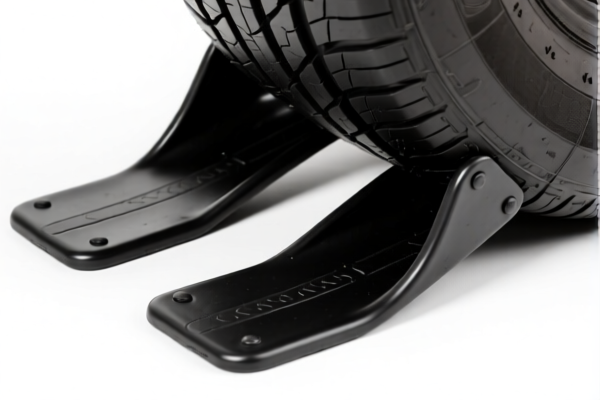
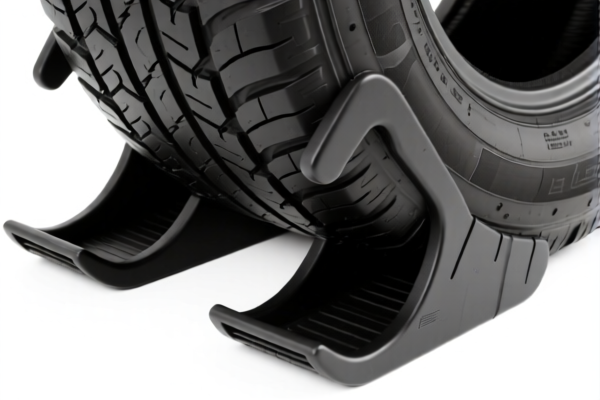
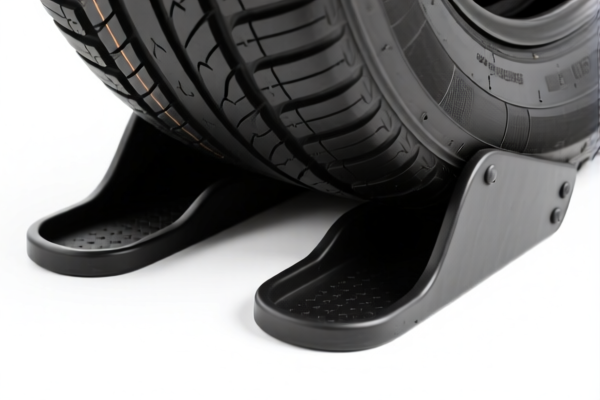
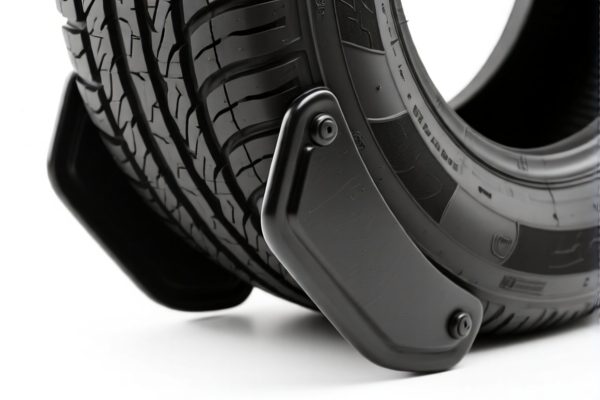
AI分析
🚗 Rubber Tire Flaps / Inner Liners (Valveless Puncture-Resistant Layers)
🌐 HS Code Reference & Customs Clearance Guide | 2026 Latest Tariff Analysis | Professional Clearance Strategy
📌 I. Product Definition & Classification: What Exactly Are "Rubber Tire Flaps"?
In the context of international trade, "Rubber Tire Flaps" (often referred to as Inner Liners, Puncture-Resistant Layers, or Tire Retaining Bands depending on the specific construction) are critical components of pneumatic tires. They are distinct from the final "Tire" (which is a complete assembly of rubber, fabric, and steel cords) and distinct from "Parts of Motor Vehicles."
Key Distinctions for Classification: 1. Finished Pneumatic Tires (Chapter 40.11/40.12): Complete, vulcanized rubber products ready for mounting. If the product is a complete tire, it goes here. 2. Other Articles of Vulcanized Rubber (Chapter 40.16): Semi-finished or specific protective layers made of vulcanized rubber that do not have the final shape of a tire but are essential for tire integrity. 3. Parts of Motor Vehicles (Chapter 87): Accessories attached to the vehicle. If the flap is considered a generic "part" not specific to tires, it might fall here, but this is less common for core tire components unless specified as a vehicle accessory.
⚠️ Critical Classification Point:
- If the product is a complete, vulcanized tire with no need for separate inner tubes (tubeless tire structure) → Chapter 40.12.
- If the product is a protective pad/liner (vulcanized rubber sheet/layer) used within tire manufacturing or as a protective accessory → Chapter 40.16 or 87.08.
- If the product is not yet vulcanized (unvulcanized rubber) → Chapter 40.08/40.09 (Not in provided data).
- Note on "Flap": In some contexts, "flap" may refer to a valve stem cover or a protective band. However, based on the provided HS codes, we are analyzing vulcanized rubber components related to tires.
📦 II. HS Code Classification Details (2026 Latest Tariff Authority Cross-Reference)
Based on the provided dataset, here are the potential classifications for "Rubber Tire Flaps" or related rubber tire components:
| HS Code | Product Description | Application Scenario | Key Classification Logic |
|---|---|---|---|
4012.11.80.00 |
Vulcanized Rubber Tires | Complete tires made entirely of rubber (e.g., solid tires, specific off-road tires) | Classified as "Tires" because the material is purely rubber and the form is a tire. |
4012.12.40.35 |
Other Vulcanized Rubber Tires | Tires made of rubber but classified under "Other" categories due to specific construction/material blends | Classified as "Tires" but falls into a different sub-category for specific rubber compositions. |
4013.10.00.10 |
Vulcanized Rubber Tires | Tires made of vulcanized rubber (excluding hard rubber) matching general tire definitions | Broad category for standard vulcanized rubber tires. |
4016.99.60.50 |
Tire Retaining Rings / Protective Pads | Vulcanized rubber articles other than tires, such as protective pads or liners used in tire systems | Classified as "Other articles of vulcanized rubber" (Ch 40.16). It is not a finished tire but a rubber component/pad. |
8708.99.03.00 |
Other Parts and Accessories of Motor Vehicles | Rubber pads or flaps considered as "accessories" to the vehicle rather than the tire itself | Classified as a Vehicle Part. This is used when the item is deemed an accessory or non-specific component. |
🔍 Focus on the "Flap" Nuance:
- If "Flap" means a protective rubber layer inside a tire system (not the whole tire),4016.99.60.50is the most accurate fit among the choices, as it covers "other articles of vulcanized rubber."
- If "Flap" implies a complete tire made of rubber (e.g., a solid rubber tire), then4012.11.80.00applies.
- If the importer argues it is a generic vehicle accessory, they might try8708.99.03.00, but this is risky if the item is clearly a tire component.
💰 III. 2026 Latest Tariff Rate Breakdown (Including Surtaxes & Policy Add-ons)
✅ Applicable Country: USA (US)
✅ Origin: China (CN)
✅ Effective Date: From November 10, 2025 (for subsequent imports)
🎯 1. 4012.11.80.00 – Vulcanized Rubber Tires (Rubber Material)
| Item | Content |
|---|---|
| Base Tariff | 3.4% (ad valorem) |
| Section 301 Surtax | +25.0% (From USITC Footnote 9903.88.01) |
| 122 Clause Surtax | +10.0% (Additional levy under Section 122 or specific trade measures) |
| Total Rate | 38.4% |
| Tax Calculation | CIF Value × 38.4% |
| De Minimis Eligibility | ❌ No (deny_de_minimis) |
| Legal Pathway | Base Tariff → USITC:4012.11.80.00 → Section 301:25% → 122 Clause:10% |
📌 Explanation:
- This high rate applies because finished tires and rubber tire components from China face significant trade barriers.
- The 25% Section 301 tariff is standard for many rubber products.
- The 10% additional tax further increases the cost.
- Total: 38.4% is a substantial cost increase for rubber tire products.
🎯 2. 4012.12.40.35 – Other Vulcanized Rubber Tires
| Item | Content |
|---|---|
| Base Tariff | 4.0% |
| Section 301 Surtax | +25.0% |
| 122 Clause Surtax | +10.0% |
| Total Rate | 39.0% |
| Tax Calculation | CIF Value × 39.0% |
| De Minimis Eligibility | ❌ No |
| Legal Pathway | Base Tariff → USITC:4012.12.40.35 → Section 301:25% → 122 Clause:10% |
📌 Note:
- Slightly higher base rate (4.0%) compared to4012.11.80.00.
- Same surcharges apply.
- Use this if the rubber composition or tire type falls into "Other" categories under HTSUS 4012.12.
🎯 3. 4013.10.00.10 – Vulcanized Rubber Tires
| Item | Content |
|---|---|
| Base Tariff | 3.7% |
| Section 301 Surtax | +25.0% |
| 122 Clause Surtax | +10.0% |
| Total Rate | 38.7% |
| Tax Calculation | CIF Value × 38.7% |
| De Minimis Eligibility | ❌ No |
| Legal Pathway | Base Tariff → USITC:4013.10.00.10 → Section 301:25% → 122 Clause:10% |
📌 Note:
- Similar to other tire classifications, this incurs the 38.7% total duty.
- Ensure the product is indeed a "tire" and not just a rubber layer.
🎯 4. 4016.99.60.50 – Other Vulcanized Rubber Articles (Tire Protective Pads)
| Item | Content |
|---|---|
| Base Tariff | 2.5% |
| Section 301 Surtax | +25.0% |
| 122 Clause Surtax | +10.0% |
| Total Rate | 37.5% |
| Tax Calculation | CIF Value × 37.5% |
| De Minimis Eligibility | ❌ No |
| Legal Pathway | Base Tariff → USITC:4016.99.60.50 → Section 301:25% → 122 Clause:10% |
📌 Explanation:
- This is the lowest total rate among the tire/rubber options (37.5%).
- It classifies the item as an "Other Article of Vulcanized Rubber" (e.g., a protective pad, liner, or flap) rather than a complete tire.
- Strategic Advantage: If your "flap" is a semi-finished component or a protective pad, this classification may save 0.9% - 1.5% compared to full tire classifications.
🎯 5. 8708.99.03.00 – Other Parts and Accessories of Motor Vehicles
| Item | Content |
|---|---|
| Base Tariff | 0.0% |
| Section 301 Surtax | +25.0% |
| 122 Clause Surtax | +10.0% |
| Total Rate | 35.0% |
| Tax Calculation | CIF Value × 35.0% |
| De Minimis Eligibility | ❌ No |
| Legal Pathway | Base Tariff → USITC:8708.99.03.00 → Section 301:25% → 122 Clause:10% |
📌 Explanation:
- This is the lowest total rate of all options (35.0%).
- It classifies the item as a "Part of Motor Vehicles" rather than a rubber product or tire.
- Risk: Customs may challenge this if the item is clearly a tire component. However, if it can be argued as a generic "accessory" (e.g., a valve cap, a protective cover not integral to the tire's structure), this offers the best tax efficiency.
- Base rate is 0%, which eliminates the base duty burden.
🛠️ IV. Customs Clearance Practical Advice (Field Pitfall Guide)
✅ 1. Document Checklist (Essential)
| Document | Required? | Description |
|---|---|---|
| ✅ Product Specification Sheet | ✔️ | Detail material composition (e.g., "Vulcanized Rubber"), dimensions, and intended use. |
| ✅ Photos of the Product | ✔️ | Show the item clearly. Is it a complete tire? A pad? A flap? |
| ✅ Commercial Invoice | ✔️ | Clearly state the product name: "Rubber Tire Flap" or "Vulcanized Rubber Protective Pad." Avoid vague terms like "Rubber Part." |
| ✅ HS Code Pre-Ruling Request | ✔️ | Highly Recommended. Due to the complexity of "flap" vs. "tire" vs. "part," request an Advance Ruling from CBP. |
| ✅ Material Safety Data Sheet (MSDS) | ✔️ | If applicable, to confirm rubber composition. |
| ✅ Certificate of Origin | ✔️ | Mandatory for determining country of origin (China) and applying surtaxes. |
✅ 2. Declaration Strategy (Key Mnemonics)
🔥 “Material First, Form Second, Part Third, Save Money!”
| Situation | Recommended HS Code | Reason |
|---|---|---|
| Product is a complete tire | 4012.11.80.00 / 4013.10.00.10 |
It is a tire. Must declare as such. |
| Product is a rubber pad/liner (not a tire) | 4016.99.60.50 |
Classified as "Other Rubber Articles." Lower base rate. |
| Product is a generic accessory/cover | 8708.99.03.00 |
Classified as "Vehicle Part." Lowest total rate (35.0%), but risky if challenged. |
| Product is unvulcanized | (Not in Data) | Would fall under Ch 40.08/40.09, but data only covers vulcanized items. |
⚠️ Warning:
- Do not declare a complete tire as a "Part" (8708) or "Other Rubber Article" (4016) unless you have a solid legal basis. CBP frequently audits this.
- If the item is a flap used for puncture resistance, argue it is a "protective pad" (4016.99.60.50) rather than a tire component (8708) to avoid potential misclassification penalties, while still benefiting from a lower base rate than complete tires.
✅ 3. Special Cases
| Situation | Handling Advice |
|---|---|
| OEM Tire Flaps for Vehicle Assembly | If sold to tire manufacturers, declare as raw material/component (4016). If sold to vehicle assemblers as parts, consider 8708. |
| Mixed Shipments | If a shipment contains both tires (4012) and flaps/pads (4016), separate the declarations. Misdeclaration can lead to whole-shipment rejection. |
| Labeling | Ensure labels clearly state "Vulcanized Rubber Article" or "Tire Component" as appropriate. Avoid "Tire" if it is not a tire. |
🌍 V. Global Market Clearance Comparison (2026 Latest)
| Country/Region | Recommended HS Code (for Rubber Flap/Pad) | Tariff Rate (China Origin) | Certification Requirements | Notes |
|---|---|---|---|---|
| 🇺🇸 USA | 4016.99.60.50 or 8708.99.03.00 |
37.5% or 35.0% | None specific, but accurate HS is critical | High surtaxes (35-38.4%). Pre-ruling strongly advised. |
| 🇨🇳 China | 4016.99.60.50 |
~5-10% | CCC (if applicable) | No surtaxes. |
| 🇪🇺 EU | 4016.99.95 |
0-6.5% | REACH, RoHS | Lower base tariffs, but complex documentation. |
| 🇬🇧 UK | 4016.99.90 |
0-6.5% | UKCA | Post-Brexit rules apply. |
| 🇦🇺 Australia | 4016.99.90 |
5% | RCM | Moderate tariffs. |
📌 Conclusion:
- USA is the most challenging market due to Section 301 + 122 Clause surtaxes.
- Strategic Recommendation: For the US market, if the product can be legitimately classified as a "Vehicle Part" (8708.99.03.00), it offers the lowest duty (35.0%). If not, "Other Rubber Articles" (4016.99.60.50) at 37.5% is the next best option. Avoid classifying as "Tires" (4012) unless it is a complete tire, as rates are higher (38.4%-39.0%).
📌 VI. Common Errors & Pitfalls (Lessons Learned)
❌ Error 1: Declaring a rubber pad as a "Tire" (4012)
👉 Consequence: Higher duty (38.4%+).
👉 Fix: Use 4016.99.60.50 if it is not a complete tire.
❌ Error 2: Declaring a tire component as a "General Accessory" (8708) without justification
👉 Consequence: CBP may reject the classification, assess back duties + penalties.
👉 Fix: Provide technical data showing it is a generic part or pad, not integral to tire structure.
❌ Error 3: Ignoring 122 Clause Surtax
👉 Consequence: Underpayment of duties.
👉 Fix: Ensure all surcharges (301 + 122) are calculated. Total rate is Base + 25% + 10%.
✅ Correct Approach:
“Vulcanized Rubber Protective Pad, Model XYZ, 100% Rubber, Not a Tire, Used for Tire Retention”
→ Declare as4016.99.60.50(37.5%) or8708.99.03.00(35.0%) with strong technical justification.
🎯 VII. Conclusion: Professional Declaration, Cost Savings, Efficiency!
🎯 Remember the Mnemonic:
🔹 “Pad is Not Tire, Part is Not Product, 35% is King, 39% is Sting!”
🔹 “Base Rate Matters, Surtaxes Add Up, Pre-Ruling is Key, Avoid Full Tire Tax!”
📌 Pro Tip:
If your rubber flaps/pads are originating from Vietnam, Mexico, Thailand, or Malaysia, you may be eligible for IEEPA Exemptions or lower tariffs under USMCA.
Recommendation: Apply for a CBP Advance Ruling before shipment. This ensures your HS Code is accepted, avoiding delays and surprise duties.
📣 Immediate Action:
📞 Consult a licensed Customs Broker
📄 Prepare Product Tech Sheets
🚀 Apply for Advance Ruling
📈 Optimize for 35.0% or 37.5% Duty, Not 39.0%!
✨ Professional Clearance Starts with Accurate Classification!
💼 Every Percent Saved is Pure Profit!
用户评价
关于 HS 编码归类
协调制度(HS)是由世界海关组织(WCO)制定的国际贸易商品分类标准。全球 200 多个国家采用 HS 系统作为海关关税、贸易统计和进出口监管的基础。
每个 HS 编码遵循以下层级结构:
- 章(2 位)——商品大类(例如:第 84 章:机器和机械设备)
- 品目(4 位)——章内的更具体分类
- 子目(6 位)——国际通用细分,所有 WCO 成员国统一使用
- 本国细分(8-10 位)——各国自行扩展的细分编码,如美国 HTSUS 10 位编码
正确的 HS 编码归类对于顺利通关、准确缴纳关税和遵守贸易法规至关重要。错误归类可能导致海关延误、多缴关税或罚款。
从CN进口到US时,适用的关税税率可能包括:
- 最惠国(MFN)税率——适用于 WTO 成员国的标准关税税率
- 普通税率——适用于无贸易协定国家
- 贸易救济关税——附加关税,如 301 条款(反倾销)、232 条款(国家安全)或反补贴税
本页内容仅供参考。如需正式归类,请咨询当地海关或持牌报关代理。