Rubber tire flaps
CN → US| HS Code | Tariff Rate | Origin | Destination | Doc |
|---|---|---|---|---|
| 4012118000 | 38.4% | CN | US | Official Doc |
| 4012124035 | 39.0% | CN | US | Official Doc |
| 4013100010 | 38.7% | CN | US | Official Doc |
| 4016996050 | 37.5% | CN | US | Official Doc |
| 8708990300 | 35.0% | CN | US | Official Doc |
Product Images
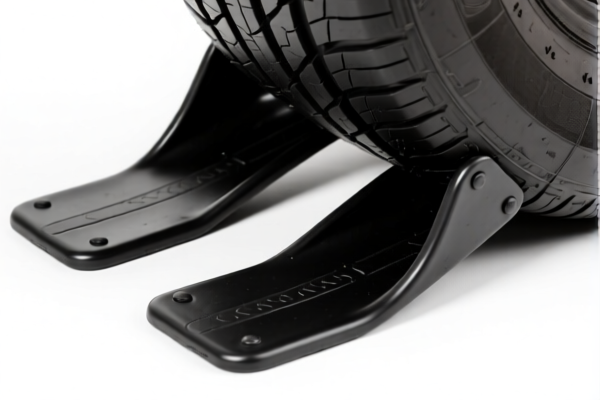
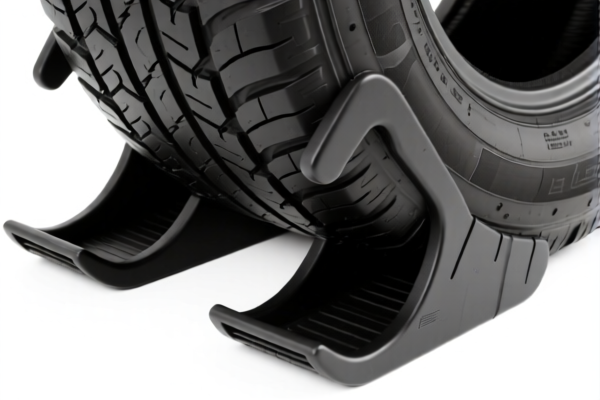
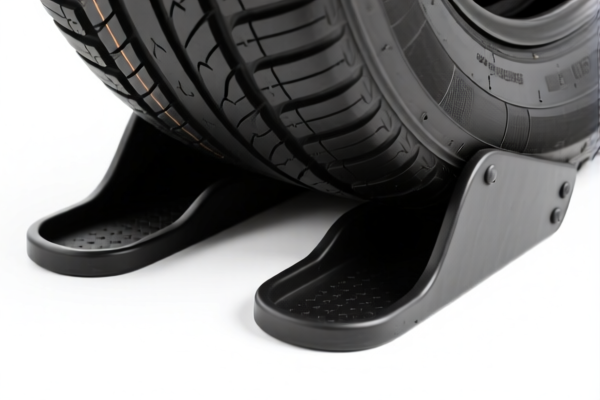
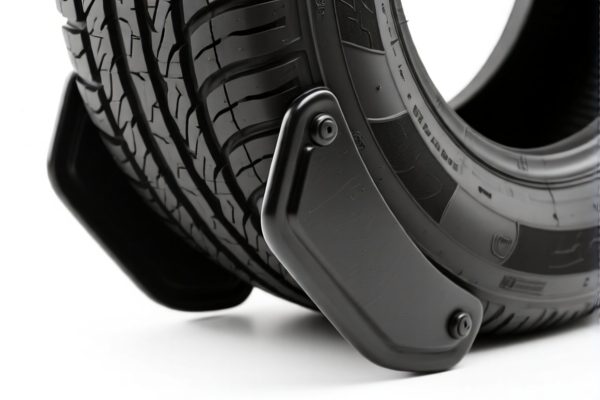
AI Analysis
🚗 Rubber Tire Flaps / Inner Liners (Valveless Puncture-Resistant Layers)
🌐 HS Code Reference & Customs Clearance Guide | 2026 Latest Tariff Analysis | Professional Clearance Strategy
📌 I. Product Definition & Classification: What Exactly Are "Rubber Tire Flaps"?
In the context of international trade, "Rubber Tire Flaps" (often referred to as Inner Liners, Puncture-Resistant Layers, or Tire Retaining Bands depending on the specific construction) are critical components of pneumatic tires. They are distinct from the final "Tire" (which is a complete assembly of rubber, fabric, and steel cords) and distinct from "Parts of Motor Vehicles."
Key Distinctions for Classification: 1. Finished Pneumatic Tires (Chapter 40.11/40.12): Complete, vulcanized rubber products ready for mounting. If the product is a complete tire, it goes here. 2. Other Articles of Vulcanized Rubber (Chapter 40.16): Semi-finished or specific protective layers made of vulcanized rubber that do not have the final shape of a tire but are essential for tire integrity. 3. Parts of Motor Vehicles (Chapter 87): Accessories attached to the vehicle. If the flap is considered a generic "part" not specific to tires, it might fall here, but this is less common for core tire components unless specified as a vehicle accessory.
⚠️ Critical Classification Point:
- If the product is a complete, vulcanized tire with no need for separate inner tubes (tubeless tire structure) → Chapter 40.12.
- If the product is a protective pad/liner (vulcanized rubber sheet/layer) used within tire manufacturing or as a protective accessory → Chapter 40.16 or 87.08.
- If the product is not yet vulcanized (unvulcanized rubber) → Chapter 40.08/40.09 (Not in provided data).
- Note on "Flap": In some contexts, "flap" may refer to a valve stem cover or a protective band. However, based on the provided HS codes, we are analyzing vulcanized rubber components related to tires.
📦 II. HS Code Classification Details (2026 Latest Tariff Authority Cross-Reference)
Based on the provided dataset, here are the potential classifications for "Rubber Tire Flaps" or related rubber tire components:
| HS Code | Product Description | Application Scenario | Key Classification Logic |
|---|---|---|---|
4012.11.80.00 |
Vulcanized Rubber Tires | Complete tires made entirely of rubber (e.g., solid tires, specific off-road tires) | Classified as "Tires" because the material is purely rubber and the form is a tire. |
4012.12.40.35 |
Other Vulcanized Rubber Tires | Tires made of rubber but classified under "Other" categories due to specific construction/material blends | Classified as "Tires" but falls into a different sub-category for specific rubber compositions. |
4013.10.00.10 |
Vulcanized Rubber Tires | Tires made of vulcanized rubber (excluding hard rubber) matching general tire definitions | Broad category for standard vulcanized rubber tires. |
4016.99.60.50 |
Tire Retaining Rings / Protective Pads | Vulcanized rubber articles other than tires, such as protective pads or liners used in tire systems | Classified as "Other articles of vulcanized rubber" (Ch 40.16). It is not a finished tire but a rubber component/pad. |
8708.99.03.00 |
Other Parts and Accessories of Motor Vehicles | Rubber pads or flaps considered as "accessories" to the vehicle rather than the tire itself | Classified as a Vehicle Part. This is used when the item is deemed an accessory or non-specific component. |
🔍 Focus on the "Flap" Nuance:
- If "Flap" means a protective rubber layer inside a tire system (not the whole tire),4016.99.60.50is the most accurate fit among the choices, as it covers "other articles of vulcanized rubber."
- If "Flap" implies a complete tire made of rubber (e.g., a solid rubber tire), then4012.11.80.00applies.
- If the importer argues it is a generic vehicle accessory, they might try8708.99.03.00, but this is risky if the item is clearly a tire component.
💰 III. 2026 Latest Tariff Rate Breakdown (Including Surtaxes & Policy Add-ons)
✅ Applicable Country: USA (US)
✅ Origin: China (CN)
✅ Effective Date: From November 10, 2025 (for subsequent imports)
🎯 1. 4012.11.80.00 – Vulcanized Rubber Tires (Rubber Material)
| Item | Content |
|---|---|
| Base Tariff | 3.4% (ad valorem) |
| Section 301 Surtax | +25.0% (From USITC Footnote 9903.88.01) |
| 122 Clause Surtax | +10.0% (Additional levy under Section 122 or specific trade measures) |
| Total Rate | 38.4% |
| Tax Calculation | CIF Value × 38.4% |
| De Minimis Eligibility | ❌ No (deny_de_minimis) |
| Legal Pathway | Base Tariff → USITC:4012.11.80.00 → Section 301:25% → 122 Clause:10% |
📌 Explanation:
- This high rate applies because finished tires and rubber tire components from China face significant trade barriers.
- The 25% Section 301 tariff is standard for many rubber products.
- The 10% additional tax further increases the cost.
- Total: 38.4% is a substantial cost increase for rubber tire products.
🎯 2. 4012.12.40.35 – Other Vulcanized Rubber Tires
| Item | Content |
|---|---|
| Base Tariff | 4.0% |
| Section 301 Surtax | +25.0% |
| 122 Clause Surtax | +10.0% |
| Total Rate | 39.0% |
| Tax Calculation | CIF Value × 39.0% |
| De Minimis Eligibility | ❌ No |
| Legal Pathway | Base Tariff → USITC:4012.12.40.35 → Section 301:25% → 122 Clause:10% |
📌 Note:
- Slightly higher base rate (4.0%) compared to4012.11.80.00.
- Same surcharges apply.
- Use this if the rubber composition or tire type falls into "Other" categories under HTSUS 4012.12.
🎯 3. 4013.10.00.10 – Vulcanized Rubber Tires
| Item | Content |
|---|---|
| Base Tariff | 3.7% |
| Section 301 Surtax | +25.0% |
| 122 Clause Surtax | +10.0% |
| Total Rate | 38.7% |
| Tax Calculation | CIF Value × 38.7% |
| De Minimis Eligibility | ❌ No |
| Legal Pathway | Base Tariff → USITC:4013.10.00.10 → Section 301:25% → 122 Clause:10% |
📌 Note:
- Similar to other tire classifications, this incurs the 38.7% total duty.
- Ensure the product is indeed a "tire" and not just a rubber layer.
🎯 4. 4016.99.60.50 – Other Vulcanized Rubber Articles (Tire Protective Pads)
| Item | Content |
|---|---|
| Base Tariff | 2.5% |
| Section 301 Surtax | +25.0% |
| 122 Clause Surtax | +10.0% |
| Total Rate | 37.5% |
| Tax Calculation | CIF Value × 37.5% |
| De Minimis Eligibility | ❌ No |
| Legal Pathway | Base Tariff → USITC:4016.99.60.50 → Section 301:25% → 122 Clause:10% |
📌 Explanation:
- This is the lowest total rate among the tire/rubber options (37.5%).
- It classifies the item as an "Other Article of Vulcanized Rubber" (e.g., a protective pad, liner, or flap) rather than a complete tire.
- Strategic Advantage: If your "flap" is a semi-finished component or a protective pad, this classification may save 0.9% - 1.5% compared to full tire classifications.
🎯 5. 8708.99.03.00 – Other Parts and Accessories of Motor Vehicles
| Item | Content |
|---|---|
| Base Tariff | 0.0% |
| Section 301 Surtax | +25.0% |
| 122 Clause Surtax | +10.0% |
| Total Rate | 35.0% |
| Tax Calculation | CIF Value × 35.0% |
| De Minimis Eligibility | ❌ No |
| Legal Pathway | Base Tariff → USITC:8708.99.03.00 → Section 301:25% → 122 Clause:10% |
📌 Explanation:
- This is the lowest total rate of all options (35.0%).
- It classifies the item as a "Part of Motor Vehicles" rather than a rubber product or tire.
- Risk: Customs may challenge this if the item is clearly a tire component. However, if it can be argued as a generic "accessory" (e.g., a valve cap, a protective cover not integral to the tire's structure), this offers the best tax efficiency.
- Base rate is 0%, which eliminates the base duty burden.
🛠️ IV. Customs Clearance Practical Advice (Field Pitfall Guide)
✅ 1. Document Checklist (Essential)
| Document | Required? | Description |
|---|---|---|
| ✅ Product Specification Sheet | ✔️ | Detail material composition (e.g., "Vulcanized Rubber"), dimensions, and intended use. |
| ✅ Photos of the Product | ✔️ | Show the item clearly. Is it a complete tire? A pad? A flap? |
| ✅ Commercial Invoice | ✔️ | Clearly state the product name: "Rubber Tire Flap" or "Vulcanized Rubber Protective Pad." Avoid vague terms like "Rubber Part." |
| ✅ HS Code Pre-Ruling Request | ✔️ | Highly Recommended. Due to the complexity of "flap" vs. "tire" vs. "part," request an Advance Ruling from CBP. |
| ✅ Material Safety Data Sheet (MSDS) | ✔️ | If applicable, to confirm rubber composition. |
| ✅ Certificate of Origin | ✔️ | Mandatory for determining country of origin (China) and applying surtaxes. |
✅ 2. Declaration Strategy (Key Mnemonics)
🔥 “Material First, Form Second, Part Third, Save Money!”
| Situation | Recommended HS Code | Reason |
|---|---|---|
| Product is a complete tire | 4012.11.80.00 / 4013.10.00.10 |
It is a tire. Must declare as such. |
| Product is a rubber pad/liner (not a tire) | 4016.99.60.50 |
Classified as "Other Rubber Articles." Lower base rate. |
| Product is a generic accessory/cover | 8708.99.03.00 |
Classified as "Vehicle Part." Lowest total rate (35.0%), but risky if challenged. |
| Product is unvulcanized | (Not in Data) | Would fall under Ch 40.08/40.09, but data only covers vulcanized items. |
⚠️ Warning:
- Do not declare a complete tire as a "Part" (8708) or "Other Rubber Article" (4016) unless you have a solid legal basis. CBP frequently audits this.
- If the item is a flap used for puncture resistance, argue it is a "protective pad" (4016.99.60.50) rather than a tire component (8708) to avoid potential misclassification penalties, while still benefiting from a lower base rate than complete tires.
✅ 3. Special Cases
| Situation | Handling Advice |
|---|---|
| OEM Tire Flaps for Vehicle Assembly | If sold to tire manufacturers, declare as raw material/component (4016). If sold to vehicle assemblers as parts, consider 8708. |
| Mixed Shipments | If a shipment contains both tires (4012) and flaps/pads (4016), separate the declarations. Misdeclaration can lead to whole-shipment rejection. |
| Labeling | Ensure labels clearly state "Vulcanized Rubber Article" or "Tire Component" as appropriate. Avoid "Tire" if it is not a tire. |
🌍 V. Global Market Clearance Comparison (2026 Latest)
| Country/Region | Recommended HS Code (for Rubber Flap/Pad) | Tariff Rate (China Origin) | Certification Requirements | Notes |
|---|---|---|---|---|
| 🇺🇸 USA | 4016.99.60.50 or 8708.99.03.00 |
37.5% or 35.0% | None specific, but accurate HS is critical | High surtaxes (35-38.4%). Pre-ruling strongly advised. |
| 🇨🇳 China | 4016.99.60.50 |
~5-10% | CCC (if applicable) | No surtaxes. |
| 🇪🇺 EU | 4016.99.95 |
0-6.5% | REACH, RoHS | Lower base tariffs, but complex documentation. |
| 🇬🇧 UK | 4016.99.90 |
0-6.5% | UKCA | Post-Brexit rules apply. |
| 🇦🇺 Australia | 4016.99.90 |
5% | RCM | Moderate tariffs. |
📌 Conclusion:
- USA is the most challenging market due to Section 301 + 122 Clause surtaxes.
- Strategic Recommendation: For the US market, if the product can be legitimately classified as a "Vehicle Part" (8708.99.03.00), it offers the lowest duty (35.0%). If not, "Other Rubber Articles" (4016.99.60.50) at 37.5% is the next best option. Avoid classifying as "Tires" (4012) unless it is a complete tire, as rates are higher (38.4%-39.0%).
📌 VI. Common Errors & Pitfalls (Lessons Learned)
❌ Error 1: Declaring a rubber pad as a "Tire" (4012)
👉 Consequence: Higher duty (38.4%+).
👉 Fix: Use 4016.99.60.50 if it is not a complete tire.
❌ Error 2: Declaring a tire component as a "General Accessory" (8708) without justification
👉 Consequence: CBP may reject the classification, assess back duties + penalties.
👉 Fix: Provide technical data showing it is a generic part or pad, not integral to tire structure.
❌ Error 3: Ignoring 122 Clause Surtax
👉 Consequence: Underpayment of duties.
👉 Fix: Ensure all surcharges (301 + 122) are calculated. Total rate is Base + 25% + 10%.
✅ Correct Approach:
“Vulcanized Rubber Protective Pad, Model XYZ, 100% Rubber, Not a Tire, Used for Tire Retention”
→ Declare as4016.99.60.50(37.5%) or8708.99.03.00(35.0%) with strong technical justification.
🎯 VII. Conclusion: Professional Declaration, Cost Savings, Efficiency!
🎯 Remember the Mnemonic:
🔹 “Pad is Not Tire, Part is Not Product, 35% is King, 39% is Sting!”
🔹 “Base Rate Matters, Surtaxes Add Up, Pre-Ruling is Key, Avoid Full Tire Tax!”
📌 Pro Tip:
If your rubber flaps/pads are originating from Vietnam, Mexico, Thailand, or Malaysia, you may be eligible for IEEPA Exemptions or lower tariffs under USMCA.
Recommendation: Apply for a CBP Advance Ruling before shipment. This ensures your HS Code is accepted, avoiding delays and surprise duties.
📣 Immediate Action:
📞 Consult a licensed Customs Broker
📄 Prepare Product Tech Sheets
🚀 Apply for Advance Ruling
📈 Optimize for 35.0% or 37.5% Duty, Not 39.0%!
✨ Professional Clearance Starts with Accurate Classification!
💼 Every Percent Saved is Pure Profit!
Customer Reviews
About HS Code Classification
The Harmonized System (HS) is an internationally standardized nomenclature developed by the World Customs Organization (WCO) to classify traded products. Over 200 countries use the HS system as the basis for customs tariffs, trade statistics, and import/export regulations.
Each HS code follows a hierarchical structure:
- Chapter (2 digits) — Broad category of goods (e.g., Chapter 84: Machinery and Mechanical Appliances)
- Heading (4 digits) — More specific grouping within the chapter
- Subheading (6 digits) — Internationally standardized breakdown, used by all WCO member countries
- National subdivisions (8-10 digits) — Country-specific extensions for further classification, such as US HTSUS 10-digit codes
Correct HS code classification is essential for smooth customs clearance, accurate duty payment, and compliance with trade regulations. Misclassification can lead to customs delays, overpayment of duties, or penalties.
When importing from CN to US, the applicable tariff rates may include:
- Most-Favored-Nation (MFN) rate — The standard duty rate applied to WTO members
- General rate — Applied to countries without trade agreements
- Trade remedy duties — Additional tariffs such as Section 301 (anti-dumping), Section 232 (national security), or countervailing duties
The information provided on this page is for reference purposes only. For official classification, please consult with your local customs authority or a licensed customs broker.