Running Vest Bag
CN → US| HS编码 | 关税税率 | 原产国 | 目的国 | 文档 |
|---|---|---|---|---|
| 6211335054 | 33.5% | CN | US | 官方文档 |
| 6211430576 | 33.5% | CN | US | 官方文档 |
| 4202923120 | 52.6% | CN | US | 官方文档 |
| 4202923900 | 52.6% | CN | US | 官方文档 |
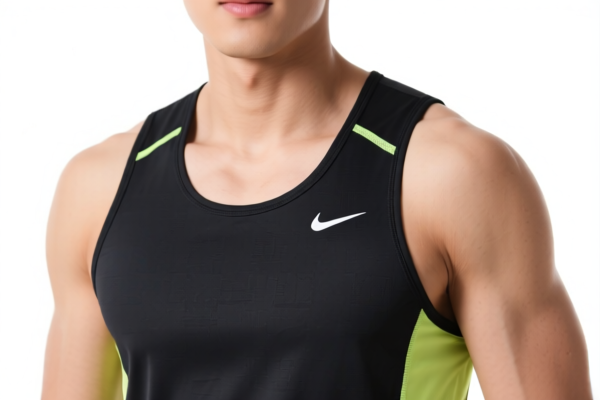
商品图片



AI分析
🏃♂️ Running Vest & Bag (Hydration Packs & Sport Sacks)
🌐 HS Code Reference & Customs Clearance Guide | 2026 Latest Tariff Analysis | Professional Clearance Strategy
📌 I. Product Definition: What Exactly Are You Shipping?
In the international trade of sporting goods, "Running Vest Bag" is often a broad term that can refer to two distinct product categories based on form, function, and material construction. Misclassification here leads to massive tariff discrepancies.
-
Running Vest (Compression/Compression Vest with Pouches):
- Form: Worn on the torso, resembling a sleeveless shirt.
- Function: Worn by the runner for hands-free hydration or storage.
- Material: Typically synthetic fibers (polyester, nylon, spandex blends).
- Classification Focus: Textile apparel (Chapter 61 or 62).
-
Running Bag/Hydration Pack (Backpack Style):
- Form: Worn on the back like a rucksack, with shoulder straps and a main compartment.
- Function: Carries larger amounts of water, gear, or clothing.
- Material: Often textile outer surface with lining/straps.
- Classification Focus: Made-up articles of textile materials (Chapter 42 or 63, depending on specific construction).
⚠️ Critical Distinction Point:
- If it is tailored/fitted like a shirt and worn directly against the body → Apparel (HS 62xx)
- If it is a bag/backpack structure with a distinct container space → Bag/Article (HS 42xx)
📦 II. HS Code Classification Details (2026 Latest Tariff Alignment)
Based on the provided data, here are the four specific classifications for "Running Vest Bags," split by product type.
| HS Code | Product Description | Application Scenario | Key Identification Features |
|---|---|---|---|
6211.33.50.54 |
Running Vest Bag (Vest Form) | Wearable Vest | Form is a vest; intended for sports/leisure; inferred material: Synthetic/Artificial fiber. |
6211.43.05.76 |
Running Vest Bag (Vest Form) | Wearable Vest | Form is a vest; identified as sportswear; inferred material: Synthetic/Artificial fiber. |
4202.92.31.20 |
Running Bag (Backpack Style) | Carry Bag | Form matches a bag/pack; intended for sports/running; surface material: Textile. |
4202.92.39.00 |
Running Bag (Backpack Style) | Carry Bag | Form matches a sports bag; outer surface: Textile materials. |
🔍 Key Insight:
- HS 62xx codes apply if the item is worn like clothing. - HS 42xx codes apply if the item is carried like a backpack or rucksack. - The tariff difference is significant (33.5% vs. 52.6%), making correct classification critical.
💰 III. 2026 Tariff Rate Breakdown (Including Additional Taxes)
✅ Applicable Country: United States (US)
✅ Origin: China (CN)
✅ Effective Date: Current tariffs including Section 301 and Section 122 measures.
🎯 1. For Running Vests (HS 6211.33.50.54 & 6211.43.05.76)
These items are classified as textile apparel. The total effective tax rate is 33.5%.
| Item | Details |
|---|---|
| Base Duty Rate | 16.0% (Standard MFN rate for men’s/boys’ or women’s/girls’ other woven garments) |
| Section 301 Additional Duty | 7.5% (25% reduced rate for specific HS codes under List 4B/4C adjustments, or full 25% depending on exact subheading evolution; Data shows 7.5%) |
| Section 122 Duty | 10% (Specific additional duty under 19 U.S.C. § 1677j for certain textile/apparel items) |
| Total Effective Rate | 33.5% |
| Calculation Basis | CIF Value × 33.5% |
| De Minimis Eligibility | ❌ No (Section 301 and Section 122 duties generally void de minimis exemptions for Chinese goods) |
| Legal Path | Base Tariff → Sec 301 (7.5%) → Sec 122 (10%) |
📌 Explanation:
- The 16% base rate is standard for woven synthetic sportswear. - The 7.5% is the remaining Section 301 duty after certain reductions. - The 10% Section 122 duty is a specific penalty on certain Chinese textiles/apparel to protect domestic manufacturing. - Total: 33.5%. This is a high but manageable rate compared to other categories.
🎯 2. For Running Bags (HS 4202.92.31.20 & 4202.92.39.00)
These items are classified as "made-up articles" (bags). The total effective tax rate is 52.6%.
| Item | Details |
|---|---|
| Base Duty Rate | 17.6% (Standard rate for other made-up articles of textile materials) |
| Section 301 Additional Duty | 25.0% (Full 25% rate applies to most textile bags from China) |
| Section 122 Duty | 10% (Applies to certain textile articles, potentially including bags depending on specific ruling) |
| Total Effective Rate | 52.6% |
| Calculation Basis | CIF Value × 52.6% |
| De Minimis Eligibility | ❌ No (Subject to additional duties) |
| Legal Path | Base Tariff → Sec 301 (25%) → Sec 122 (10%) |
📌 Explanation:
- The 17.6% base rate is higher than apparel for bags. - The 25% Section 301 is not reduced for these bag subheadings in the provided data, unlike the vests. - The 10% Section 122 is also applied. - Total: 52.6%. This is a prohibitive tariff for many retailers.
🛠️ IV. Customs Clearance Operational Advice (Real-World Pitfall Guide)
✅ 1. Preparation Checklist (Must-Haves)
| Document | Required? | Purpose |
|---|---|---|
| ✅ Product Photos | ✔️ | Crucial: Must clearly show if it’s a vest (worn on body) or a bag (backpack shape). |
| ✅ Material Composition | ✔️ | Confirm % of synthetic vs. natural fibers. HS 6211 requires "Synthetic/Artificial Fiber." |
| ✅ Functional Description | ✔️ | "Worn on torso" vs. "Carried on back." This determines Chapter 62 vs. 42. |
| ✅ Commercial Invoice | ✔️ | Must describe item accurately (e.g., "Men's Running Vest, Synthetic, Woven" vs. "Running Backpack, Textile"). |
| ✅ Origin Certificate | ✔️ | Proof of Chinese origin to apply the correct Section 301/122 rates. |
✅ 2. Classification Strategy (Key Mnemonic)
🔥 "Vest is Apparel (62), Bag is Article (42). Wear it or Carry it? That's the key!"
| Scenario | Correct HS Code Chapter | Risk of Misclassification |
|---|---|---|
| Item looks like a sleeveless shirt, fits tightly | Chapter 62 (Apparel) | Low risk if described as "Vest" |
| Item is a loose sack with straps, carried like a backpack | Chapter 42 (Bags) | High risk if described as "Vest Bag" (ambiguous) |
| Item has both vest front and backpack back | Chapter 42 (Bag) | High Risk: Often classified as a bag if the primary function is carrying >10L volume |
✅ 3. Special Considerations for Section 122
- What is Section 122? It is a specific U.S. trade remedy duty (10%) applied to certain Chinese textile and apparel products to address unfair trade practices.
- Why it matters: Even if your base duty is low, adding 10% can make a product unprofitable.
- Advice: Verify if your specific bag/vest model is on the Section 122 coverage list. The data indicates both categories are subject to it, but always double-check with a customs broker.
🌍 V. Global Market Comparison (2026 Context)
| Market | Recommended HS Code | Estimated Total Duty (China Origin) | Notes |
|---|---|---|---|
| 🇺🇸 USA | 6211.33... (Vest) / 4202.92... (Bag) |
33.5% (Vest) / 52.6% (Bag) | Highest cost due to Sec 301 + Sec 122. |
| 🇪🇺 EU | 6114.30 (Vest) / 4202.92 (Bag) |
~4-12% | No Section 301/122 equivalent. Much cheaper. |
| 🇨🇦 Canada | 6211.33 / 4202.92 |
~0-10% | CUSMA advantages may apply if manufactured in Canada/Mexico. |
| 🇯🇵 Japan | 6114.30 / 4202.92 |
~5-10% | No additional punitive tariffs. |
📌 Conclusion:
- The US market is exceptionally expensive for Chinese-made running vests/bags due to Section 122 and 301. - If shipping to the US, optimize for the "Vest" classification (33.5%) rather than the "Bag" classification (52.6%) if the product design allows. - Consider transshipment or assembly in Southeast Asia (Vietnam/Thailand) to avoid US additional duties, though Rules of Origin must be strictly met.
📌 VI. Common Errors & Pitfalls (Lessons Learned)
❌ Error 1: Calling a "Running Backpack" a "Vest" to get the 33.5% rate.
👉 Consequence: Customs will inspect, reclassify to 4202.92, charge 52.6%, and potentially fine you for fraud.
👉 Solution: Be honest. If it has a large main compartment and straps, it’s a bag.
❌ Error 2: Ignoring Section 122.
👉 Consequence: Underestimating landed cost by 10%.
👉 Solution: Always include the 10% Sec 122 in your margin calculations for US-bound textile goods.
❌ Error 3: Incorrect material declaration.
👉 Consequence: If declared as "Cotton" but is "Polyester," HS Code changes, and duty rates may differ.
👉 Solution: Provide accurate composition labels (e.g., "95% Polyester, 5% Spandex").
✅ Correct Approach:
"Men's Woven Synthetic Running Vest (Form: Vest, Function: Sport), Model XYZ, 100% Polyester."
HS:6211.33.50.54| Rate: 33.5%
🎯 VII. Final Recommendation: How to Save Costs?
- Product Design: If possible, design the product as a tight-fitting vest (no large storage pockets) to qualify for HS 6211 (33.5%) instead of HS 4202 (52.6%).
- Supplier Sourcing: If the US market is your primary goal, consider sourcing from non-China countries (e.g., Vietnam, Bangladesh) to avoid Section 301 (7.5%/25%) and Section 122 (10%) duties entirely.
- Pre-Ruling: Apply for a Customs Ruling from CBP if your product is hybrid (vest + bag). A binding ruling provides legal certainty and protects against future audits.
📌 Pro Tip:
🔹 "Vest = 33.5%, Bag = 52.6%. The difference is 19.1% of your product value."
🔹 "Don't let 'Bag' in your name ruin your margin. Classify by Form, not by Name."
📣 Action Step:
📞 Consult your customs broker with high-res photos of the product.
📄 Request a Pre-Ruling if you are unsure whether it’s a vest or a bag.
🚀 Accurate classification = Predictable costs + Smooth clearance.
✨ Professional Clearance, Start with Correct HS Codes!
💼 Your Profit Margin Depends on Every Percentage Point!
用户评价
关于 HS 编码归类
协调制度(HS)是由世界海关组织(WCO)制定的国际贸易商品分类标准。全球 200 多个国家采用 HS 系统作为海关关税、贸易统计和进出口监管的基础。
每个 HS 编码遵循以下层级结构:
- 章(2 位)——商品大类(例如:第 84 章:机器和机械设备)
- 品目(4 位)——章内的更具体分类
- 子目(6 位)——国际通用细分,所有 WCO 成员国统一使用
- 本国细分(8-10 位)——各国自行扩展的细分编码,如美国 HTSUS 10 位编码
正确的 HS 编码归类对于顺利通关、准确缴纳关税和遵守贸易法规至关重要。错误归类可能导致海关延误、多缴关税或罚款。
从CN进口到US时,适用的关税税率可能包括:
- 最惠国(MFN)税率——适用于 WTO 成员国的标准关税税率
- 普通税率——适用于无贸易协定国家
- 贸易救济关税——附加关税,如 301 条款(反倾销)、232 条款(国家安全)或反补贴税
本页内容仅供参考。如需正式归类,请咨询当地海关或持牌报关代理。