Running Vest Bag
CN → US| HS Code | Tariff Rate | Origin | Destination | Doc |
|---|---|---|---|---|
| 6211335054 | 33.5% | CN | US | Official Doc |
| 6211430576 | 33.5% | CN | US | Official Doc |
| 4202923120 | 52.6% | CN | US | Official Doc |
| 4202923900 | 52.6% | CN | US | Official Doc |
Product Images



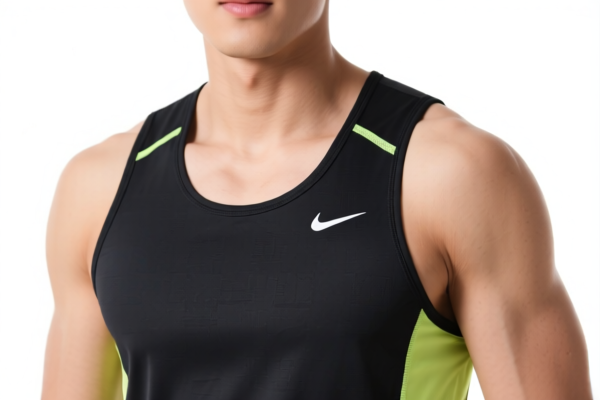
AI Analysis
🏃♂️ Running Vest & Bag (Hydration Packs & Sport Sacks)
🌐 HS Code Reference & Customs Clearance Guide | 2026 Latest Tariff Analysis | Professional Clearance Strategy
📌 I. Product Definition: What Exactly Are You Shipping?
In the international trade of sporting goods, "Running Vest Bag" is often a broad term that can refer to two distinct product categories based on form, function, and material construction. Misclassification here leads to massive tariff discrepancies.
-
Running Vest (Compression/Compression Vest with Pouches):
- Form: Worn on the torso, resembling a sleeveless shirt.
- Function: Worn by the runner for hands-free hydration or storage.
- Material: Typically synthetic fibers (polyester, nylon, spandex blends).
- Classification Focus: Textile apparel (Chapter 61 or 62).
-
Running Bag/Hydration Pack (Backpack Style):
- Form: Worn on the back like a rucksack, with shoulder straps and a main compartment.
- Function: Carries larger amounts of water, gear, or clothing.
- Material: Often textile outer surface with lining/straps.
- Classification Focus: Made-up articles of textile materials (Chapter 42 or 63, depending on specific construction).
⚠️ Critical Distinction Point:
- If it is tailored/fitted like a shirt and worn directly against the body → Apparel (HS 62xx)
- If it is a bag/backpack structure with a distinct container space → Bag/Article (HS 42xx)
📦 II. HS Code Classification Details (2026 Latest Tariff Alignment)
Based on the provided data, here are the four specific classifications for "Running Vest Bags," split by product type.
| HS Code | Product Description | Application Scenario | Key Identification Features |
|---|---|---|---|
6211.33.50.54 |
Running Vest Bag (Vest Form) | Wearable Vest | Form is a vest; intended for sports/leisure; inferred material: Synthetic/Artificial fiber. |
6211.43.05.76 |
Running Vest Bag (Vest Form) | Wearable Vest | Form is a vest; identified as sportswear; inferred material: Synthetic/Artificial fiber. |
4202.92.31.20 |
Running Bag (Backpack Style) | Carry Bag | Form matches a bag/pack; intended for sports/running; surface material: Textile. |
4202.92.39.00 |
Running Bag (Backpack Style) | Carry Bag | Form matches a sports bag; outer surface: Textile materials. |
🔍 Key Insight:
- HS 62xx codes apply if the item is worn like clothing. - HS 42xx codes apply if the item is carried like a backpack or rucksack. - The tariff difference is significant (33.5% vs. 52.6%), making correct classification critical.
💰 III. 2026 Tariff Rate Breakdown (Including Additional Taxes)
✅ Applicable Country: United States (US)
✅ Origin: China (CN)
✅ Effective Date: Current tariffs including Section 301 and Section 122 measures.
🎯 1. For Running Vests (HS 6211.33.50.54 & 6211.43.05.76)
These items are classified as textile apparel. The total effective tax rate is 33.5%.
| Item | Details |
|---|---|
| Base Duty Rate | 16.0% (Standard MFN rate for men’s/boys’ or women’s/girls’ other woven garments) |
| Section 301 Additional Duty | 7.5% (25% reduced rate for specific HS codes under List 4B/4C adjustments, or full 25% depending on exact subheading evolution; Data shows 7.5%) |
| Section 122 Duty | 10% (Specific additional duty under 19 U.S.C. § 1677j for certain textile/apparel items) |
| Total Effective Rate | 33.5% |
| Calculation Basis | CIF Value × 33.5% |
| De Minimis Eligibility | ❌ No (Section 301 and Section 122 duties generally void de minimis exemptions for Chinese goods) |
| Legal Path | Base Tariff → Sec 301 (7.5%) → Sec 122 (10%) |
📌 Explanation:
- The 16% base rate is standard for woven synthetic sportswear. - The 7.5% is the remaining Section 301 duty after certain reductions. - The 10% Section 122 duty is a specific penalty on certain Chinese textiles/apparel to protect domestic manufacturing. - Total: 33.5%. This is a high but manageable rate compared to other categories.
🎯 2. For Running Bags (HS 4202.92.31.20 & 4202.92.39.00)
These items are classified as "made-up articles" (bags). The total effective tax rate is 52.6%.
| Item | Details |
|---|---|
| Base Duty Rate | 17.6% (Standard rate for other made-up articles of textile materials) |
| Section 301 Additional Duty | 25.0% (Full 25% rate applies to most textile bags from China) |
| Section 122 Duty | 10% (Applies to certain textile articles, potentially including bags depending on specific ruling) |
| Total Effective Rate | 52.6% |
| Calculation Basis | CIF Value × 52.6% |
| De Minimis Eligibility | ❌ No (Subject to additional duties) |
| Legal Path | Base Tariff → Sec 301 (25%) → Sec 122 (10%) |
📌 Explanation:
- The 17.6% base rate is higher than apparel for bags. - The 25% Section 301 is not reduced for these bag subheadings in the provided data, unlike the vests. - The 10% Section 122 is also applied. - Total: 52.6%. This is a prohibitive tariff for many retailers.
🛠️ IV. Customs Clearance Operational Advice (Real-World Pitfall Guide)
✅ 1. Preparation Checklist (Must-Haves)
| Document | Required? | Purpose |
|---|---|---|
| ✅ Product Photos | ✔️ | Crucial: Must clearly show if it’s a vest (worn on body) or a bag (backpack shape). |
| ✅ Material Composition | ✔️ | Confirm % of synthetic vs. natural fibers. HS 6211 requires "Synthetic/Artificial Fiber." |
| ✅ Functional Description | ✔️ | "Worn on torso" vs. "Carried on back." This determines Chapter 62 vs. 42. |
| ✅ Commercial Invoice | ✔️ | Must describe item accurately (e.g., "Men's Running Vest, Synthetic, Woven" vs. "Running Backpack, Textile"). |
| ✅ Origin Certificate | ✔️ | Proof of Chinese origin to apply the correct Section 301/122 rates. |
✅ 2. Classification Strategy (Key Mnemonic)
🔥 "Vest is Apparel (62), Bag is Article (42). Wear it or Carry it? That's the key!"
| Scenario | Correct HS Code Chapter | Risk of Misclassification |
|---|---|---|
| Item looks like a sleeveless shirt, fits tightly | Chapter 62 (Apparel) | Low risk if described as "Vest" |
| Item is a loose sack with straps, carried like a backpack | Chapter 42 (Bags) | High risk if described as "Vest Bag" (ambiguous) |
| Item has both vest front and backpack back | Chapter 42 (Bag) | High Risk: Often classified as a bag if the primary function is carrying >10L volume |
✅ 3. Special Considerations for Section 122
- What is Section 122? It is a specific U.S. trade remedy duty (10%) applied to certain Chinese textile and apparel products to address unfair trade practices.
- Why it matters: Even if your base duty is low, adding 10% can make a product unprofitable.
- Advice: Verify if your specific bag/vest model is on the Section 122 coverage list. The data indicates both categories are subject to it, but always double-check with a customs broker.
🌍 V. Global Market Comparison (2026 Context)
| Market | Recommended HS Code | Estimated Total Duty (China Origin) | Notes |
|---|---|---|---|
| 🇺🇸 USA | 6211.33... (Vest) / 4202.92... (Bag) |
33.5% (Vest) / 52.6% (Bag) | Highest cost due to Sec 301 + Sec 122. |
| 🇪🇺 EU | 6114.30 (Vest) / 4202.92 (Bag) |
~4-12% | No Section 301/122 equivalent. Much cheaper. |
| 🇨🇦 Canada | 6211.33 / 4202.92 |
~0-10% | CUSMA advantages may apply if manufactured in Canada/Mexico. |
| 🇯🇵 Japan | 6114.30 / 4202.92 |
~5-10% | No additional punitive tariffs. |
📌 Conclusion:
- The US market is exceptionally expensive for Chinese-made running vests/bags due to Section 122 and 301. - If shipping to the US, optimize for the "Vest" classification (33.5%) rather than the "Bag" classification (52.6%) if the product design allows. - Consider transshipment or assembly in Southeast Asia (Vietnam/Thailand) to avoid US additional duties, though Rules of Origin must be strictly met.
📌 VI. Common Errors & Pitfalls (Lessons Learned)
❌ Error 1: Calling a "Running Backpack" a "Vest" to get the 33.5% rate.
👉 Consequence: Customs will inspect, reclassify to 4202.92, charge 52.6%, and potentially fine you for fraud.
👉 Solution: Be honest. If it has a large main compartment and straps, it’s a bag.
❌ Error 2: Ignoring Section 122.
👉 Consequence: Underestimating landed cost by 10%.
👉 Solution: Always include the 10% Sec 122 in your margin calculations for US-bound textile goods.
❌ Error 3: Incorrect material declaration.
👉 Consequence: If declared as "Cotton" but is "Polyester," HS Code changes, and duty rates may differ.
👉 Solution: Provide accurate composition labels (e.g., "95% Polyester, 5% Spandex").
✅ Correct Approach:
"Men's Woven Synthetic Running Vest (Form: Vest, Function: Sport), Model XYZ, 100% Polyester."
HS:6211.33.50.54| Rate: 33.5%
🎯 VII. Final Recommendation: How to Save Costs?
- Product Design: If possible, design the product as a tight-fitting vest (no large storage pockets) to qualify for HS 6211 (33.5%) instead of HS 4202 (52.6%).
- Supplier Sourcing: If the US market is your primary goal, consider sourcing from non-China countries (e.g., Vietnam, Bangladesh) to avoid Section 301 (7.5%/25%) and Section 122 (10%) duties entirely.
- Pre-Ruling: Apply for a Customs Ruling from CBP if your product is hybrid (vest + bag). A binding ruling provides legal certainty and protects against future audits.
📌 Pro Tip:
🔹 "Vest = 33.5%, Bag = 52.6%. The difference is 19.1% of your product value."
🔹 "Don't let 'Bag' in your name ruin your margin. Classify by Form, not by Name."
📣 Action Step:
📞 Consult your customs broker with high-res photos of the product.
📄 Request a Pre-Ruling if you are unsure whether it’s a vest or a bag.
🚀 Accurate classification = Predictable costs + Smooth clearance.
✨ Professional Clearance, Start with Correct HS Codes!
💼 Your Profit Margin Depends on Every Percentage Point!
Customer Reviews
About HS Code Classification
The Harmonized System (HS) is an internationally standardized nomenclature developed by the World Customs Organization (WCO) to classify traded products. Over 200 countries use the HS system as the basis for customs tariffs, trade statistics, and import/export regulations.
Each HS code follows a hierarchical structure:
- Chapter (2 digits) — Broad category of goods (e.g., Chapter 84: Machinery and Mechanical Appliances)
- Heading (4 digits) — More specific grouping within the chapter
- Subheading (6 digits) — Internationally standardized breakdown, used by all WCO member countries
- National subdivisions (8-10 digits) — Country-specific extensions for further classification, such as US HTSUS 10-digit codes
Correct HS code classification is essential for smooth customs clearance, accurate duty payment, and compliance with trade regulations. Misclassification can lead to customs delays, overpayment of duties, or penalties.
When importing from CN to US, the applicable tariff rates may include:
- Most-Favored-Nation (MFN) rate — The standard duty rate applied to WTO members
- General rate — Applied to countries without trade agreements
- Trade remedy duties — Additional tariffs such as Section 301 (anti-dumping), Section 232 (national security), or countervailing duties
The information provided on this page is for reference purposes only. For official classification, please consult with your local customs authority or a licensed customs broker.