SBS Rubber Granules
CN → US| HS编码 | 关税税率 | 原产国 | 目的国 | 文档 |
|---|---|---|---|---|
| 4003000000 | 35.0% | CN | US | 官方文档 |
| 4002990000 | 35.0% | CN | US | 官方文档 |
| 4004000000 | 35.0% | CN | US | 官方文档 |
| 4002190019 | 35.0% | CN | US | 官方文档 |
| 4002990000 | 35.0% | CN | US | 官方文档 |
商品图片
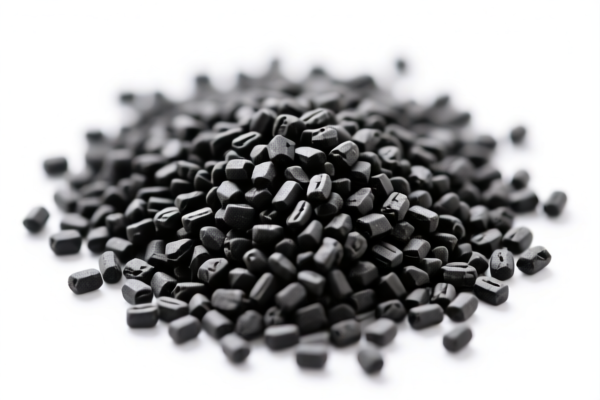
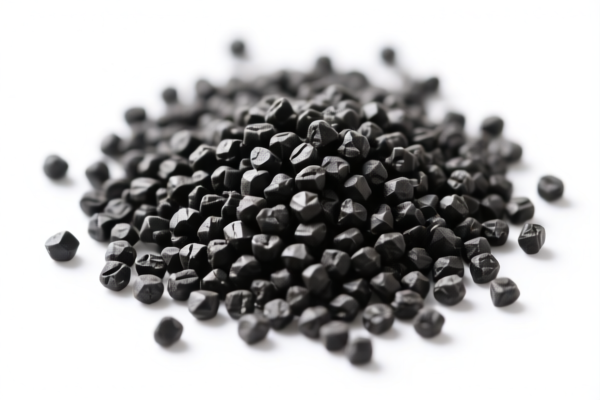
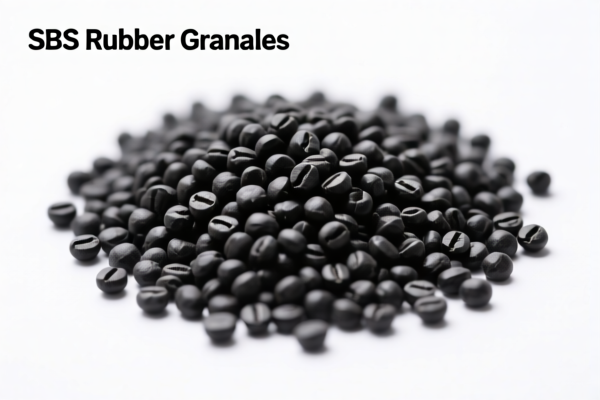
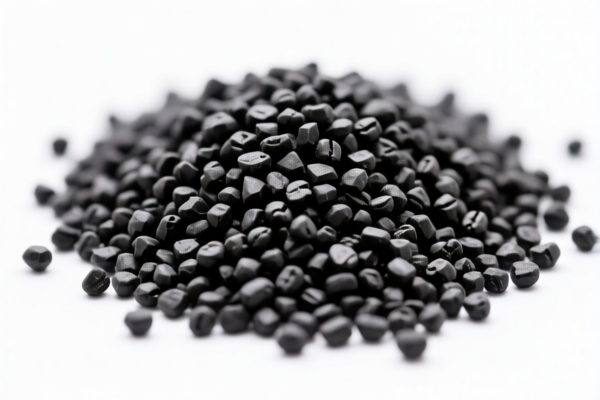
AI分析
🧱 SBS Rubber Granules (Thermoplastic Elastomer)
🌐 HS Code Reference & Clearance Guide | 2026 Latest Tariff Analysis | Professional Entry Strategy
📌 I. Product Definition & Classification: What Exactly Are "SBS Rubber Granules"?
SBS (Styrene-Butadiene-Styrene) is a thermoplastic elastomer (TPE). In international trade, it is classified not as a vulcanized rubber (which is irreversible), but as a primary form of synthetic rubber.
The key distinction lies in the state of matter: * Primary Form (Granules/Particles): Raw material for molding, extruding, or blending. → Chapter 40. * Manufactured Goods (Tires, Soles): Finished products. → Chapter 40 (various) or Chapter 39/40 depending on composition.
⚠️ Key Distinction Point:
- If the product is "granules," "pellets," or "powder" intended for further processing → It is considered "Primary Form" under HS 4002.
- If it is "reclaimed rubber" or "waste" from recycling processes → It falls under HS 4003 or 4004.
- Do NOT classify SBS granules as plastic (Chapter 39) because it exhibits rubbery elastic properties.
📦 II. HS Code Classification Details (Based on Provided Data)
The provided data highlights four specific HS Codes relevant to rubber granules, including SBS. All listed codes carry a Total Tax Rate of 35.0% due to US trade policies.
| HS Code | Product Summary | Applicable Scenario | Key Characteristics |
|---|---|---|---|
4002.99.00.00 |
Synthetic Rubber & Derivatives (Primary Form) | General synthetic rubber granules, SBS applicable here | ✅ SBS Category: General "Other" synthetic rubber in primary form. |
4002.19.00.19 |
Synthetic Rubber (Specific Sub-category) | SBS or similar synthetic rubber granules with no material conflict | ✅ Specific Sub-cat: More precise fit for certain SBS types; still "Primary Form". |
4003.00.00.00 |
Reclaimed Rubber Particles | Reclaimed rubber granules meeting material/primary form requirements | ⚠️ Reclaimed: Only if the granules are made from recycled/vulcanized rubber scrap. |
4004.00.00.00 |
Rubber Waste, Scraps & Debris | Recycled rubber granules from waste/scrap | ⚠️ Waste: Only if derived from industrial waste or used tires (recycled into granules). |
🔍 Critical Clarification for SBS:
- New SBS Granules: Must be classified under4002(Synthetic Rubber in Primary Form), specifically4002.99.00.00or4002.19.00.19.
- Recycled SBS: If the SBS granules are made by grinding down old SBS products, they might fall under4003(Reclaimed) or4004(Waste), but this is rare for pure SBS.
- Do NOT mix "New Synthetic Rubber" with "Reclaimed Rubber" in one shipment if they have different HS codes, as this triggers customs scrutiny.
💰 III. 2026 Latest Tariff Rate Breakdown (Detailed Policy)
✅ Applicable Country: United States (US)
✅ Origin: China (CN)
✅ Effective Date: All rates apply as of current US trade policy (Section 301 & IEEPA).
✅ Total Tax Rate: 35.0% for ALL listed codes.
🎯 1. 4002.99.00.00 & 4002.19.00.19 —— New Synthetic Rubber (Including SBS)
| Item | Content |
|---|---|
| Base Tariff | 0.0% (ad valorem) |
| Section 301 Tariff | +25.0% (Added by USTR under Trade Act of 1974) |
| Section 122 Tariff | +10.0% (Specific provision referenced in data) |
| Total Rate | 35.0% |
| Calculation | CIF Value × 35% |
| De Minimis Exemption | ❌ Not Eligible |
| Legal Basis | Section 301: Footnote 9903.88.01 → IEEPA/Section 122 → USITC:4002.* |
📌 Explanation:
- 0% Base: Synthetic rubber typically has low base duties.
- +25% (301): This is the major punitive tariff on Chinese goods.
- +10% (122): Specific additional duty noted in the provided data.
- Result: A 35% flat tax on the CIF value. This is a high-cost barrier.
🎯 2. 4003.00.00.00 —— Reclaimed Rubber Particles
| Item | Content |
|---|---|
| Base Tariff | 0.0% |
| Section 301 Tariff | +25.0% |
| Section 122 Tariff | +10.0% |
| Total Rate | 35.0% |
| Calculation | CIF Value × 35% |
| De Minimis Exemption | ❌ Not Eligible |
📌 Note: Even though "reclaimed" sounds eco-friendly, it is subject to the same high tariffs if originating from China.
🎯 3. 4004.00.00.00 —— Rubber Waste & Scraps
| Item | Content |
|---|---|
| Base Tariff | 0.0% |
| Section 301 Tariff | +25.0% |
| Section 122 Tariff | +10.0% |
| Total Rate | 35.0% |
| Calculation | CIF Value × 35% |
| De Minimis Exemption | ❌ Not Eligible |
📌 Warning: Importing "rubber waste" can trigger additional EPA/Environmental compliance checks. Ensure the product is clearly defined as "recycled granules for manufacturing" and not "unsorted waste."
🛠️ IV. Clearance Practical Advice (Avoiding Pitfalls)
✅ 1. Required Documentation Checklist
| Document | Mandatory? | Description |
|---|---|---|
| ✅ Product Specification Sheet | ✔️ | Must clearly state: "SBS (Styrene-Butadiene-Styrene) Thermoplastic Elastomer, Granules/Pellets, Primary Form." |
| ✅ Material Safety Data Sheet (MSDS) | ✔️ | Required for chemical handling; confirms non-hazardous nature. |
| ✅ Certificate of Origin (CO) | ✔️ | Must indicate Made in China to apply (or deny) preferential treatments (none available here). |
| ✅ Commercial Invoice | ✔️ | Must explicitly describe goods as "Synthetic Rubber Granules, HS 4002..." Not just "Rubber." |
| ✅ Packing List | ✔️ | Detail weight, dimensions, and number of bags/pallets. |
| ✅ Test Report | ✔️ | Optional but helpful: Proof of polymer composition (SBR/SEBS/SBS) to support HS 4002 classification. |
✅ 2. Declaration Tips (Critical Keywords)
🔥 Golden Rule: "Be Specific. Don't Say 'Rubber' Alone."
| Scenario | Correct Declaration | Incorrect Declaration | Consequence |
|---|---|---|---|
| New SBS Granules | "SBS Synthetic Rubber Granules, Primary Form, for Extrusion" | "Rubber Granules" or "TPE" | High risk of misclassification, delays, or audit. |
| Reclaimed Rubber | "Reclaimed Rubber Particles, HS 4003" | "Recycled Tire Rubber" (Vague) | May be flagged as waste (HS 4004) or hazardous material. |
| Mixed Shipment | Split HS Codes on separate lines | Combining SBS and Reclaimed Rubber | Confusion, potential penalty for incorrect declaration. |
✅ 3. Special Handling Advice
| Situation | Recommendation |
|---|---|
| OEM Custom SBS | Provide formula details to customs broker to prove it’s not a proprietary blend that might fall under a different chapter. |
| Small Samples | Even for samples, if value exceeds $800, it’s subject to duty. If < $800, De Minimis may apply, but Section 301 goods are often excluded. Check current CBP enforcement! |
| SBS vs. SEBS | SEBS (Hydrogenated SBS) is also HS 4002. Ensure the chemical name matches the HS code description. |
🌍 V. Global Market Comparison (2026)
| Country/Region | Recommended HS Code | Tariff (China Origin) | Notes |
|---|---|---|---|
| 🇺🇸 USA | 4002.99.00.00 / 4002.19.00.19 |
35.0% | High tariff due to 301/122. No exemptions for SBS. |
| 🇨🇳 China | 4002.99.00.00 |
~1% - 5% | Low import duty for synthetic rubber. |
| 🇪🇺 EU | 4002.99.00.00 |
~5.3% | No additional punitive tariffs for rubber. |
| 🇲🇽 Mexico | 4002.99.00.00 |
0% (if USMCA origin) | If manufactured in Mexico, may be tariff-free. |
📌 Conclusion:
The US market is the most challenging for Chinese-origin SBS rubber granules due to the 35% total tariff.
- Cost Impact: A $10,000 shipment incurs $3,500 in duties.
- Strategy: Consider sourcing from Vietnam, Thailand, or Malaysia if possible, to avoid Section 301 tariffs (subject to transshipment rules).
📌 VI. Common Mistakes & Pitfalls (Blood Lessons)
❌ Mistake 1: Labeling SBS as "Plastic Pellets" (Chapter 39)
👉 Result: Customs will reclassify to 4002 + 35% tariff + Penalty. SBS is chemically distinct from polyethylene/polypropylene.
❌ Mistake 2: Claiming "De Minimis" for small shipments under $800
👉 Result: Section 301 goods are frequently excluded from de minimis exemption. You may still owe 35% even on small samples. Verify current CBP policy.
❌ Mistake 3: Mixing "Virgin" and "Reclaimed" Rubber in one HS Code
👉 Result: If you mix 4002 (New) and 4003 (Reclaimed), customs may audit the entire shipment for accuracy, causing delays.
✅ Correct Practice:
"SBS Thermoplastic Elastomer Granules, 100% Synthetic, Primary Form, HS 4002.99.00.00, Made in China"
🎯 VII. Conclusion: Professional Clearance for Cost Efficiency
🎯 Remember the Mantra:
🔹 "SBS is Rubber, Not Plastic. HS 4002 is Key. 35% Tax is Real."
🔹 "Be Specific in Description. Avoid 'Rubber' Alone."
🔹 "De Minimis is Not Guaranteed for Section 301 Goods."
📌 Pro Tip:
If your SBS granules are used in medical or food-contact applications, ensure you have FDA/USP compliance certificates. While this doesn’t change the HS code, it prevents rejection at the border for regulatory reasons.
📣 Immediate Action:
📞 Contact a licensed customs broker to file an Advance Ruling for your specific SBS formulation.
📉 Calculate Landed Cost: Include 35% duty + freight + insurance + handling.
🚀 Optimize Supply Chain: Evaluate sourcing from non-China regions to mitigate the 35% tariff burden.
✨ Precise Classification Saves Money!
💼 Don’t let a 35% tariff erode your margin. Know your HS Code!
用户评价
关于 HS 编码归类
协调制度(HS)是由世界海关组织(WCO)制定的国际贸易商品分类标准。全球 200 多个国家采用 HS 系统作为海关关税、贸易统计和进出口监管的基础。
每个 HS 编码遵循以下层级结构:
- 章(2 位)——商品大类(例如:第 84 章:机器和机械设备)
- 品目(4 位)——章内的更具体分类
- 子目(6 位)——国际通用细分,所有 WCO 成员国统一使用
- 本国细分(8-10 位)——各国自行扩展的细分编码,如美国 HTSUS 10 位编码
正确的 HS 编码归类对于顺利通关、准确缴纳关税和遵守贸易法规至关重要。错误归类可能导致海关延误、多缴关税或罚款。
从CN进口到US时,适用的关税税率可能包括:
- 最惠国(MFN)税率——适用于 WTO 成员国的标准关税税率
- 普通税率——适用于无贸易协定国家
- 贸易救济关税——附加关税,如 301 条款(反倾销)、232 条款(国家安全)或反补贴税
本页内容仅供参考。如需正式归类,请咨询当地海关或持牌报关代理。