SBS Rubber Granules
CN → US| HS Code | Tariff Rate | Origin | Destination | Doc |
|---|---|---|---|---|
| 4003000000 | 35.0% | CN | US | Official Doc |
| 4002990000 | 35.0% | CN | US | Official Doc |
| 4004000000 | 35.0% | CN | US | Official Doc |
| 4002190019 | 35.0% | CN | US | Official Doc |
| 4002990000 | 35.0% | CN | US | Official Doc |
Product Images
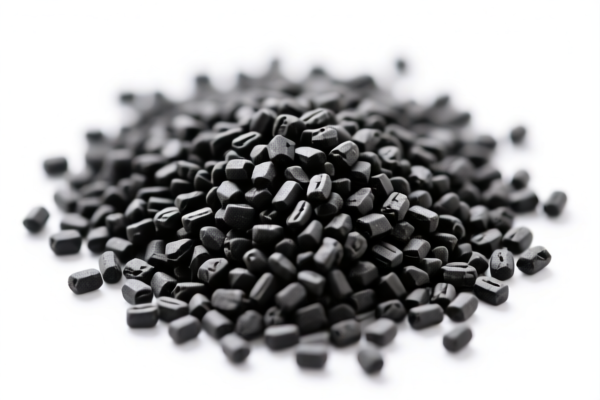
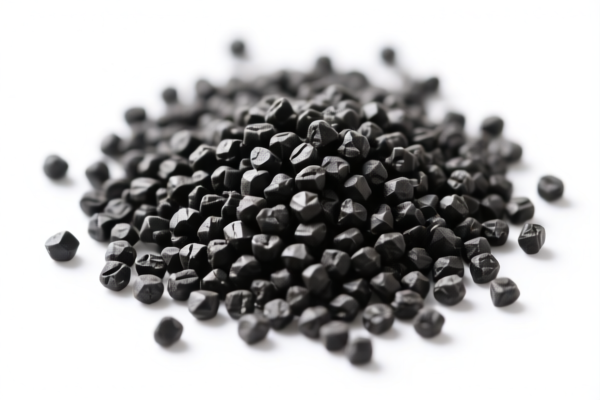
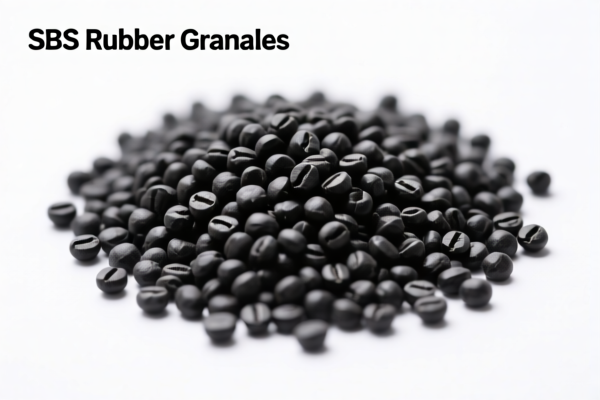
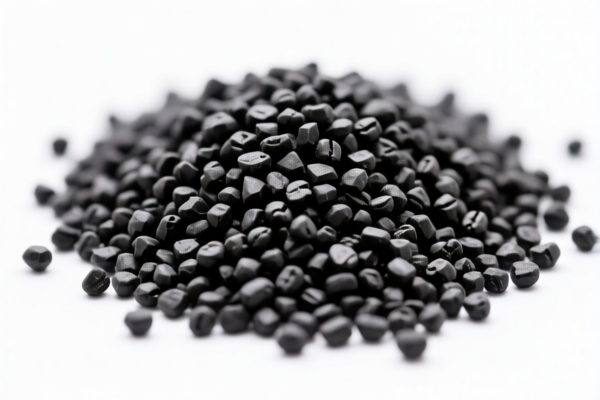
AI Analysis
🧱 SBS Rubber Granules (Thermoplastic Elastomer)
🌐 HS Code Reference & Clearance Guide | 2026 Latest Tariff Analysis | Professional Entry Strategy
📌 I. Product Definition & Classification: What Exactly Are "SBS Rubber Granules"?
SBS (Styrene-Butadiene-Styrene) is a thermoplastic elastomer (TPE). In international trade, it is classified not as a vulcanized rubber (which is irreversible), but as a primary form of synthetic rubber.
The key distinction lies in the state of matter: * Primary Form (Granules/Particles): Raw material for molding, extruding, or blending. → Chapter 40. * Manufactured Goods (Tires, Soles): Finished products. → Chapter 40 (various) or Chapter 39/40 depending on composition.
⚠️ Key Distinction Point:
- If the product is "granules," "pellets," or "powder" intended for further processing → It is considered "Primary Form" under HS 4002.
- If it is "reclaimed rubber" or "waste" from recycling processes → It falls under HS 4003 or 4004.
- Do NOT classify SBS granules as plastic (Chapter 39) because it exhibits rubbery elastic properties.
📦 II. HS Code Classification Details (Based on Provided Data)
The provided data highlights four specific HS Codes relevant to rubber granules, including SBS. All listed codes carry a Total Tax Rate of 35.0% due to US trade policies.
| HS Code | Product Summary | Applicable Scenario | Key Characteristics |
|---|---|---|---|
4002.99.00.00 |
Synthetic Rubber & Derivatives (Primary Form) | General synthetic rubber granules, SBS applicable here | ✅ SBS Category: General "Other" synthetic rubber in primary form. |
4002.19.00.19 |
Synthetic Rubber (Specific Sub-category) | SBS or similar synthetic rubber granules with no material conflict | ✅ Specific Sub-cat: More precise fit for certain SBS types; still "Primary Form". |
4003.00.00.00 |
Reclaimed Rubber Particles | Reclaimed rubber granules meeting material/primary form requirements | ⚠️ Reclaimed: Only if the granules are made from recycled/vulcanized rubber scrap. |
4004.00.00.00 |
Rubber Waste, Scraps & Debris | Recycled rubber granules from waste/scrap | ⚠️ Waste: Only if derived from industrial waste or used tires (recycled into granules). |
🔍 Critical Clarification for SBS:
- New SBS Granules: Must be classified under4002(Synthetic Rubber in Primary Form), specifically4002.99.00.00or4002.19.00.19.
- Recycled SBS: If the SBS granules are made by grinding down old SBS products, they might fall under4003(Reclaimed) or4004(Waste), but this is rare for pure SBS.
- Do NOT mix "New Synthetic Rubber" with "Reclaimed Rubber" in one shipment if they have different HS codes, as this triggers customs scrutiny.
💰 III. 2026 Latest Tariff Rate Breakdown (Detailed Policy)
✅ Applicable Country: United States (US)
✅ Origin: China (CN)
✅ Effective Date: All rates apply as of current US trade policy (Section 301 & IEEPA).
✅ Total Tax Rate: 35.0% for ALL listed codes.
🎯 1. 4002.99.00.00 & 4002.19.00.19 —— New Synthetic Rubber (Including SBS)
| Item | Content |
|---|---|
| Base Tariff | 0.0% (ad valorem) |
| Section 301 Tariff | +25.0% (Added by USTR under Trade Act of 1974) |
| Section 122 Tariff | +10.0% (Specific provision referenced in data) |
| Total Rate | 35.0% |
| Calculation | CIF Value × 35% |
| De Minimis Exemption | ❌ Not Eligible |
| Legal Basis | Section 301: Footnote 9903.88.01 → IEEPA/Section 122 → USITC:4002.* |
📌 Explanation:
- 0% Base: Synthetic rubber typically has low base duties.
- +25% (301): This is the major punitive tariff on Chinese goods.
- +10% (122): Specific additional duty noted in the provided data.
- Result: A 35% flat tax on the CIF value. This is a high-cost barrier.
🎯 2. 4003.00.00.00 —— Reclaimed Rubber Particles
| Item | Content |
|---|---|
| Base Tariff | 0.0% |
| Section 301 Tariff | +25.0% |
| Section 122 Tariff | +10.0% |
| Total Rate | 35.0% |
| Calculation | CIF Value × 35% |
| De Minimis Exemption | ❌ Not Eligible |
📌 Note: Even though "reclaimed" sounds eco-friendly, it is subject to the same high tariffs if originating from China.
🎯 3. 4004.00.00.00 —— Rubber Waste & Scraps
| Item | Content |
|---|---|
| Base Tariff | 0.0% |
| Section 301 Tariff | +25.0% |
| Section 122 Tariff | +10.0% |
| Total Rate | 35.0% |
| Calculation | CIF Value × 35% |
| De Minimis Exemption | ❌ Not Eligible |
📌 Warning: Importing "rubber waste" can trigger additional EPA/Environmental compliance checks. Ensure the product is clearly defined as "recycled granules for manufacturing" and not "unsorted waste."
🛠️ IV. Clearance Practical Advice (Avoiding Pitfalls)
✅ 1. Required Documentation Checklist
| Document | Mandatory? | Description |
|---|---|---|
| ✅ Product Specification Sheet | ✔️ | Must clearly state: "SBS (Styrene-Butadiene-Styrene) Thermoplastic Elastomer, Granules/Pellets, Primary Form." |
| ✅ Material Safety Data Sheet (MSDS) | ✔️ | Required for chemical handling; confirms non-hazardous nature. |
| ✅ Certificate of Origin (CO) | ✔️ | Must indicate Made in China to apply (or deny) preferential treatments (none available here). |
| ✅ Commercial Invoice | ✔️ | Must explicitly describe goods as "Synthetic Rubber Granules, HS 4002..." Not just "Rubber." |
| ✅ Packing List | ✔️ | Detail weight, dimensions, and number of bags/pallets. |
| ✅ Test Report | ✔️ | Optional but helpful: Proof of polymer composition (SBR/SEBS/SBS) to support HS 4002 classification. |
✅ 2. Declaration Tips (Critical Keywords)
🔥 Golden Rule: "Be Specific. Don't Say 'Rubber' Alone."
| Scenario | Correct Declaration | Incorrect Declaration | Consequence |
|---|---|---|---|
| New SBS Granules | "SBS Synthetic Rubber Granules, Primary Form, for Extrusion" | "Rubber Granules" or "TPE" | High risk of misclassification, delays, or audit. |
| Reclaimed Rubber | "Reclaimed Rubber Particles, HS 4003" | "Recycled Tire Rubber" (Vague) | May be flagged as waste (HS 4004) or hazardous material. |
| Mixed Shipment | Split HS Codes on separate lines | Combining SBS and Reclaimed Rubber | Confusion, potential penalty for incorrect declaration. |
✅ 3. Special Handling Advice
| Situation | Recommendation |
|---|---|
| OEM Custom SBS | Provide formula details to customs broker to prove it’s not a proprietary blend that might fall under a different chapter. |
| Small Samples | Even for samples, if value exceeds $800, it’s subject to duty. If < $800, De Minimis may apply, but Section 301 goods are often excluded. Check current CBP enforcement! |
| SBS vs. SEBS | SEBS (Hydrogenated SBS) is also HS 4002. Ensure the chemical name matches the HS code description. |
🌍 V. Global Market Comparison (2026)
| Country/Region | Recommended HS Code | Tariff (China Origin) | Notes |
|---|---|---|---|
| 🇺🇸 USA | 4002.99.00.00 / 4002.19.00.19 |
35.0% | High tariff due to 301/122. No exemptions for SBS. |
| 🇨🇳 China | 4002.99.00.00 |
~1% - 5% | Low import duty for synthetic rubber. |
| 🇪🇺 EU | 4002.99.00.00 |
~5.3% | No additional punitive tariffs for rubber. |
| 🇲🇽 Mexico | 4002.99.00.00 |
0% (if USMCA origin) | If manufactured in Mexico, may be tariff-free. |
📌 Conclusion:
The US market is the most challenging for Chinese-origin SBS rubber granules due to the 35% total tariff.
- Cost Impact: A $10,000 shipment incurs $3,500 in duties.
- Strategy: Consider sourcing from Vietnam, Thailand, or Malaysia if possible, to avoid Section 301 tariffs (subject to transshipment rules).
📌 VI. Common Mistakes & Pitfalls (Blood Lessons)
❌ Mistake 1: Labeling SBS as "Plastic Pellets" (Chapter 39)
👉 Result: Customs will reclassify to 4002 + 35% tariff + Penalty. SBS is chemically distinct from polyethylene/polypropylene.
❌ Mistake 2: Claiming "De Minimis" for small shipments under $800
👉 Result: Section 301 goods are frequently excluded from de minimis exemption. You may still owe 35% even on small samples. Verify current CBP policy.
❌ Mistake 3: Mixing "Virgin" and "Reclaimed" Rubber in one HS Code
👉 Result: If you mix 4002 (New) and 4003 (Reclaimed), customs may audit the entire shipment for accuracy, causing delays.
✅ Correct Practice:
"SBS Thermoplastic Elastomer Granules, 100% Synthetic, Primary Form, HS 4002.99.00.00, Made in China"
🎯 VII. Conclusion: Professional Clearance for Cost Efficiency
🎯 Remember the Mantra:
🔹 "SBS is Rubber, Not Plastic. HS 4002 is Key. 35% Tax is Real."
🔹 "Be Specific in Description. Avoid 'Rubber' Alone."
🔹 "De Minimis is Not Guaranteed for Section 301 Goods."
📌 Pro Tip:
If your SBS granules are used in medical or food-contact applications, ensure you have FDA/USP compliance certificates. While this doesn’t change the HS code, it prevents rejection at the border for regulatory reasons.
📣 Immediate Action:
📞 Contact a licensed customs broker to file an Advance Ruling for your specific SBS formulation.
📉 Calculate Landed Cost: Include 35% duty + freight + insurance + handling.
🚀 Optimize Supply Chain: Evaluate sourcing from non-China regions to mitigate the 35% tariff burden.
✨ Precise Classification Saves Money!
💼 Don’t let a 35% tariff erode your margin. Know your HS Code!
Customer Reviews
About HS Code Classification
The Harmonized System (HS) is an internationally standardized nomenclature developed by the World Customs Organization (WCO) to classify traded products. Over 200 countries use the HS system as the basis for customs tariffs, trade statistics, and import/export regulations.
Each HS code follows a hierarchical structure:
- Chapter (2 digits) — Broad category of goods (e.g., Chapter 84: Machinery and Mechanical Appliances)
- Heading (4 digits) — More specific grouping within the chapter
- Subheading (6 digits) — Internationally standardized breakdown, used by all WCO member countries
- National subdivisions (8-10 digits) — Country-specific extensions for further classification, such as US HTSUS 10-digit codes
Correct HS code classification is essential for smooth customs clearance, accurate duty payment, and compliance with trade regulations. Misclassification can lead to customs delays, overpayment of duties, or penalties.
When importing from CN to US, the applicable tariff rates may include:
- Most-Favored-Nation (MFN) rate — The standard duty rate applied to WTO members
- General rate — Applied to countries without trade agreements
- Trade remedy duties — Additional tariffs such as Section 301 (anti-dumping), Section 232 (national security), or countervailing duties
The information provided on this page is for reference purposes only. For official classification, please consult with your local customs authority or a licensed customs broker.