Sanding Belt Machine Carbon Base Plate
CN → US| HS编码 | 关税税率 | 原产国 | 目的国 | 文档 |
|---|---|---|---|---|
| 8466933000 | 40.8% | CN | US | 官方文档 |
| 8545194000 | 35.0% | CN | US | 官方文档 |
| 3801105090 | 35.0% | CN | US | 官方文档 |
| 3801105010 | 35.0% | CN | US | 官方文档 |
| 8466931560 | 35.0% | CN | US | 官方文档 |
商品图片
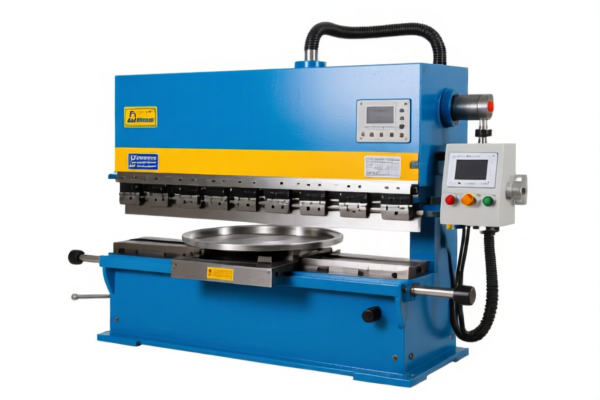
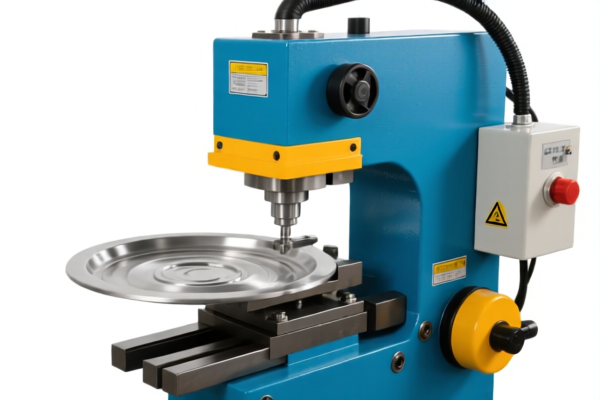
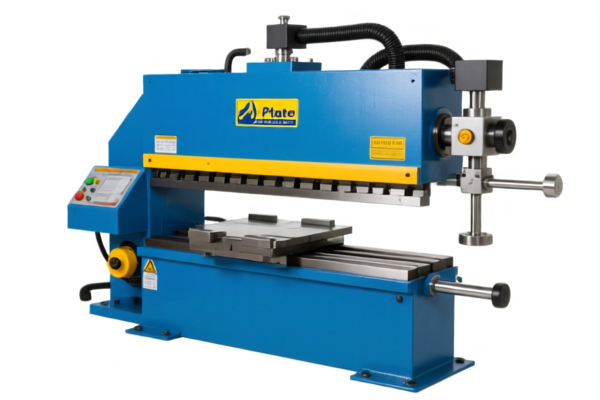
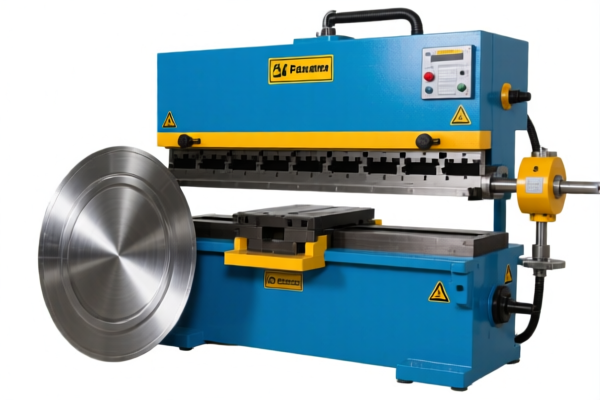
AI分析
🛠️ Sanding Belt Machine Carbon Base Plate: HS Code Classification & US Customs Clearance Guide
🌐 HS Code Reference & Customs Strategy | 2026 Latest Tariff Analysis | Professional Clearance Protocol
📌 I. Product Definition: What Exactly is a "Carbon Base Plate"?
The Sanding Belt Machine Carbon Base Plate is a critical component in belt sanding systems. Its classification depends entirely on the material composition and functional role. In international trade, this item sits at the intersection of machinery parts, carbon products, and abrasive accessories.
⚠️ Key Distinction:
- If made of steel/metal with carbon coating → Classified as Machine Part.
- If made of pure carbon/graphite/carbon fiber → Classified as Carbon Product/Electrode.
- If used as an abrasive carrier or backing → Classified as Abrasive/Graphite Accessory.
📦 II. HS Code Classification Details (2026 Latest Tariff对照)
Based on the provided data, there are 5 potential HS Codes depending on the specific material inference. Here is the detailed breakdown:
| HS Code | Material Inference | Product Description | Total Tax Rate | Tax Composition |
|---|---|---|---|---|
8466.93.30.00 |
Carbon Steel / Metal | Sanding belt machine base plate (Metal construction) | 40.8% | Base: 5.8% + Section 301: 25% + IEEPA 122: 10% |
8545.19.40.00 |
Carbon Products (Graphite/Carbon Fiber) | Base plate with electrode characteristics | 35.0% | Base: 0.0% + Section 301: 25% + IEEPA 122: 10% |
3801.10.50.90 |
Artificial Graphite | Base plate as a spare part/accessory | 35.0% | Base: 0.0% + Section 301: 25% + IEEPA 122: 10% |
3801.10.50.10 |
Carbon/Silicon Carbide | Base plate as an abrasive carrier component | 35.0% | Base: 0.0% + Section 301: 25% + IEEPA 122: 10% |
8466.93.15.60 |
Cast Iron | Base plate made of other cast iron parts | 35.0% | Base: 0.0% + Section 301: 25% + IEEPA 122: 10% |
🔍 Critical Note:
- The Base Duty varies significantly: 5.8% for metal (8466...) vs 0.0% for carbon/graphite (8545.../3801...).
- However, Section 301 (25%) and IEEPA 122 (10%) apply uniformly, making the Total Effective Rate either 40.8% or 35.0%.
- Misclassification between "Metal Part" and "Carbon Product" can lead to 5.8% duty difference + potential penalties.
💰 III. 2026 Latest Tariff Rate Breakdown (Detailed Legal Basis)
✅ Applicable Country: United States (US)
✅ Origin: China (CN)
✅ Effective Time: Current (Post-2025 Adjustments)
🎯 1. 8466.93.30.00 – Machine Parts (Steel/Metal Base Plate)
| Item | Detail |
|---|---|
| Base Duty Rate | 5.8% (Ad Valorem) |
| Section 301 Duty (USITC Footnote) | +25% |
| IEEPA Section 122 Duty | +10% |
| Total Effective Rate | 40.8% |
| Tax Calculation | CIF Value × 40.8% |
| De Minimis Exemption | ❌ Not Eligible (High tariff rates exceed exemption thresholds) |
| Legal Reference Path | HTSUS:8466.93.30.00 → USITC:Section 301 → IEEPA:122 |
📌 Explanation:
- This classification treats the item as a machine part.
- The 5.8% base duty is added to the 35% punitive tariffs (25% + 10%).
- Risk: If the item is actually carbon-based, declaring it as steel may trigger customs audits for "undervaluation" or "incorrect material declaration."
🎯 2. 8545.19.40.00 – Carbon/Graphite Products (Electrode/Carbon Plate)
| Item | Detail |
|---|---|
| Base Duty Rate | 0.0% |
| Section 301 Duty (USITC Footnote) | +25% |
| IEEPA Section 122 Duty | +10% |
| Total Effective Rate | 35.0% |
| Tax Calculation | CIF Value × 35.0% |
| De Minimis Exemption | ❌ Not Eligible |
| Legal Reference Path | HTSUS:8545.19.40.00 → USITC:Section 301 → IEEPA:122 |
📌 Explanation:
- This classification assumes the base plate is made of graphite or carbon fiber with electrode-like properties.
- Savings: 5.8% lower than the metal classification due to 0% base duty.
- Requirement: Must provide Material Safety Data Sheet (MSDS) or Certificate of Analysis proving carbon/graphite content.
🎯 3. 3801.10.50.90 / 3801.10.50.10 – Artificial Graphite / Abrasive Carriers
| Item | Detail |
|---|---|
| Base Duty Rate | 0.0% |
| Section 301 Duty (USITC Footnote) | +25% |
| IEEPA Section 122 Duty | +10% |
| Total Effective Rate | 35.0% |
| Tax Calculation | CIF Value × 35.0% |
| De Minimis Exemption | ❌ Not Eligible |
| Legal Reference Path | HTSUS:3801.10.50.xx → USITC:Section 301 → IEEPA:122 |
📌 Explanation:
- Used if the plate is primarily for abrasive support or made of silicon carbide/carbon composites.
- Difference between .90 and .10:.10is for specific abrasive carriers;.90is for other artificial graphite products.
- Compliance: Must specify chemical composition and intended use (abrasive backing vs. structural part).
🎯 4. 8466.93.15.60 – Cast Iron Parts
| Item | Detail |
|---|---|
| Base Duty Rate | 0.0% |
| Section 301 Duty (USITC Footnote) | +25% |
| IEEPA Section 122 Duty | +10% |
| Total Effective Rate | 35.0% |
| Tax Calculation | CIF Value × 35.0% |
| De Minimis Exemption | ❌ Not Eligible |
| Legal Reference Path | HTSUS:8466.93.15.60 → USITC:Section 301 → IEEPA:122 |
📌 Explanation:
- Specifically for cast iron components.
- Risk: If the base plate is steel (not cast iron), this classification is incorrect. Cast iron has distinct metallurgical properties.
🛠️ IV. Customs Clearance Practical Advice (Pitfall Avoidance)
✅ 1. Required Documentation Checklist
| Document | Mandatory | Purpose |
|---|---|---|
| ✅ Material Certificate | ✔️ | Must specify Carbon %, Steel Grade, or Graphite Type. |
| ✅ Product Technical Sheet | ✔️ | Show dimensions, weight, and machining process (e.g., CNC machined from graphite block). |
| ✅ Product Photos | ✔️ | Clear images of texture (metallic vs. dark grey/black for carbon). |
| ✅ Commercial Invoice | ✔️ | Accurate description: "Carbon Base Plate for Sanding Belt Machine". Avoid generic terms like "Metal Plate." |
| ✅ Packing List | ✔️ | Include net/gross weight to verify consistency with material density. |
| ✅ USDA/FDA (if applicable) | ❌ | Generally not required for industrial carbon/metal parts. |
✅ 2. Declaration Tips (Key Phrases)
🔥 "Material is King! Describe Accurately, Save 5.8%!"
| Scenario | Correct Declaration | Incorrect Declaration | Consequence |
|---|---|---|---|
| Steel Base Plate | "Steel Base Plate, CNC Machined, for Belt Sander" | "Carbon Plate" | Misclassification → Penalty + Back Taxes |
| Graphite Base Plate | "Artificial Graphite Base Plate, Electrode Grade" | "Metal Part" | 5.8% Base Duty Overcharge + Audit Risk |
| Cast Iron Base Plate | "Cast Iron Base Plate, Unmachined Rough Surface" | "Carbon Composite" | Material mismatch → Customs Hold |
| Carbon Fiber Plate | "Carbon Fiber Reinforced Polymer Base Plate" | "Graphite" | Different HS Code → Potential Delay |
✅ 3. Special Case Handling
| Situation | Advice |
|---|---|
| Mixed Materials | If the plate is steel with a carbon coating, declare as Steel Part (8466.93.30.00) but disclose coating in technical specs. |
| Carbon Fiber Composites | Classify under 8545.19.40.00 if it has electrode properties, or 8466.93.30.00 if it’s a structural part. Prioritize function. |
| OEM Custom Parts | Provide Customer PO and Engineering Drawings to prove intent. |
| High-Value Shipments | Consider Advance Ruling (PAR) to lock in HS Code and avoid post-clearance audits. |
🌍 V. Global Market Comparison (2026 Update)
| Country/Region | Recommended HS Code | Base Duty | Add-on Tariff (China) | Total Rate | Notes |
|---|---|---|---|---|---|
| 🇺🇸 USA | 8466.93.30.00 or 8545.19.40.00 |
5.8% or 0.0% | +35% (25% + 10%) | 40.8% or 35.0% | Strict material verification required. |
| 🇨🇳 China | 8466.93.30.00 or 8545.19.40.00 |
5.8% or 0.0% | 0% | 5.8% or 0.0% | No Section 301/IEEPA. |
| 🇪🇺 EU | 8466.93.90 or 8545.90 |
0% - 4% | 0% | ~0-4% | No major punitive tariffs. |
| 🇬🇧 UK | 8466.93.90 or 8545.90 |
0% - 4% | 0% | ~0-4% | Post-Brexit tariff rates apply. |
📌 Conclusion:
- The US market is the most complex due to 35% punitive tariffs.
- Material accuracy is the biggest cost-saving lever (5.8% base duty difference).
- Carbon-based classifications are cheaper but require strong material proof.
📌 VI. Common Mistakes & Pitfalls (Blood Lessons)
❌ Mistake 1: Calling a Steel Plate a "Carbon Plate" to avoid 5.8% duty.
👉 Consequence: Customs lab test reveals steel → Penalty + Back Taxes + Seizure Risk.
❌ Mistake 2: Using "Other Machine Parts" generic code.
👉 Consequence: Customs may assign a higher duty rate or hold shipment for classification review.
❌ Mistake 3: Ignoring Section 122 (10%).
👉 Consequence: Underpayment of tariff → Late Fees + Interest.
❌ Mistake 4: Missing Material Certificate for Carbon Products.
👉 Consequence: Customs cannot verify 0% base duty → Reverts to highest duty rate.
✅ Correct Approach:
"Graphite Base Plate, 100% Artificial Graphite, for Sanding Machine, No Electronic Components, Model XYZ, Certified by Lab."
🎯 VII. Conclusion: Precise Classification Saves Money!
🎯 Remember the Mantra:
🔹 "Metal Base: 40.8% (5.8+25+10)"
🔹 "Carbon Base: 35.0% (0+25+10)"
🔹 "Prove the Material, Save the 5.8%!"
🔹 "Generic Descriptions = Customs Audits!"
📌 Pro Tip:
- If your product is Carbon Fiber, consider if it fits 8545.19.40.00 (electrode-like) or 8466.93.30.00 (machine part).
- Always obtain a third-party material analysis report before shipping to the US.
- For high-volume shipments, apply for a Customs Ruling to secure the HS Code and tariff rate in advance.
📣 Immediate Action:
📞 Consult a Customs Broker + Provide Material Specs + Apply for Pre-Ruling
🚀 Ensure Smooth Clearance, Minimize Tariffs, Maximize Profit!
✨ Professional Clearance Starts with Accurate Classification!
💼 Every Penny Counted, Every Shipment Secured!
用户评价
关于 HS 编码归类
协调制度(HS)是由世界海关组织(WCO)制定的国际贸易商品分类标准。全球 200 多个国家采用 HS 系统作为海关关税、贸易统计和进出口监管的基础。
每个 HS 编码遵循以下层级结构:
- 章(2 位)——商品大类(例如:第 84 章:机器和机械设备)
- 品目(4 位)——章内的更具体分类
- 子目(6 位)——国际通用细分,所有 WCO 成员国统一使用
- 本国细分(8-10 位)——各国自行扩展的细分编码,如美国 HTSUS 10 位编码
正确的 HS 编码归类对于顺利通关、准确缴纳关税和遵守贸易法规至关重要。错误归类可能导致海关延误、多缴关税或罚款。
从CN进口到US时,适用的关税税率可能包括:
- 最惠国(MFN)税率——适用于 WTO 成员国的标准关税税率
- 普通税率——适用于无贸易协定国家
- 贸易救济关税——附加关税,如 301 条款(反倾销)、232 条款(国家安全)或反补贴税
本页内容仅供参考。如需正式归类,请咨询当地海关或持牌报关代理。