Sanding Belt Machine Carbon Base Plate
CN → US| HS Code | Tariff Rate | Origin | Destination | Doc |
|---|---|---|---|---|
| 8466933000 | 40.8% | CN | US | Official Doc |
| 8545194000 | 35.0% | CN | US | Official Doc |
| 3801105090 | 35.0% | CN | US | Official Doc |
| 3801105010 | 35.0% | CN | US | Official Doc |
| 8466931560 | 35.0% | CN | US | Official Doc |
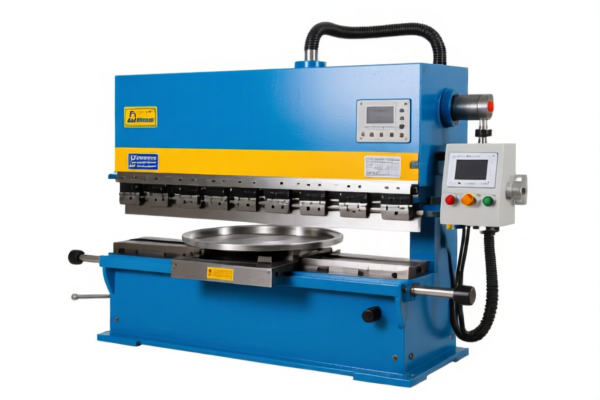
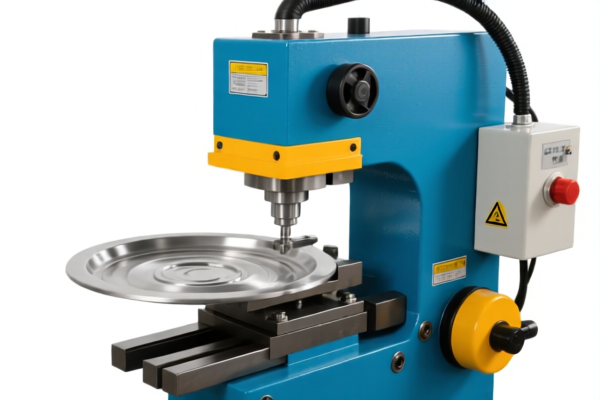
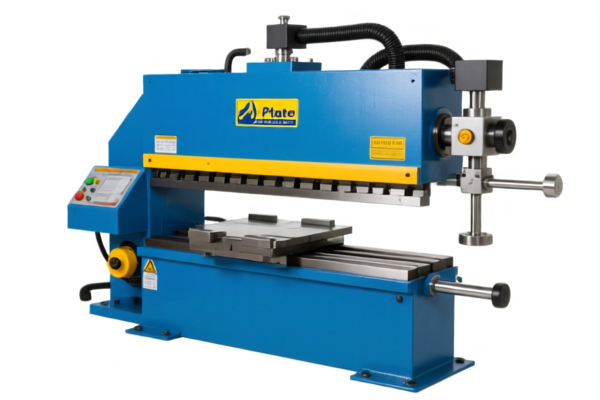
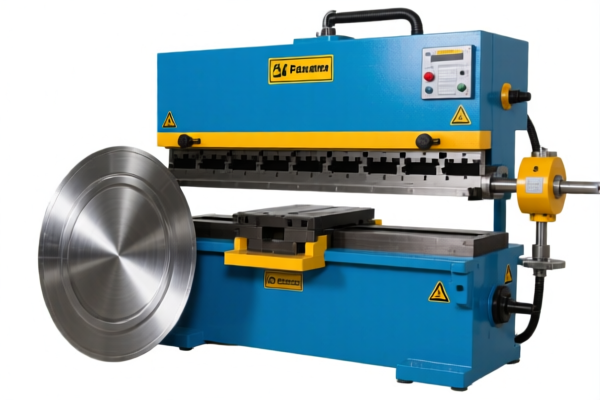
Product Images
AI Analysis
🛠️ Sanding Belt Machine Carbon Base Plate: HS Code Classification & US Customs Clearance Guide
🌐 HS Code Reference & Customs Strategy | 2026 Latest Tariff Analysis | Professional Clearance Protocol
📌 I. Product Definition: What Exactly is a "Carbon Base Plate"?
The Sanding Belt Machine Carbon Base Plate is a critical component in belt sanding systems. Its classification depends entirely on the material composition and functional role. In international trade, this item sits at the intersection of machinery parts, carbon products, and abrasive accessories.
⚠️ Key Distinction:
- If made of steel/metal with carbon coating → Classified as Machine Part.
- If made of pure carbon/graphite/carbon fiber → Classified as Carbon Product/Electrode.
- If used as an abrasive carrier or backing → Classified as Abrasive/Graphite Accessory.
📦 II. HS Code Classification Details (2026 Latest Tariff对照)
Based on the provided data, there are 5 potential HS Codes depending on the specific material inference. Here is the detailed breakdown:
| HS Code | Material Inference | Product Description | Total Tax Rate | Tax Composition |
|---|---|---|---|---|
8466.93.30.00 |
Carbon Steel / Metal | Sanding belt machine base plate (Metal construction) | 40.8% | Base: 5.8% + Section 301: 25% + IEEPA 122: 10% |
8545.19.40.00 |
Carbon Products (Graphite/Carbon Fiber) | Base plate with electrode characteristics | 35.0% | Base: 0.0% + Section 301: 25% + IEEPA 122: 10% |
3801.10.50.90 |
Artificial Graphite | Base plate as a spare part/accessory | 35.0% | Base: 0.0% + Section 301: 25% + IEEPA 122: 10% |
3801.10.50.10 |
Carbon/Silicon Carbide | Base plate as an abrasive carrier component | 35.0% | Base: 0.0% + Section 301: 25% + IEEPA 122: 10% |
8466.93.15.60 |
Cast Iron | Base plate made of other cast iron parts | 35.0% | Base: 0.0% + Section 301: 25% + IEEPA 122: 10% |
🔍 Critical Note:
- The Base Duty varies significantly: 5.8% for metal (8466...) vs 0.0% for carbon/graphite (8545.../3801...).
- However, Section 301 (25%) and IEEPA 122 (10%) apply uniformly, making the Total Effective Rate either 40.8% or 35.0%.
- Misclassification between "Metal Part" and "Carbon Product" can lead to 5.8% duty difference + potential penalties.
💰 III. 2026 Latest Tariff Rate Breakdown (Detailed Legal Basis)
✅ Applicable Country: United States (US)
✅ Origin: China (CN)
✅ Effective Time: Current (Post-2025 Adjustments)
🎯 1. 8466.93.30.00 – Machine Parts (Steel/Metal Base Plate)
| Item | Detail |
|---|---|
| Base Duty Rate | 5.8% (Ad Valorem) |
| Section 301 Duty (USITC Footnote) | +25% |
| IEEPA Section 122 Duty | +10% |
| Total Effective Rate | 40.8% |
| Tax Calculation | CIF Value × 40.8% |
| De Minimis Exemption | ❌ Not Eligible (High tariff rates exceed exemption thresholds) |
| Legal Reference Path | HTSUS:8466.93.30.00 → USITC:Section 301 → IEEPA:122 |
📌 Explanation:
- This classification treats the item as a machine part.
- The 5.8% base duty is added to the 35% punitive tariffs (25% + 10%).
- Risk: If the item is actually carbon-based, declaring it as steel may trigger customs audits for "undervaluation" or "incorrect material declaration."
🎯 2. 8545.19.40.00 – Carbon/Graphite Products (Electrode/Carbon Plate)
| Item | Detail |
|---|---|
| Base Duty Rate | 0.0% |
| Section 301 Duty (USITC Footnote) | +25% |
| IEEPA Section 122 Duty | +10% |
| Total Effective Rate | 35.0% |
| Tax Calculation | CIF Value × 35.0% |
| De Minimis Exemption | ❌ Not Eligible |
| Legal Reference Path | HTSUS:8545.19.40.00 → USITC:Section 301 → IEEPA:122 |
📌 Explanation:
- This classification assumes the base plate is made of graphite or carbon fiber with electrode-like properties.
- Savings: 5.8% lower than the metal classification due to 0% base duty.
- Requirement: Must provide Material Safety Data Sheet (MSDS) or Certificate of Analysis proving carbon/graphite content.
🎯 3. 3801.10.50.90 / 3801.10.50.10 – Artificial Graphite / Abrasive Carriers
| Item | Detail |
|---|---|
| Base Duty Rate | 0.0% |
| Section 301 Duty (USITC Footnote) | +25% |
| IEEPA Section 122 Duty | +10% |
| Total Effective Rate | 35.0% |
| Tax Calculation | CIF Value × 35.0% |
| De Minimis Exemption | ❌ Not Eligible |
| Legal Reference Path | HTSUS:3801.10.50.xx → USITC:Section 301 → IEEPA:122 |
📌 Explanation:
- Used if the plate is primarily for abrasive support or made of silicon carbide/carbon composites.
- Difference between .90 and .10:.10is for specific abrasive carriers;.90is for other artificial graphite products.
- Compliance: Must specify chemical composition and intended use (abrasive backing vs. structural part).
🎯 4. 8466.93.15.60 – Cast Iron Parts
| Item | Detail |
|---|---|
| Base Duty Rate | 0.0% |
| Section 301 Duty (USITC Footnote) | +25% |
| IEEPA Section 122 Duty | +10% |
| Total Effective Rate | 35.0% |
| Tax Calculation | CIF Value × 35.0% |
| De Minimis Exemption | ❌ Not Eligible |
| Legal Reference Path | HTSUS:8466.93.15.60 → USITC:Section 301 → IEEPA:122 |
📌 Explanation:
- Specifically for cast iron components.
- Risk: If the base plate is steel (not cast iron), this classification is incorrect. Cast iron has distinct metallurgical properties.
🛠️ IV. Customs Clearance Practical Advice (Pitfall Avoidance)
✅ 1. Required Documentation Checklist
| Document | Mandatory | Purpose |
|---|---|---|
| ✅ Material Certificate | ✔️ | Must specify Carbon %, Steel Grade, or Graphite Type. |
| ✅ Product Technical Sheet | ✔️ | Show dimensions, weight, and machining process (e.g., CNC machined from graphite block). |
| ✅ Product Photos | ✔️ | Clear images of texture (metallic vs. dark grey/black for carbon). |
| ✅ Commercial Invoice | ✔️ | Accurate description: "Carbon Base Plate for Sanding Belt Machine". Avoid generic terms like "Metal Plate." |
| ✅ Packing List | ✔️ | Include net/gross weight to verify consistency with material density. |
| ✅ USDA/FDA (if applicable) | ❌ | Generally not required for industrial carbon/metal parts. |
✅ 2. Declaration Tips (Key Phrases)
🔥 "Material is King! Describe Accurately, Save 5.8%!"
| Scenario | Correct Declaration | Incorrect Declaration | Consequence |
|---|---|---|---|
| Steel Base Plate | "Steel Base Plate, CNC Machined, for Belt Sander" | "Carbon Plate" | Misclassification → Penalty + Back Taxes |
| Graphite Base Plate | "Artificial Graphite Base Plate, Electrode Grade" | "Metal Part" | 5.8% Base Duty Overcharge + Audit Risk |
| Cast Iron Base Plate | "Cast Iron Base Plate, Unmachined Rough Surface" | "Carbon Composite" | Material mismatch → Customs Hold |
| Carbon Fiber Plate | "Carbon Fiber Reinforced Polymer Base Plate" | "Graphite" | Different HS Code → Potential Delay |
✅ 3. Special Case Handling
| Situation | Advice |
|---|---|
| Mixed Materials | If the plate is steel with a carbon coating, declare as Steel Part (8466.93.30.00) but disclose coating in technical specs. |
| Carbon Fiber Composites | Classify under 8545.19.40.00 if it has electrode properties, or 8466.93.30.00 if it’s a structural part. Prioritize function. |
| OEM Custom Parts | Provide Customer PO and Engineering Drawings to prove intent. |
| High-Value Shipments | Consider Advance Ruling (PAR) to lock in HS Code and avoid post-clearance audits. |
🌍 V. Global Market Comparison (2026 Update)
| Country/Region | Recommended HS Code | Base Duty | Add-on Tariff (China) | Total Rate | Notes |
|---|---|---|---|---|---|
| 🇺🇸 USA | 8466.93.30.00 or 8545.19.40.00 |
5.8% or 0.0% | +35% (25% + 10%) | 40.8% or 35.0% | Strict material verification required. |
| 🇨🇳 China | 8466.93.30.00 or 8545.19.40.00 |
5.8% or 0.0% | 0% | 5.8% or 0.0% | No Section 301/IEEPA. |
| 🇪🇺 EU | 8466.93.90 or 8545.90 |
0% - 4% | 0% | ~0-4% | No major punitive tariffs. |
| 🇬🇧 UK | 8466.93.90 or 8545.90 |
0% - 4% | 0% | ~0-4% | Post-Brexit tariff rates apply. |
📌 Conclusion:
- The US market is the most complex due to 35% punitive tariffs.
- Material accuracy is the biggest cost-saving lever (5.8% base duty difference).
- Carbon-based classifications are cheaper but require strong material proof.
📌 VI. Common Mistakes & Pitfalls (Blood Lessons)
❌ Mistake 1: Calling a Steel Plate a "Carbon Plate" to avoid 5.8% duty.
👉 Consequence: Customs lab test reveals steel → Penalty + Back Taxes + Seizure Risk.
❌ Mistake 2: Using "Other Machine Parts" generic code.
👉 Consequence: Customs may assign a higher duty rate or hold shipment for classification review.
❌ Mistake 3: Ignoring Section 122 (10%).
👉 Consequence: Underpayment of tariff → Late Fees + Interest.
❌ Mistake 4: Missing Material Certificate for Carbon Products.
👉 Consequence: Customs cannot verify 0% base duty → Reverts to highest duty rate.
✅ Correct Approach:
"Graphite Base Plate, 100% Artificial Graphite, for Sanding Machine, No Electronic Components, Model XYZ, Certified by Lab."
🎯 VII. Conclusion: Precise Classification Saves Money!
🎯 Remember the Mantra:
🔹 "Metal Base: 40.8% (5.8+25+10)"
🔹 "Carbon Base: 35.0% (0+25+10)"
🔹 "Prove the Material, Save the 5.8%!"
🔹 "Generic Descriptions = Customs Audits!"
📌 Pro Tip:
- If your product is Carbon Fiber, consider if it fits 8545.19.40.00 (electrode-like) or 8466.93.30.00 (machine part).
- Always obtain a third-party material analysis report before shipping to the US.
- For high-volume shipments, apply for a Customs Ruling to secure the HS Code and tariff rate in advance.
📣 Immediate Action:
📞 Consult a Customs Broker + Provide Material Specs + Apply for Pre-Ruling
🚀 Ensure Smooth Clearance, Minimize Tariffs, Maximize Profit!
✨ Professional Clearance Starts with Accurate Classification!
💼 Every Penny Counted, Every Shipment Secured!
Customer Reviews
About HS Code Classification
The Harmonized System (HS) is an internationally standardized nomenclature developed by the World Customs Organization (WCO) to classify traded products. Over 200 countries use the HS system as the basis for customs tariffs, trade statistics, and import/export regulations.
Each HS code follows a hierarchical structure:
- Chapter (2 digits) — Broad category of goods (e.g., Chapter 84: Machinery and Mechanical Appliances)
- Heading (4 digits) — More specific grouping within the chapter
- Subheading (6 digits) — Internationally standardized breakdown, used by all WCO member countries
- National subdivisions (8-10 digits) — Country-specific extensions for further classification, such as US HTSUS 10-digit codes
Correct HS code classification is essential for smooth customs clearance, accurate duty payment, and compliance with trade regulations. Misclassification can lead to customs delays, overpayment of duties, or penalties.
When importing from CN to US, the applicable tariff rates may include:
- Most-Favored-Nation (MFN) rate — The standard duty rate applied to WTO members
- General rate — Applied to countries without trade agreements
- Trade remedy duties — Additional tariffs such as Section 301 (anti-dumping), Section 232 (national security), or countervailing duties
The information provided on this page is for reference purposes only. For official classification, please consult with your local customs authority or a licensed customs broker.